Wilhelm Richard Wagner ( Wilhelm Richard Wagner) , pronunciation: [ˈʁɪçaʁt ˈvaːɡnɐ] ( listen ) ; May 22, 1813 , Leipzig - February 13, 1883 , Venice ) is a German composer , conductor and art theorist. The largest opera reformer, who had a significant influence on European musical culture, especially German, especially on the development of opera and symphonic genres.
| Richard Wagner him Richard Wagner | |
|---|---|
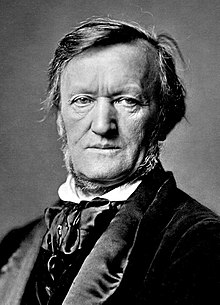 1871 | |
| basic information | |
| Birth name | |
| Date of Birth | |
| Place of Birth | |
| Date of death | |
| Place of death | Venice , Kingdom of Italy |
| Buried | |
| A country | |
| Professions | composer , conductor |
| Instruments | |
| Genres | Opera Musical drama |
| Awards | |
| Autograph | |
Wagner’s mysticism and ideologically stained anti-Semitism influenced German nationalism of the early 20th century [4] , and later on national socialism , which surrounded his work with a cult, which in some countries (especially in Israel ) caused an “anti-Ugner’s” reaction after World War II [5 ] [6] [7] .
Biography
Wagner was born in the family of an official Carl Friedrich Wagner (1770–1813). Influenced by his stepfather , actor Ludwig Geyer ( him. Ludwig Geyer ), Wagner, receiving education in the school of St. Nicholas (1828–1830) and then at St. Thomas’s school (1830–1831), from 1828 began to study harmony under the direction of Christian Gottlieb Muller , then the composition from the cantor of St. Thomas’s Theodore Weinliga , in 1831 he began his musical studies in Leipzig the university . In 1833–1842 he led a hectic life, often in great need in Würzburg , where he worked as a theater choirmaster , Magdeburg , then in Königsberg and Riga , where he conducted musical theaters, then in Norway , London and Paris , where he wrote the Faust overture and opera "The Flying Dutchman ". In 1842, the triumphal premiere of the opera Rienzi, the last of the tribunes in Dresden, laid the foundation of his glory. A year later he became court conductor at the royal Saxon court . In 1843, his half sister Tsitsiliy had a son Richard, the future philosopher Richard Avenarius . Wagner became his godfather . In 1849, Wagner participated in the May Dresden uprising , during which he met MA Bakunin . After the defeat of the uprising, he fled to Zurich , where he wrote the libretto of the tetralogy “The Ring of the Nibelungs ”, the music of its first two parts (“The Gold of the Rhine ” and “The Valkyrie ”) and the opera “ Tristan and Isolda ”. In 1858, he visited for a short time Venice , Lucerne , Vienna , Paris and Berlin .
In 1864, having achieved the favor of the Bavarian king Ludwig II , who paid his debts and supported him further, he moved to Munich , where he wrote the comic opera Nuremberg Mastersingers and the last two parts of the Ring of the Nibelung : Siegfried and The Death of the Gods . In 1872, the laying of the foundation stone for the House of Festivals took place in Bayreuth , which opened in 1876, where the premiere of the tetralogy “ Ring of the Nibelung ” took place on August 13-17, 1876. In 1882, the opera mystery Parsifal was staged in Bayreuth. In the same year, Wagner went to Venice for health reasons, where he died of a heart attack in 1883. Buried in Bayreuth.
Music
To a much greater extent than all the European composers of the 19th century, Wagner viewed his art as a synthesis and a way of expressing a certain philosophical concept. Its essence is clothed in the form of an aphorism in the next passage from Wagner’s article “The Artwork of the Future”: “As a person until he is free, until he joyfully accepts the bonds connecting it with Nature, so will art become free until it disappears reasons to be ashamed of the connection with life. " Two fundamental ideas stem from this concept: art must be created by a community of people and belong to this community; the highest form of art is musical drama, understood as an organic unity of word and sound. Bayreuth became the embodiment of the first idea, where the opera house first began to be interpreted as a temple of art, and not as an entertainment institution; the embodiment of the second idea is the new opera form “musical drama” created by Wagner. It was her creation that became the goal of Wagner’s creative life. Its separate elements were embodied in the early operas of the composer of the 1840s - “The Flying Dutchman ”, “ Tannhäuser ” and “ Lohengrin ”. The most complete embodiment of the theory of musical drama was in Wagner's Swiss articles (Opera and Drama, Art and Revolution, Music and Drama, Artwork of the Future), and in practice in his later operas: Tristan and Isolda ", Tetralogy" Ring of the Nibelung "and the mystery" Parsifal . "
According to Wagner, musical drama is a work in which the romantic idea of the synthesis of arts (music and drama), an expression of programmaticity in opera, is carried out. To implement this plan, Wagner abandoned the traditions of the opera forms that existed at that time - first of all, Italian and French. He criticized the first for excesses, the second for pomp. With fierce criticism, he attacked the works of the leading representatives of the classical opera ( Rossini , Meyerbeer , Verdi , Auber ), calling their music “candied boredom”.
Trying to bring the opera to life, he came to the idea of end- to -end dramatic development - from the beginning to the end not only of one act, but of the entire work and even the cycle of works (all four operas of the cycle “ The Nibelung Ring ”). In the classical opera by Verdi and Rossini, separate numbers (arias, duets, ensembles with choirs) divide a single musical movement into fragments. Wagner, on the other hand, completely abandoned them in favor of large through vocal-symphonic scenes, flowing one into the other, and replaced arias and duets with dramatic monologues and dialogues. Wagner replaced the overtures with preludes - short musical introductions to each act, on the semantic level inseparably connected with the action. And, starting with the opera " Lohengrin" , these preludes were performed not before the opening of the curtain, but already with the open stage.
External action in the late Wagner operas (especially in “ Tristan and Isolde ”) is minimized, it is transferred to the psychological side, to the area of feelings of the characters. Wagner believed that the word is not capable of expressing the full depth and meaning of inner experiences, therefore, the orchestra plays the leading role in the musical drama, and not the vocal part. The latter is entirely subordinate to orchestration and is considered by Wagner as one of the instruments of the symphonic orchestra. At the same time, the vocal part in musical drama represents the equivalent of theatrical dramatic speech. There is almost no song, ariosity. Due to the specificity of vocals in Wagner's opera music (exceptional length, mandatory requirement of dramatic skill, merciless exploitation of marginal voice tessitura registers), new stereotypes of singing voices were established in solo performing practice - Wagner tenor, Wagner soprano, etc.
Wagner attached exceptional importance to orchestration and, more broadly, to symphonism . The Wagner Orchestra is compared with the ancient choir, who commented on what was happening and conveyed a “hidden” meaning. Reforming the orchestra, the composer used up to four Wagner tubes, introduced the bass trumpet, double bass trombone , expanded the string group, used six harps . In the entire history of opera before Wagner, not a single composer has used an orchestra of such magnitude (for example, The Ring of the Nibelung performs the quadruple orchestra with eight French horns).
It is generally recognized Wagner's innovation in the field of harmony . He extremely inherited the tonality he inherited from the Viennese classics and early romantics by intensifying chromatism and modal alterations . Having weakened (straightforward in the classics) unambiguity of the center (tonics) and periphery connections, deliberately avoiding direct resolution of dissonance into consonance , he gave the modulation development tension, dynamism and continuity. The “ Tristan-chord ” (from the prelude to the opera “ Tristan and Isolde ”) and the leitmotif of fate from the “Nibelung Ring” are considered to be the card of Wagner's harmony.
Wagner introduced a developed system of leitmotifs . Each such leitmotif (short musical characteristic) is a designation of something: a particular character or a living being (for example, the Rhine leitmotif in “ Gold of the Rhine ”), objects, often acting as character characters (ring, sword and gold in the “ Ring ”). , a love drink in “ Tristan and Isolde ”), places of action (Grail leitmotifs in Lohengrin and Valhalla in Gold of the Rhine ), and even an abstract idea (numerous leitmotifs of fate and rock in the Niebelung Ring cycle, languor, love look in " Tristan and Isolation de "). The Wagnerian system of leitmotifs was most fully developed in The Ring - accumulating from opera to opera, intertwining with each other, each time receiving new development options, all the leitmotifs of this cycle are combined and interact in the complex musical texture of the final opera Death of the Gods .
Understanding music as the personification of continuous movement, the development of feelings led Wagner to the idea of merging these leitmotifs into a single stream of symphonic development, into an “ endless melody ” (unendliche Melodie). The absence of a tonic support (throughout the entire Tristan and Isolde opera), the incompleteness of each theme (throughout the cycle of the Nibelung Ring , except for the culminating mourning march in the opera The Death of the Gods ) contribute to the continuous growth of emotions that do not receive permission, which allows to keep the listener in constant tension (as in the preludes to the operas “ Tristan and Isolde ” and “ Lohengrin ”).
Literary heritage
Richard Wagner’s literary heritage is immense. Of greatest interest are his works on the theory and history of art, as well as musical and critical articles. Wagner's extensive epistolary and his diaries, as well as the memoir “My Life” [8], have been preserved.
Philosophy
As for the influences of various philosophers who experienced Wagner, here Feuerbach is traditionally called. A. F. Losev, in rough drafts of his article on Wagner [9], believes that the composer’s acquaintance with Feuerbach’s work was rather superficial. The key conclusion that Wagner made from Feuerbach’s reflections was the need to abandon any philosophy, which, according to Losev, testifies to the fundamental rejection of all philosophical borrowings in the process of free creativity. As for the influence of Schopenhauer , it was, apparently, stronger, and in the Nibelung Ring , as well as in Tristan and Isolde , one can find paraphrases of some of the provisions of the great philosopher. However, one can hardly say that Schopenhauer became the source of his philosophical ideas for Wagner. Losev believes that Wagner interprets the ideas of the philosopher so peculiarly that it is only with great stretch that one can speak of following them.
"Utopia Art"
Interest in public topics never left Wagner. The peculiar Künstlerutopie (“utopia of art”) was described by the composer in the article “Art and Revolution”, published in 1849. Before and after that Wagner will repeatedly refer to the artist’s place in contemporary society, but in this article the composer has only once in a more or less systematic form, will express his ideas about the ideal social structure and the place of art in future world harmony. Written after the defeat of the revolutions of 1848 , in an atmosphere of considerable public pessimism about the possibility of radically changing the world for the better, Wagner’s article is filled with enthusiasm and confidence in the speedy victory of the revolution. However, the Wagner revolution is very different from the one that modern rulers of his thoughts from both the liberal and socialist camps dreamed of. The revolution will be sanctified by art, which will give it and the person it created the real beauty. Being in the tradition of classical German idealism , Wagner believed that ethics naturally follows aesthetics (beautifully).
It is curious that in this very optimistic and seemingly even somewhat naive concept there are many prerequisites for Wagner’s future thinking. First of all, this is about determinism inherent in all the constructions of Wagner. Indeed, the Wagner revolution should not be, but will be sanctified by the grace of art. Wagner sees this as a logical conclusion to the circle of history. The revolution destroyed the Greek policies , in which the theater allowed free citizens to attain the highest manifestations of the spirit, since the vast majority of the inhabitants were slaves who needed only one thing - freedom. Apollo was replaced by Christ , who proclaimed the equality of all people, but made them rebel against the natural human nature for the sake of imaginary happiness in heaven. The last and real revolution, according to Wagner, should destroy the Industry, that is, the universal unification, which has become the dream and edem of the New Age . Thus, in the combination of two principles - universal freedom and beauty - world harmony will be achieved. In this last idea, the second characteristic feature of Wagner’s philosophical creativity is visible - the focus on overcoming time, which concentrates everything that is transient, irrelevant and at the same time vulgar . Finally, in the idea of merging revolution and art, Wagner's dualism is outlined, which, in all likelihood, is rooted in the Platonic concept of the separation of the original human being.
Mystical Symbolism
A. F. Losev defines the philosophical and aesthetic basis of Wagner's creativity as “mystical symbolism” [10] . The key to understanding the ontological concept of Wagner is the tetralogy “The Ring of the Nibelung ” and the opera “ Tristan and Isolde ”. Firstly, Wagner’s dream of musical universalism was fully embodied in the “ Ring ”. “In the Ring , this theory was embodied through the use of leitmotifs, when each idea and each poetic image was immediately specifically organized using a musical motif,” writes Losev . In addition, the “ Ring ” fully reflected the fascination with the ideas of Schopenhauer . However, it must be remembered that familiarity with them happened when the text of the tetralogy was ready and work began on the music. Like Schopenhauer , Wagner feels the trouble and even the meaninglessness of the basis of the universe. The only reason for existence is to renounce this world will and, plunging into the abyss of pure intelligence and inaction, find genuine aesthetic pleasure in music. However, Wagner, unlike Schopenhauer , considers possible and even predetermined a world in which people will no longer live in the name of the constant pursuit of gold, which in Wagner’s mythology symbolizes world will. Nothing is known about this world, but there is no doubt about its occurrence after a global catastrophe. The topic of world catastrophe is very important for the ontology of the “Ring” and, apparently, is a new rethinking of the revolution, which is no longer understood as a change in the social system, but a cosmological action that changes the very essence of the universe.
As for " Tristan and Isolde ", then the ideas embodied in it were significantly influenced by the brief passion for Buddhism and at the same time a dramatic love story for Matilda Wesendonk . It is here that the long-awaited Wagner fusion of divided human nature takes place. This connection occurs with the departure of Tristan and Isolde into oblivion. Conceived as a completely Buddhist fusion with the eternal and everlasting world , it resolves, according to Losev , the contradiction between the subject and the object on which European culture is based. The most important is the theme of love and death, which for Wagner is inextricably linked. Love is inherent in man, completely subordinating him to himself, just as death is the inevitable end of his life. Именно в том смысле следует понимать вагнеровский любовный напиток. «Свобода, блаженство, наслаждение, смерть и фаталистическая предопределенность — вот что такое любовный напиток, так гениально изображенный у Вагнера», — пишет Лосев .
Impact
Оперная реформа Вагнера оказала значительное влияние на европейскую и русскую музыку, обозначив высший этап музыкального романтизма и одновременно заложив основы для будущих модернистских течений. Прямой или опосредованной ассимиляцией вагнеровской оперной эстетики (особенно новаторской «сквозной» музыкальной драматургии) отмечена значительная часть последующих оперных произведений. Использование лейтмотивной системы в операх после Вагнера стало тривиальным и всеобщим. Не менее значительным стало влияние новаторского музыкального языка Вагнера, особенно его гармонии , в которой композитор пересмотрел «старые» (прежде считавшиеся незыблемыми) каноны тональности .
Среди русских музыкантов знатоком и пропагандистом Вагнера был его друг А. Н. Серов [11] . Н. А. Римский-Корсаков , публично критиковавший Вагнера, тем не менее, испытал (особенно в позднем творчестве) влияние Вагнера в гармонии , оркестровом письме, музыкальной драматургии [12] . Ценные статьи о Вагнере оставил крупный русский музыкальный критик Г. А. Ларош [13] . Вообще, «вагнеровское» более прямо ощущается в сочинениях «прозападных» композиторов России XIX века (например, у А. Г. Рубинштейна ), чем у представителей национальной школы. Влияние Вагнера (музыкальное и эстетическое) отмечается в России и в первых десятилетиях XX века, в трудах А. Н. Скрябина .
На западе центром культа Вагнера стала так называемая веймарская школа (самоназвание — Новая немецкая школа ), сложившаяся вокруг Ф. Листа в Веймаре . Её представители ( П. Корнелиус , Г. фон Бюлов , И. Рафф и др.) поддерживали Вагнера, прежде всего, в его стремлении расширить рамки музыкальной выразительности (гармонии, оркестрового письма, оперной драматургии). Среди западных композиторов, испытавших влияние Вагнера, — Антон Брукнер , Гуго Вольф , Клод Дебюсси , Густав Малер , Рихард Штраус , Бела Барток , Кароль Шимановский , Арнольд Шёнберг (в раннем творчестве) и многие другие.
Реакцией на культ Вагнера стала противопоставлявшая себя ему «антивагнеровская» тенденция, крупнейшими представителями которой были композитор Иоганнес Брамс и музыкальный эстетик Э. Ганслик , отстаивавший имманентность и самодостаточность музыки, несвязанность её с внешними, внемузыкальными «раздражителями» (см. Абсолютная музыка ) [14] . В России антивагнеровские настроения характерны для национального крыла композиторов, прежде всего, М. П. Мусоргского и А. П. Бородина .
Отношение к Вагнеру у немузыкантов (которые оценивали не столько музыку Вагнера, сколько его противоречивые высказывания и его «эстетизирующие» публикации) неоднозначно. Так, Фридрих Ницше в статье «Казус Вагнер» писал: «Был ли Вагнер вообще музыкантом? Во всяком случае он был больше кое-чем другим… Его место в какой-то другой области, а не в истории музыки: с её великими истыми представителями его не следует смешивать. Вагнер и Бетховен — это богохульство…» [15] По словам Томаса Манна , Вагнер «видел в искусстве священное тайнодействие, панацею против всех язв общества…» [16] .
Музыкальные творения Вагнера в XX—XXI веках продолжают жить на самых престижных оперных сценах, не только Германии, но и всего мира (за исключением Израиля).
Лебединый замок в честь Рихарда Вагнера
Фотография Йозефа Альберта ( 1886 или 1887 )
Замок Нойшванштайн — один из самых посещаемых замков Германии и одно из самых популярных туристических мест Европы. Замок расположен в Баварии, недалеко от города Фюссен. Он был построен королём Людвигом II Баварским , известным также как «сказочный король».
Король Людвиг был большим почитателем культуры и искусства и лично оказывал поддержку всемирно известному композитору Рихарду Вагнеру, и замок Нойшванштайн был отчасти возведён и в его честь. Интерьер многих помещений замка пропитан атмосферой Вагнеровских персонажей. Третий ярус замка наиболее полно отражает восторженность Людвига операми Вагнера. Зал певцов, который занимает целиком четвёртый этаж, также украшен персонажами опер Вагнера.
Говоря литературным языком, Нойшванштайн означает «Новый Лебединый замок» по аналогии с королём-лебедем, одним из персонажей Вагнера. Нойшванштайн действительно производит впечатление сказочного замка. Он строился в конце XIX века — в то время, когда замки уже утратили свои стратегические и оборонительные функции.
Во внутреннем дворе замка расположен сад с искусственной пещерой. Нойшванштайн красив и внутри. Хотя всего 14 комнат были завершены до внезапной кончины Людвига II в 1886 году , эти комнаты были украшены волшебными декорациями. Сказочный вид Нойшванштайна вдохновил Уолта Диснея на создание Волшебного Королевства, воплощённого в известном мультфильме « Спящая красавица ».
Антисемитизм Вагнера
Электронная еврейская энциклопедия отмечала, что неотъемлемой частью мировоззрения Вагнера была юдофобия , а сам Вагнер характеризовался как один из предшественников антисемитизма XX века [17] .
Антисемитские выступления Вагнера вызывали протесты и при его жизни; так, ещё в 1850 году напечатанная Вагнером под псевдонимом «Вольнодумец» публикация в журнале « Neue Zeitschrift für Musik » его статьи «Еврейство в музыке» вызвала протесты со стороны профессоров Лейпцигской консерватории ; они требовали отстранения тогдашнего редактора журнала, Франца Бренделя , от руководства журналом [17] . В 2012 году статья Вагнера «Еврейство в музыке» (на основании решения Вельского районного суда Архангельской области от 28.03.2012) была внесена в Федеральный список экстремистских материалов (№ 1204) [18] и, соответственно, её печать или распространение в Российской Федерации преследуется по закону.
Вагнер был категорически против того, чтобы премьерой «Парсифаля» дирижировал еврей Герман Леви , и, поскольку это был выбор короля (Леви считался одним из лучших дирижёров своего времени и, наряду с Гансом фон Бюловом , лучшим вагнеровским дирижёром), Вагнер до последнего момента требовал, чтобы Леви крестился. Леви отказался [19] .
Произведения Вагнера
| Произведения Рихарда Вагнера | ||||||||
|---|---|---|---|---|---|---|---|---|
| Composition | A source | Creature | Premiere | Окончательная версия | ||||
| русское название | немецкое название | a place | year | a place | year | a place | year | |
| Ранний период | ||||||||
| Симфония | Sinfonie | - | Leipzig | 1832 | - | - | - | - |
| Польша (увертюра) | Polen | - | Leipzig | 1832 | - | - | - | 1836 |
| Феи | Die Feen | Карло Гоцци | Würzburg | 1833 – 1834 | - | 1888 | - | - |
| Запрет любви | Das Liebesverbot | Вильям Шекспир , «Мера за меру» | Leipzig | 1834 - 1836 | Магдебург | 1836 | - | - |
| Риенци, последний из трибунов | Rienzi, der Letzte der Tribunen | Эдвард Булвер-Литтон , одноименный роман | Riga | 1838 – 1840 | Dresden | 1842 | - | - |
| Зрелые произведения | ||||||||
| Фауст (увертюра) | Faust | Гёте , « Фауст » | Paris | 1840 | - | - | - | 1855 |
| Летучий голландец | Der Fliegende Holländer | народные легенды о Летучем голландце , одноименная новелла Генриха Гейне | Paris | 1841 | Dresden | 1843 | - | - |
| Тангейзер | Tannhäuser | соединение разных легенд: о Тангейзере , о состязании певцов в Вартбурге и о Св. Елизавете | Leipzig | 1843 – 1845 | Berlin | 1845 | - | - |
| Лоэнгрин | Lohengrin | средневековые легенды о Лоэнгрине | Leipzig | 1845 – 1848 | Веймар | 1850 | - | - |
| Цикл « Кольцо Нибелунга » — Der Ring des Nibelungen (замысел 1848 , либретто 1849 - 52 , Цюрих ) | ||||||||
| 1. Золото Рейна | Das Rheingold | « Старшая Эдда », « Песнь о Нибелунгах », « Сага о Вёльсунгах » | Zurich | 1852 – 54 | Байрёйт , Фестшпильхаус | 13 - 17 августа 1876 | - | - |
| 2. Валькирия | Die Walküre | 1852 – 1856 | - | - | ||||
| 3. Зигфрид | Siegfried | Munich | 1871 | - | - | |||
| 4. Гибель богов | Götterdämmerung | 1871 – 1874 | - | - | ||||
| Поздние работы | ||||||||
| Тристан и Изольда | Tristan und isolde | Gottfried Strasbourg 's epic poem about Tristan and Isolde | Zurich | 1857 - 1859 | Munich | 1865 | - | - |
| Nuremberg Mastersingers | Die Meistersinger von Nürnberg | Nuremberg chronicle of the end of the 17th century | Munich | 1868 | Munich | 1868 | - | - |
| Parsifal | Parsifal | medieval legend of Parsifal , a poem by Wolfram von Eschenbach | Bayreuth | 1882 | Bayreuth | 1882 | - | - |
Musical Fragments
Attention! Ogg Vorbis Music Samples
- Introduction to the opera Tristan and Isolde
Memory
- Monument in the Berlin Big Tiergarten (1903)
- Monument on the Munich area Prinzregentenplatz (1913)
- Monument to the Leipzig Ring (2013) [20]
- A commemorative medal was made by the German medalist Friedrich-Wilhelm Hörnlein on the 50th anniversary of the death of Wagner [21]
- Crater on Mercury named after Wagner
- The name of Wagner is carried by the streets in the cities of Germany , in Riga and Kaliningrad.
- Depicted on postage stamps of the GDR and the USSR in 1963
- In 2013, a postal envelope was issued in his honor in Russia.
- In 2013, in honor of the 200th anniversary of Wagner, German conceptual artist Ottmar Hörl installed 500 multi-colored sculptures of Richard Wagner in Bayreuth , Germany
See also
- Wagner's Opera Reform
- Bayreuth Festival
- Festival Theater
- Neuman, Angelo
Notes
- 2 1 2 3 German National Library , Berlin State Library , Bavarian State Library , etc. Record # 118594117 // General Regulatory Control (GND) - 2012—2016.
- ↑ 1 2 BNF ID : 2011 open data platform .
- ↑ 1 2 SNAC - 2010.
- ↑ see. Houston Chamberlain Chase, Allan. The Social Costs of the New Scientific Racism. New York: Alfred A. Knopf, 1977, pp. 91–92
- ↑ The History of Anti-semitism: From Voltaire to Wagner
- ↑ Music, mysticism, and magic: a sourcebook
- ↑ Wagner's Hitler: The Prophet and His Disciple
- ↑ The Russian diaries of Wagner are published in the book: M. Saponov. The Russian diaries and memoirs of R. Wagner, L. Shpor, R. Schumann. M., 2004.
- ↑ Losev A. F. Problem R. Wagner in the past and present // Questions of aesthetics. M., 1968; Losev’s sketches were published after his death under the title Philosophical Commentary on R. Wagner’s Dramas in the book: Form - Style - Expression (M., 1995).
- ↑ “Losev A. F. A Philosophical Commentary on the Dramas of Richard Wagner” Archive dated December 17, 2009 on the Wayback Machine
- ↑ Serov A.N. Wagner and his reform in the field of opera // Serov A.N. Selected articles. T. 2. M., 1957.
- ↑ Kholopov Yu. N. Kanun New Music. On the harmony of the late Rimsky-Korsakov // Nikolai Andreevich Rimsky-Korsakov. Scientific works of the CIM. Sat 30. M .: MGC, 2000, p. 54-69; Rimsky-Korsakov N. A. Wagner. The total work of two arts or musical drama // Rimsky-Korsakov N. А. Full Works. T.2. M., 1963.
- ↑ For example, in the article “Richard Wagner and his tetralogy of the Nibelungs ring ”, 1889.
- ↑ Paradoxically, the term “absolute music,” which Hanslik picked up, belongs specifically to R. Wagner.
- ↑ Nietzsche F. Casus Wagner ... M., 2001.
- ↑ Mann T. The Suffering and Majesty of Richard Wagner // Mann T. Collected Works. T.10. M., 1961.
- ↑ 1 2 Wagner Wilhelm Richard - article from the Electronic Jewish Encyclopedia
- ↑ Federal list of extremist materials
- ↑ Gottfrid Wagner, Michael Shapiro, Lawrence Mass, John Corigliano, William M. Hoffman. Wagner and Hitler; Evidence of Hatred (eng.) . The New York Times (22 November 1998). The appeal date is February 13, 2015. Archived May 30, 2012.
- ↑ Sculptor Stefan Balkenhol: Wagner against his own shadow
- ↑ Fengler H., Girou G., Unger V. Numismatic Dictionary: Trans. with him. MG Arsen'eva / Ed. editor V.M. Potin. - 2nd ed., Pererab. and add. - M .: Radio and communication, 1993. - p. 353. - 408 p. - 50 000 copies - ISBN 5-256-00317-8 .
Literature
- Wagner R. "About conducting"
- Wagner R. “Art and Revolution”, translated with the foreword by I. M. Ellen, Horizon, publishing house, St. Petersburg, 1906, 36 p.
- Wagner R. On the Essence of German Music
- Wagner R. About composing poems and music
- Wagner R. Pilgrimage to Beethoven
- Wagner R. Selected Works / Entered. Art. A.F. Losev. M .: Art, 1978. 695 p.
- Nietzsche, F. Casus Wagner
- A.F. Losev. The historical meaning of the worldview of Richard Wagner
- A.F. Losev. Philosophical commentary on the dramas of Richard Wagner.
- Boris Tolchinsky Mythological colossus of Wagner rallied the nation
- Encyclopedia of the young musician / Igor Kubersky , E. V. Minin. - SPb.: Diamant LLC, 2001, 576 p.
- A. Lishtanberzhe. Richard Wagner as a poet and thinker. M., “Algorithm”, 1977, 477 p.
- Sidorov A. A. Wagner - 1934. - 272 s. (Life of great people)
- Dreyfus, Laurence. Hermann Levi's Shame and Parsifal's Guilt: A Critique of Essentialism in Biography and Criticism // Cambridge Opera Journal, Vol. 6, No. 2 (Jul., 1994), pp. 125–145.
- Kurt E. Romantic harmony and its crisis in Wagner's "Tristan". M., 1975. 552 p.
Links
- N.F. Solovyov . Wagner, Richard // Encyclopedic Dictionary of Brockhaus and Efron : 86 tons. (82 tons and 4 extra.). - SPb. , 1891. - T. V. - p. 344-348.
- N. D. Bernstein . Wagner, Wilhelm Richard // The Brockhaus and Efron Jewish Encyclopedia . - SPb. 1908-1913.
- Wagner Richard - Life and Work
- The life and career of Wagner
- German site
- Official site of the Bayreuth Festival
- Wagner House Museum (Villa Vanfried)
- Ludwig II and Wagner on the Epoch Style portal
- The most complete discography of Wagner's works
- Postcards on the theme of "Richard Wagner"
- Wagner. Full libretto of operas in Russian
- Collection of Russian performers Wagner from the Russian State Archive of Recording
- Wagner's music performed by an orchestra from Israel
- Dreyfus, Laurence . Hermann Levi's Shame and Parsifal's Guilt (research article in the Cambridge Opera Journal )
- Richard Wagner: Sheet Music at the International Music Score Library Project