The 1944 coup ( August Revolt ) is a coup in Romania on August 23, 1944 against Ion Antonescu , organized and carried out by the king of the country, Mihai I and opposition parties. As a result, Ion Antonescu was overthrown and arrested, and Romania sided with the countries of the Anti-Hitler coalition . The new Prime Minister and de facto leader of the country was Konstantin Senatescu .
| Coups in Romania (since 1859 ) | |
|---|---|
| The coup of 1864 • The coup of 1866 • The coup of 1940 • The riot of the legionnaires of 1941 • The coup of 1944 • The Romanian revolution of 1989 | |
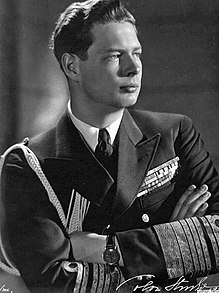
Having sided with the Anti-Hitler coalition, Romania thereby declared war on Hungary and Germany . This was followed by the entry of Soviet troops into the country and the establishment of a pro-Soviet regime in Romania.
Reasons
Background
In Romania, in September 1940, as a result of territorial concessions to Hungary , Bulgaria and the USSR and the country's foreign policy isolation, Ion Antonescu came to power, heading Romania, and the fascist organization Iron Guard under the leadership of Horia Sima , whose members included the country's government. Sima himself became the Deputy Prime Minister of Romania. The king also changed in the country - the nineteen-year-old Mihai I , who actually became the puppet king, ascended the throne. Romania changed its foreign policy, now, instead of Britain and France , focusing on Germany .

As a result of political repression and the country's autumn crisis and economic downturn, serious disagreements arose between Ion Antonescu and Choria Sima [1] . In the winter of 1940 - 1941, German troops were introduced into the country to control oil fields. With their help, Horia Sima hoped to overthrow Antonescu, in January 1941, raising a rebellion . Legionnaires of the Iron Guard from January 19 to 23 carried out pogroms and fought with the police and internal troops in the largest cities of the country. However, contrary to the expectations of Horia Sima, Germany sided with Ion Antonescu. Thus, without receiving German support, the legionnaires were defeated by the Romanian troops, and the Iron Guard was dissolved. All power in the country passed into the hands of Antonescu, who proclaimed himself a conductor .
On June 22, 1941, Romania sided with Germany against the USSR, thus entering the Second World War . Romanian troops for a month (from June 22 to July 23 ) seized territories given to the Soviet Union in 1940 ( Bessarabia and Bukovina ), and also occupied Transnistria . The Romanian administration was established in these territories. After Odessa fell on October 16 , many residents of Romania considered the war ended, however , the 3rd and 4th Romanian armies were sent along with German troops far to the eastern front. Romanian troops took part in the battles in southern and eastern Ukraine, in the Crimea , in the Kuban , in the North Caucasus , near Stalingrad . However, in the autumn of 1942, the Romanian armies in the east began to suffer heavy losses, and in December there was a series of defeats. German-Romanian troops began a retreat to the west, leaving behind the occupied territories. In the spring of 1944, Soviet troops approached Transnistria, and on March 13, 1944, during the Dnieper-Carpathian operation , the 2nd Ukrainian Front approached the Southern Bug .
Romania's internal instability, political confrontation
A protracted war led to the emergence of economic instability in the country. The constant costs of maintaining the Romanian armies far on the eastern front and the dependence of the Romanian economy on Germany and Hungary, as well as on Transnistria’s raw materials, which were transferred to the German administration and from which agricultural raw materials were exported, weakened the country's national economy. According to Antonescu’s estimates in 1943 , “this war costs Romania 300 million lei, ” and Romania supplied Germany with “more than 8 million tons of oil, threatening its national reserves and the deposits themselves” [2] . As a result, by 1944 the country's economy fell into decay: the German exploitation of oil fields, the enormous expenditures on weapons and human losses at the front led to the emergence of an economic crisis that engulfed all sectors. Hyperinflation began, leu sharply depreciated. So, his attitude to the post-war Romanian currency was 20,000 to one [3] .
The Minister of Agriculture often calls on peasants to cultivate their land, but these platonic calls remain inconclusive. We find that draconian measures must be applied to stubborn peasants ...
A serious blow to the country's economy was the offensive of Soviet troops in Ukraine and their approach to the Southern Bug - the eastern border of Transnistria. A further offensive by Soviet troops led to the fact that by the summer of 1944, Romania had lost control of Transnistria, Bukovina and northern Bessarabia. In Romania, the supply of cheap raw materials from the east - the territories of the USSR, which since 1941 have been controlled by Romania - has ceased. By that time, the Romanian peasants, forced to work for the needs of the army and unable to feed themselves in this regard, refused to go to work. Thus, Romania suffered serious damage in the agricultural sector. All these factors (military exhaustion of the country, economic damage, serious losses on the eastern front and the unjustification of the further war against the USSR [4] after the territories lost in 1940 were returned) led to the emergence and widespread pacifist and anti-fascist movements.
In order to distract the population of Romania from the problems in the country and at the front, the Romanian leadership tried to provoke a conflict with Hungary, thereby focusing public attention on the Romanian-Hungarian border. In the spring of 1944, skirmishes occurred regularly on it [2] , which only aggravated the foreign policy situation and allowed Germany to take advantage of the Romanian-Hungarian contradictions. In summer, a calm was established on the eastern front, which allowed us to begin preparations for the coup.
Conspiracy
From the very moment Antonescu came to power, the Communist Party of Romania (CRC) was deeply in opposition; the conductor was also opposed by the National Tsarist and National Liberal parties led by Julio Maniu and Dean Bratianu, respectively. Unlike the CRC, these parties were more moderate in relation to the current leadership of the country [2] . However, in the situation that developed at the front in the spring, they sided with the opponents of the current regime. Mihai I and his entourage also sought to remove the conductor, in particular, the king sought to withdraw Romania from the war, an alliance with the United States and Great Britain and the entry of their troops into the country. In the first half of 1944, the Communists organized the Single Labor Front and began negotiations with senior officials in the Romanian armed forces . On June 20, a national democratic bloc was formed, which included communists, social democrats, national liberals and national tsarists. This posed a threat to Ion Antonescu [2] .
The circle of conspirators included: Mihai I, the king of the country, and Queen Mother Elena ; Julio Maniu, Dinu Bratiano and Petrescu, leaders of the peasant, liberal and social democratic parties, respectively; Grigore Niculescu-Buzeti , Romanian Foreign Minister , General Konstantin Senatescu , Royal Chamber Head, General Aurel Aldia, Ionel Moxoni-Starcha, Royal Secretary, Mircea Ioaniciu, King’s close friend, Colonel Emilian Ionescu, Major Anton Dumitrescu, as well as Communists and Pescure Luccrezu Emil Bodnaras [5] . Also, some members of the parties, whose leaders were initiated into the conspiracy, joined the conspirators.
Event
Iasi-Chisinau Operation (August 21–22)
On March 19, 1944, the Red Army in the north of Odessa region came close to the Dniester, and on March 20, crossing the river began. During March-April, Romania lost Bukovina, the north of Moldova and Odessa [6] . Also, Soviet troops occupied a small territory in northeastern Romania. By the end of spring, the front stabilized in the east along the Dniester line and in the north along the line of the Reduc - Pashkani - Orhei - Dubossary . The war was transferred to the territory of Romania. In such circumstances, the USSR, even during the operation on April 12, proposed a truce of Romania on its own terms, but Ion Antonescu categorically refused to comply with Soviet requirements [7] .
The lull at the front in early summer allowed the Soviet command to regroup the troops, and the Romanian one to strengthen the position of their troops and prepare for defense. By that time, 12 German divisions of the Army Group “Southern Ukraine” had been transferred from Romania to the west of Ukraine and to Belarus , where fierce battles were fought. On the eve of the operation , the army group "South Ukraine" under the command of Hans Frisner possessed 25 German, 22 Romanian divisions and 5 Romanian brigades in the 6th and 8th German armies , the 3rd and 4th Romanian armies and the 17th German army corps . The troops supported the 4th Air Fleet , which included 810 aircraft. The USSR in this sector of the front had an advantage in the number of troops. Near the Dniester and in the north of Moldova were the 2nd Ukrainian Front under the command of Rodion Yakovlevich Malinovsky , the 3rd Ukrainian Front under the command of Fyodor Ivanovich Tolbukhin and the Black Sea Fleet , including the Danube Flotilla [8] .
On August 20, Soviet troops opened powerful artillery fire on Romanian positions, thereby initiating artillery preparation. This was followed by the advance of the 27th and 6th tank armies of the Soviet Union in the Yass area, which tried to prevent the German command by throwing 3 infantry and 1 tank divisions into a counterattack. This did not turn the tide, and on August 21, Soviet troops broke through the front line 65 km along the front and up to 40 km in depth, capturing Iasi and Tirgu Frumos . Having occupied these two cities, the command of the 3rd Ukrainian Front received an order from the Headquarters of the Supreme High Command to encircle the enemy, closing the ring in the area of Husi with the efforts of two fronts, thereby cutting off the Romanian-German troops in Chisinau from communication with Romania. On August 22, the Romanian troops received a directive to retreat from Chisinau, but it was already too late. Soviet troops cut off all escape routes.
In the evening of the same day, Akkerman was taken by the forces of the Danube Flotilla, after which the offensive began along the Black Sea coast in a southerly direction. On August 23, the ring around the German-Romanian forces closed, the 18th Panzer Corps reached the Khushi region, the 7th Mechanized Corps went to the Prut in the Leushen region, and the 4th Guards Mechanized Corps went to Leovo . The 3rd Romanian army was driven out by the 46th Soviet Army of the 3rd Ukrainian Front to the Black Sea , where it was surrounded. At the front, a 100-kilometer breakthrough was formed.
The coup (August 23)
Initially, it was planned to overthrow Antonescu on August 26 , but the Iasi-Chisinau operation violated the plans of the conspirators, so the coup took place on August 23, at the height of the fighting in Moldova and northeastern Romania. On this day, Konstantin Senatescu phoned Ion Antonescu and asked him to come to the palace allegedly to discuss further military operations against the USSR in connection with the defeat on the eastern front. At 16:30, Antonescu arrived at the royal palace. In the yellow salon of the palace, Senatescu and Mihai I were waiting for him. Aurel Aldia, Ionel Moxoni-Starcha, Grigore Nikulescu-Buzeti, Mircea Ioaniciu, as well as Emilian Ionescu and Anton Dumitrescu with personal protection of the king [5] were waiting for the results of negotiations between the king and the conductor in the next room.
Mihai I proposed Antonescu to end the war and sign a truce with the Soviet Union. The conductor categorically refused the immediate surrender of Romania and the severance of the alliance with Hitler and asked for a few days to think about the situation at the front. The king realized that Ion Antonescu was not going to end the war and would not give up his powers as the head of the country. Mihai I at 17:15 left Antonescu for a few minutes and went into the next room to the conspirators to discuss further actions against Ion Antonescu. When he returned, he invited Antonescu to immediately resign:
| “Dear Marshal , seeing the desire of my people , expressed by representatives of the majority, leaders of democratic parties - to immediately leave the war in order to save the country from disaster - we decided to overthrow you today” [5] Original text (rum.) "Domnule mareşal, vazand voinţa poporului meu, exprimata de reprezentanţii majoritaţii lui de şefii partidelor democratice, ca sa iesim imediat din război pentru a salva ţara de un dezastru mai mare pentru toata lumea, amarat rarat |
When Antonescu was indignant and began to object to the decree of the monarch, the king told him: “Mr. Marshal, we will both give an answer to God and history!” [9] After these words, Mihai I left the yellow salon, and Antonescu was arrested by the royal guard under the leadership of Emilian Ionescu and locked in a safe room in the palace. The king immediately appointed Prime Minister Constantine Senatescu, who took over the leadership of the coup. By order of Senatescu, his high-ranking close associates were arrested after Antonescu : generals Konstantin Pantazi and Vasiliu, Colonel Mircea Elefterescu, head of the Romanian special services Eugen Cristescu and head of the gendarmerie General Konstantin Tobescu. The protection of dignitaries was entrusted to the communist detachment of Emil Bodnaras.
At the same time, by agreement with Mihai I, the Communists raised an armed uprising in Bucharest . In a short time all state institutions of the city, as well as telephone and telegraph stations, were occupied. This allowed the interruption of the connection of German commanders in Bucharest with Germany . At 23:30, Mihai I addressed all the inhabitants of Romania on the radio. He announced the change of power in the country, the cessation of the war against the USSR and the armistice with Britain and the United States . A declaration was announced on the formation of a new government led by Konstantin Sanatescu. A peace proposal from the USSR of April 12, 1944 was accepted. On August 25, the Soviet Union learned that the Romanian leadership had accepted the proposal.
After Mihai I spoke on the radio, he left Bucharest. The king hid in the mountains of Oltenia near Craiova [9] , leaving Constantine Senatescu in the Romanian capital to manage internal affairs. On August 31, Ion Antonescu and other senior leaders were handed over to the Soviet troops and transported by truck to Balti , from where they were taken by train to Moscow .
The reaction of the Romanian and German military. Entering the Red Army (August 24–31)
When the new Romanian government approved a truce with the USSR, on August 25 the Soviet leadership broadcast a statement stating the USSR’s intention to preserve the territorial integrity, state system and independence of Romania, and also urgently sent 50 divisions to the country. The Soviet Union invited the Romanian troops to immediately stop resistance near the Prut . The statement of August 25 said [2] :
| The Soviet High Command believes that if the Romanian troops cease hostilities against the Red Army and if they pledge hand in hand with the Red Army to wage a war of liberation against the Germans for the independence of Romania, <...> the Red Army will not disarm them, it will retain all its weapons and by all means will help them fulfill this honorable task |
Not all Romanian officers immediately learned about the armistice with the Soviet Union, and some simply did not support the new leadership, so military operations in eastern Romania and southern Moldova continued until August 29 , until Soviet troops surrounded the remnants of the Romanian armies. According to modern Romanian data, as a result of the operation, about 150 thousand Romanian soldiers and officers fell into Soviet captivity [10] , according to other sources the figure was higher - 208 600 people [11] .
At the time of the coup in Romania, the 6th German Army , the 8th German Army , the 17th German Army Corps and the 2nd Hungarian Army were in the Southern Ukraine Army Group. German commanders tried to crush the rebellion in Bucharest. Troops were urgently sent to the city, which were detained by the faithful Mihai I Romanian units. The German armies, which were at that time at the front, also urgently tried to retreat to the rear, but were stopped by the Red Army. In addition, before the arrival of Soviet troops from August 23 to 25, the capital of Romania was subjected to three times Luftwaffe raids, which were based near the city in Otopeni. Several buildings of Bucharest were destroyed or seriously damaged, including the National Theater and the Royal Palace [12] . German aviation was suppressed on time by a raid by the British and American Air Force . At the same time, the Romanian troops, who sided with the new government, attacked the German units stationed in Ploiesti , forcing the Germans to leave the city. A hasty retreat of German troops from Romania to Hungary began , which was hindered by volunteer units. Because of this, attempts by German units to break through to the Hungarian border often failed. The chaotic retreat was accompanied by robberies of Romanian cities and villages. During the retreat, due to the activities of volunteer groups, about 50 thousand German soldiers were captured by the Romanians [2] . On August 31 , after the completion of the Iasi-Chisinau operation, the Red Army reached the capital of Romania.
Consequences
Continuation of the Romanian War
After the Red Army occupied Bucharest without resistance, Soviet troops continued to advance to the western borders of Romania. The offensive was carried out by the forces of the 2nd and 4th Ukrainian fronts . The 2nd Ukrainian front was advancing in the direction of Transylvania, and the 4th was advancing in the direction of Slovakia , along the northern borders of Romania. The 3rd Ukrainian front reached the Danube , from where it launched an offensive into the interior of Bulgaria . Soviet troops supported the 1st and 4th Romanian armies ; the 3rd Romanian army occupied the German side. At that time, the 1st and 4th Romanian armies and the 4th Romanian army aviation corps were relocated from the east of Romania to the western front and transferred to the subordination of the 2nd Ukrainian front [2] . The 2nd Ukrainian Front under the command of R. Y. Malinovsky included: 27th Army , 40th Army , 52nd Army , 53rd Army , 4th Guards Army , 7th Guards Army , 6th tank army , 18th separate tank corps and horse-mechanized group. The 5th Air Army supported the front.They were opposed by the Army Group "Southern Ukraine", which was in Romania before the coup, under the command of G. Frisner .
Наступление сил 2-го Украинского фронта на Трансильванию было прекращено из-за сильного сопротивления немецких и венгерских войск на ключевых перевалах в Карпатах ( Кымпулунг-Молдовенеск , Онешти , Олтуз и Георгени ). Другая ситуация складывалась на юге Румынии, где уже к 15 сентября силами 53-ей советской армии была взята Слатина , что позволило новому румынскому руководству распространить свою власть на всю Валахию , Молдову и Банат , то есть территорию Румынии, установленную Вторым Венским арбитражем . Военные действия с румынской территории были перенесены в Венгрию, Болгарию и Югославию .
Попытка Красной Армии начать повторное наступление в Трансильвании провалилась: противник сосредоточил на этом участке фронта 27 немецких и венгерских дивизий и бригад, в том числе 6 танковых и моторизированных дивизий. Вновь были развязаны ожесточённые бои за горные перевалы. В результате линия фронта долгое время оставалась статичной. Однако с юга Трансильвании велось наступление левого крыла 2-го Украинского фронта, которое к середине сентября вышло в тыл к немецко-венгерским войскам, оборонявших перевалы через Карпаты. В такой ситуации те вынуждены были отступить. 24 сентября советско-румынские войска вышли к довоенной румынско-венгерской границе близ Мако . Теперь румынское руководство контролировало почти всю территорию страны, включая потерянную в результате Второго Венского арбитража Северную Трансильванию. Окончательно вся территория Румынии была взята под контроль только после Дебреценской операции 7 — 15 октября [2] .
Изменение политики Румынии. «Социалистическая монархия»
Согласно принятому 23 августа советскому мирному предложению от 12 апреля 1944 года Румыния обязывалась [2] :
- Порвать с Германией и сражаться на стороне Антигитлеровской коалиции против Третьего рейха
- Восстановить советско-румынскую границу по состоянию на 1940 год
- Возместить Советскому Союзу ущерб, нанесённый военными действиями и оккупацией части советской территории
- Возвратить в СССР всех советских военнопленных и интернированных
- Разрешить свободное перемещение советских войск по своей территории в любом направлении и всячески содействовать этому
- В свою очередь СССР соглашался аннулировать все решения Второго Венского арбитража об изменении территории Румынии и помочь румынским войскам вернуть Трансильванию
12 сентября того же года СССР и Румыния на официальном уровне заключили перемирие. Позже, после октябрьской англо-советской конференции в Москве , Уинстоном Черчиллем и Иосифом Сталиным было принято решение о том, что Румыния будет оккупирована в основном советскими войсками [13] . Общая численность советского контингента войск в Румынии после 1944 года в различных источниках указывается от 750 000 до 1 000 000 человек [14] .
Период в истории Румынии с 23 августа 1944 по 30 декабря 1947 года современники прозвали «социалистической монархией», а Михая I — «королём-комсомольцем» [15] . Этот период характеризуется тем, что большое влияние в Румынии приобрели коммунисты. После выборов 1946 года в парламент Румынии прошли несколько партий, но к 1947 году парламентское большинство принадлежало Коммунистической партии Румынии (КПР). Это объясняется тем, что Фронт земледельцев развалился, фракции либералов и царанистов в парламентской борьбе потерпели поражение, а социал-демократическая партия подверглась сильной чистке, после которой вынуждена была слиться с коммунистами. Советизации Румынии способствовала и частая смена правительств: кабинет Константина Сэнэтеску прекратил существование 16 октября 1944, а сформированный 6 декабря кабинет Николае Рэдеску ушёл в отставку 6 марта 1945 . Новый кабинет министров возглавил Петру Гроза , при котором Румыния начала сближение с СССР [16] . В конце концов во второй половине 1947 года в Румынии произошла бескровная смена государственного строя: коммунистическое руководство страны объявило о преобразовании королевства в республику , а сам король Михай I отрёкся от престола 30 декабря [17] . Позже Михай I заявил: «акт был подписан под физическим воздействием. У Петру Гроза в кармане был пистолет. Охрана была арестована, а артиллерия заняла позиции вокруг дворца» [9] . 3 января 1948 года короля и его семью лишили румынского гражданства, и тот эмигрировал в Великобританию.
После переворота Ион Антонеску был выдан СССР, однако позже возвращён в Румынию, где был расстрелян 1 июня 1946 года в тюрьме Жилавы по решению народного трибунала вместе со своими приближёнными. В государственном архиве Румынии отмечено [18] , что перед расстрелом Антонеску спросил, кто будет в него стрелять — солдаты или офицеры, — а непосредственно перед смертью сказал: «История будет судить меня!»
6 июля 1945 года Михай I за успешное проведение переворота был награждён орденом «Победа» с формулировкой «За мужественный акт решительного поворота политики Румынии в сторону разрыва с гитлеровской Германией и союза с Объединёнными Нациями в момент, когда ещё не определилось ясно поражение Германии» [19] . В румынской историографии принято считать, что румынский народ самостоятельно сверг Иона Антонеску, без помощи извне [20] [21] .
See also
- Бухарестско-Арадская операция
- Дебреценская операция
- Ясско-Кишинёвская операция
- Болгарская операция
- Румыния во Второй мировой войне
Notes
- ↑ Нэги-Талавэра, Николас М. Зеленые рубашки и другие. — Стэнфорд, 1970. — С. 315—326.
- ↑ 1 2 3 4 5 6 7 8 9 10 Освобождение Юго-Восточной и Центральной Европы войсками 2-го и 3-го Украинских фронтов 1944-1945 . — Москва: Наука, 1970. Архивная копия от 17 ноября 2009 на Wayback Machine
- ↑ Денежные реформы // Большая Советская Энциклопедия.
- ↑ Bennighof, Mike. Romania on the Offensive: The Eastern Front, 1941–42 // Strategy & Tactics. — 2000. — № 206 .
- ↑ 1 2 3 Tesu Solomovici. 23 august - radiografia unei lovituri de Palat (рум.) // Ziua.
- ↑ История второй мировой войны. 1939—1945. — М. , 1977. — Т. 8. — С. 93—95.
- ↑ И. А. Ожог, И. М. Шаров. Краткий курс лекций по истории румын. Новейшая история . — 1992. Архивировано 8 декабря 2008 года.
- ↑ История Республики Молдова. С древнейших времён до наших дней = Istoria Republicii Moldova: din cele mai vechi timpuri pină în zilele noastre / Ассоциация учёных Молдовы им. Н. Милеску-Спэтару. — 2-е, переработанное и дополненное. — Кишинёв: Elan Poligraf, 2002. — С. 240. — 360 с. — ISBN 9975-9719-5-4 .
- ↑ 1 2 3 Н.Н. Морозов. Гогенцоллерны в Румынии (рус.) // Новая и Новейшая история. - 1995.
- ↑ 23 şi 24 august 1944 – zile funebre pentru România şi provinciile ei Basarabia şi Nordul Bucovinei (рум.) .
- ↑ Ясско-Кишиневская наступательная операция (рус.) // Международный Объединенный Биографический Центр.
- ↑ Constantin C. Giurescu. Istoria Bucureştilor. Din cele mai vechi timpuri pînă în zilele noastre. — 1966. P. 190
- ↑ У. Черчилль. Вторая мировая война. Книга 3 (том 6). — М: Воениздат, 1991. С.449.
- ↑ Sergiu Verona, «Military Occupation and Diplomacy: Soviet Troops in Romania, 1944—1958», Duke University Press, Durham, NC, 1992, ISBN 0-8223-1171-2 P. 46—47
- ↑ Царь с горы // Русский Newsweek.
- ↑ Adrian Cioroianu, Pe umerii lui Marx. O introducere în istoria comunismului românesc («On the Shoulders of Marx. An Incursion into the History of Romanian Communism»), Editura Curtea Veche, Bucharest, 2005. ISBN 973-669-175-6 P. 70
- ↑ Румыния // Кругосвет.
- ↑ Arhivele Statului, Bucureşti, Mai 1946
- ↑ Алексей Абрамов. Зеркало истории . Независимое военное обозрение (05 июля 2002). Дата обращения 20 января 2008. Архивировано 25 августа 2011 года.
- ↑ George Ciorănescu, Patrick Moore, Romania's 35th Anniversary of 23 August 1944 Архивная копия от 5 августа 2009 на Wayback Machine , Radio Free Europe
- ↑ Florin Mihai, «Sărbătoarea Armatei Române» , Jurnalul Naţional , 25 октября 2007
Literature
На русском
- Залесский К. А. Кто был кто во Второй мировой войне. Союзники Германии. — М. : АСТ , 2004. — Т. 2. — 492 с. — ISBN 5-271-07619-9 .
- История Второй мировой войны. 1939—1945. — М. , 1977. — Т. 8.
In Romanian
- Florin Constantiniu, O istorie sinceră a poporului român , Ed. Univers Enciclopedic, Bucureşti, 1997, ISBN 973-9243-07-X
- Romulus Dima, Contribuţia României la înfrângerea Germaniei fasciste , Bucureşti, 1982
На английском
- David M. Glantz. Red Storm over the Balkans: The Failed Soviet Invasion of Romania, Spring 1944 (Modern War Studies). — University Press of Kansas. — ISBN 0-7006-1465-6 .
- Sergiu Verona, «Military Occupation and Diplomacy: Soviet Troops in Romania, 1944—1958», Duke University Press, Durham, NC, 1992, ISBN 0-8223-1171-2
Links
- Николай Паклин. Король с орденом "Победа" (рус.) // Российская газета. — 2004.
- Судебный процесс над Ионом Антонеску (видео) (рум.)