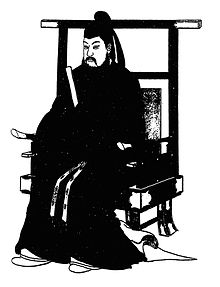
The Chrysanthemum Throne is the western name of the throne of the Emperor of Japan , used since the 19th century [1] . The name comes from the imperial seal of Japan , officially adopted in 1889 [1] , which depicts a 16-petal yellow chrysanthemum . In Japanese it is simply called the "imperial throne" ( Jap. 皇位 ko: i ) . The term "Chrysanthemum Throne" can mean a specific physical throne - a traditional chair in the takamikur style, located in the Shishin-den hall of the Imperial Palace in Kyoto and used in the ceremony of intronization of the new emperor (other thrones used by the emperor, for example, the one from whom he makes a speech before parliament , they are not traditionally called the Chrysanthemum Throne), [2] - but it is more often used in a figurative sense and means the imperial throne or the institution of the Japanese monarchy [3] , and sometimes the person of the emperor himself [4] .
Content
See also
- Regalia of Japanese Emperors
- Supreme Order of Chrysanthemum
- List of Emperors of Japan
Notes
- ↑ 1 2 Martin , p. 9
- ↑ Ponsonby Fein, Richard . (1959). The Imperial House of Japan, p. 337.
- ↑ Martin
- ↑ Carl Cavanagh Hodge. Encyclopedia of the Age of Imperialism, 1800-1914 . - 2008. - T. I. - 874 p. - ISBN 0313334064 .
Literature
- Peter Martin The Chrysanthemum Throne: a history of the emperors of Japan . - University of Hawaii Press, 1998 .-- 175 p. - ISBN 0824820290 .