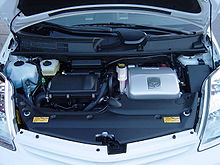

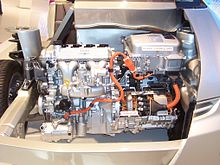

Hybrid Synergetic Drive ( English Hybrid Synergy Drive, HSD ; pronounced [ Hybrid Synergy Drive ]) - a vehicle’s power plant technology based on a synergistic effect , developed by the Japanese corporation Toyota . It was first used in 1997 in a production car “ Prius ”.
Combines seven main components:
- 1NZ-FXE gasoline engine (2ZR-FXE) with variable valve timing, ( Atkinson cycle , 13: 1 compression ), connected to the planet carrier
- electric motor (synchronous, with a permanent magnet), connected to the planetary ring gear
- an electric generator connected to the planet gear solar gear
- planetary gear
- rechargeable battery (designed for the entire life of the car)
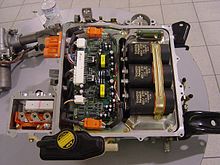
- inverter (converts direct current to alternating current)
- electronic variator
The complex is controlled by a computer according to the concept of Drive-by-Wire (without direct mechanical contact)
Work Phases
At speeds above average, the gasoline engine transfers part of the energy (through the carrier and the planetary gear crown) directly to the front wheels, the rest (through the carrier and the sun gear ) goes to the generator. Part of the current from the generator branches off to recharge the battery, and part returns (via the 500 V inverter) to the traction electric motor, which rotates the front wheels through the ring gear.
When overtaking (maximum acceleration), the computer stops recharging the battery and directs all the current from the generator to the electric motor. In addition, the current from the battery through the inverter also enters the electric motor.
When braking, the computer turns off the gasoline engine, and the electric motor switches to the current generation mode and returns energy to the battery ( recovery ).
At low speed (up to 50 km / h), the car operates in electric vehicle mode, receiving energy only from the battery.
In fact, the vehicle’s power plant is divided into two modules - the electrical subsystem is responsible for operating in transient and steady-state modes, the internal combustion subsystem is only responsible for operating in steady-state modes. This approach radically changes the requirements for the internal combustion engine and the target functions of the designers when developing the entire power plant of the car, and not just one transmission, as, for example, in the experimental development of General Motors , DaimlerChrysler AG and BMW “ Two-Mode ”, which is designed for hybridization of standard gasoline or diesel engines of old designs, developed without taking into account the work as part of a hybrid unit.
Hybrid Synergy Drive is a notable milestone in the automotive industry.
See also
- Wikimedia Commons has media related to Hybrid Synergetic Drive
- 1NZ-FXE
- Hybrid car
- Regenerative inhibition
- Idling