Beaufort , Beaufort ( English Beaufort ) - the famous in the XV century, the English family, named after Beaufort Castle in Champagne , France.
| Beauforts | |
|---|---|
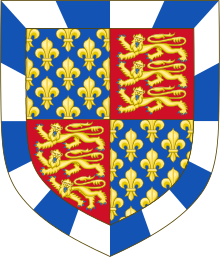 Coat of arms of Beaufort House | |
| Allegiance | |
 Great Britain Great Britain | |
Representatives
The surname Beaufort received four illegitimate children of John Gaunt, the Duke of Lancaster and his mistress Catherine Swinford , who later became his third wife. (The Beaufort surname is apparently given in connection with the reign of John Gaunt in the French Beaufort castle during the Hundred Years War ). John Gaunt in 1390 obtained from his nephew Richard II the legalization of all Beaufort children, and also married their mother in January 1396. They were half-brothers of King Henry IV , but were not part of the line of inheritance.
Children of John Gaunt:
- John Beaufort, 1st Earl of Somerset
- Henry Beaufort (1375-1447), bishop of Winchester, cardinal and at one time chancellor of the kingdom, played a large role in all the most important affairs of his time. In 1417 , on the way to the Holy Places, he facilitated the election of Pope Martin V at the Council of Constance and received a cardinal hat for this. Repeatedly clashed with his nephew Henry V. When, in order to continue the Hundred Years War, the king demanded a new taxation of the clergy, Beaufort most of all opposed this measure. In 1427 , he organized a crusade against the Hussites in Germany , having visited Bohemia as early as 1421 . In 1431 he accompanied the young king Henry VI to France for coronation in Paris. Together with the Duke of Bedford, he worked hard to execute the virgin of Orleans and presided over the court, which sentenced her to death. Finally, he is also credited with the murder of his nephew Humphrey, Duke of Gloucester in 1447 .
- Thomas Beaufort, Duke of Exter (1377-1427)
- Joanna Beaufort, Countess of Westmoreland (1379-1440)
Further representatives:
- Joanna Beaufort (Queen of Scotland) - daughter of John Beaufort
- Edmund Beaufort , Earl of Dorset, great-grandson of King Edward III , solicited the regency in France for the young King Henry VI after the death of the Duke of Bedford; but he was preferred by Richard, Duke of York . When in 1445 the last regency was promised again for 5 years, Beaufort managed with the help of Queen Margarita and her duke, Duke of Suffolk, to ensure that Henry VI violated his word and entrusted him with the rule of France in 1447 . The failure of the English weapons against a strengthened France and the hatred of his rival threatened Beaufort, upon his return to England in 1450 , with fatal consequences. True, he found protection in the location of the king and queen, but at the cost of a civil war in which Richard York, the head of the White Rose, spoke out against him, as a representative of the Scarlet Rose. Accused of high treason, he was once imprisoned in the Tower and barely saved his head. At the battle of St. Aublaines, in which Duke Richard defeated the royal army in 1455 , Beaufort died on the battlefield.
- Of his three sons, Henry and Edmund , who sought revenge for the death of their father and commanded the armies of Lancaster, were executed at the behest of King Edward IV of York, and the third, John , died without direct heirs. With him the legitimate line of the Dukes of Somerset from the Beauforts house faded.
- John Beaufort . The daughter of John Beaufort was Margarita Beaufort , whose son, who became King Henry VII in 1485, founded the Tudor dynasty.
The illegitimate son of Henry Beaufort, Charles Somerset, received the title of Earl of Worcester from his cousin Henry VIII in 1514 . His descendant in 1683 received the title Duke of Beaufort ; from him come the modern dukes of Beaufort (bearing the name Somerset).
Literature
- Beaufort, clan // Brockhaus and Efron Encyclopedic Dictionary : in 86 volumes (82 volumes and 4 additional). - SPb. , 1890-1907.