The Polish-Swedish wars are a series of military conflicts between Poland and Sweden .
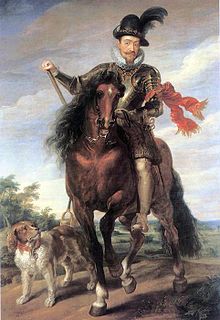
Timeline
- 1563 - 1570 - Northern Seven Years War .
- 1598 - 1599 - War against Sigismund .
- 1600 - 1629 - The Polish-Swedish war of 1600-1629.
- The war is divided into several periods:
- The Polish-Swedish war of 1600-1611.
- The Polish-Swedish war of 1617-1618.
- The Polish-Swedish war of 1621-1626.
- The Polish-Swedish war of 1626-1629.
- Sometimes military conflicts between Poland and Sweden in the period from 1617 to 1629 combine in one Polish-Swedish war of 1600-1629 .
- The war is divided into several periods:
- 1655 - 1660 - The Northern War of 1655-1660 .
- Sometimes one of the stages of the Northern War of 1655-1660 is allocated into a separate Polish-Swedish war of 1655-1657 .
- A series of troubles (including the Northern War of 1655-1660 ), which hit the Polish-Lithuanian Commonwealth in the middle of the 17th century, is called the Swedish Flood .
- 1700 - 1721 - The Great Northern War .
- 1813 - 1814 - War of the sixth coalition .
The Northern Seven Years' War (1563-1570)
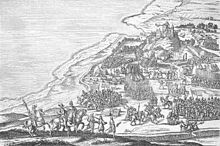
The Northern Seven Years War is the war between Sweden and the coalition of Denmark , Lubeck and Poland . Military action was launched in 1563 by Danish King Frederick II , who was dissatisfied with Sweden 's withdrawal from the Kalmar Union in 1523 and the loss of control over it. The Danish king was joined as allies by Poland and Lubeck . In September 1563, the army of Frederick II captured the important Swedish fortress Elvsborg, thereby cutting off Sweden from the North Sea . A year later, the Danes defeated the Swedish army at Axtorna. But in 1564 - 1566, luck passed to the side of the Swedes. As a result of several battles, the Swedish fleet, led by the talented Augustus Klas Kristerssson Gorn, completely destroyed the Allied fleet. After that, the Swedes made several trips to Norway , but in 1568 a coup occurred in Sweden . The Swedish king Eric XIV was ousted by his own brother Johan III , who soon agreed to a truce with Denmark. The Stettin Peace Treaty restored the situation preceding the outbreak of war: none of the parties acquired new territories.
War against Sigismund (1598-1599)
The war against Sigismund was a struggle for the Swedish throne between the Polish king Sigismund III and the Duke of Cedermanland Charles IX . Sigismund III was the son of the Swedish king and the Polish princess, and, having entered the Polish throne in 1587 (and in 1592 becoming the Swedish king) united the Swedish, Polish and Lithuanian lands under his authority. But soon Sigismund was forced to appoint his uncle Karl, the Duke of Södermanland , as regent of Sweden , who, supporting Protestantism, gained the favor of the people and clearly aspired to the throne. During his second stay in Sweden ( 1598 ), Sigismund pushed many supporters away from him, and at the Battle of Stangebro in 1598 he was defeated and was finally removed from the throne. Uncle Sigismund was declared king of Sweden at the Sejm in Norrköping, in 1604, under the name of Charles IX .
Polish-Swedish War 1600-1629
The Polish-Swedish war of 1600 - 1629 was an attempt by the Polish king Sigismund III to regain the Swedish throne, which ended in failure. Military operations were often interrupted, so the war is divided into several periods:
Polish-Swedish War 1600-1611
The Polish-Swedish war 1600 - 1611 was imposed on Sweden by the Polish king Sigismund III , who sought to subjugate Estonia and take revenge on the Swedish king Charles IX , who a year earlier had taken the Swedish crown from Sigismund. Despite the numerical superiority and professional skill of the Swedish army, the Poles, however, managed to win a significant number of battles: the battle of Kokenhausen , the battle of Kirchholm , the battle of the Gauja river , etc. All this was achieved thanks to the talent of the outstanding Polish commander Khodkevich . But due to the cessation of funding by the Polish king of Khodkevich’s army, internal turmoil ( Rokosz Zebrzydowski ) that began in 1605, the Russo-Polish war, the Polish king Sigismund III was forced to negotiate peace. As a result of the war, neither side was able to acquire new territories.
Polish-Swedish War of 1617-1618
The son of Charles IX Gustav II Adolf , having ascended the Swedish throne, decided to consolidate the whole Baltic region for Sweden . This was favored by the protracted wars (the Russo-Polish War of 1605-1618, military clashes with the Ottoman Empire ) waged by Poland at that time. In 1617, the Swedes landed in the Gulf of Riga . In two months they seized all the Polish lands in the Baltic, except Riga , which was blocked by the Swedish fleet. But soon, the Polish-Lithuanian troops led by the talented commander of the Lithuanian hetman Krzysztof Mikołaj Radziwill managed to inflict a series of defeats on the Swedes and liberate the Polish lands captured at the beginning of the war. Gustav II Adolf requested peace. Sigismund III , who had unsuccessfully stormed Moscow at that time (during the Russo-Polish war of 1605–1618 ), agreed to the proposal of the Swedish king. In 1618, a truce was concluded. The borders between both states remained the same.
Polish-Swedish War of 1621-1626
The Swedish king Gustav Adolf thoroughly prepared for the next war with Poland . He carried out several important military reforms and, taking advantage of the outbreak of war between the Commonwealth and the Ottoman Empire , as well as the crushing defeat of the Polish army from the Turks near Tsetsora ( 1620 ), attacked Polish possessions in the Baltic states in 1621 . After a month-long siege, the Swedes surrendered to Riga (September 25, 1621 ). With a swift blow, the troops of Gustav II Adolf captured most of the Polish lands in the Baltic . One of the Swedish troops occupied the capital of the Duchy of Courland, Mitau . But soon the Polish commander Krzysztof Radziwill knocked out the Swedes from the fortress and gave battle to the troops of Gustavus Adolf ( battle of Mitava , 1622 ). The superior forces of the Swedes could not take over the city, and soon the Swedish king made a truce with the Poles until 1625 . Poland lost all of its possessions in Livonia , including Riga .
After the armistice in 1625, the army of Gustav Adolf invaded Lithuania , taking advantage of the conflict between the hetman Lev Sapieha and the commander Radziwill and, consequently, the split of the Polish army, alternately destroying the Polish troops. At the beginning of 1626, the Swedes defeated the Polish army under the leadership of Sapieha near Walgof [1] . But after this, the Swedish king concluded a ceasefire with Poland for a period of six months, intending to strike Poland after its expiration from its possessions in Pomerania and Prussia .
Polish-Swedish War of 1626-1629
After the ceasefire expired, the Swedish fleet, led by King Gustav II Adolph , entered the Gulf of Gdansk in June 1626 . The troops of the Swedes landed near the city of Pillau and moved to Gdansk . Polish fortresses that met on the way of the army of Gustav II surrendered almost without a fight. After two days of siege, Marienburg surrendered. The Swedes tried to take Gdansk on the move, but not far from the city they were met by Polish troops led by King Sigismund III and commander Stanislav Konetspolsky . After a stubborn battle, called the Battle of Wrath , the Polish army retreated to the city of Tczew . While fighting was ongoing in the west of the Polish-Lithuanian Commonwealth , Smolensk governor Alexander Gonsevsky at the head of the Lithuanian detachment, taking advantage of the small number of Swedish troops in Livonia (most of the army at that time was in Prussia and Pomerania ), inflicted a number of defeats on the Swedes (summer 1626 ). But already in the fall, the Swedish commander Jacob Delagardi, in the battle of Cesis, completely defeated the Gonsevsky detachment and forced him to retreat to Lithuania , after having made an armistice with him for a period of about a year. The winter of 1626/1627 turned out to be harsh, and both armies suffered from illness, cold and lack of provisions. When spring came, the Poles, under the command of Stanislav Konetspolsky, swiftly surrounded the Swedish detachment that wintered in Marienburg . The Swedes tried to get out of the encirclement, but were defeated at the Battle of Charn . This, of course, could not but excite Gustav II Adolf , who did not expect such a turn of events at all. He tried to ferry his troops across the Vistula River on the night of May 22 to hit the city of Gdansk from the western side, but the Poles from the opposite bank opened artillery fire on the Swedish boats, and Gustav II had to retreat with heavy losses. After that, the Swedish army tried to break through the Polish defense in Pomerania , but after a bloody battle near Tczew , which lasted two days (August 7–8, 1627 ), the army of Gustav Adolf was forced to retreat. The Swedes were defeated by the same Stanislav Konetspolsky . At the end of November 1627, the Swedish king Gustav II, after several defeats on land, decided to try his luck at sea.
On November 28, the Swedish squadron, which consisted of six ships, attacked ten Polish ships on a raid in Gdansk ( Battle of Olivia ) on his orders. As a result of the battle, Sweden lost two galleons, Poland - not a single one. This victory was not of great importance for the general martial law, but it raised the morale of the Polish army, which was important. After the failure of the Swedes in 1627, Gustav Adolf conducted a wide mobilization among the population of Sweden , collecting an army of 50 thousand people. Polish troops by the beginning of 1628 totaled half the number of soldiers. Therefore, by the beginning of the campaign in 1629, the Swedes received a huge advantage. In addition, Gustav II unsuccessfully tried to win over Transylvania , Russia , Ukrainian Cossacks, Crimean Tatars, the Ottoman Empire, and even the Protestant princes of Germany. The campaign of 1629 began with the attack of the Swedish squadron on the Polish fleet, which was on the roads in Gdansk . This time, luck smiled at the Swedes: they sank two Polish ships. After this, the army of Gustav II again tried to break through the Polish defense in Pomerania , but was only able to capture the town of Brodnica .
The Polish commander Konetspolsky , using cavalry for swift and unexpected attacks on the Swedish troops, forced Gustav to stop the attack due to large losses in the troops. Soon the Poles surrounded the city, waiting for the imminent surrender of the garrison. In the winter of the next 1629, Swedish troops led by general German Wrangel arrived to help the besieged. They defeated the Poles, led by Stanislav Pototsky , near the town of Guzhno . Concerned about the victory of the Swedes, the Austrian Emperor Ferdinand II , hoping that the Swedish army would get bogged down in Poland for a long time and could not support the Protestant princes in Germany against whom Austria was at war ( Thirty Years War ), sent several Austrian regiments to the Polish king Sigismund III . Upon learning of this, Gustav II decided to prevent the allies from uniting, but unsuccessfully. Having managed to unite, Polish and Austrian troops defeated the Swedish army in the battle near the village of Trstena . After the defeat at Trsten (not least achieved thanks to the talent of the same Stanislav Konetspolsky ), Gustav II proposed a truce to the Poles, which was soon concluded near Gdansk in the Pomeranian village of Altmark. Mediators between the warring countries were France , England and the Netherlands . At the end of the armistice in 1635, Sweden and the Commonwealth concluded a new Stumsdorf world . According to it, the Swedes lost all their acquisitions in Prussia and Pomerania , but retained the Livonian lands . Polish king Wladyslaw IV officially refused claims to the Swedish throne and pledged not to support the enemies of Sweden . The ceasefire was also set at 26 and a half years. By securing a truce with the Polish-Lithuanian Commonwealth , Sweden was able to enter the Thirty Years War .
The Northern War of 1655-1660
In 1655, the Swedish king Charles X , violating the Stumsdorf peace treaty , invaded the territory of the Polish-Lithuanian Commonwealth under the pretext of claims to the Swedish throne of the Polish king Jan II Casimir . This invasion was favored by the Russo-Polish War, which began in 1654 . The Swedes quickly captured most of Poland , took Krakow and the capital of the state, Warsaw . Polish magnates and gentry universally recognized the power of Charles X. Polish king Jan II Casimir was forced to flee to Silesia . The threat of loss of independence and the outrage of the invaders caused a patriotic upsurge of the Polish people. Resistance to the invaders in the Krakow Foothills in December 1655 marked the beginning of the expulsion of the Swedes from the country. By the beginning of the next 1656, the troops of Charles X were almost completely driven out of Poland . This was facilitated by the conclusion in the spring of 1656 of a truce between Russia and the Commonwealth , and the beginning of the Russo-Swedish war of 1656-1658 . However, already in the summer of 1656, the Swedes, having enlisted the help of Brandenburg , again captured Warsaw . On the side of Charles X stood Transylvanian Prince Gyorgy II Rakoczy , whose troops invaded Poland in 1657 , but were defeated. In the same year, the Polish-Lithuanian Commonwealth received the support of Austria . Jan II Casimir, at the cost of renouncing the rights of suzerainty over East Prussia, also attracted Brandenburg to his side, concluding with it the Wielawski-Bydgoszcz Treaty . In the summer of 1657, Denmark declared war on Sweden . But in the winter of the next 1658, the troops of Charles X on the ice of the Baltic Sea approached the Danish capital Copenhagen , forcing her to leave the war. But soon the Danes again began fighting. Holland joined the allies. It seemed that the fate of Sweden was a foregone conclusion, but the contradictions between its opponents saved her from defeat. The Polish-Lithuanian Commonwealth , trying to once again take possession of Ukraine , which joined Russia in 1654 , and Belarus , most of which was occupied by Russian troops in 1654 - 1655 , concluded the Peace Treaty with Sweden ( 1660 ). Polish king Jan II Casimir renounced his claim to the Swedish throne and also reaffirmed Brandenburg’s right to suzerainty over East Prussia . In 1659, the Polish-Lithuanian Commonwealth resumed the war against Russia, which forced Tsar Alexei Mikhailovich Romanov to conclude the Cardis Peace Treaty , which was disadvantageous for Russia ( 1661 ), with Sweden , which restored the pre-war border between the two states. Danish military action against Sweden put an end to the 1660 Copenhagen Peace . Denmark was forced to give Sweden the Skåne region and other lands, but in return the island of Bornholm on the Baltic Sea and the region of Trøndelag in Norway returned. The Northern War of 1655-1660 significantly weakened the Polish-Lithuanian Commonwealth , which affected the unsuccessful outcome of the Russo-Polish War of 1654-1667 for it .
The Great Northern War (1700-1721)
The background of the war.
In 1697 - 1698, as a result of the Russian diplomatic mission in Western Europe , the Northern Union was concluded between Russia , the Commonwealth , Saxony and Denmark against Sweden . The main reason for joining the alliance of Russia was the desire to regain access to the Baltic Sea , which was lost in the Time of Troubles . Denmark was pushed into conflict with Sweden by a long-standing rivalry for Baltic rule. In addition, the Danish King Frederick IV sought to regain several provinces on the Scandinavian Peninsula that Sweden captured during the Northern War of 1655-1660 . At the same time, Denmark refused to collect duties when passing vessels through the Sound of the Sounds , an important income to the state treasury. In addition, the two countries were keenly competing for influence on Denmark ’s southern neighbor, the Duchy of Schleswig-Holstein . The entry into the union of Saxony and the Commonwealth was explained by the obligation of the Saxon Elector Augustus II , given before entering the Polish throne. August II promised to return to Poland Livonia and other Baltic lands captured by Sweden as a result of several military conflicts between the two states in the 17th century . Dissatisfaction with the strengthening of Sweden in the Baltic region pushed the Allies to war.
Campaign of 1700.
Military operations began on February 12 ( 22 ), 1700 , when the Polish-Saxon troops approached Riga , but the siege of the city was not successful. In August of that year, the Danish king Frederick IV launched an invasion of the Duchy of Holstein in the south of the country. But then suddenly the troops of the Swedish king Charles XII landed near Copenhagen , forcing Denmark to leave the war. In the autumn of 1700, immediately after the conclusion of the Treaty of Constantinople with the Ottoman Empire , Russia entered the war. Russian troops led by Peter I besieged Narva , but the siege dragged on. The few Swedish garrison of the fortress desperately defended. At the end of November, the Swedish army headed by Charles XII moved to help the besieged. On November 30, 1700, the Swedes, under cover of heavy snowfall, imperceptibly approached the Russian positions and with a swift blow took fortifications along with artillery. Panic started in the Russian camp. The commander Boris Sheremetev , who was at the head of the Russian cavalry, ordered the cavalry to retreat beyond the Narva River . Seeing the cavalry crossing to the right bank of the river, part of the infantry joined the retreating. The commander-in-chief of the Russian troops, Field Marshal de Croix ( Peter I left the camp the day before, giving him command) and a number of other foreign officers surrendered to the Swedes. At the same time, the Russian regiments remaining on the left bank of the river skillfully defended themselves. The fight stopped with the onset of darkness. In the morning, a group of Russian generals offered Karl the terms of surrender: the Swedes send Russian troops to the other side of the Narva River with weapons and banners, but without artillery. Karl agreed, but after crossing the Guards regiments and divisions Golovin violated the conditions of surrender and captured the remaining troops. So, despite the numerical superiority of 2-3 times, the Russian troops suffered a crushing defeat, losing 25-30 thousand people killed and captured (against about 1 thousand soldiers from the Swedes), as well as a significant part of the artillery.
1701 Campaign
After the battle of Narva, Charles XII sent troops to Riga , which at that time was unsuccessfully besieged by the Polish-Saxon army. On July 9, 1701, troops met on the banks of the Western Dvina . Seven thousand Swedes opposed the nineteen thousandth army of Augustus II . With the active support of artillery, the Swedes crossed the river and, after a fierce battle, put the enemy to flight. After the battle, the Swedish troops invaded the territory of the Polish-Lithuanian Commonwealth and inflicted several major defeats on the Polish-Saxon army, forcing it to withdraw to Krakow . In the same year, they took the capital of Poland - the city of Warsaw .
1702 Campaign
On July 19, 1702, troops of Charles XII approached the camp of Polish-Saxon troops near the village of Kliszow (80 km north-east of Krakow ). The Allies had a significant advantage in the number of troops: 24 thousand soldiers against 12 thousand Swedes. In addition, the Poles military camp was surrounded on all sides by forest and swamps, which complicated the fighting of the Swedes. But unexpectedly for the Polish-Saxon army, at noon on July 9, the Swedish army, having crossed the swamps, attacked the Allied camp. Augustus II hastily built troops in battle formation. Coming out of the forest, Charles XII, under enemy artillery fire, moved his army to the right flank of the enemy, since the center and left flank of the Polish-Saxon army were covered by swampy terrain. After a hot battle, the left flank of the Allies was put to flight. Meanwhile, the center of the Swedes managed to cross the swamp and break through the ranks of the enemy infantry. The most fierce battle unfolded on the right flank of the army of Charles XII , where the Saxons tried to get around the Swedes and hit them from the rear, but the Swedes managed to organize a defense and force the enemy to retreat. The battle under Klishov , which lasted about five hours, cost the allies 2 thousand people killed and 1.7 thousand captured. For their part, the Swedes lost 300 people killed and 800 wounded. The winners got all the Saxon artillery (48 guns).
At the same time, the actions of the Russian troops were more successful than the actions of their Western allies. At the beginning of 1702 , taking advantage of the fact that most of the Swedish troops were in Poland , Russian troops led by Sheremetev hit the Swedish corps of Schlippenbach , located near the city of Dorpat ( Battle of Erestfer ). The battle took place on January 9, 1702 . The first stage of the battle was unsuccessful for the Russians. Sheremetev ordered the retreat to begin, but then artillery came and turned the tide of the battle. Russian troops went on the attack. The Swedes fled, losing their artillery, and the Russian cavalry pursued them for several more miles. In the summer of that year, Sheremetev’s troops inflicted another defeat on Schlippenbach at the Battle of Gummelshof . The battle began with an attack by the Swedes, who managed to defeat the vanguard of the Russian troops and capture several guns. But then reinforcements approached Sheremetev , thanks to whom they managed to strike at the flanks of the Swedes. The enemy was utterly defeated: more than 2 thousand soldiers were killed or captured. Another failure overtook the Swedes in September 1702 , when the Russian army, led by Peter the Great, besieged Noteburg , a strategic fortress on the Neva . The Russian flotilla simultaneously entered the Neva , firing at the fortress from the side of the river. The ten-day bombardment, which produced terrible destruction of the fortress, ended with the assault of Notburg.
1703 Campaign
In the next 1703, the Polish-Saxon army continued to pursue failure: on May 1, 1703, the Swedes defeated the troops of Augustus II in the battle of Pultusk . The forces of the enemy before the battle were approximately equal (3–3.5 thousand soldiers on each side). But if the Allies lost about 1 thousand people killed, wounded and captured, then the Swedes killed no more than 50 people. In the same year, the Swedes won several more victories: in the battle of Danzig and near the city of Poznan .
The Russian troops led by Peter I acted more successfully than the Polish-Saxon army: on May 1 ( 12 ), 1703 , the Nyenschanz fortress was located, located at the confluence of the Okhta into the Neva . Two weeks later (May 16 ( 27 ), 1703 ) St. Petersburg was founded. During the winter of 1703 - 1704, Kronstadt was built on the island of Kotlin . Thus, by the beginning of 1704, the entire course of the Neva was in the hands of the Russians.
1704 Campaign
On January 14, 1704, the Polish Sejm deposed Augustus II as king of the Polish-Lithuanian Commonwealth and elected Stanislav Leszczynski as the new king of the Swedish protege. But after some time, the Poles, dissatisfied with the actions of the Swedes in the Polish-Lithuanian Commonwealth , re-elected August II to the Polish throne. By that time, most of Poland was in the hands of Charles XII .
But the failure of the Swedes on the border with Russia continued. In June 1704, Russian troops besieged Dorpat . After a month-long siege, the city was stormed. At the same time, the losses of the Russians amounted to only 800 people (out of about 10 thousand who participated in the assault). The losses of the Swedish 5,000th garrison totaled 2 thousand soldiers. In the summer of the same year 1704, Russian troops again besieged Narva . After a long shelling, the assault on the fortress began and in the evening of August 9, 1704, Narva was in the hands of the Russians. During the assault, the army of Peter I lost about 350 people killed. The losses of the Swedes were more significant: 1.3 thousand soldiers.
1705 Campaign
In 1705, Peter I sent several Russian troops to help his Western allies ( Poland and Saxony ). The combined Russian-Polish-Saxon troops stopped for the winter near the city of Grodno .
1706 Campaign
Unexpectedly, in January 1706, Charles XII advanced large forces towards the Allied camp near Grodno . On February 13, 1706, the Swedes inflicted a crushing defeat on the Russian-Polish-Saxon army at the battle of Fraustadt , defeating the enemy’s threefold superior forces. The battle was unsuccessful for the allies. The Saxons and Poles fled from the battlefield, almost without resistance, having lost all the artillery. Only Russian troops defended strenuously and suffered heavy losses. After the battle, the position of the Allied army surrounded by Grodno worsened, and it was decided to retreat in the direction of Kiev . But Karl did not follow the troops of Peter , but deployed his army against the Saxons. This time, the Swedes invaded the territory of Saxony itself. On September 24, 1706, Augustus II secretly concluded a peace agreement with Sweden . Under the agreement, he renounced the Polish throne in favor of Stanislav Leshchinsky , broke the alliance with Russia and pledged to pay an indemnity for the maintenance of the Swedish army. Nevertheless, not daring to announce the betrayal in the presence of the Russian army under the command of Menshikov , August II was forced to participate with his troops in the battle of Kalisz on October 18, 1706 . The battle ended with the complete victory of the Russian army and the capture of the Swedish commander. This battle was the largest with the participation of the Russian army since the beginning of the war. But despite a brilliant victory, Russia was left alone in the war with Sweden , as soon as the Polish-Lithuanian Commonwealth and Saxony recognized as their king the Swedish protege Stanislav Leshchinsky .
1707 Campaign
In 1707, active hostilities were not conducted. Russian troops were preparing for defense against the intended invasion of the Swedish army, and Charles XII made up for losses in the troops before going to Russia .
1708 Campaign
At the beginning of 1708, the Swedes advanced in the direction of Smolensk . On July 3, 1708, they won the battle of Golovchin over three times the superior Russian troops. This battle was the last major success of the Swedish army. Before the battle, Russian troops, under the general command of Field Marshal Count B.P. Sheremetev , were located along the left marshy bank of the Babich River. In total, about 35 thousand people were concentrated. On the night of July 2 to 3 , when the battle took place, it rained heavily, giving way to fog. Under cover of darkness and bad weather, Swedish soldiers quickly built a bridge over a river to a swampy section of the opposite shore, where the Russians did not expect danger. Here was the division of Prince Repnin . At three in the morning, five infantry regiments, led by King Charles , rushed over the bridge to attack under cover of artillery fire. Forcing the swamp, they cut off the Repnin’s division from the Russian cavalry. The battle took place in dense coastal thickets that did not allow the cavalry to be brought into action. After three hours of battle, Repnin’s division rushed into the forest, leaving the Swedes 10 cannons. Fortunately for the Russians, the marshland made it difficult for the Swedes to pursue. Following the infantry, the Swedish cavalry crossed the bridge and attacked the enemy cavalry. Unable to withstand the onslaught, the Russian cavalry also fled. The troops of the Russian center, fearing a flank attack by the Swedes, hastily retreated to Shklov . In the battle of Golovchin, the Russians lost 2,700 killed and 630 more prisoners. The losses of the Swedes amounted to about 250 soldiers killed and more than 1 thousand wounded.
Further advancement of the Swedish army slowed down. Through the efforts of Peter I , the Swedes had to move around the devastated terrain, experiencing an acute shortage of provisions. By the fall of 1708, Charles XII was forced to turn south towards Ukraine . There he hoped to wait for reinforcements and a convoy with food. In addition, Charles XII expected support from the Turkish Sultan and the Ukrainian Hetman Mazepa . But on September 28, 1708, in the battle near the village of Forestry , Peter the Great defeated the Levengaupt corps, moving from Riga with a convoy and reinforcements to join Karl's main army. The enemy corps was overtaken near the village of Lesnoy. The Swedish commander had to accept the battle, which began with an attack by the Russians. Peter I with the arrival of fresh Dragoon cavalry cut off the enemy’s road to Propoisk and increased the onslaught of the Swedes. In the evening, the battle ceased due to twilight and a blizzard. Levengaupt had to destroy the remains of his huge convoy (most of it became Russian booty), but his corps, pursued by the Russian cavalry, managed to get to the royal camp. The total losses of the Swedes amounted to 8.5 thousand killed and wounded, 45 officers and 700 soldiers were captured. Trophies of the Russian army were 17 guns, 44 banners and about 3 thousand carts with provisions and ammunition. General Levengaupt was able to bring only about 6 thousand soldiers to the king.
In October 1708, it became known about the betrayal of the Ukrainian hetman Mazepa , who was in correspondence with Charles XII and promised him, if he arrived in Ukraine , 50 thousand Cossack troops, food and a comfortable winter. October 28, 1708 Mazepa at the head of a detachment of Cossacks, numbering about 5 thousand people, arrived at the headquarters of Karl . After his betrayal, at the All-Ukrainian Council in the city of Glukhov , a new hetman was elected - the old-Danish colonel I. S. Skoropadsky . Then the Russian troops, led by the Menshikov assault, took the residence of Mazepa - the town of Baturin , whose defense was led by Colonel Dmitry Chechel at the head of the five thousandth garrison.
1709 Campaign
On June 27, 1709, a general battle took place between the Swedish troops and the army of Peter I near Poltava , which the Swedes unsuccessfully besieged. The Russian army had a numerical superiority in personnel (50 thousand soldiers from Russians versus 30 thousand from Swedes) and artillery (102 guns against 41 guns from the enemy). After a personal tour of the area, Peter I ordered the construction of a line of six redoubts across the field, at a distance of a gun shot from each other. Then, perpendicular to them, they began the construction of four more redoubts (two of them did not have time to finish building by the beginning of the battle). Now, in any case, the Swedish army during the attack had to move under enemy fire. Redoubts were the forefront of the Russian army, which was a complete surprise for the Swedes. The battle began at 3 a.m., when a clash between the Russian and Swedish cavalry occurred, and two hours later the latter was overturned. The advancing Swedish troops ran into transverse redoubts, which they were not aware of, and suffered heavy losses. The Swedish infantry tried to break through the line of redoubts, but managed to take possession of only two of them. The 20 thousandth Swedish army (about 10 thousand more remained in the Swedish camp near Poltava ), attacked with 4 columns of infantry and 6 columns of cavalry. The plan conceived by Peter I was a success - two Swedish right-flank columns of Generals Ross and Schlippenbach, when breaking through the line of redoubts, were cut off from the main forces and were destroyed by the Russians in the Poltava forest. At 6 a.m., Tsar Peter I built up the Russian army in front of the camp in two lines: infantry in the center, dragoon cavalry on the flanks. Field artillery was in the first line. 9 infantry battalions remained in the camp as a reserve. Before the decisive battle, the Russian emperor turned to his soldiers with the words: “Warriors! Now the time has come that will decide the fate of the Fatherland. And so you should not think that you are fighting for Peter, but for the state handed to Peter, for your kind, for the Fatherland ... You should also not be embarrassed by the glory of the enemy, as if invincible, which you yourself proved by your victories over him ... But oh Petra know that his life is not expensive for him, if only Russia would live in bliss and glory for our well-being. ” The Swedish army also adopted a linear battle formation and at 9 o'clock in the morning went on the attack. In a fierce hand-to-hand fight, the Swedes managed to squeeze the center of the Russians, but at that moment Peter I personally launched a second battalion of the Novgorod regiment in a counterattack and restored the situation. Then Charles XII decided to bypass the redoubts from the north along the edge of the Budishchensky forest, but then he was met by Menshikov , who managed to transfer his cavalry here. In a fierce battle, Russian dragoons forced the Swedes to retreat. After this, the Russian dragoon cavalry managed to circumvent the flanks of the Swedish army. Then Peter I ordered to signal a general attack. Under the onslaught of the Russian troops, the Swedes fled. Charles XII tried in vain to stop his soldiers. The runners were chased down to the Budishchensky forest. By 11 o’clock the Battle of Poltava ended in the complete defeat of the Swedish army. After the defeat near Poltava , the Swedes army fled to Perevolochne - a place at the confluence of the Vorskla in the Dnieper . But it was very difficult to cross the army across the river. Then Charles XII entrusted the remnants of his army to Levengaupt and, together with Mazepa, fled to Ochakov . June 30, 1709 the remains of the Swedish army were surrounded by troops under the command of Menshikov and surrendered. On the banks of the Dnieper near Perevolochny, a Russian 9,000th detachment surrendered 16,947 enemy soldiers and officers, led by General Levengaupt . The trophies of the winners were 28 guns, 127 banners and standards, and the entire royal treasury. For participation in the Battle of Poltava, Sovereign Peter I awarded Menshikov , one of the heroes of the defeat of the royal army of Sweden , the rank of Field Marshal. The Poltava victory was obtained with "little blood." The losses of the Russian army on the battlefield amounted to only 1,345 people killed and 3,290 wounded, while the Swedes lost 9,234 people killed and 18,794 prisoners (taking into account the prisoners at Perevolochny ). The royal army of Sweden, tested in campaigns in Northern Europe , ceased to exist. After the defeat at Poltava, Charles XII managed to take refuge in the Ottoman Empire , where he tried to convince Sultan Ahmed III to start a war against Russia .
After the victory near Poltava, Peter managed to restore the Northern Union . On October 9, 1709, the Torun Union Treaty was signed with Saxony and Poland , and on October 11, Russia entered into an alliance with Denmark . After the conclusion of allied agreements, the Russian army began active hostilities in the Baltic states .
1710 Campaign
During the military campaign of 1710, Russian troops took seven Baltic fortresses ( Vyborg , Elbing , Riga , Dunamunde , Pernov , Keksholm , Revel ), capturing Estonia and Livonia . At the end of 1710, Peter I received a message about the preparation of the Turkish army for a war with Russia . After that, part of the Russian troops was transferred from the Baltic to the border with Turkey .
1711 Campaign
At the beginning of 1711, Peter I declared war on the Ottoman Empire and invaded the territory of the Principality of Moldavia , which at that time was a Turkish vassal. Moldavian ruler Dmitry Cantemir , who had previously concluded a secret treaty with Russia , spoke on the side of Peter I. Soon, the Russian-Moldavian troops reached the Prut River , where they were surrounded by the Turkish army. About 75 thousand Russian soldiers were forced to confront 120 thousand Turks. The decisive resistance of the army of Peter I forced the Turkish commander to conclude peace. The Turks pledged to release Russian troops from the encirclement at the cost of concessions to Turkey, previously conquered in 1696, Azov and the coast of the Sea of Azov . However, the Ottoman Empire did not enter the war on the side of Sweden . After the unsuccessful Prut campaign, Peter I sent Russian troops to Pomerania , where at that time the Danish and Polish-Saxon armies were fighting against Sweden .
Campaign of 1712.
By the end of 1712, most of Pomerania was in the hands of the Allies. In December 1712, the Danish-Saxon troops located near Lubeck (about 20 thousand people), learning about the approach of a small Swedish detachment ( 14 000 people), took up positions near the village of Wackenstedt, 3 km south of the city of Gadebusch . On the morning of December 10, 1712, the Swedes, under the command of Field Marshal Stenbock, struck the Allied forces, using powerful artillery (30 guns from the Swedes against 13 guns from the enemy). Saxon cavalry tried to break the resistance of the Swedes, but was defeated. The battle of Gadebusch ended only at dusk. The Swedes won a landslide victory. The Danish-Saxon army retreated several kilometers west of Gadebusch , leaving all artillery on the battlefield, losing more than 3,000 people killed and wounded, 2,600 soldiers captured. The losses of the Swedes were insignificant: 500 people were killed and 1000 wounded. Thus, the Allied plan to attack Sweden through Denmark on the ice of the Baltic Sea was destroyed.
1713 Campaign
In 1713, the Allies managed to take revenge after the December defeat at Gadebusch . On September 18, 1713, the Shtetin , one of the most important fortresses in Pomerania, surrendered to Russian troops. After that, Menshikov concluded a peace treaty with Prussia , which intended to enter the war on the side of Sweden . In exchange for neutrality and monetary compensation, Prussia received Stetin and part of Pomerania , which was divided between Prussia and Holstein (an ally of Saxony ). In the same 1713, the Russians launched the Finnish campaign, in which the Russian fleet created in the Baltic in 1703 - 1713 played a large role. On May 10, after shelling from the sea, Helsingfors surrendered. Then, without a fight, Breg was taken. On August 28, the landing under the command of Apraksin took the largest city in Finland - Abo .
1714 Campaign
By the beginning of 1714, Russian troops captured the entire southern part of Finland . The Swedish troops led by Karl Gustav Armfeldt tried to prevent the further advance of the Russian army to the north. Opponents converged in a battle near the village of Lappola . The Russian army had a numerical superiority in personnel (9,000 soldiers versus 4,500 among the Swedes). The battle began with the attack of the right flank of the Swedes on the left wing of the Russian troops. The Swedes were initially successful. This was also favored by the fact that the left flank of the Russian army was not completely built up and was in an erratic position at the time the Swedish attack began. However, despite the initial success of the Swedes, the Russians managed to complete the formation of troops and stabilize the situation inside the left flank, and their numerical advantage soon affected. The right flank of the Russian army was better organized and repelled the Swedish attack. Swedish cavalry was stopped, surrounded and defeated by dragoons and Cossacks. The troops on the left flank were also defeated, after which the Swedish infantry rushed to retreat. The battle ended in the complete defeat of the Finnish army of the Swedes, the loss of the Swedes reached almost 2500 people. The Russians also suffered serious losses: in total, about 2 thousand wounded and killed. The strategic importance of the victory in the Battle of Lappolsk was that the Russians were able to actually control the whole of Finland for several years. Sweden was very weak to drive them out of Finland .
At the end of June 1714, the Russian rowing fleet (99 galleys, scampaways and auxiliary vessels with a 15,000th landing) under the command of Admiral Count Fedor Matveevich Apraksin and Emperor Peter I concentrated at Cape Gangut in Tverminna Bay in order to land troops to strengthen the Russian garrison in Abo (100 km northwest of Cape Gangut). The Russian fleet was blocked by the Swedish fleet (15 battleships, 3 frigates, 2 bombardier ships and 9 galleys) under the command of Gustav Wattrang . Peter I used a tactical maneuver. He decided to transfer part of his galleys to the area north of Gangut through the isthmus of this peninsula 2.5 kilometers long. To fulfill the plan, he ordered the construction of a reload. Upon learning of this, Wattrang sent a detachment of ships to the northern coast of the peninsula (1 frigate, 6 galleys, 3 skherbot). Rear Admiral Erenschold led the detachment. He decided to use another detachment (8 battleships and 2 bombing ships) under the command of Vice Admiral Lille to strike at the main forces of the Russian fleet. Peter I expected such a decision. He decided to take advantage of the separation of forces of the enemy. He was favored by the weather. On the morning of July 26th there was calm, which caused the Swedish sailing ships to lose their maneuverability. The vanguard of the Russian fleet (35 ships) under the command of commander Matvey Zmayevich on oars went around the Gangut peninsula and blocked the Erensheld squad. Assuming that other units of the Russian ships will continue the breakthrough in the same way, Wattrang recalled the detachment of Lille , thus freeing the coastal channel. Taking advantage of this, Apraksin, with the main forces of the rowing fleet, broke through the coastal channel to his vanguard. At 14 hours on July 27, the Russian avant-garde, consisting of 23 ships, attacked the Ehrensheld detachment, which built its ships in a concave line, both flanks of which rested on the islands. The Swedes managed to repulse the first two attacks with the fire of naval guns. The third attack was launched against the flanking ships of the Swedish detachment, which did not allow the enemy to take advantage of artillery. Soon all 10 ships of the Erenschild detachment were captured. Part of the forces of the Swedish fleet managed to withdraw to the Åland Islands . The victory at the Gangut Peninsula was the first major victory of the Russian regular fleet. She provided him with freedom of action in the Gulf of Bothnia and Bothnia, and effective support for Russian troops in Finland .
At the end of October 1714, Charles XII returned to Sweden from the Ottoman Empire , he could not leave for a long time.
1715 Campaign
On May 1, 1715, in response to Sweden ’s demand for the return of Stetin and other territories, Prussia declared war on her. Then, on the side of the Allies, Hanover entered the war. In the same year, the Danish fleet won major victories over the Swedes fleet in the battle of Ferman , and then of Bulk. General Admiral Wachmeister was captured , and 6 Swedish ships also became prey to the Danes.
On December 23, as a result of a long siege of the city by the Danish-Polish-Saxon troops, Stralsund capitulated - the stronghold of the Swedes on the southern coast of the Baltic Sea . Thus, Sweden lost all of its possessions in Pomerania .
1716 Campaign
In 1716, the famous campaign of the combined fleets of England , Denmark , Holland and Russia took place under the command of Peter I , whose goal was to end Swedish rule in the Baltic Sea .
In the same 1716, Charles XII invaded Norway . But this campaign was unsuccessful. Another failure overtook the Swedes at sea. On July 8, 1716, the Danish-Norwegian flotilla under the command of Tordenscheld locked up in the Dunekilfjord (on the west coast of Sweden ) and defeated the Swedish detachment, which was engaged in the transfer of troops from Gothenburg to Fredrikstad .
1717 Campaign
In 1717, active hostilities were not conducted, as both warring parties were exhausted by a long war.
1718 Campaign
In May 1718, the Åland Congress opened, designed to develop the terms of a peace treaty between Russia and Sweden . However, the Swedes did their best to drag out negotiations, hoping for British help in the war against Russia . This was also facilitated by the position of other European powers: Denmark , which feared a separate peace between Sweden and Russia , and England , whose king George I did not want Sweden to be completely defeated in the war and strengthen Russia in the Baltic .
In the fall of 1718, the Swedes began a new invasion of Norway . Their army, under the command of Charles XII, besieged the border fortress Fredriksten . But on the night of November 30, the Swedish king was killed by a stray bullet, and the Swedes were forced to retreat. But clashes between Danes and Swedes on the border with Norway continued until 1720 .
After the death of Charles XII, his sister Ulrica Eleanor entered the Swedish throne. At the same time, England's position in the Swedish court strengthened.
1719 Campaign
At the end of May 1719, a Russian squadron led by Captain Naum Senyavin advanced from the port of Revel to intercept the Swedish military convoy accompanying the detachment of merchant ships. On June 4, a Russian squadron overtook the Swedes off the island of Ezel. As a result of the ensuing battle ( Ezel battle ), in which 7 ships acted from Russia , and 3 ships from the Swedes, the Russians managed to capture all the enemy ships and capture 387 people, as well as the captain-commander Wrangel. Killed in battle: from the Swedes about a hundred people, and from the Russians only 18 sailors.
In July 1719, the Russian fleet under the command of Apraksin conducted a landing in the Stockholm area and raids on the outskirts of the Swedish capital.
After the Battle of Gangut, England , anxious about the growing power of the Russian army, formed a military alliance with Sweden . On November 9, 1719, the English king George I , who was also the ruler of Hanover , concluded a peace treaty with the Swedish Queen Ulrika Eleanor . Hanover, the Swedes were ceded to Bremen and Ferden .
1720 Campaign
After England joined the Swedes, the Danes agreed to a separate peace with Sweden . On July 3, 1720, a peace treaty was signed, according to which Denmark received small territories in Schleswig-Holstein , cash indemnity and resumed collecting duties from Swedish vessels for passing through the Sound of the Sound . Then Sweden reconciled with Prussia and finally ceded to her their possessions in Pomerania . Poland and Saxony also sided with Sweden , joining the coalition created by the efforts of British diplomacy, which in addition to these countries included Austria and Hanover . Thus, by the beginning of the summer of 1720, Russia was completely without allies.
In the same 1720, the Norris English squadron entered the Baltic Sea with the order to destroy the Russian fleet. However, the demonstrative approach of this squadron to Revel did not force Peter I to seek peace, and the squadron retreated to the shores of Sweden . Moreover, on July 27, Russian ships attacked the Swedish fleet near the island of Grengam. The Swedes under the command of Eric Sheblad , having 156 guns, were the first to start the battle, subjecting the Russians to massive shelling. The Russian fleet began to hastily retreat in shallow water, where the Swedish ships pursuing it got. In shallow water, the more maneuverable Russian galleys and boats went on the attack and managed to board 4 frigates, after which the rest of the Swedish fleet retreated. The result of the battle of Grengam was the end of undivided Swedish influence in the Baltic Sea and the establishment of Russia on it. The battle brought closer the conclusion of the Nistadt peace .
1721 Campaign
On May 8, 1721, new negotiations began on the conclusion of peace between Sweden and Russia in Nistadt . And on August 30, the Nishtad Peace Treaty was signed. Sweden recognized the accession of Livonia , Estonia , Ingermanland (Izhora land), part of Karelia and other territories to Russia . Russia pledged to pay monetary compensation to Sweden and return Finland .
War of the Sixth Coalition (1813-1814)
Sweden acted in this war as a member of the anti-French coalition, but did not conduct active hostilities. On the side of Napoleon stood the Duchy of Warsaw , created in 1807 on the territory of modern Poland and under the protectorate of Napoleonic France . It was the most faithful of Napoleon's allies and put out a 100,000th army fighting from the first to the last day of the war. The Duchy of Warsaw lasted until 1813 , when it was conquered by the forces of the Sixth Coalition . Under the terms of the Vienna Congress, most of the duchy became part of the Russian Empire as an autonomous Kingdom of Poland .
Notes
- ↑ Wallhof // Military Encyclopedia : [in 18 vol.] / Ed. V.F. Novitsky [et al.]. - SPb. ; [ M. ]: Type. t-va I. D. Sytin , 1911-1915.