“Degeneration” ( Entartung , 1892) is the most famous work of Max Nordau . The author sharply criticizes decadence (the so-called degenerative art ), and also expounds his vision of certain social problems of Europe in the XIX century through the prism of the concept of degeneration.
| Degeneration | |
|---|---|
| Entartung | |
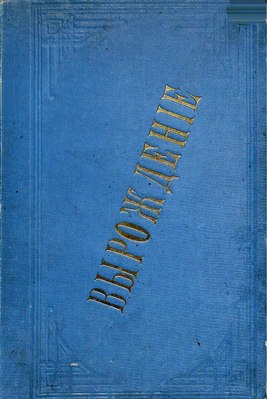 Cover of the fourth volume of the works of Max Nordau (Kiev, edition by B. K. Fuchs, 1902-1903) | |
| Genre | sociology and psychology |
| Author | Max Nordau |
| Original language | Deutsch |
| Date of first publication | 1892 |
Nordau begins his research with medical and sociological interpretations of the factors that gave rise to the phenomenon of degeneration described by him. The author divides his research into five books. In the first book, he points to the origins of the fin de siècle phenomenon (Fr. “The end of the century”). Nordau talks about the widespread moral decay, the overthrow of moral values. Then, based on the works of leading writers, artists, composers and thinkers of the century — Oscar Wald , Friedrich Nietzsche , Richard Wagner , Henrik Ibsen, and others — the author shows their predisposition to the kind of art that one would expect from people with mental diseases ( hysterics , neurasthenics, and so on). At the same time, Nordau points to the fact that their creations are not only a personal product, but also a public product: because of the general painful atmosphere in which Europe was in the designated period, the success of this kind of art was ensured.
The ideas expressed by Max Nordau, have received the widest distribution. Concepts such as degeneration, degeneration, were taken as serious medical terms. The concept of degenerative art was subsequently taken up by the National Socialists .