Dobrush district ( Belor. Dobrushsky ryon ) is an administrative unit in the east of the Gomel region . The administrative center is the city of Dobrush .
| area | |||
| Dobrush district | |||
|---|---|---|---|
| belor Dobrush district | |||
| |||
| A country |  Belorussia Belorussia | ||
| Enters into | Gomel region | ||
| Adm Centre | Dobrush | ||
| Chairman district executive committee | Mokhoreva, Olga Fedorovna | ||
| History and geography | |||
| Square | 1 452.72 [1] km² (16th place ) | ||
| Height | |||
| Timezone | UTC + 3 | ||
| Population | |||
| Population | ▼ 36 864 [2] people ( 2016 ) ( 9th place ) | ||
| Density | 28.08 person / km² (7th place) | ||
| Nationalities | Belarusians - 90.38%, Russians - 7.26%, Ukrainians - 1.47%, others - 0.89% [3] | ||
| official languages | Mother tongue: Belarusian - 41.89%, Russian - 55.81% They talk at home: Belarusian - 15.69%, Russian - 78.63% [3] | ||
| Official site | |||
 | |||
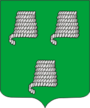
Administrative Device
In the area of 14 village councils:
- Borschovsky
- Zhgunsky
- Ivakovsky
- Korma
- Krugovets-Kalininsky
- Krupetsky Village Council
- Kuzminichsky
- Leninist
- Nosovichsky
- Pererost
- Rassvetovsky
- Terekhovsky
- Usokho-Budsky
- Utevsky
The abolished village councils in the territory of the district:
- Vasilyevsky (December 1, 2009 [5] )
- Demyankovsky (December 1, 2009)
- Dubrovsky (December 1, 2009)
- Krugovsky (January 23, 1995)
- Ogorodnya-Gomelsky (October 28, 1991)
Geography
The territory of the region within the Gomel Polesie. The relief is flat, with a height of 140-160 m prevailing. The area of the region is 1440 km² (16th place). The district is bordered by the Vetka and Gomel districts of the Gomel region, the Novozybkovsky, Zlynkovsky and Klimovsky districts of the Bryansk region of the Russian Federation, the Gorodnyansky district of the Chernihiv region of Ukraine.
The main rivers are Iput with tributaries Khoroput and Netesha, Ut (tributary of Sozh). In the north of the region is Lake Revuchey.
In the western part of the district is located Shabrinsky biological reserve .
On the territory of the Dobrush district there is an exclave of Medvezhye-Sankovo , administratively related to the Bryansk region of the Russian Federation .
History
The district was created on December 8, 1926 as part of the Gomel district , but on August 4, 1927 it was liquidated, and the district was transferred to the Vetka , Gomel, and Terekhov districts. Restored February 12, 1935 . From January 15, 1938 in the Gomel region.
Demographics
The population of the district is 36,864 people (9th place), including 21,508 people living in urban areas (as of January 1, 2016) [2] . There are 102 settlements in total.
As of January 1, 2018, 18.2% of the district’s population was younger than the able-bodied, 50.4% were of working age, and 31.4% were older than the able-bodied. In terms of the proportion of the population over the able-bodied age, the district ranks third in the Gomel region after Petrikovsky (32.8%) and Loevsky (32.3%). The average indicators for the Gomel region are 18.3%, 56.6% and 25.1%, respectively [6] .
The birth rate in the region in 2017 was 10.2 per 1000 people, the mortality rate was 18.6. A total of 372 were born in the region in 2017 and 677 people died. The birth rate is one of the lowest in the region (lower only in Gomel - 9.7). The average birth and death rates in the Gomel region are 11.3 and 13, respectively, in the Republic of Belarus, 10.8 and 12.6, respectively [7] [8] . The migration balance is negative (in 2017, 359 more people left the area than arrived; only in 2016, the opposite trend was observed) [9] .
In 2017, 210 marriages (5.8 per 1000 people) and 120 divorces (3.3 per 1000 people) were concluded in the region. The average indices in the Gomel region are 6.9 marriages and 3.2 divorces per 1000 people, in the Republic of Belarus - 7 and 3.4, respectively [10] .
| Population [11] [12] [13] [14] : | |||||||
|---|---|---|---|---|---|---|---|
| 1970 [15] | 1979 [15] | 1989 [15] | 1996 | 2000 | 2001 | 2002 | 2003 |
| 65,082 | ▼ 58 671 | ▼ 53 675 | ▼ 48 100 | ▼ 46 573 | ▼ 45 939 | ▼ 45 258 | ▼ 44 560 |
| 2004 | 2005 | 2006 | 2007 | 2008 | 2009 | 2010 | 2011 |
| ▼ 43 893 | ▼ 43 342 | ▼ 42 599 | ▼ 42 034 | ▼ 41 483 | ▼ 41 101 | ▼ 40 465 | ▼ 39 678 |
| 2012 | 2013 | 2014 | 2015 | 2016 | 2017 | 2018 | 2019 |
| ▼ 38 841 | ▼ 38 094 | ▼ 37 373 | ▼ 37 054 | ▼ 36 864 | ▼ 36 774 | ▼ 36 110 | ▼ 35 531 |
| National composition according to the census 2009 [16] [17] | ||
|---|---|---|
| People | Number of | % |
| Belarusians | 36,723 | 90.38% |
| Russians | 2951 | 7.26% |
| Ukrainians | 599 | 1.47% |
| Gypsies | 56 | 0.14% |
| Moldovans | 44 | 0.11% |
| Armenians | 32 | 0.08% |
| Poles | 31 | 0.08% |
| Uzbeks | 24 | 0.06% |
| Azerbaijanis | 17 | 0.04% |
Economy
Revenue from the sale of products, goods, works, services for 2017 amounted to 306.1 million rubles (about $ 153 million), including 80.2 million rubles (26.2%) accounted for by agriculture , forestry and fisheries, 115 , 9 million (37.9%) for industry , 11.2 million for construction, 51.9 million for trade and repairs, 47 million for other economic activities [18] .
Agriculture
In 2017, in agricultural organizations, 28,483 hectares of arable land were sown for cereals and leguminous crops, and 28,699 hectares for fodder crops [19] . In 2016, 78.4 thousand tons of grain and leguminous plants were harvested, in 2017 - 79.8 thousand tons (yield - 31.2 centners per hectare in 2016 and 28 centners per hectare in 2017). The average grain yield in the Gomel region in 2016–2017 is 30.1 and 28 centners per hectare, in the Republic of Belarus - 31.6 and 33.3 centners per hectare. In the area of grain harvest in 2017, the district ranked fifth in the Gomel region [20] .
As of January 1, 2018, the agricultural organizations of the region (excluding personal farms of the population and farmers) contained 44.8 thousand cattle, including 12.1 thousand cows, and also 15.4 pigs [21] . In 2017, the region produced 4.4 thousand tons of meat in live weight and 71.2 thousand tons of milk with an average yield of 6176 kg (the average milk yield per cow in the agricultural organizations of the Gomel region was 4947 kg in 2017). In milk production, the region ranks fifth in the Gomel region, by the average milk yield - the second after Mozyr [22] .
Transportation
The transport infrastructure includes the railways Gomel - Bryansk , Gomel - Bakhmach , Gomel - Krugovets , there are highways, in particular Bryansk - Kobrin .
Education
In 2017, there were 25 pre-school education institutions in the region (including the kindergarten-school complexes) with 1.5 thousand children. In the 2017/2018 school year, 21 institutions of general secondary education were operating, in which 4 thousand students were enrolled. The educational process in schools was provided by 551 teachers, an average of 7.3 students per teacher (the average value for the Gomel region - 8.6, for the Republic of Belarus - 8.7) [23] .
Culture
The Dobrush district local history museum is located in the district center. The museum has collected 5.9 thousand museum items of the main fund. In 2016, the museum was visited by 16.7 thousand people (the eighth figure in the Gomel region) [24] .
Healthcare
In 2017, the institutions of the Ministry of Health of the Republic of Belarus numbered 102 medical practitioners (28.2 in terms of 10 thousand people; the average for the Gomel region - 39.3, for the Republic of Belarus - 40.5) and 322 paramedical workers. The number of hospital beds in the district medical institutions is 229 (in terms of 10 thousand people - 63.1, the lowest in the region; the average in the Gomel region is 86.4, in the Republic of Belarus - 80.2) [25] .
Attractions
- Palace-manor of the XIX century, the Governor-General of Finland N. N. Gerard in the village Demyanki
- St. John's Kormyansky Convent
See also
- Urban settlements of Belarus
- Cities of Belarus
- Terehovka
Notes
- "State Land Cadastre of the Republic of Belarus" (as of January 1, 2011)
- ↑ 1 2 Population size as of January 1, 2016 and the average annual population size for 2015 in the Republic of Belarus in the context of regions, districts, cities and urban-type settlements.
- ↑ 1 2 2009 census results
- ↑ GeoNames 2005.
- ↑ Administrative and territorial structure of the Republic of Belarus (1981–2010): Handbook / comp. O. A. Kudryashova [et al.]. - Minsk: BelNIIDAD, 2012. - P. 35.
- ↑ Statistical yearbook of the Gomel region. - Mn. : National Statistical Committee of the Republic of Belarus, 2018. - pp. 48-50.
- ↑ Statistical yearbook of the Gomel region. - Mn. : National Statistical Committee of the Republic of Belarus, 2018. - p. 52-55.
- ↑ Demographic Yearbook of the Republic of Belarus: statistical compilation. - Mn. : National Statistical Committee of the Republic of Belarus, 2018. - p. 143-148.
- ↑ Statistical yearbook of the Gomel region. - Mn. : National Statistical Committee of the Republic of Belarus, 2018. - p. 84.
- ↑ Statistical yearbook of the Gomel region. - Mn. : National Statistical Committee of the Republic of Belarus, 2018. - p. 71-75.
- Population size by cities and districts of the Gomel region , the Main statistical department of the Gomel region
- ↑ The number of the actual population of cities, urban-type settlements, districts and district centers of the USSR according to census data as of January 15, 1970 by republics, territories and regions (except for the RSFSR)
- ↑ All-Union Population Census of 1979. The actual population of the Union and autonomous republics, autonomous regions and districts, territories, regions, urban settlements, village-district centers and rural settlements with a population of over 5,000 people (except the RSFSR)
- All-Union Population Census of 1989. Population of the Union Republics of the USSR and their territorial units by sex
- ↑ 1 2 3 The data on the Dobrush district and Dobrush were combined, which was a city of regional subordination and was taken into account separately.
- ↑ Population census 2009. National composition of the Republic of Belarus. Volume 3 . - Mn. , 2011 - pp. 114-117.
- ↑ National composition of the Gomel region .
- ↑ Regions of the Republic of Belarus. - T. 1. - Mn. : National Statistical Committee of the Republic of Belarus, 2018. - p. 635.
- ↑ Agriculture of the Republic of Belarus. - Mn. : National Statistical Committee of the Republic of Belarus, 2018. - p. 71–80.
- ↑ Agriculture of the Republic of Belarus. - Mn. : National Statistical Committee of the Republic of Belarus, 2018. - p. 110–116.
- ↑ Agriculture of the Republic of Belarus. - Mn. : National Statistical Committee of the Republic of Belarus, 2018. - p. 138–145.
- ↑ Statistical yearbook of the Gomel region. - Mn. : National Statistical Committee of the Republic of Belarus, 2018. - p. 269-271.
- ↑ Regions of the Republic of Belarus. - T. 1. - Mn. : National Statistical Committee of the Republic of Belarus, 2018. - p. 236-261.
- ↑ Culture of the Republic of Belarus. - Mn. : National Statistical Committee of the Republic of Belarus, 2017. - p. 26-27.
- ↑ Regions of the Republic of Belarus. - T. 1. - Mn. : National Statistical Committee of the Republic of Belarus, 2018. - p. 277-288.