Kurt Hiller ( German: Kurt Hiller ; August 17, 1885 , Berlin - October 1, 1972 , Hamburg ) is a German writer , pacifist journalist , one of the early expressionists . He was a supporter of the ideas of socialism . He actively advocated for the rights of sexual minorities .
| Kurt Hiller | |
|---|---|
| Kurt hiller | |
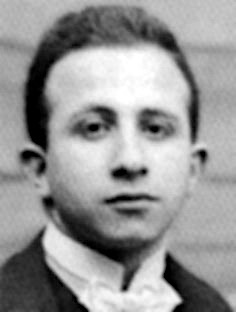 1903 photo | |
| Date of Birth | August 17, 1885 |
| Place of Birth |  Berlin , German Empire Berlin , German Empire |
| Date of death | October 1, 1972 (87 years old) |
| A place of death |  Hamburg , Germany Hamburg , Germany |
| Citizenship (citizenship) | |
| Occupation | writer , publicist |
| Language of Works | |
| www.hiller-gesellschaft.de (German) | |
Content
- 1 Biography
- 2 Contemporaries about Kurt Hiller
- 3 See also
- 4 References
- 5 notes
Biography
In 1903 - 1907 he studied philosophy and law in Berlin and Freiburg . After graduation, he defended his legal dissertation, which was even issued in a separate edition. In Berlin, Hiller made numerous acquaintances in literary circles, and in 1909 he himself became a “freelance writer,” one of the pioneers of the expressionism that was emerging in Germany. In the same year, together with Jacob van Goddis, he founded the expressionist “ New Club ” ( German: Der Neue Club ), which was soon joined by many artists who lived in Berlin: poets Ernst Blass , Elsa Lasker-Schuler and Georg Game , actress Tilla Durie . Club meetings were held under the brand name " Neopathetic Cabaret ." Soon, however, disagreements between the organizers of the performances led to the fact that Hiller left the club and founded together with Ernst Blass " Cabaret Gnu ". All this time he was actively writing articles for the expressionist magazines Der Sturm , Die Aktion , Pan, etc. In 1912, Kurt Hiller published the first anthology of expressionism lyrics Condor ( German Der Kondor ) in Heidelberg publishing house Richard Weissbach . .
During the November Revolution of 1918, he became actively involved in political life, formulating the ideal of a "logocracy" based on Plato 's idea of "rulers-philosophers." In 1919, together with his supporters, he founded the "Union of Opponents of Military Service". In 1920 he joined the German Society for Peace. Although Hiller was rather critical of Lenin , he still believed that German pacifism should take an example from the Soviet Union . His ideal was peace and socialism, understood as a free society without war, oppression and exploitation. In the 1920s, Hiller spoke a lot in the press against German and Italian fascists . In 1922 he published the pamphlet “§ 175: the shame of the century”, where he criticized the provisions of the German Penal Code against homosexuals (for more details see the article “Section 175 ”).
After Hitler came to power, Kurt Hiller as a pacifist , socialist , Jew and homosexual was a victim of severe persecution. He was arrested three times and sent to concentration camps , subjecting to humiliating tortures. In 1934 , as a result of the intercession of Rudolf Hess , he was released. He was allowed to fly to Prague , from where he then emigrated to London . In exile, he continued to publish articles and manifestos directed against the Nazis, and founded the Group of Independent German Authors in London.
Hiller returned to Germany only in 1955 , where he was awarded the prize as an outstanding critic. Several times he tried to found various neo-socialist unions and magazines, but his ideas did not find a response from the public. He died in Hamburg in 1972 .
One of Berlin's parks in the Schöneberg district is named after Kurt Hiller.
Contemporaries about Kurt Hiller
Heinrich Edward Jacob:
"TO. Hiller is one of the most important figures among politicians and ideologists of the movement , a brilliant organizer and speaker who, as G.E. Jacob recalls, “had the right to represent the face of the Club in the literary arena of Germany just because among us all, too young , he was the only holder of a doctoral title and bald head ” [2] .
See also
- Expressionism (literature)
- Expressionism
- New club
- Neopathetic Cabaret
- Georg Game
- Jacob van Goddis
Links
- Kurt Hiller Society (German)
Notes
- ↑ BNF ID : 2011 Open Data Platform .
- ↑ Jacob HE Der neue Club // Expressionismus. Literatur und Kunst 1910-1923. Marbach, 1960.S. 23.