The Second Spanish Republic ( Spanish. La Segunda República Española ) - the republican period after the deposition of the monarchy, before the establishment of the dictatorship of Francisco Franco . The Second Spanish Republic existed from 1931 to 1939.
| Republic | |||||
| Second Spanish Republic | |||||
|---|---|---|---|---|---|
| La Segunda República Española | |||||
| |||||
| Hymn : | |||||
 | |||||
←   → →1931 - 1939 | |||||
| Capital | Madrid | ||||
| Largest cities | Madrid , Barcelona | ||||
| Languages) | Spanish | ||||
| Currency unit | peseta | ||||
| Form of government | presidential parliamentary republic | ||||
| The president | |||||
| • 1931 - 1936 | Niceto Alcala Zamora | ||||
| • 1936 - 1939 | Manuel Asana and Diaz | ||||
| Story | |||||
| • 1931 |  Proclamation ProclamationRepublic and transfer authorities of the Provisional Government | ||||
| • October 1931 - November 1933 | The government of the left republicans and socialists | ||||
| • November 1933 - February 1936 | Governing body conservatives | ||||
| • 1935 | Insurrection in Asturias | ||||
| • July 1936 - April 1939 | Civil War in Spain | ||||
| • 1939 |  Fall of the Republic. Fall of the Republic.Rise to power Francisco Franco | ||||

Content
Provisional Government and the adoption of the constitution (April – December 1931)
The republic existed in the period of the Spanish Revolution of 1931-1939. The revolution began on April 12 after the Republicans won the municipal elections in the largest cities of the country. Despite the fact that in the whole country they lost, supporters of the Republicans took to the streets of Madrid, Barcelona and other cities. The commander of the civil guards, H. Sanhurho, informed the king that he could not disperse the demonstrations. The king decided to leave the country [1] .
The revolution overthrew King Alfonso XIII and transferred power to the Provisional Government. It was created on April 14 by the leaders of the leading Republican parties. June 28, 1931 elections were held in the Constituent Assembly . They were attended by 65% of citizens, 83% were Republicans, the largest faction was formed by socialists (116 out of 470). [2] The republican constitution, approved on December 9, proclaimed Spain a "democratic republic of workers of all classes built on the principles of freedom and justice" (Art. . one). Art. 44 of the Constitution provided for the possibility of alienation of property (for remuneration) and its socialization [3] The Constitution declared freedom of speech, separation of the Church from the state (including schools and subsidies), granting electoral rights to women, the right to divorce . The nobility was deprived of all privileges. The highest authority passed to the Spanish Congress of Deputies ( Spanish: Congreso de los Diputados ).
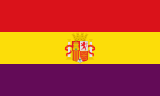
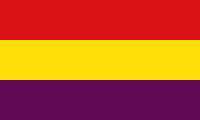
The Republican Constitution also changed the symbols of the country. The hymn of Riego was established as a national anthem, and as a national flag - a cloth consisting of three horizontal stripes - red, yellow and purple.
The first president of the new republic was Niceto Alcala Zamora .
The reforms of the government of Manuel Asany (July 1931 - September 1933).
Since the Constituent Assembly elections held on June 28, 1931 , provided the majority to the republican liberal parties and the Spanish Socialist Workers Party , the government formed a liberal-socialist coalition, and the government was headed by Manuel Asania . The government launched military and agrarian reforms, secularization of education, and social measures.
The government included leaders of the Spanish Socialist Workers Party, Francisco Largo Caballero and Indalecio Prieto . On their initiative, state-funded public works, minimum wages, industrial arbitration courts, an 8-hour working day, mandatory overtime pay, accident insurance, and pregnancy allowance were held [4] .
According to the law of September 9, 1932, it was provided for the state to purchase landowner lands that were leased for more than 12 years and exceeding 400 hectares (usually uncultivated), and their distribution among peasants, as well as resettlement of surplus labor to state lands. It was forbidden to sublease land received from the state. Labor legislation was introduced in the countryside. However, the implementation of the reform involved a great deal of land accounting, and it was carried out slowly. Then it was necessary to reconcile the numerous interests, including the opinions of landlords who want to sell the inconvenience to the state, and peasants who want to get plots sufficient for a full life. As a result, the pace of reform lagged noticeably behind the ten years conceived [5] .
In 1932 the Jesuit Order was banned. In March 1933, a law was passed on the confiscation of church lands and a part of real estate. In 1932, under pressure from the national movement in Catalonia, the government recognized the autonomy of the province. The church, the conservative part of society and the majority of the officers objected to these reforms. On August 10, 1932, General José Sanhurho raised a military insurrection, which was quickly suppressed. In the context of the global economic crisis, the strike struggle intensified, and anarchist uprisings took place. In the Cortes government was accused of excessive cruelty in their suppression. At the same time, President Niceto Alcala Zamora spoke out against the Prime Minister in connection with his anti-church policy. After another setback in the formation of the Tribunal of constitutional guarantees, Prime Minister Manuel Asanya resigned on September 9, 1933, and new elections were scheduled for November 19 and December 3, 1933 [6] .
Center-Right Governments (November 1933 - February 1936)
In the 1933 elections, CEDA received a majority - a coalition of center-right and right-wing parties ranging from right-wing liberal to fascist.
The rightists received 3,345,000 votes (CEDA — 98 seats), the radicals — 1,351,000 (100 seats), the socialists — 1,627,000 (60 seats), left-wing liberals — 1 million (70 seats), the Communists — 400,000 ( but did not win in any district). In order to get ahead of the right, the left did not have 400 thousand votes (anarcho-syndicalists, who refused to participate in the elections, controlled about half a million).
The liberal-conservative bloc led by the leader of the Radical Union Alejandro Lerrus came to power. The former radical liberal, now positioning himself as a centrist, has practically moved into the conservative political spectrum. The government of the right actually stopped the agrarian reform, canceled social payments and began to sponsor the Church.
The left called Lerrus “Spanish Brüning ” (referring to the German Chancellor, who created the prerequisites for Hitler to come to power), and anarchists believed that now only an uprising can stop fascism. The socialists were gradually inclined to take this view, but the anarchists sought to seize the initiative. On December 8-14, 1933, the anarcho-syndicalist National Confederation of Labor held a strike that developed into an uprising in Zaragoza and several towns and villages of Aragon and Catalonia. Peasants of several villages proclaimed communism. The uprising in the villages was suppressed with the help of aviation. Revolutionary committee in Zaragoza lasted four days. The forces were obviously not equal, the majority of workers did not support the anarcho-syndicalist attempt, and on December 14 the CNT called for an end to the strike and the uprising. Already in August 1933, 9,000 strikers and insurgents were already in prison (which was often the same in Spain). On December 18, a state of emergency was introduced in Spain. The government used it to attack both the CNT and the KPI, as well as the socialists - the people's houses of the UGT (UGT) were closed and some socialist municipalities were dissolved [7] .
Once in opposition, the PSOE (PSOE) quickly became radicalized. The left wing, led by F. Largo Caballero led the PSOE. Even before the defeat in the elections of 1933, on June 23 of this year, Largo Caballero delivered a report “Socialists and the Republic”, in which he said: “We know that if our party and our organizations find themselves in such a situation, in order to prevent the establishment of fascism, it will be necessary to establish the dictatorship of the proletariat, we will go for it. " After the defeat in the elections, the political turnout of Largo Caballero was supported by the party and the TSA, which in January 1934 set out to prepare for a general strike. Largo Caballero combined the posts of the chairman of the TSA, the secretary general of the PSOE and the chairman of the party’s parliamentary faction. According to the leaders of the PSOE (and Largo, and the more moderate I. Prieto), a movement towards fascism and monarchy began, and this should be resisted even by armed means. As a result, the PSOE began to converge with the communists, as well as with the nationalists of Catalonia, whose rights to autonomy were violated by the right-wing government [8] ..
Rise in Asturias
In September, accusing the government of the radical Riccardo Samper, who had replaced Lerrus, of failing to restore order in the country (manifestations of the left frustrated the CEDA youth conference in Asturias), CEDA leader José Gil-Robles provoked the government crisis to take power himself. October 1, 1934 Samper resigned. But the president feared Gil-Robles, whom his supporters already openly called “Hefe” (the Spanish equivalent of the word “Führer”), and proposed to form a new government to Lerrus. To secure a parliamentary majority, he invited CEDA to the government. The left with indignation claimed that the "fascists" could enter the government. Indeed, CEDA included the Spanish Update organization, whose leader, José Calvo Sotelo, advocated right-wing ideas extremely close to fascism. The youth organization CEDA acted in close contact with the phalangists. The situation is heated, Largo Caballero has publicly stated that if CEDA enters the government, the socialists will call on the people to revolt.
On October 4, it was announced that Lerrus had included three CEDA ministers in his government. On October 5, the UGT launched a general strike, which was supported by the Communists and the Catalan nationalists and developed into an armed uprising in Asturias and Catalonia. Anarchists in Asturias joined the strike a few hours on their own initiative. However, on the whole, the CNT was reluctant to speak out, as the PSOE put forward the slogan “All power of the socialist party!” In Madrid, anarchist leaders opposed the strike that was uncoordinated, but the NCT organizations joined it. In Catalonia, autonomous government seized power — the Generalitat led by Louis Kompanis . On October 6, Kompanis read out an act of proclaiming the Catalan state to an enthusiastic crowd. Government forces, led by General Francisco Franco , a veteran of the Moroccan war, quickly isolated the centers of the uprising and suppressed a speech almost throughout the country.
On October 8, Kompanis capitulated, after which the socialists ceased resistance. Only in Asturias, fighting continued. On October 5, the miners raised red flags over the cities of Asturias and moved to Oviedo. Power in Asturias was taken by workers' committees, which included socialists, communists and anarchists. They proclaimed a socialist republic. The Asturian Revolutionary Committee was headed by Socialist Deputies Belarmino Thomas and Ramon Gonzalez Peña.
Fearing for the reliability of the troops, the government sent a Moroccan legion to Asturias, led by Colonel Juan Yagüe, the future general of the civil war. Although formally the commander of the antiterrorist operation in Asturias was General López Ochoa, it was actually coordinated from Madrid by Franco, who was directly subordinate to Yagüe. Two weeks were stubborn fighting in the highlands and in the cities . While the rebels numbering up to 20,000 soldiers squeezed the ring around the garrison of the provincial capital of Oviedo , capturing almost the entire city, the troops squeezed the ring around Asturias. The workers organized explosions (the miners knew how to use dynamite well), but there was not enough other weapons. In addition, upon learning of the defeat of the movement in the rest of Spain, part of the PSOE delegates withdrew from the Revolutionary Committee. When the rebels ran out of ammunition, they were forced to stop resistance.
By agreement with General Ochoa on October 18, the rebels were promised that there would be no repression. Yagüe did not fulfill this promise. Spain was shocked by news from Asturias about mass extrajudicial executions. During the fighting and subsequent massacres, from 1 to 3 thousand people died, about 30 thousand were arrested. Socialist, Communist, and Catalan nationalist leaders, including Largo Caballero and President of the Generalitat Kompanis, were imprisoned. I. Prieto fled abroad. Despite the fact that anarcho-syndicalist leaders learned about the strike and the uprising from the newspapers, arrests were also made among the CNT assets. In February-March 1935, the tribunal issued 20 death sentences and a number of sentences to long prison terms. There was an opportunity to decapitate the opposition. But at the same time, it was obvious that this would create in the environment of the left a cult of fallen heroes, and new leaders would take the place of those executed. The campaign of the liberal intelligentsia and the left parties for the salvation of those sentenced from execution was widening. On March 30, 1935, the government came out for the abolition of death sentences (in protest the CEDA ministers left the Lerrus office, but soon returned, and in May, Gil Robles became war minister). Death sentences were replaced by imprisonment [9] .
Election 1936 and Popular Front Government
After the defeat of the October uprising, many socialist leaders, as well as left-wing Republicans, remained in freedom, whose hope for a return to power was associated with the revival of the power of the socialists. They launched a campaign against the government, the success of which contributed to the scandals in the right camp related to corruption, as well as the continuation of the fall in the living standards of most Spaniards. As a result, more and more influence acquired the ideas of the left bloc, which can stop the advance of the right. In January 1935, consultations began on the creation of a left-wing democratic bloc, in 1936 called the Popular Front . In September 1935, Lerrus and members of his administration were convicted of bribery. President Alcala Zamora was forced to resign the government of Lerrus (a formal reason for the disagreement of the right with granting even minimal autonomy rights to Catalonia), replacing it on September 25 with the technical prime minister of Chapapriet.
With the weakening of the right center, the role of the left has increased. In April 1934, the Republican action of M. Asanya, the left wing of the Radical Socialists (leader M. Domingo) and the Autonomous Republican Organization of Galicia (leader S. Casares Quiroga) created the Left Republican Party (LRP), which became the most influential political force of the liberals. Now they could return to power only in alliance with the socialists. On November 14, Asanya offered the bloc to the PSOE executive committee.
On December 9, CEDA refused to trust the government of Chapapriety - Gil Robles believed that now the way to power was cleared for him. But the president didn’t want to give up the premiership of Hefe this time either. On January 4, 1936, Alcala Zamora called elections, up to which the government was to be headed by the conservative politician Manuel Portela Villadares. In connection with the upcoming elections, the state of emergency was to be eliminated, and in January 1936 restrictions on the activities of the left parties were lifted. In December 1935, at the Largo Caballero trial, he was acquitted. Immediately after his release from prison, Largo Caballero maintained an alliance with the Communists and the Republicans [10] .
15 января 1936 г. социалисты, коммунисты, ПОУМ, леволиберальные партии, каталонские и баскские националисты, а также ряд других организаций подписали соглашение о создании Народного блока (в дальнейшем известного как Народный фронт ). Совместный электорат левого Народного фронта был примерно равен электорату правых. Партия Лерруса, пытавшаяся играть роль центра, была дискредитирована политикой 1933—1935 гг. и раскололась. Из неё выделился Республиканский союз М. Барриоса, который вошёл в «Народный фронт».
CEDA вела кампанию очень энергично. Её активно поддержала католическая церковь. Фалангисты совершала нападения на митинги левых. Нарушения закона достигли таких масштабов, что Асанья даже предлагал призвать к бойкоту выборов. В этих условиях особое значение приобретали голоса сторонников анархо-синдикалистов. За два дня до выборов, 14 февраля Национальный комитет НКТ опубликовал заявление, в котором говорилось: «Мы — не защитники республики, но мы мобилизуем все свои силы, чтобы нанести поражение старинным врагам пролетариата. Лучше смело опередить события, даже если это означает ошибку, чем после событий сожалеть о своём промахе». Фактический отказ НКТ от «электоральной стачки» привёл к тому, что левые получили на сотни тысяч голосов больше, чем в 1933 г. На выборах 16 февраля 1936 г. Народный фронт получил 4654116 голосов, правые 4503524, баскские националисты 125714, центр 400901. Таким образом, перевес левых над правыми был минимален, а с учётом центристов и вовсе сомнителен. Но при мажоритарной системе решающую роль играло сплочение сил в округах, где поддержка анархистов также помогла левым добиться перевеса. Народный фронт завоевал 268 мест из 473. При этом социалисты получили 88 мест, левые республиканцы — 81, коммунисты — 16. Правые и центристы получили 205 мест. Победа Народного фронта вызвала ликование республиканцев в крупных городах страны. Президент и премьер-министр обсуждали возможность объявить выборы недействительными. Но перед лицом угрозы гражданской войны они отказались от этого [11] .
В результате победы Народного фронта к власти пришло правительство М. Асаньи. Правительство Народного фронта объявило политическую амнистию. Узники октября и предыдущих социальных волнений были освобождены (более 15 тысяч человек). 23 февраля был восстановлен Женералитат Каталонии. 10 мая Кортесы избрали президентом страны М. Асанью (Алкала Самора ушёл в отставку 3 апреля в связи с обвинениями в нарушении предвыборного законодательства). Правительство возглавил галисийский либерал Сантьяго Касарес Кирога . Социалисты, имевшие наибольшую фракцию в Кортесах, пока воздержались от вхождения в правительство.
Ускорилась аграрная реформа. Если в 1932—1935 гг. было распределено 119 тыс. га земли, то с февраля по июль 1936 г. — 750 тыс. га. Создавались кооперативы для управления отчуждёнными поместьями и для совместной обработки целины (правда, им не хватало техники для повышения производительности труда). Но реформа хоть и пошла быстрее, но не удовлетворяла тех крестьян, которым ещё многие годы предстояло ждать своей очереди. Крестьяне Эстремадуры стали захватывать пустующие поместья, что приводило к столкновениям с гражданской гвардией. Одновременно в стране нарастали продовольственные трудности. Профсоюзы развернули кампанию наступления на капитал. В феврале-июле произошло 113 всеобщих и 228 местных стачек. В столкновениях между правыми и левыми экстремистами, нападениях на демонстрации и в результате покушений погибло 269 человек, в том числе 13 июля — Кальво Сотело. Общественные настроения искусственно радикализировались политическими элитами. Возможность победы политических противников рассматривалась как катастрофа. Умеренная политика либералов не соответствовала глубине социального кризиса [12] .
17 июля , с попытки военного переворота, совершенного правоориентированными силами, началась Гражданская война.
Civil War
Гражданская война явилась результатом сложных политических, экономических и культурных различий между «Двумя Испаниями» (по выражению испанского писателя Антонио Мачадо , употреблённому в 1912 году). После начала войны в Республике началась глубокая социальная революция, часть промышленных предприятий и земель перешла в руки коллективов работников.
Республиканцы включали в себя как центристов, которые поддержали капиталистическую либеральную демократию , так и коммунистов и анархо-синдикалистов ; их социальная база находилась в преимущественно городских, промышленных регионах, таких, как Астурия и Каталония , а также в сельскохозяйственном Арагоне .
19 июля 1936 г. правительство возглавил левый республиканец Хосе Хираль . В условиях радикализации социальной революции 4 сентября 1936 г. Ф. Ларго Кабальеро сформировал правительство широкой антифалангистской коалиции, в которое вошли социалисты, либералы, коммунисты, каталонские и баскские националисты, а с 4 ноября — даже анархо-синдикалисты из НКТ.
Франко был поддержан вооружёнными силами Германии, Италии и Португалии. Военную помощь Республике оказал только СССР, вставший на защиту свободы от наступившего впоследствии фалангистского режима.
Весной 1937 г. обострился конфликт между левыми социалистами (кабальеристами) и анархо-синдикалистами с одной стороны и другими силами Народного фронта — с другой. 3-6 мая 1937 г. произошли вооружённые столкновения между революционерами в Барселоне . В результате правительство Ларго Кабальеро пало, и правительство Народного фронта (без кабальеристов и анархо-синдикалистов) возглавил социалист Хуан Негрин , ориентировавшийся на союз с коммунистами и СССР. В Республике развернулись репрессии против анархистов и «троцкистов», началось сворачивание социальных преобразований второй половины 1936 г. В 1937 г. война шла с переменным успехом, в 1938 г. республика стала терпеть поражение за поражением. Энтузиазм первых месяцев гражданской войны сменился разочарованием и апатией. 1 апреля 1939 г., проиграв войну, Республика пала.
Заключение
Вторая Республика столкнулась с серьёзными экономическими трудностями, вызванными как социальными конфликтами, так и мировой депрессией. Углубление социального кризиса и политическая непримиримость привели к росту насилия и гражданской войне, сопровождавшейся террором с обеих сторон, вмешательством тоталитарных режимов. Коммунисты при содействии Коминтерна и СССР проводили политику захвата власти при формальном сохранении парламентских институтов, которая в 1940-е гг. будет использована при становлении «народных демократий» в Восточной Европе. В то же время рабочие и крестьяне Республики создали сектор экономики, основанный на производственной демократии и самоуправлении. Республика первой оказала серьёзное сопротивление наступлению фашизма в Европе, оказавшись в центре мировой политики в 1936—1937 гг. Другой точкой зрения является то, что правонациональная диктатура генерала Франко остановила продвижение коммунистических режимов в Европе до окончания Второй мировой войны.
See also
- Итальянская оккупация Майорки
- Mach naked (stamps of Spain)
- Three-beam star
Notes
- ↑ Shubin A.V. The Great Spanish Revolution. - M.: URSS, Book House "Librokom", 2011. - p. 30.
- ↑ Shubin A.V. The Great Spanish Revolution. - M .: URSS, Book House "Librokom", 2011. - p. 31-32.
- ↑ Shubin A.V. The Great Spanish Revolution. - M .: URSS, Book House "Librokom", 2011. - p. 32.
- ↑ Shubin A.V. The Great Spanish Revolution. - M .: URSS, Book House "Librokom", 2011. - p. 36.
- ↑ Shubin A.V. The Great Spanish Revolution. - M .: URSS, Book House "Librokom", 2011. - p. 38.
- ↑ Shubin A.V. The Great Spanish Revolution. - M .: URSS, Book House "Librokom", 2011. - p. 35-55.
- ↑ Shubin A.V. The Great Spanish Revolution. - M .: URSS, Book House "Librokom", 2011. - p. 55-57.
- ↑ Shubin A.V. The Great Spanish Revolution. - M .: URSS, Book House "Librokom", 2011. - P. 58-60.
- ↑ Shubin A.V. The Great Spanish Revolution. - M .: URSS, Book House "Librokom", 2011. - p. 63-68.
- ↑ Shubin A.V. The Great Spanish Revolution. - M .: URSS, Book House "Librokom", 2011. - p. 68-73.
- ↑ Shubin A.V. The Great Spanish Revolution. - M .: URSS, Book House "Librokom", 2011. - p. 74-79.
- ↑ Shubin A.V. The Great Spanish Revolution. - M .: URSS, Book House "Librokom", 2011. - p. 79-91.
Links
- First Spanish Republic
- Shubin A.V. The Great Spanish Revolution. - M .: URSS, Librocom Book House, 2011. - 605 c. - ISBN 978-5-397-02355-9
- Constitución de la República Española "Constitution of the Republic of Spain" (1931) (Spanish)
- [1] Mukhamatulin Timur Anvarovich . Revolutionary Spain (1931–1939) in Soviet literature: from M. A. Svetlov to A. N. Rybakov