Pontian Islands ( Italian: Isole Ponziane ) - an archipelago in the Tyrrhenian Sea off the west coast of the Apennine Peninsula . Administratively, the Pontian Islands are part of the Latina province of the Lazio region. The population of the islands is 4,066 ( 2009 ). The area of the islands is 11.39 km² .
| Pontian Islands | |
|---|---|
| ital. Isole Ponziane | |
 Pontian Islands Map | |
| Specifications | |
| Number of islands | 6 |
| Largest island | Ponza |
| total area | 11.39 km² |
| Highest point | 280 m |
| Population | 4066 people (2009) |
| Population density | 356.98 people / km² |
| Location | |
| Water area | Tyrrhenian Sea |
| A country |
|
| Region | Lazio |
| Provinces | Latina |


Geography
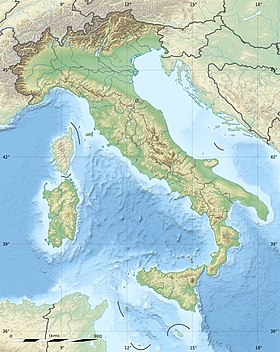
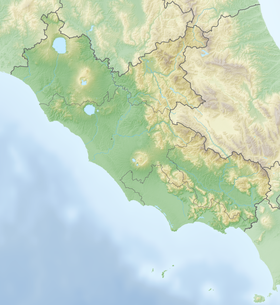
The islands have a collective name in honor of the largest of them - the island of Ponza . Other islands of the archipelago are Palmarola , Zannone (included in the Circeo National Park ) and Gavi , which together with Ponza form the northwestern group of islands of the archipelago, as well as Ventotene and Santo Stefano , forming the southeastern group of islands. These two groups are separated by a distance of 22 nautical miles. The distance from Sabaudia and Cape Circeo to Zannone is 12 nautical miles, while Ventotene is 21 mile from Gaeta . The distance between the islands of Santo Stefano and Ischia is 22 nautical miles.
The emergence of the archipelago is associated with volcanic activity.
Ventotene and Santo Stefano have land and marine conservation zones.
Fauna
An endemic species of nymphalid butterflies, the Ponza butterfly ( Hipparchia sbordonii ), listed in the Italian Red Book [1] [2], lives on the islands of the archipelago.
History
The history of the development of the islands by man has more than one millennium. On the islands, artifacts of the Neolithic and Bronze Age are found . The islands were used by the Etruscans who created the Blue Grotto . The first written mention of the islands is a description of the victory of the Romans over the Volks in 338 BC. e. The Romans called the islands "Pontia" ( lat. Pontia ). [3] During the reign of Octavian Augustus , the population of the islands increased. The Romans used the islands of Ponza and Ventotene for breeding fish . Grotto di Pilato fish farming complexes have been preserved on Ponza. Four large fish basins located in the eastern part of the island south of the present harbor have been preserved on Ventoten. Also on Ventoten (and to a lesser extent on Ponza) there are remains of Roman port facilities. [4] The islands were used to refer to unreliable citizens.
The islands were abandoned in the Middle Ages due to raids by Saracens and pirates, although Ponza, for example, is mentioned in Bocaccio's “ Decameron ” (sixth story of the second day). In the 18th century, the Kingdom of Naples again colonized the islands.
During the Mussolini regime , the islands were again used as a place of exile.
Population
Ponza and Ventotene have a population, small islands are uninhabited.
Tourism
Currently, the Pontian Islands are a popular and visited tourist destination. Agrotourism , beach vacations, sea excursions, diving are developed. Ferry routes connect the archipelago with Formia , Anzio , Terracina and Naples .
Notes
- ↑ Hipparchia sbordonii unopened (unreachable link) . The IUCN Red List of Threatened Species . International Union for Conservation of Nature and Natural Resources. Date accessed July 20, 2018. Archived July 20, 2018.
- ↑ Emilio Balletto, Simona Bonelli, Francesca Barbero, Luca Pietro Casacci, Valerio Sbordoni, Leonardo Dapporto, Stefano Scalercio, Alberto Zilli, Alessia Battistoni, Corrado Teofili, Carlo Rondinini. Lista Rossa IUCN dei Ropaloceri Italiani. - IUCN Italia, 2016 .-- 47 p.
- ↑ Society for the Diffusion of Useful Knowledge (Great Britain). The Penny Cyclopædia of the Society for the Diffusion of Useful Knowledge. - C. Knight, 1840. - T. 18. - P. 398.
- ↑ John J. Dvorak, Giuseppe Mastrolorenzo. The mechanisms of recent vertical crustal movements in Campi Flegrei caldera, southern Italy. - Geological Society of America, 1991. - P. 23-24. - 47 p. - ISBN 0813722632 .