Culture Ottoman-Fuzeşabony is an archaeological culture of the Middle Bronze Age that existed in the west of Romania, the east of Hungary, in Slovakia and Transcarpathia in the period 2100-1700. BC e. The natural boundaries of culture were the rivers of the Körös delta. Bordered on the cultures of Mako and Dulavarshand .
| Ottoman-Fuseshabon Bronze Age | ||||
|---|---|---|---|---|
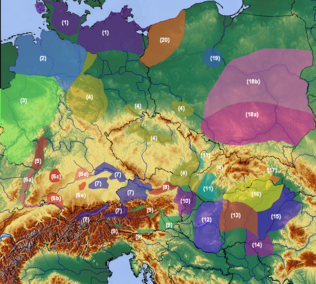 Central Europe in the Bronze Age, 2300-1950 BC e. Culture Ottoman (15) and related Hatvan (16). | ||||
| Geographic region | Central Europe | |||
| Localization | Hungary, Romania, Slovakia, Ukraine, Poland | |||
| Dating | 2150-1350 BC | |||
| Continuity | ||||
| ||||
Culture existed simultaneously with the Wittenberg culture. The Ottomans were engaged in agriculture and livestock. Houses were built on the mounds, which were poured over the burnt old houses. [1] . In Hungary there was a settlement where the house had the shape of a megaron (traditions of the Balkan Neolithic ). The farm used four-wheeled carts (carts) [2]
Notes
- ↑ Transylvanian History Museum guide
- ↑ BRONZE CENTURY OF SOUTH-EAST EUROPE
See also
- Bronze Age Romania