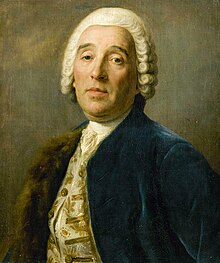
Elizabethan Baroque ( baroque-rocaille style, monumental rococo [1] ) - a term for the design of Russian Baroque architecture of the era of Elizabeth Petrovna (1741-1761). The largest representative of this trend was F. B. Rastrelli , whence the second name for this baroque exodus is “Rastrelli”. Unlike Peter's baroque that preceded it, Elizabethan baroque knew and appreciated the achievements of Moscow baroque at the end of the 17th-beginning of the 18th centuries, retaining the elements essential for the Russian temple tradition (cross-domed scheme, bulbous or pear-shaped five-domes).
The Elizabethan baroque (sometimes separated by the Anninsky, but the difference between them is conditional) tended to create heroized images with the goal of glorifying the power of the Russian Empire . Rastrelli designed the magnificent palace complexes in Petersburg and its environs - the Winter Palace , the Catherine Palace , Peterhof . Rastrelli is characterized by the gigantic scale of buildings, the splendor of decorative decoration, two-three-color color of the facades using gold. The major, festive character of Rastrelli architecture left its mark on all Russian art of the mid- 18th century .
The original page of the Elizabethan Baroque is represented by the work of Moscow architects of the mid-18th century, led by D. V. Ukhtomsky and I. F. Michurin . In St. Petersburg under Elizaveta Petrovna, a galaxy of domestic architects worked - serf architect F. S. Argunov , S. I. Chevakinsky , A. V. Kvasov and others. Italian P. A. Trezini specialized in temple architecture. With the exception of the Ukrainian buildings of A.V. Kvasov, A. Rinaldi, G.I.Shedel , the Elizabethan baroque remained a metropolitan style and little affected the Russian province.
After the death of Elizabeth Petrovna, the main construction orders were transferred to the Italian Antonio Rinaldi , who had previously worked for the “young court” in Oranienbaum . He abandoned the grandeur of Rastrelli’s undertakings and introduced elements of the Rococo chamber style into the court architecture. During the 1760s, Rinaldi, like other leading architects, overcame the attraction of the obsolete baroque and began to master the aesthetics of classicism .
- Cult buildings
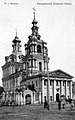
Sergiev Kazan Cathedral

Church of Clement of the Pope (architect P. A. Trezzini )

Nicholas Naval Cathedral (architect S.I. Chevakinsky)

Smolny Cathedral (architect F. B. Rastrelli)

Catherine Cathedral (architect A. Rinaldi)


- Civil buildings

Red Gate in Moscow
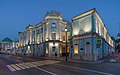
Apraksin Palace in Moscow

The Great Hall of the Catherine Palace

Mariinsky Palace (Kiev)

Vakhrameev House in Yaroslavl


Notes
- ↑ Loktev V.I. B. Rastrelli and Baroque problems in architecture // Baroque in Slavic cultures. - M.: Nauka, 1982. - S. 299-315.
Literature
- Vipper B. R. Architecture of Russian Baroque. M .: Nauka, 1978.
- Vlasov V.G. Art of Russia in the space of Eurasia. T.2. Classical architecture and Russian classicism. St. Petersburg: Dmitry Bulanin, 2012.S. 73-104.
- Ovsyannikov Yu. M. The great architects of St. Petersburg. Trezzini. Rastrelli. Rossi. SPb .: Art-SPb. (2nd ed.), 2001.
- Russian art of the Baroque era. New materials and research. Digest of articles. SPb., 1998.