Rotavirus infection is an infectious disease caused by rotaviruses [2] . It is the most common cause of diarrhea in children. [3] This disease is characterized by an acute onset, mild symptoms of gastroenteritis or enteritis , a frequent combination of intestinal and respiratory syndromes in the initial period of the disease. Rotavirus infection is often incorrectly called "intestinal flu," although rotavirus has nothing to do with influenza viruses.
| Rotavirus infection | |
|---|---|
 Rotavirus A | |
| ICD-10 | A 08.0 |
| ICD-9 | 008.61 |
| ICD-9-KM | |
| Diseasesdb | 11667 |
| Medlineplus | 000252 |
| eMedicine | emerg / 401 |
| Mesh | D012400 |
Rotaviruses

Rotaviruses ( lat. Rotavirus ) - a genus of viruses from the Reoviridae family, similar in morphology and antigenic structure. Like other representatives of this family, rotaviruses possess double-stranded fragmented RNA . There are 11 fragments in the genome of the virus, which are surrounded by a clearly defined three-layer protein shell ( capsid ) with icosahedral symmetry. The appearance of the particles resembles “a wheel with a wide hub, short knitting needles and a clearly defined rim” [4] , which is why they got their name ( lat. Rota - “wheel”). The diameter of the viral particles is from 65 to 75 nm.
Epidemiology
Rotavirus A, which accounts for more than 90% of cases of human rotavirus infection, [5] is widespread throughout the world. Up to 25 million cases of the disease are registered annually, of which 600-900 thousand (that is, 2.4-3.6%) are fatal [6] , especially for people with poor health. [7] Each year, rotavirus causes millions of cases of diarrhea in developing countries, resulting in nearly 2 million hospital admissions, [8] and an estimated 453,000 deaths in children under five years of age. [9] This represents about 40% of all hospitalizations associated with diarrhea in children under five years of age worldwide. [ten]
In the United States alone, before the start of the rotavirus vaccination program in 2006 [11] , 47,000–70,000 hospitalizations of children under 5 years of age occurred per year, and 20–60 children of this age died a year as a result of illness. [11] [12]
To the main causative agents of infectious diarrhea, including fatalities include rotavirus, calicivirus (norovirus), enteropathogenic and enterotoxigenic Escherichia coli, which together are responsible for more than 50% of all deaths from diarrhea and its severe forms in children under 5 years of age on a global scale. Among these pathogens, rotavirus is the leader, accounting for 39.4% of the total number of episodes of diarrhea in which the etiology was studied, and among etiologically decrypted viral diarrhea, rotavirus is detected in 65% of cases, with 17.8% of fatal diarrhea associated with rotavirus. Thus, annually 197 thousand deaths are associated with rotavirus gastroenteritis, i.e. every hour, 23 children die from this infection [13] . By the age of five, almost all children in the world suffer rotavirus infection. [14] Rotavirus is the leading cause of severe diarrhea in infants and children (about 20% of all cases), it accounts for 50% of cases of diarrhea requiring hospitalization, [8] 37% of deaths associated with diarrhea, and 5% of all cases death of children under five. [9] Boys are hospitalized twice as often as girls. [15] [16] The number of infections through virus-contaminated food is unknown. [17]
The disease occurs both sporadically and in the form of epidemic outbreaks . Foci often occur in kindergartens, among hospitalized children, in nursing homes. [18] In 2005, Nicaragua experienced the largest recorded epidemic. Characterized by an unusually wide coverage and severe course of the disease, this outbreak was associated with mutations in the rotavirus genome, possibly allowing the virus to escape the existing immunity in the population. [19] A similar major outbreak occurred in Brazil in 1977. [20]
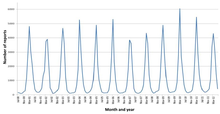
The incidence rate is clearly seasonal in nature, increasing sharply in the winter months. [21] In Russia, up to 93% [6] cases of the disease occur in the cold period (from November to April inclusive).
Rotavirus B, also called Adult Diarrhoea RotaVirus (ADRV), has caused serious epidemics of severe gastroenteritis in thousands of people of all ages in China resulting from wastewater contamination of drinking water. [22] [23] The rotavirus B epidemic also occurred in India in 1998; the pathogen strain was named CAL. Unlike ADRV, the CAL strain is endemic . [24] [25] To date, rotavirus B epidemics are limited to mainland China.
In Russia, rotavirus is most common on the Black Sea coast, in this regard, it is recommended to vaccinate a child before traveling to this resort area [26] .
Distribution
The main mechanism of transmission of rotaviruses is fecal-oral: through contaminated hands, surfaces and things. [27] Airborne transmission through close contact with the infected is also possible. [3] The feces of an infected person may contain more than 10 trillion viral particles per gram [2] , with less than 100 particles required to transmit the infection to another person. [28]
Rotavirus virions are well preserved in the environment and are found in water samples from river mouths at a concentration of 1-5 particles per gallon (~ 1 particle per liter). [29] They also tolerate low temperatures. Sanitary measures deemed sufficient to kill bacterial and parasitic agents against rotavirus are statistically ineffective, as incidence rates in high and low health countries remain similar. [3]
Pathogenesis
The three-layer protein shell of the viral particles makes them resistant to the acidic environment of the stomach and digestive enzymes of the intestine.
Rotaviruses replicate mainly in the intestine, [30] infecting enterocytes of the villi of the small intestine and ultimately causing their death, which leads to structural and functional changes in the epithelium. [31]
Several viral factors cause diarrhea . The death of enterocytes leads to the development of malabsorption . The viral protein toxin NSP4 induces the secretion of calcium-dependent chloride channels , disrupts the reabsorption of water mediated by the SGLT1 sodium glucose cotransporter, apparently reduces the activity of disaccharidases in the membranes of microvilli , and possibly activates calcium-dependent secretory reflexes of the enteric nervous system . [32]
Transient deficiency of lactase (normally secreted by enterocytes into the intestinal lumen), which lasts several weeks, is also characteristic. [33] [34]
Clinical picture
The disease is cyclical in nature. In one cycle, the incubation period (1–5 days), the acute period (3–7 days, with a severe course of the disease - more than 7 days) and the recovery period (4–5 days) are distinguished.
A rotavirus infection is characterized by an acute onset - vomiting , a sharp increase in temperature, diarrhea , and often very characteristic stools - on the second, third day, gray-yellow and clay-like. In addition, most patients have a runny nose , redness in the throat, and they experience pain when swallowing. In the acute period there is no appetite, a state of loss of strength is observed. Long-term observations have shown that the largest outbreaks of the disease occur during or on the eve of an influenza epidemic, for which it received the unofficial name - “intestinal flu”.
Feces and urine are very similar in symptoms to the symptoms of hepatitis (light feces, dark urine, sometimes with blood flakes).
Signs of dehydration are an alarming symptom and are more common for rotavirus infection than for most bacterial agents, and also the most common cause of death in this disease.
The disease is considered childhood, because the organisms of adults are more protected from rotaviruses. In an adult, the acidity of the gastric juice is higher and the amount of secretory IgA produced is higher.
With each infection, immunity to this type of virus is developed, and subsequent infections caused by the same serotype are easier to proceed. [35] In an adult, rotavirus infection may manifest as a small intestinal disorder, so an infected person may not realize that he is sick. Often the disease proceeds and is completely asymptomatic. Usually, if there is an infected person in the family or in the team, then the rest begin to become ill within 3-5 days.
The most common clinical course of the disease is enteritis and gastroenteritis , secondary lactase deficiency . The introduction of milk into a child’s diet after an illness is often accompanied by a mild recurrence of diarrhea due to bacterial fermentation of lactose in the intestine. [36]
Diagnostics
Specific diagnosis of infection caused by rotavirus A is made by detecting the virus in the feces of a child by enzyme immunoassay . There are several rapid test kits available on the market to determine all serotypes of rotavirus A. [37] Other methods, such as PCR and electron microscopy, are used only in research laboratories. [38] RT-PCR allows the detection and identification of all types and serotypes of rotaviruses that infect humans. [39]
Treatment
The main goal of treatment is to combat the effects of infection on the body: dehydration , intoxication and related disorders of the cardiovascular and urinary systems .
First of all, rehydration therapy is used in treatment , sorbent intake ( activated carbon , dioctahedral smectite , attapulgite ) may be prescribed [40] . In severe cases, hospitalization is required with the introduction of fluid intravenously or through a nasogastric tube, monitoring of electrolytes and blood sugar. The use of antibiotics is not recommended. Effective antiviral drugs to combat active rotavirus infection do not exist.
In the process of treatment, it is necessary to adjust the patient's nutrition. It is recommended to exclude from the diet spicy, fatty, sweet (including fruit juices), as well as dairy products (except for breast milk when feeding babies), caffeinated products, carbonated drinks, citrus fruits and gelatin . It should also limit and, if possible, stop drinking and smoking. Otherwise, a normal diet in the usual amount for the patient, including, for example, cereals and mashed potatoes, bananas, boiled lean meat and fish, vegetables, is highly appreciated. Proper nutrition is especially necessary in cases of illness in a child, since in addition to replenishing nutrients and energy, it substantially prevents dehydration. Liquid, including rehydration agents, should be offered in frequent small portions. Starvation, BRAT diet are not recommended. [41]
As an effective agent against rotavirus infection, WHO recommends prophylactic vaccination .
According to the American Gastroenterological Association , probiotics such as Lactobacillus rhamnosus and Lactobacillus casei may be useful in treating diarrhea caused by rotavirus infection, especially in young children and infants [42] .
Forecast
With adequate care and adequate treatment, the prognosis is good. [43] After recovery, the illness suffered does not have any lasting effects. After the first disease (usually in childhood), a strong immunity appears in the body. In adults with low antibody levels, disease symptoms may recur [2] .
Prevention
Non-specific prophylaxis consists in observance of sanitary and hygienic standards (hand washing, use only boiled water for drinking), purification and chlorination of tap water.
Since improved sanitation does not reduce the prevalence of rotavirus infection, and the number of hospitalizations remains high despite the use of oral rehydrates, vaccination is a critical area of health care. [44] For specific prophylaxis of rotavirus infection caused by rotavirus A, there are currently two clinically tested vaccines: [45] Rotarix of GlaxoSmithKline [46] and RotaTeq of Merck and Co. [47] Both are taken orally and contain a weakened live virus. [45]
Rotavirus vaccines are licensed in more than 100 countries, but only 17 countries have introduced routine vaccinations. [48] After the introduction of routine vaccination in the USA in 2006, the incidence of rotavirus gastroenteritis “quickly and significantly” decreased, despite the relatively low coverage compared to childhood immunization against other diseases. [49] Clinical trials of the Rotarix vaccine in South Africa and Malawi have shown that the vaccine significantly reduces the severity of rotavirus diarrhea and can prevent infection. [50] In 2012, a Cochrane Collaboration review of 41 clinical trials involving 186,263 participants confirmed the efficacy of Rotarix and RotaTec vaccines. [51] Other vaccines are also under development. [52] The World Health Organization recommends the inclusion of rotavirus vaccines in national immunization programs. [53] In countries following this recommendation, the incidence and severity of rotavirus infection has decreased significantly. [54] [45]
History
In 1943, Jacob Light and Horace Hodes proved that filtering agent from the feces of children with infectious diarrhea also causes diarrhea in cattle. [55] Thirty years later, rotavirus was detected in surviving samples. [56] In subsequent years, a similar virus was found in mice. [57] [58] In 1973, Ruth Bishop and colleagues described related viruses that they found in children with gastroenteritis. [59]
In 1974, Thomas Henry Fluitt, after observing the virus through an electron microscope, proposed the name "rotavirus", noting that the viral particle was like a wheel ( lat. Rota - "wheel"). [60] [61] Four years later, the name was officially recognized by the International Committee on the Taxonomy of Viruses . [62] In 1976, related viruses were also described in other animal species, [58] all of which caused acute gastroenteritis, and were recognized as a collective pathogen that infects humans and animals around the world. [60] Rotavirus serotypes were first described in 1980, [63] and the following year, rotavirus from an infected person was first cultivated by adding the trypsin necessary for replication to the culture medium of cells obtained from monkey kidneys. [64] The ability to cultivate the virus accelerated the pace of research, and the first candidate vaccines were tested by the mid-1980s. [65]
In 1998, the rotavirus vaccine was licensed for use in the United States. Clinical trials in the United States, Finland, and Venezuela have shown its 80 - 100% effectiveness in preventing severe diarrhea caused by rotavirus A. The researchers also did not find any statistically significant side effects. [66] [67] However, the manufacturer removed the vaccine after it was discovered that it may have contributed to an increased risk of invagination in one for every 12,000 vaccinated infants. [68] This case provoked intense debate about the relative risks and benefits of a rotavirus vaccine. [69] In 2006, studies of two new rotavirus A vaccines showed their safety and effectiveness in children, [70] and in June 2009, the World Health Organization recommended the inclusion of rotavirus vaccination in all national immunization programs to protect the population from this the virus. [71]
Other animals
Ротавирусы инфицируют молодых особей многих видов животных и являются основной причиной диареи у диких и домашних животных во всём мире. [72] Как патоген, распространённый среди скота, особенно молодых телят и поросят, ротавирусы вызывают экономические потери для фермеров вследствие затрат на лечение, высоких показателей заболеваемости и смертности. [73] Ротавирусы животных являются потенциальным резервуаром для генетического обмена с ротавирусами человека. [73] Есть свидетельства, что ротавирусы животных могут инфицировать людей — либо путём прямой передачи вируса, либо получением реассортантного вируса путём внесения одного или нескольких сегментов РНК в геном ротавируса человека. [74] [75]
Notes
- ↑ Monarch Disease Ontology release 2018-06-29sonu - 2018-06-29 - 2018.
- ↑ 1 2 3 Bishop RF Natural history of human rotavirus infection (англ.) // Archives of Virology . - 1996. - Vol. 12 . — P. 119—128 . — PMID 9015109 .
- ↑ 1 2 3 Dennehy PH Transmission of rotavirus and other enteric pathogens in the home (англ.) // Pediatric Infectious Disease Journal : journal. - 2000. - Vol. 19 , no. 10 Suppl . — P. S103—5 . — DOI : 10.1097/6454-200010001-3 . — PMID 11052397 .
- ↑ Грачева Н. М., Аваков А. А., Блохина Т. А., Щербаков И. Т. Клинические аспекты ротавирусной инфекции // Лечащий врач . — 1998. — № 3 . — ISSN 1560-5175 .
- ↑ Leung AK, Kellner JD, Davies HD Rotavirus gastroenteritis (англ.) // Advances in Therapy . - 2005. - Vol. 22 , no. 5 . — P. 476—487 . — DOI : 10.1007/BF02849868 . — PMID 16418157 .
- ↑ 1 2 Ферьева Е. Е. Ротавирусная инфекция // Consilium Provisorum. — 2007. — Т. 5 , № 1 .
- ↑ Тихонов, Виктор. Детей-инвалидов убил ротавирус . Газета.Ru (1 марта 2010). Дата обращения 19 июля 2011. Архивировано 1 июня 2012 года.
- ↑ 1 2 Simpson E., Wittet S., Bonilla J., Gamazina K., Cooley L., Winkler JL Use of formative research in developing a knowledge translation approach to rotavirus vaccine introduction in developing countries (англ.) // BMC Public Health : journal. - 2007. - Vol. 7 . - P. 281 . — DOI : 10.1186/1471-2458-7-281 . — PMID 17919334 .
- ↑ 1 2 Tate JE, Burton AH, Boschi-Pinto C., Steele AD, Duque J., Parashar UD 2008 estimate of worldwide rotavirus-associated mortality in children younger than 5 years before the introduction of universal rotavirus vaccination programmes: a systematic review and meta-analysis (англ.) // The Lancet : journal. — Elsevier , 2012. — February ( vol. 12 , no. 2 ). — P. 136—141 . — DOI : 10.1016/S1473-3099(11)70253-5 . — PMID 22030330 .
- ↑ UNICEF/WHO (2009) «Diarrhoea: Why children are still dying and what can be done.» Retrieved 23 May 2010
- ↑ 1 2 Centers for Disease Control and Prevention (CDC). Reduction in rotavirus after vaccine introduction—United States, 2000–2009 (англ.) // Morbidity and Mortality Weekly Report : journal. — 2009. — October ( vol. 58 , no. 41 ). — P. 1146—1149 . — PMID 19847149 .
- ↑ Fischer TK, Viboud C., Parashar U., etal. Hospitalizations and deaths from diarrhea and rotavirus among children <5 years of age in the United States, 1993–2003 (англ.) // The Journal of Infectious Diseases : journal. - 2007. - Vol. 195 , no. 8 . — P. 1117—1125 . — DOI : 10.1086/512863 . — PMID 17357047 .
- ↑ Claudio F. Lanata, Christa L. Fischer-Walker, Ana C. Olascoaga, Carla X. Torres, Martin J. Aryee. Global Causes of Diarrheal Disease Mortality in Children <5 Years of Age: A Systematic Review (англ.) // PLOS One . — Public Library of Science , 2013-09-04. - Vol. 8 , iss. 9 . — P. e72788 . — ISSN 1932-6203 . — DOI : 10.1371/journal.pone.0072788 .
- ↑ Parashar UD, Gibson CJ, Bresse JS, Glass RI Rotavirus and severe childhood diarrhea (англ.) // Emerging Infectious Diseases . — Centers for Disease Control and Prevention , 2006. — Vol. 12 , no. 2 . — P. 304—306 . — DOI : 10.3201/eid1202.050006 . — PMID 16494759 .
- ↑ Rheingans RD, Heylen J., Giaquinto C. Economics of rotavirus gastroenteritis and vaccination in Europe: what makes sense? (англ.) // Pediatric Infectious Disease Journal : journal. — 2006. — Vol. 25 , no. 1 Suppl . — P. S48—55 . — DOI : 10.1097/01.inf.0000197566.47750.3d . — PMID 16397429 .
- ↑ Ryan MJ, Ramsay M., Brown D., Gay NJ, Farrington CP, Wall PG Hospital admissions attributable to rotavirus infection in England and Wales (англ.) // The Journal of Infectious Diseases : journal. - 1996. - Vol. 174 Suppl 1 . — P. S12—8 . — DOI : 10.1093/infdis/174.Supplement_1.S12 . — PMID 8752285 .
- ↑ Koopmans M., Brown D. Seasonality and diversity of Group A rotaviruses in Europe (англ.) // Acta Paediatrica : journal. — 1999. — Vol. 88 , no. 426 . — P. 14—9 . — DOI : 10.1111/j.1651-2227.1999.tb14320.x . — PMID 10088906 .
- ↑ Anderson EJ, Weber SG Rotavirus infection in adults (англ.) // The Lancet . — Elsevier , 2004. — February ( vol. 4 , no. 2 ). — P. 91—9 . — DOI : 10.1016/S1473-3099(04)00928-4 . — PMID 14871633 .
- ↑ Bucardo F., Karlsson B., Nordgren J., etal. Mutated G4P[8] rotavirus associated with a nationwide outbreak of gastroenteritis in Nicaragua in 2005 (англ.) // Journal of Clinical Microbiology : journal. - 2007. - Vol. 45 , no. 3 . — P. 990—997 . — DOI : 10.1128/JCM.01992-06 . — PMID 17229854 .
- ↑ Linhares AC, Pinheiro FP, Freitas RB, Gabbay YB, Shirley JA, Beards GM An outbreak of rotavirus diarrhea among a non-immune, isolated South American Indian community (англ.) // American Journal of Epidemiology : journal. — 1981. — Vol. 113 , no. 6 . — P. 703—710 . — PMID 6263087 .
- ↑ Levy K., Hubbard AE, Eisenberg JN Seasonality of rotavirus disease in the tropics: a systematic review and meta-analysis (англ.) // International Journal of Epidemiology : journal. — 2009. — December ( vol. 38 , no. 6 ). — P. 1487—1496 . — DOI : 10.1093/ije/dyn260 . — PMID 19056806 .
- ↑ Hung T., Chen GM, Wang CG, etal. Waterborne outbreak of rotavirus diarrhea in adults in China caused by a novel rotavirus (англ.) // The Lancet : journal. — Elsevier , 1984. — Vol. 1 , no. 8387 . — P. 1139—1142 . — DOI : 10.1016/S0140-6736(84)91391-6 . — PMID 6144874 .
- ↑ Fang ZY, Ye Q., Ho MS, etal. Investigation of an outbreak of adult diarrhea rotavirus in China (англ.) // The Journal of Infectious Diseases : journal. - 1989. - Vol. 160 , no. 6 . — P. 948—953 . — DOI : 10.1093/infdis/160.6.948 . — PMID 2555422 .
- ↑ Kelkar SD, Zade JK Group B rotaviruses similar to strain CAL-1, have been circulating in Western India since 1993 (англ.) // Epidemiology and Infection : journal. - 2004. - Vol. 132 , no. 4 . — P. 745—749 . — DOI : 10.1017/S0950268804002171 . — PMID 15310177 .
- ↑ Ahmed MU, Kobayashi N., Wakuda M., Sanekata T., Taniguchi K., Kader A., Naik TN, Ishino M., Alam MM, Kojima K., Mise K., Sumi A. Genetic analysis of group B human rotaviruses detected in Bangladesh in 2000 and 2001 (англ.) // Journal of Medical Virology : journal. - 2004. - Vol. 72 , no. 1 . — P. 149—155 . — DOI : 10.1002/jmv.10546 . — PMID 14635024 .
- ↑ Сага об антибиотиках. Научно-популярная лекция Алексея Водовозова на YouTube , начиная с 1:01:49
- ↑ Butz AM, Fosarelli P., Dick J., Cusack T., Yolken R. Prevalence of rotavirus on high-risk fomites in day-care facilities (англ.) // Pediatrics : journal. — American Academy of Pediatrics , 1993. — Vol. 92 , no. 2 . — P. 202—205 . — PMID 8393172 .
- ↑ Grimwood K., Lambert SB Rotavirus vaccines: opportunities and challenges (англ.) // Human Vaccines & Immunotherapeutics . - 2009 .-- February ( vol. 5 , no. 2 ). - P. 57-69 . - DOI : 10.4161 / hv.5.2.6924 . - PMID 18838873 .
- ↑ Rao VC, Seidel KM, Goyal SM, Metcalf TG, Melnick JL Isolation of enteroviruses from water, suspended solids, and sediments from Galveston Bay: survival of poliovirus and rotavirus adsorbed to sediments (Eng.) // Applied and Environmental Microbiology : journal. - 1984 .-- 1 August ( vol. 48 , no. 2 ). - P. 404-409 . - PMID 6091548 .
- ↑ Greenberg HB, Estes MK Rotaviruses: from pathogenesis to vaccination (neopr.) // Gastroenterology. - 2009. - May ( t. 136 , No. 6 ). - S. 1939-1951 . - DOI : 10.1053 / j.gastro.2009.02.0.076 . - PMID 19457420 .
- ↑ Greenberg HB, Clark HF, Offit PA Rotavirus pathology and pathophysiology (neopr.) // Curr. Top Microbiol. Immunol .. - 1994 .-- T. 185 . - S. 255-283 . - PMID 8050281 .
- ↑ Gregorini, L; Marco, J; Bernies, M; Cassagneau, B; Pomidossi, G; Anguissola, GB; Fajadet, J. The alpha-1 adrenergic blocking agent urapidil counteracts postrotational atherectomy "elastic recoil" where nitrates have failed. (Eng.) // American Journal of Cardiology : journal. - 1997 .-- 15 April ( vol. 79 , no. 8 ). - P. 1100-1103 . - DOI : 10.1016 / S0002-9149 (97) 00053-2 . - PMID 9114772 .
- ↑ Ouwehand A., Vesterlund S. Health aspects of probiotics (neopr.) // IDrugs. - 2003. - T. 6 , No. 6 . - S. 573-580 . - PMID 12811680 .
- ↑ Farnworth ER The evidence to support health claims for probiotics // Journal of Nutrition : journal. - 2008 .-- June ( vol. 138 , no. 6 ). - P. 1250S — 4S . - PMID 18492865 .
- ↑ Velázquez FR, Matson DO, Calva JJ, Guerrero L., Morrow AL, Carter-Campbell S., Glass RI, Estes MK, Pickering LK, Ruiz-Palacios GM Rotavirus infections in infants as protection against subsequent infections / / The New England Journal of Medicine : journal. - 1996. - Vol. 335 , no. 14 . - P. 1022-1028 . - DOI : 10.1056 / NEJM199610033351404 . - PMID 8793926 .
- ↑ Arya SC Rotaviral infection and intestinal lactase level (neopr.) // J. Infect.Dis .. - 1984. - T. 150 , No. 5 . - S. 791 . - DOI : 10.1093 / infdis / 150.5.791 . - PMID 6436397 .
- ↑ Desk Encyclopedia of Human and Medical Virology. - Boston: Academic Press, 2009 .-- P. 278. - ISBN 0-12-375147-0 .
- ↑ Gastroenteritis viruses. - New York: Wiley, 2001 .-- P. 14. - ISBN 0-471-49663-4 .
- ↑ Fischer TK, Gentsch JR Rotavirus typing methods and algorithms (neopr.) // Reviews in Medical Virology. - 2004. - T. 14 , No. 2 . - S. 71-82 . - DOI : 10.1002 / rmv.411 . - PMID 15027000 .
- ↑ ATX group - A07B Adsorbent intestinal preparations . Encyclopedia of medicines and pharmaceutical products . Radar Patent. - Instruction, application and formula.
- ↑ The Treatment Of Diarrhoea: A manual for physicians and other senior health workers . World Health Organization (2005). Date of treatment October 3, 2017.
- ↑ The American Gastroenterological Association. Probiotics: What They Are and What They Can Do For You Archived July 11, 2012 on the Wayback Machine . Translation into Russian: Probiotics. What is it and what can they give?
- ↑ Ramig RF Systemic rotavirus infection (Eng.) // Expert Review of Anti-infective Therapy . - 2007 .-- August ( vol. 5 , no. 4 ). - P. 591-612 . - DOI : 10.1586 / 14787210.5.4.591 . - PMID 17678424 .
- ↑ Bernstein DI Rotavirus overview (English) // Pediatric Infectious Disease Journal . - 2009 .-- March ( vol. 28 , no. 3 Suppl ). - P. S50-3 . - DOI : 10.1097 / INF.0b013e3181967bee . - PMID 19252423 .
- ↑ 1 2 3 Jiang V., Jiang B., Tate J., Parashar UD, Patel MM Performance of rotavirus vaccines in developed and developing countries (English) // Human Vaccines & Immunotherapeutics : journal. - 2010 .-- July ( vol. 6 , no. 7 ). - P. 532-542 . - DOI : 10.4161 / hv.6.7.11278 . - PMID 20622508 .
- ↑ O'Ryan M. Rotarix (RIX4414): an oral human rotavirus vaccine (neopr.) // Expert review of vaccines. - 2007. - T. 6 , No. 1 . - S. 11-9 . - DOI : 10.1586 / 14760584.6.1.11 . - PMID 17280473 .
- ↑ Matson DO The pentavalent rotavirus vaccine, RotaTeq (neopr.) // Seminars in pediatric infectious diseases. - 2006. - T. 17 , No. 4 . - S. 195-199 . - DOI : 10.1053 / j.spid.2006.08.005 . - PMID 17055370 .
- ↑ Widdowson MA, Steele D., Vojdani J., Wecker J., Parashar U. Global rotavirus surveillance: determining the need and measuring the impact of rotavirus vaccines (English) // The Journal of Infectious Diseases : journal. - 2009 .-- November ( vol. 200 , no. Suppl 1 ). - P. S1-8 . - DOI : 10.1086 / 605061 . - PMID 19817589 .
- ↑ Tate JE, Cortese MM, Payne DC, Curns AT, Yen C., Esposito DH, Cortes JE, Lopman BA, Patel MM, Gentsch JR, Parashar UD Uptake, impact, and effectiveness of rotavirus vaccination in the United States: review of the first 3 years of postlicensure data (English) // Pediatric Infectious Disease Journal : journal. - 2011 .-- January ( vol. 30 , no. 1 Suppl ). - P. S56-60 . - DOI : 10.1097 / INF.0b013e3181fefdc0 . - PMID 21183842 .
- ↑ Waggie Z., Hawkridge A., Hussey GD Review of rotavirus studies in Africa: 1976–2006 // The Journal of Infectious Diseases . - 2010 .-- September ( vol. 202 , no. Suppl ). - P. S23–33 . - DOI : 10.1086 / 653554 . - PMID 20684708 .
- ↑ Soares-Weiser K., Maclehose H., Bergman H., etal. Vaccines for preventing rotavirus diarrhoea: vaccines in use // Cochrane Database of Systematic Reviews / Soares-Weiser, Karla. - 2012. - Vol. 11 . - P. CD008521 . - DOI : 10.1002 / 14651858.CD008521.pub3 . - PMID 23152260 .
- ↑ Ward RL, Clark HF, Offit PA Influence of potential protective mechanisms on the development of live rotavirus vaccines (Eng.) // The Journal of Infectious Diseases : journal. - 2010 .-- September ( vol. 202 , no. Suppl ). - P. S72-9 . - DOI : 10.1086 / 653549 . - PMID 20684721 .
- ↑ Tate JE, Patel MM, Steele AD, Gentsch JR, Payne DC, Cortese MM, Nakagomi O., Cunliffe NA, Jiang B., Neuzil KM, de Oliveira LH, Glass RI, Parashar UD Global impact of rotavirus vaccines ) // Expert Review of Vaccines . - 2010 .-- April ( vol. 9 , no. 4 ). - P. 395-407 . - DOI : 10.1586 / erv.10.17 . - PMID 20370550 .
- ↑ Giaquinto C., Dominiak-Felden G., Van Damme P., Myint TT, Maldonado YA, Spoulou V., Mast TC, Staat MA Summary of effectiveness and impact of rotavirus vaccination with the oral pentavalent rotavirus vaccine: a systematic review of the experience in industrialized countries (English) // Human Vaccines & Immunotherapeutics : journal. - 2011 .-- July ( vol. 7 , no. 7 ). - P. 734-748 . - DOI : 10.4161 / hv.7.7.15511 . - PMID 21734466 .
- ↑ Light JS, Hodes HL Studies on epidemic diarrhea of the new-born: Isolation of a Filtrable Agent Causing Diarrhea in Calves (Eng.) // Am. J. Public Health Nations Health: journal. - 1943. - Vol. 33 , no. 12 . - P. 1451-1454 . - DOI : 10.2105 / AJPH.33.12.1451 . - PMID 18015921 .
- ↑ Mebus CA, Wyatt RG, Sharpee RL, etal. Diarrhea in gnotobiotic calves caused by the reovirus-like agent of human infantile gastroenteritis (English) // Infection and Immunity : journal. - 1976. - 1 August ( vol. 14 , no. 2 ). - P. 471—474 . - PMID 184047 .
- ↑ Rubenstein D., Milne RG, Buckland R., Tyrrell DA The growth of the virus of epidemic diarrhoea of infant mice (EDIM) in organ cultures of intestinal epithelium (English) // British journal of experimental pathology: journal. - 1971. - Vol. 52 , no. 4 . - P. 442-445 . - PMID 4998842 .
- ↑ 1 2 Woode GN, Bridger JC, Jones JM, Flewett TH, Davies HA, Davis HA, White GB Morphological and antigenic relationships between viruses (rotaviruses) from acute gastroenteritis in children, calves, piglets, mice, and foals (English) // Infection and Immunity : journal. - 1976. - 1 September ( vol. 14 , no. 3 ). - P. 804-810 . - PMID 965097 .
- ↑ Bishop R. Discovery of rotavirus: Implications for child health (Eng.) // Journal of Gastroenterology and Hepatology: journal. - 2009 .-- October ( vol. 24 , no. Suppl 3 ). - P. S81-5 . - DOI : 10.1111 / j.1440-1746.2009.06076.x . - PMID 19799704 .
- ↑ 1 2 Flewett TH, Woode GN The rotaviruses (English) // Archives of Virology . - 1978. - Vol. 57 , no. 1 . - P. 1-23 . - DOI : 10.1007 / BF01315633 . - PMID 77663 .
- ↑ Flewett TH, Bryden AS, Davies H., Woode GN, Bridger JC, Derrick JM Relation between viruses from acute gastroenteritis of children and newborn calves // The Lancet : journal. - Elsevier , 1974. - Vol. 2 , no. 7872 . - P. 61-3 . - DOI : 10.1016 / S0140-6736 (74) 91631-6 . - PMID 4137164 .
- ↑ Matthews RE Third report of the International Committee on Taxonomy of Viruses. Classification and nomenclature of viruses (Eng.) // Intervirology : journal. - 1979. - Vol. 12 , no. 3-5 . - P. 129-296 . - DOI : 10.1159 / 000149081 . - PMID 43850 .
- ↑ Beards GM, Brown DW The antigenic diversity of rotaviruses: significance to epidemiology and vaccine strategies (Eng.) // European Journal of Epidemiology : journal. - 1988 .-- March ( vol. 4 , no. 1 ). - P. 1-11 . - DOI : 10.1007 / BF00152685 . - PMID 2833405 .
- ↑ Urasawa T., Urasawa S., Taniguchi K. Sequential passages of human rotavirus in MA-104 cells (Eng.) // Microbiol. Immunol. : journal. - 1981. - Vol. 25 , no. 10 . - P. 1025-1035 . - DOI : 10.1111 / j.1348-0421.1981.tb00109.x . - PMID 6273696 .
- ↑ Ward RL, Bernstein DI Rotarix: a rotavirus vaccine for the world (English) // Clinical Infectious Diseases . - 2009 .-- January ( vol. 48 , no. 2 ). - P. 222-228 . - DOI : 10.1086 / 595702 . - PMID 19072246 .
- ↑ Rotavirus vaccine for the prevention of rotavirus gastroenteritis among children. Recommendations of the Advisory Committee on Immunization Practices (ACIP) // English Morbidity and Mortality Weekly Report : journal. - 1999. - Vol. 48 , no. RR — 2 . - P. 1-20 . - PMID 10219046 .
- ↑ Kapikian AZ A rotavirus vaccine for prevention of severe diarrhoea of infants and young children: development, utilization and withdrawal (Eng.) // Novartis Found. Symp : journal. - 2001. - Vol. 238 . - P. 153-171 . - ISBN 9780470846537 . - DOI : 10.1002 / 0470846534.ch10 . - PMID 11444025 .
- ↑ Bines JE Rotavirus vaccines and intussusception risk (neopr.) // Curr. Opin. Gastroenterol .. - 2005. - T. 21 , No. 1 . - S. 20-5 . - PMID 15687880 .
- ↑ Bines J. Intussusception and rotavirus vaccines (English) // Vaccine . - Elsevier , 2006 .-- Vol. 24 , no. 18 . - P. 3772-3776 . - DOI : 10.1016 / j.vaccine.2005.07.031 . - PMID 16099078 .
- ↑ Dennehy PH Rotavirus vaccines: an overview (English) // Clinical Microbiology Reviews . - 2008. - Vol. 21 , no. 1 . - P. 198-208 . - DOI : 10.1128 / CMR.00029-07 . - PMID 18202442 .
- ↑ Meeting of the immunization Strategic Advisory Group of Experts, April 2009 — conclusions and recommendations // Relevé Épidémiologique Hebdomadaire / Section D'hygiène Du Secrétariat De La Société Des Nations = Weekly Epidemiological Record / Health Section of the Secretariat of the League of Nations: journal. - 2009 .-- June ( vol. 84 , no. 23 ). - P. 220—236 . - PMID 19499606 . [one]
- ↑ Fenner's Veterinary Virology, Fourth Edition. - Boston: Academic Press, 2010 .-- P. 288. - ISBN 0-12-375158-6 .
- ↑ 1 2 Martella V., Bányai K., Matthijnssens J., Buonavoglia C., Ciarlet M. Zoonotic aspects of rotaviruses (neopr.) // Veterinary Microbiology. - 2010. - January ( t. 140 , No. 3-4 ). - S. 246-255 . - DOI : 10.1016 / j.vetmic.2009.08.0.028 . - PMID 19781872 .
- ↑ Müller H., Johne R. Rotaviruses: diversity and zoonotic potential — a brief review (English) // Berl. Munch. Hierarchtl. Wochenschr. : journal. - 2007. - Vol. 120 , no. 3-4 . - P. 108-112 . - PMID 17416132 .
- ↑ Cook N., Bridger J., Kendall K., Gomara MI, El-Attar L., Gray J. The zoonotic potential of rotavirus (Eng.) // Journal of Infection . - 2004. - Vol. 48 , no. 4 . - P. 289-302 . - DOI : 10.1016 / j.jinf.2004.01.018 . - PMID 15066329 .
See also
- Norwalk virus
- Astroviruses
- Flu
- ARVI
- Angina
Links
- N. M. Gracheva, A. A. Avakov, T. A. Blokhin, I. T. Shcherbakov. Clinical aspects of rotavirus infection // Attending physician (journal) , # 03, 1998
- Rotavirus infection // "Bulletin of infectology and parasitology"