Serdobsk is a city (since 1780), the administrative center of Serdobsky district of the Penza region . It forms the municipality “Serdobsk city” with the status of an urban settlement as the only settlement in its composition [4] .
| City | |||||
| Serdobsk | |||||
|---|---|---|---|---|---|
 | |||||
| A country |  Russia Russia | ||||
| Subject of the federation | Penza region | ||||
| Municipal District | Serdobsky | ||||
| Urban settlement | city Serdobsk | ||||
| The head of administration | Makarov Vitaliy Vitalievich | ||||
| History and Geography | |||||
| Based | in 1698 | ||||
| City with | 1780 year | ||||
| Square | MO - 28.42 [1] [2] km² | ||||
| Center height | 180 m | ||||
| Timezone | UTC + 3 | ||||
| Population | |||||
| Population | ↘ 32 087 [3] people ( 2018 ) | ||||
| Density | 1129.03 people / km² | ||||
| Nationalities | Russians - 82.1% Mordovians - 6.7% Tatars - 3.2% Ukrainians - 1.2% Kazakhs - 1.1% Greeks , Armenians , Germans - 1% | ||||
| Denominations | Orthodox , Catholics | ||||
| Katoykonim | Serdobchane, Serdobchanin, Serdobanka | ||||
| Digital identifiers | |||||
| Telephone code | +7 84167 | ||||
| Postal codes | 442890, 442891, 442893, 442894, 442895 | ||||
| OKATO Code | 56410 | ||||
| OKTMO Code | |||||
| gorod-serdobsk.ru | |||||
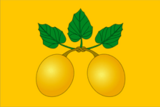
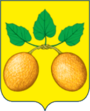
Physico-geographical characteristics
The city is located 111 km southwest of Penza , on the river. Serdobe (Don basin), on the western edge of the Volga Upland , on the border of the steppe and forest-steppe zone. The railway station of the same name Southeast Railway on the line Rtishchevo - Penza .
Time Zone
Geographically, Serdobsk is located exactly in the center of the third time zone (45 ° 00′00 ″ E) and is included in the time zone designated according to the international standard as Moscow Time Zone ( MSK ). The offset relative to UTC is +3: 00.
Climate
The climate is temperate continental . Winter in Serdobsk is moderately cold and long, lasting from early November to late March, the coldest month is February with an average temperature of −9.1 ° C. Summer is warm, lasts from late May to early September, with an average July temperature of 20.4 ° C. The average annual temperature is 5.5 ° C. The climate is close to Moscow , but the continentality is higher and there is less rainfall.
History
It was founded in 1698 by the servant watchman Lisitsin Alexander Alexandrovich of the Penza district as the Serdobinsky (Arkhangelsk) settlement of the guardians of the ship’s forests, when, returning from the Azov campaign , Tsar Peter I visited Saratov and “instructed to see the good places on the Penza side and establish guards there”.
The census book , 1717 reports: “There are 250 yards in the Serdobinsky settlement, where 904 residents live, basically they are arable soldiers , palace, landlord peasants , a small number of monastic, church and yasak peasants, as well as village people .”
- 1774 — arable soldiers under the leadership of the retired vakhmistr B. S. Fedyshev supported Pugachev , acting independently.
- On November 7, 1780, by decree of Catherine II, the settlement acquired the status of the county town of Serdobsk as part of the Saratov governorate (from 1797 - the Saratov province ). The description of 1805-1806 says that the city is located on both banks of the river. Hearts, his circumference is 6 versts of 354 fathoms; there was a stone cathedral in the name of Michael the Archangel and three wooden churches, a liquor store, two drinking houses; the inhabitants were mainly engaged in tillage.
- In 1865, a wooden cemetery church was built in the name of St. Nicholas the Wonderworker, in 1857 - the stone Kazan Church of the Nagorny, in 1876 - the wooden Church of the Exaltation of the Cross (expanded in 1897).
- The post office was founded in 1869, the water supply system was started up, and in 1871 a telegraph service opened. In 1894, the Rtishchevo - Penza railway line was laid through Serdobsk, then the Serdobsk railway station arose.
- In 1896 , the first wooden building of the Serdobsky Station was built, which stood until 1986 . At the end of the 19th century, the city was run by impregnating, soap making, tarry, tar factories, salting mill, and an elevator with a steam engine.
- A printing house was opened in 1900, a trade school in 1907, and cinema in 1910. In 1913 an iron foundry, 3 forest marinas and other enterprises, 15 shops and shops, a real school, a private women's gymnasium, 2 cinemas; the dynamo worked, giving electric light for office buildings, the Zemstvo assembly, the hospital, and some private houses. The local drama collective staged performances in the summer theater.
- On January 10, 1918, at the second congress of Soviets in the city, Soviet power was proclaimed in Serdobsk. In August, a committee of the RCP (b) was formed , and in September 1919, the Komsomol . The Civil War claimed many lives of heartbeats. In particular, with the suppression in Bakura of the uprising of the kulaks and Socialist-Revolutionaries
- On March 2, 1919, the chairman of the executive committee, K. M. Gubin, the chairman of the district Cheka, N. A. Fedulov, and the police detective, I. M. Midziaev, were killed; a monument was erected in the city center. The police surrendered their weapons peacefully and went home, there was no gendarme department. At the Serdobsk station, small groups of white shelters were stationed, but they didn’t move further, but in the provincial city of Penza they got out of the cars and occupied almost half the city. During the Civil War, the front-line city, the 4th Serdobsky Regiment was formed here,
- 1921 in the county of a part of the Red Army under the command of M.N. Tukhachevsky , G.I. Kotovsky , I.P. Uborevich inflicted a decisive defeat on the units of A.S. Antonov . After the Civil War, the city began extensive construction.
- The power station was launched in 1922, a telephone with 50 points was launched. In the same year, the Sverdlov Park was opened, then renamed Ostrovsky Park. The agricultural technical school opened its doors ... By the beginning of World War II, 51 industrial enterprises were already operating in the city.
Citizens raised more than 17 million rubles in the defense fund. 11,819 heartbeats were drafted into the army, more than 5 thousand were killed, 7240 received orders and medals, 12 - the title of Hero of the Soviet Union.
- February 1, 1963 Serdobsk is assigned to the category of cities of regional subordination.
- February 17, 2006 Serdobsk became part of the Serdobsky district as an urban settlement .
Monuments
- Mass grave of K.M. Gubin, N.A. Fedulov, T.P. Midzhaev (1919).
- The house where the revolutionary lived and worked was the populist S. A. Zhebunev (1923-1924) on Kirova Street.
- The grave of the first holder of the orders of Glory N. A. Zaletov (1914-1977).
- Mass grave of Soviet soldiers who died from wounds in the Great Patriotic War.
- The memorial on Lenin Street to the heartbeats of the Heroes of the Soviet Union, Heroes of Russia with eternal flame .
- The grave of the writer-democrat V. A. Sleptsov (1836-1878), and to him in the “Birch” bust, the work of the local sculptor Lartsev.
- Monument to the inventor of the light bulb P. N. Yablochkov (1847-1894) in the central square of the city.
- The memorial plaque to O. Kusmartsev [5] , the holder of the Order of Courage , who heroically died in Ossetia .
- A bust of the genius of Russian literature M. Yu. Lermontov next to the district library.
- Monument to Vladimir Ilyich Lenin in the central square in front of the city administration building.
Monument to the heart warriors who fell in battles for their homeland
The Three Bayonets Monument
Monument to P.N. Yablochkov
Monument to M. Yu. Lermontov, installed in 2014
The monument to V.I. Lenin
Cathedral of Michael the Archangel
Monument to N.V. Gogol
Population
| Population | |||||||||
|---|---|---|---|---|---|---|---|---|---|
| 1717 [6] | 1856 [7] | 1859 [6] | 1897 [8] | 1913 [7] | 1926 [6] | 1931 [7] | 1939 [6] | 1959 [9] | 1967 [7] |
| 1004 | ↗ 10,000 | ↘ 5231 | ↗ 7381 | ↗ 12,200 | ↘ 11 220 | ↗ 17,000 | ↘ 12 807 | ↗ 26 119 | ↗ 31,000 |
| 1970 [10] | 1979 [11] | 1989 [12] | 1992 [7] | 2000 [7] | 2001 [7] | 2002 [13] | 2003 [7] | 2005 [7] | 2006 [7] |
| ↗ 33 783 | ↗ 39 936 | ↗ 43 518 | ↗ 44 900 | ↘ 41,600 | ↘ 40 900 | ↘ 37 738 | ↘ 37,700 | ↘ 36,200 | ↘ 35 800 |
| 2009 [14] | 2010 [15] | 2011 [16] | 2012 [17] | 2013 [18] | 2014 [19] | 2015 [20] | 2016 [21] | 2017 [22] | 2018 [3] |
| ↘ 35,020 | ↗ 35 393 | ↘ 35 268 | ↘ 34 900 | ↘ 34 504 | ↘ 33 992 | ↘ 33 553 | ↘ 32 986 | ↘ 32 554 | ↘ 32 087 |

As of January 1, 2019, in terms of population, the city was in 485th place out of 1,115 [23] cities of the Russian Federation [24] .
Economics
- Serdobsky Machine-Building Plant (AMO ZIL) - part of the parts for Priora and Kalina cars of AvtoVAZ PJSC is produced. [25]
- Furniture factory Lina. [26]
- Creamery "Dream" [27] - the production of milk, dairy products and butter.
- City Food Serdobsky [28] .
- Serdobsky Confectioner - manufacture of confectionery.
Local government
Local self-government in Serdobsk was regulated by the Charter of the city settlement of the city of Serdobsk in the Serdobsky district of the Penza region (adopted by Decision of the Meeting of representatives of the city of Serdobsk in the Serdobsky district of 07.08.2006 No. 29-5 / 1) [29] .
The new edition of the Charter of the city settlement, the city of Serdobsk, Serdobsky district of the Penza region, was adopted by Decision of the Meeting of representatives of the city of Serdobsk in the Serdobsky region dated 04.25.2014 No. 166-18 / 3 [30] .
The structure of local government of the city of Serdobsk is made up of:
- The meeting of representatives of the city of Serdobsk is the representative body of the city of Serdobsk;
- The head of the city of Serdobsk is the head of the municipality, the highest official of the city of Serdobsk;
- Administration of Serdobsk - local administration, executive and administrative body of Serdobsk;
- The Audit Chamber of the City of Serdobsk is the Audit Office of the City of Serdobsk.
Media
Print Editions
The city is going to print in mass circulation newspapers.
- "Serdo news . " The newspaper was founded on April 30, 1918 at the initiative of the Central Committee of the CPSU (B.). It was called “The Poor”, then “The Voice of the Communist”, “Sickle and Hammer”, “Collective Farm Construction”, and “Lenin's Way”. Since 1994, the newspaper has been called "Serdobskie Novosti", reports the main news of the city and the region (political life, economy, patriotic education).
- The Alliance , published March 6, 1997.
Serdobsk has its own VHF workshop in s. Meshcherskoye Serdobsky district.
Radio stations
| Frequency Rating, MHz | Broadcast program |
|---|---|
| 68.84 | Radio of Russia |
| 100.5 | New radio |
Communication
Broadband Internet access services are provided by the following providers :
- Serdobsky branch of PJSC Rostelecom (trademark Rostelecom),
- Intexcom
The city has mobile operators such as:
- MegaFon (Volga branch of MegaFon PJSC),
- YOTA (Virtual mobile operator on MegaFon infrastructure),
- Beeline (operator of Vimpelcom PJSC, Beeline-Volga zone),
- Tele2 Russia Rostelecom (virtual mobile operator on the Tele2 infrastructure),
- MTS (operator of the branch of MTS PJSC in the Penza region)
Television
Since September 1, 2008, the Serdobsk TV channel has been operating. Also, television in Serdobsk operated before that from 1993 to August 27, 2001.
| TCEs | Broadcast program |
|---|---|
| 2 | First channel |
| 3 | NTV |
| 12 | Russia-1 / GTRK Penza |
| 24 | 11 channel |
| 28 | RTRS-1 (DVB-T2) |
| 41 | STS / TV-Express |
| 43 | TV Center |
| 47 | RTRS-2 (DVB-T2) |
| 51 | Fifth channel |
Transport
Railway station Serdobsk on the electrified line Rtishchevo - Penza of the Southeast Railway . The city is connected with Penza and Rtishchevo by regularly running electric trains .
There is a bus station in the city, from which daily intercity buses (Moscow, Penza, Saratov, Kamenka, Rtishchevo) and suburban buses leave.
Education
General educational institutions
- MOU secondary school No. 1 is the oldest educational institution in the city of Serdobsk and Serdobsky district, founded in 1913 as the Serdobsky real school.
- MOU SOSH Lyceum № 2.
- MOU secondary school number 4
- MOU secondary school number 6 named. N.V. Kuzmina.
- MOU secondary school number 9.
- MOU secondary school number 10.
Specialized Secondary Educational Institutions of Serdobsk
- Serdobsky diversified technical school.
- Serdobsky Agricultural College.
- Serdobsky branch of the Penza Regional Medical College.
- A branch of Penza State University (SF) on the basis of the secondary school № 6.
List of institutions for continuing education of children
- Center for children's creativity in Serdobsk.
- Children and youth sports school in Serdobsk.
- Swimming pool "Sail".
Architecture
The architectural appearance of the city is determined by the former merchant mansions of the late XIX - early XX centuries , built in the neoclassicism and Art Nouveau style , small wooden houses decorated with carvings, buildings of the former Zemstvos ( 1879 ), a girls' gymnasium ( 1910 ), a real school ( 1913 ), a fire station with preserved Kalancha (beginning of XX century) , Cathedral of St. Michael the Archangel .
Typography
Administrative Division
In addition to the historical center, microdistricts are distinguished in Serdobsk: “Birch trees” (northern part of the city) and “Yasenki” (east), as well as unofficial areas: “Oktyabrsky village” (“Shanghai”, northeast), “Gagarina Street” (“ Gagarka "traditionally covers the entire western part of the city adjacent to the railway station). Behind the railway is the village of them. Kalinina - “Mazanovka”. Serdobsk also includes a small settlement north-west of the city associated with the correctional institution (medical correctional institution) FKU LIU-6. The city has a satellite village Prigorodnoye (in everyday life - “Zarechka”), which is separated from it by the Serdoba River.
Street Name
Many streets of the city are named after the heroic countrymen.
Serezhnikov Street Named in honor of Mikhail Vasilyevich Serezhnikov (1884-1920), head of the Red Guard of the city of Rtishchevo, participant in the Civil War, commander of the 2nd Yaroslavl regiment, heroically died in a battle with gangs of Makhno
Sorokin Street Named after Boris Andreyevich Sorokin (1883-1972), Soviet writer, poet, chief of the Central Headquarters of the Red Guard of the city of Penza, participant in the Civil War; commander of the First Penza Communist Regiment: participant in the Great Patriotic War, honorary citizen of Penza
Street Sleptsova Named in honor of Vasily Alekseevich Sleptsov , Russian writer and publicist
Gubin Street Named in honor of Konstantin Mikhailovich Gubin, (? - 1919), chairman of the Executive Committee of the city of Serdobsk, died in the village of Bakury
Fedulov Street Named in honor of N. A. Fedulov, (? - 1919), chairman of the district Cheka, died in the village of Bakury
Midzyaev Street Named in honor of I. M. Midzyaev, (? - 1919), police officer of the city of Serdobsk, died in the village of Bakury
Zaletov Street Named in honor of N. A. Zaletov, (1914-1977), Knight of the Orders of Glory
Kostenko Street Named in honor of the Hero of the Soviet Union Kostenko Mikhail Fedorovich
Shabashov Street Named in honor of the hero of the Soviet Union Shabashov Fedor Filippovich
Yablochkova Street Named in honor of the Russian electrical engineer, military engineer, inventor
Museum of Local Lore
Serdobsky Museum of Local Lore was founded in 1919 on the basis of the study room of the real school of natural science by Modem Mikhailovich Chermisinov (1888-1967). Its first exhibits were botanical and zoological collections.
Since 1985, the museum has become a full-profile. The exposition includes the following departments: nature, the history of the region of the pre-revolutionary period, the Soviet period and a hall dedicated to the life and work of Serdobsky illustrator N.V. Kuzmin . Among the museum exhibits, collections of furniture, mechanical toys, paintings by A.V. Freiman, and Sokol ceramics are of most interest. The museum is located in the building of the former parish school , built in the second half of the 19th century at the Holy Cross Exaltation Church. The building is an architectural monument.
St. Michael the Archangel Cathedral
St. Michael the Archangel Cathedral was built from 1895 to 1905 according to the project of the famous Saratov architect A. M. Salko . The development of the city by the beginning of the new century expanded its borders and increased the population. This was facilitated by the growth of industrial production and the railway that passed in 1894. The cathedral church, built in 1796 , could no longer accommodate numerous parishioners. A need was brewing for the construction of a new temple. The Saratov diocese , which was in charge of the Serdo church, together with the zemstvo and city governments decided that the cathedral should have better architecture.
In the spring of 1895, digging a pit under the building began.
The beginning of the work was accompanied by the discovery at some depth of human remains, probably originating from the graves of the clergy of the old temple.
The five-domed, stone cathedral appeared in the center of Serdobsk at the beginning of the 20th century. The main throne in the name of Archangel Michael was consecrated by the Bishop of Saratov and Tsaritsyno Germogen on April 2, 1905. The cathedral was built for 10 years, from 1895 to 1905, according to the project of the Saratov architect A. M. Salko. The interior of the temple with paintings and ornaments was made in 1909 by Moscow artists of the P.P. Pashkov school .
In 1937 the cathedral was closed. The temple was saved from destruction by the fact that it housed a military warehouse. At the request of parishioners at the end of World War II, the cathedral was allowed to open. In 1946 he was consecrated again. Restoration and restoration work has been carried out in the cathedral.
In 1993, new bells were installed. There is a Sunday school at the cathedral [31] .
Twin Cities
- Sarvas ( Hungarian. Szarvas ), Hungary (1970).
- Sortavala , Karelia , Russia (2009).
Famous residents
Honorary Citizens of Serdobsk
- Khudobin, Alexander Ivanovich - Honored Teacher of the School of the Russian Federation, participant in the Great Patriotic War , author of manuals for teachers of mathematics, awarded the medal. N.K. Krupskaya .
Natives
- Kurakin, Alexander Borisovich (01/18/1752 - 06/24/1818), prince, prominent Russian statesman and diplomat, real first-class privy councilor, senator, member of the State Council
- . Ishutin, Nikolai Andreevich - Russian revolutionary, one of the first Utopian socialists, creator of revolutionary circles. One of the first representatives of the Russian revolutionary conspirators, guided by the principle of "the end justifies the means." In Serdobsk, one of the streets is named after Ishutin.
- Zaletov, Nikolai Andreevich (1914-1977) - full holder of the Order of Glory of three degrees, awarded the Order of Glory of the 1st degree (No. 1). In 1984, in Serdobsk, a bust was installed in honor of 3aletov and the street was named [32] .
- Shishkin Alexander Alekseevich (1897-1920) - a walker to V.I. Lenin from the Council of Workers, Soldiers and Peasants' Deputies of the city of Serdobsk.
- Kuzmin Nikolai Vasilievich (12/06/1890 - 01/09/1987) - Soviet graphic artist, illustrator of works of Russian and foreign classical literature, corresponding member of the USSR Academy of Arts
- Guselnikova Ekaterina Nikolaevna (1893-1975) - teacher, founder of the circle of young people, the head of Serdo’s young Michurin residents at the House of Young people
- Besov Victor Dmitrievich] (10/14/1916 - 03/28/1991) - Director of the Serdobsky Watch Factory for twenty years. Mechanical engineer. He began his career after the end of the federal labor law as a locksmith in the Moscow Metro depot. He graduated from the Moscow Machine-Tool Institute . Since 1955, director of the Serdobsky watch factory. Repeatedly elected as a deputy of the regional, city and district councils of deputies of workers. Member of the city and factory committees of the CPSU . He was awarded the Order of the Red Banner of Labor , “ Badge of Honor ”.
Figures of culture and science
- Ruslanova, Lidia Andreevna (Agafya Leikina) - Soviet singer, was born in Serdobsky district of the Saratov province
- Yablochkov, Pavel Nikolaevich - Russian electrical engineer, military engineer, inventor and entrepreneur, was born in Serdobsky district of the Saratov province.
- Ozolin, Arthur Ivanovich - Slavic historian. From December 1942 to November 1945 he served in the Red Army . In June 1948 he defended his thesis “Residents of Prague and Taborites” at the History Department of Moscow State University . First an assistant professor, then a professor in the Department of History of the Middle Ages at the History Department of the Saratov State University , was born in Serdobsk district of the Saratov province.
Views of Serdobsk and its surroundings
View of the Serdoba River ,
(1990s, author: V.N. Polukhin )Serdoba River , Bald Mountain,
(1990s, author: V.N. Polukhin )Cathedral,
(1990s, author: V.N. Polukhin )Cathedral of Michael the Archangel
Notes
- ↑ Penza region. The total land area of the municipality
- ↑ Gene plan of the city of Serdobsk from December 18, 2009
- ↑ 1 2 Population of the Russian Federation by municipalities as of January 1, 2018 . Date of treatment July 25, 2018. Archived July 26, 2018.
- ↑ Law of the Penza Region of November 2, 2004 No. 690-ZPO “On the Borders of Municipalities of the Penza Region”
- ↑ Administration of Serdobsky district. Opening of the memorial plaque to Kusmartsev Oleg . rserd.pnzreg.ru. Date of contact May 30, 2017.
- ↑ 1 2 3 4 On the portal "Suslons" . Archived June 1, 2012.
- ↑ 1 2 3 4 5 6 7 8 9 10 People's Encyclopedia “My City”. Serdobsk . Date of treatment June 18, 2014. Archived June 18, 2014.
- ↑ First General Census of the Russian Empire in 1897. Saratov province . Date of treatment November 30, 2013. Archived November 30, 2013.
- ↑ 1959 All-Union Census. The number of urban population of the RSFSR, its territorial units, urban settlements and urban areas by gender . Demoscope Weekly. Date of treatment September 25, 2013. Archived on April 28, 2013.
- ↑ 1970 All-Union Population Census. The number of urban population of the RSFSR, its territorial units, urban settlements and urban areas by gender. . Demoscope Weekly. Date of treatment September 25, 2013. Archived on April 28, 2013.
- ↑ 1979 All-Union Population Census. The number of urban population of the RSFSR, its territorial units, urban settlements and urban areas by gender. . Demoscope Weekly. Date of treatment September 25, 2013. Archived on April 28, 2013.
- ↑ 1989 All-Union Population Census. The urban population . Archived on August 22, 2011.
- ↑ 2002 All-Russian Population Census. Tom. 1, table 4. The population of Russia, federal districts, constituent entities of the Russian Federation, regions, urban settlements, rural settlements - district centers and rural settlements with a population of 3 thousand or more . Archived February 3, 2012.
- ↑ The number of permanent population of the Russian Federation by cities, urban-type settlements and districts as of January 1, 2009 . Date of treatment January 2, 2014. Archived January 2, 2014.
- ↑ 2010 All-Russian Population Census. Численность и размещение населения Пензенской области . Дата обращения 20 июля 2014. Архивировано 20 июля 2014 года.
- ↑ Пензенская область. Estimated resident population as of January 1, 2009-2014
- ↑ Population of the Russian Federation by municipalities. Table 35. Estimated resident population as of January 1, 2012 . Date of treatment May 31, 2014. Archived May 31, 2014.
- ↑ The population of the Russian Federation by municipalities as of January 1, 2013. - M.: Federal State Statistics Service of Rosstat, 2013. - 528 p. (Table 33. The population of urban districts, municipalities, urban and rural settlements, urban settlements, rural settlements) . Date of treatment November 16, 2013. Archived November 16, 2013.
- ↑ Table 33. The population of the Russian Federation by municipalities as of January 1, 2014 . Date of treatment August 2, 2014. Archived on August 2, 2014.
- ↑ The population of the Russian Federation by municipalities as of January 1, 2015 . Date of treatment August 6, 2015. Archived on August 6, 2015.
- ↑ Population of the Russian Federation by municipalities as of January 1, 2016
- ↑ The population of the Russian Federation by municipalities as of January 1, 2017 (July 31, 2017). Date of treatment July 31, 2017. Archived July 31, 2017.
- ↑ с учётом городов Крыма
- ↑ Численность населения Российской Федерации по муниципальным образованиям на 1 января 2019 года. Таблица «21. Численность населения городов и пгт по федеральным округам и субъектам Российской Федерации на 1 января 2019 года» (RAR-архив (1,0 Mб)). Федеральная служба государственной статистики .
- ↑ СЕРДОБСКИЙ МАШИНОСТРОИТЕЛЬНЫЙ ЗАВОД. СЕРДОБСКИЙ МАШИНОСТРОИТЕЛЬНЫЙ ЗАВОД - Content . www.zao-smz.ru. Дата обращения 31 мая 2017.
- ↑ Линаура фабрика мебели . www.linamebel.ru. Дата обращения 31 мая 2017.
- ↑ Маслозавод ООО «Мечта» . mechtaserdobsk.ru. Дата обращения 31 мая 2017.
- ↑ ОАО "Горпищекомбинат "Сердобский" - Кондитерская промышленность России. Confectionery industry. - SHOKOLADKA.RU . www.shokoladka.ru. Дата обращения 31 мая 2017.
- ↑ Устав городского поселения город Сердобск Сердобского района Пензенской области 2006 год. Пенза 7 | Портал Пензенской области
- ↑ Устав городского поселения город Сердобск Сердобского района Пензенской области 2014 год. Пенза 7 | Портал Пензенской области
- ↑ 24 | Апрель | 2017 | СЕРДОБСКАЯ ЕПАРХИЯ (рус.) (неопр.) ? . serdobsk-eparh.cerkov.ru. Дата обращения 30 мая 2017.
- ↑ Сайт Герои Страны. Залётов Николай Андреевич . Архивировано 1 июня 2012 года.
Literature
- Шабалов Д.В. Метро 2033: Право на силу, Право на жизнь, Право на месть: Издательство АСТ, 2012 год, 350 с.70000 экз.
- Бульин Н. П. , Махалкин С. М. Сердобск / Фото О. П. Санталова; Художник В. В. Картович. — Саратов : Приволжское кн. изд-во , 1979. — 40 с. — (Города Пензенской области). - 5,000 copies. (обл.)
- Полубояров М. С. «На реке Сердобе и в иных урочищах…». Сердобск и Сердобский район в XVIII веке . — Саратов: Изд-во Саратовской государственной академии права, 1999. — 114 с.