Sian Ka'an ( Spanish: Sian Ka'an ) is a biosphere reserve in the Mayan Riviera region, Mexico , Quintana Roo . Organized by a non-profit and non-governmental organization with the aim of preserving the biodiversity of the region. It has the status of a national park since January 1986 and the status of a UNESCO World Heritage Site since 1987. In the language of the Mayan Indians, whose civilization was located on the Yucatan Peninsula , Sian Ka'an means "where the sky begins."
| Sian kaan | |
|---|---|
 | |
| IUCN Category - Ia (Strict Nature Reserve) | |
| basic information | |
| Square | |
| Location | |
| A country |
|
 World Heritage Site World Heritage Site | |
| Sian ka'an (Sian Kaan Biosphere Reserve) | |
| Link | No. 410 on the World Heritage List |
| Criteria | vii, x |
| Region | Latin America and the Caribbean |
| Turning on | 1987 ( 11th session ) |


Geography
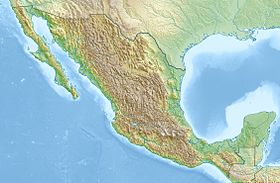
The reserve is located on the eastern coast of the peninsula, stretching from north to south for 120 km and occupying almost a third of the Caribbean coast of Mexico. The total area of protected areas is 5,280 km². In 1994, lands of more than 800 km² south of the reserve, near Waimil , were annexed to the reserve.
Sian Kaan Nature Reserve includes tropical forests , there are mangroves and swamps , as well as the coastal waters of the Caribbean Sea with a section of the barrier reef . The average annual rainfall in the region is 1120–1220 mm, approximately 70% of which falls in the season from May to October. Most of the water seeps through the limestone rocks, of which the Yucatan and sandy soils are composed, the aquifer in places exits through the cenotes . Most of the reserve is wetlands, flooded in the rainy season.
The reserve has three main areas where human activity is limited and scientific research is being carried out: the central zone of Muyil ( Zonas Nucleares of Muyil ), the island of Culebras ( Cayo Culebras ) and Waimil ( Uaymil ). In total, there are 23 archaeological sites of Mayan civilization within the reserve. The population of the reserve is estimated at 2 thousand people, most of whom live in the fishing villages of Punta Allen and Punta Herrero on the coast.
Flora and fauna
110 km of the second largest Mesoamerican Barrier Reef in the world, which stretches along the east coast of Yucatan to the south near the coast of Belize and Honduras, is located on the territory of the Sian-Kaan Nature Reserve. On the beaches of Sian Kaan there are egg laying sites of several rare species of sea turtles. On the coastal dunes that protect the interior from storms, sea grapes , Kermek , Surian seaside , Sesuvium portalacastrum , perennial ragweed , morning glory and many others grow.
Wetlands are an important habitat for many animal species, also mitigating the effects of storms. Red , black and white mangrove trees grow in the mangroves , as well as the erect conocarpus . On oxygen-poor soils of the coastal savannah, flooded every year, grass and reeds grow, the height of which rarely exceeds 3 meters.
The fauna of the reserve is very diverse and includes 336 known species of birds and 103 known species of mammals. In addition, more than a million birds fly to winter in Sian Kaan. Among the feathered inhabitants of the reserve - brown pelican , green cormorant , magnificent frigate , great blue heron , white American heron , American white ibis and osprey .
Among the marine life in the reserve there are representatives of the carapace family, tarpon , groupers , round trachinot , nanny shark , hammer fish , black-headed shark and reef perch .
Tourism
You can get to the reserve from five points located in the settlements of Multikub , Santa Teresa , Chumpon , Chunyashche and Chak-Mool . In addition to the natural beauties of tourists, archaeological sites on the site of the ancient Mayan cities are attracted, where artifacts up to 2.3 thousand years old were found. In the northernmost part of Sian Kaan, the lagoons and canals probably used the ancient trade route from Tulum to Muyil . The population of the reserve territory until the mid-12th century was made by chikle (natural rubber ), and also engaged in fishing.
For fishermen in Sian-Kaan, tourism is another source of income - tourists take rental boats to look at reefs and lagoons. In 2000, the reserve was visited by 36 thousand tourists.
Links
- Wikimedia Commons has media related to Sian Kaan
- Centro Ecologico Sian Ka'an (English) (Spanish)
- UNESCO: Sian-Kaan Biosphere Reserve (Inaccessible link - history ) .