Amiata ( Italian: Monte Amiata ) is a mountain of volcanic origin in Italy .
| Amiata | |
|---|---|
| ital. Monte amiata | |
 Monte Amiata Mountain View | |
| Characteristics | |
| Volcano shape | Volcanic dome |
| Education period | Pleistocene |
| Last eruption | Pleistocene |
| Highest point | |
| Absolute height | 1738 [1] m |
| Relative height | |
| Location | |
| A country |
|
| Region | Tuscany |
| Mountain system | Apennines |
| Ridge or array | |
| |



Content
- 1 Geography
- 2 Attractions
- 3 notes
- 4 References
Geography
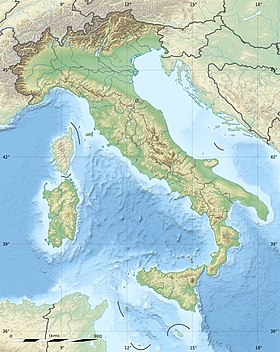
Mount Amiata is located in the southern part of Tuscany , 50 km southeast of Siena , on the route between Florence and Rome . Height is 1738 m above sea level. Near Amiata are the Val d'Orcia Valley, a UNESCO World Heritage Site, and Upper Maremma .
The Amiata volcano has remained calm for more than 2000 years, but volcanic activity has not completely stopped - this is indicated by geothermal springs and geysers on the mountain slopes (currently used to generate electricity). The slopes of Monte Amiata are covered with beech, chestnut, pine forests, which are still inhabited by rare species of birds of prey and wolves .
Attractions
The latter include the slopes of Amiata, remarkably adapted for skiing. In addition, in the vicinity of the mountain there are several conservation zones. Nearby is the D. Sperry Sculpture Park in Seggiano , as well as the Renaissance villa La Sforzesca.
Notes
- ↑ Amiata : [ eng. ] // Global Volcanism Program . - Smithsonian Institution . - Date of appeal: 09/28/2018.
Links
- http://www.monte-amiata.com/ (English)
- Amiata : [ eng. ] // Global Volcanism Program . - Smithsonian Institution .
- Amiata on Volcano Live