Isidro Lángara Galarraga ( Spanish: Isidro Lángara Galarraga ; May 25, 1912 , Pasaques - August 21, 1992 , Andoain ) - Spanish footballer , striker .
 Isidro Langara | ||||||||||||||||||||||||||||||||||||||||||||||||||||
|---|---|---|---|---|---|---|---|---|---|---|---|---|---|---|---|---|---|---|---|---|---|---|---|---|---|---|---|---|---|---|---|---|---|---|---|---|---|---|---|---|---|---|---|---|---|---|---|---|---|---|---|---|
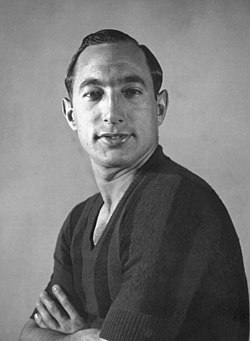 | ||||||||||||||||||||||||||||||||||||||||||||||||||||
| general information | ||||||||||||||||||||||||||||||||||||||||||||||||||||
| Full name | Isidro Langara Galarraga | |||||||||||||||||||||||||||||||||||||||||||||||||||
| Nickname | Tanque (Tank) | |||||||||||||||||||||||||||||||||||||||||||||||||||
| Born | May 25, 1912 Pasajes , Spain | |||||||||||||||||||||||||||||||||||||||||||||||||||
| Died | August 21, 1992 (aged 80) Andoain , Spain | |||||||||||||||||||||||||||||||||||||||||||||||||||
| Citizenship |  Spain Spain | |||||||||||||||||||||||||||||||||||||||||||||||||||
| Position | attack | |||||||||||||||||||||||||||||||||||||||||||||||||||
| ||||||||||||||||||||||||||||||||||||||||||||||||||||
| ||||||||||||||||||||||||||||||||||||||||||||||||||||


Biography
Isidro Langara Galarraga was born on May 25, 1912 in the city of Pasajes , which is located in Gipuzkoa in the north of Basque Country . There he began to play football, speaking for the team of his Bildur Gucci school, but after graduating from secondary education, Langar, like many boys of his age, was forced to leave football, working as an assistant turner and mastering the basics of this profession.
In 1928, Uncle Langara took his nephew with him on a trip to San Sebastian , which was located near Pasaques, where Isidro offered his services to the Esperanza club, playing in the second league of the Gipuzkoa Championship. The 16-year-old boy liked the coaching staff of the team, so Langara became a football player. When the time came of coming of age to Langara, the footballer was taken into the army, but, like many footballers, did not get into the troops themselves, but was taken into the army team - Tolosa , who played in the third Spanish division.
In 1931, after demobilization, Langara came to the Oviedo club. With Oviedo, Langara made his debut in the Segund , the club immediately paid Isidro 3,000 pesetas and assigned him a salary of 500 pesetas per month. In the 1931/32 season, Oviedo took second place, which did not allow the club to rise in Example , but Langara proved to be excellent, becoming the main striking force of the team, which attracted the attention of the coaches of the national team , in which the player made his debut on April 24, 1932 in game with the team of Yugoslavia , in which he scored the first goal in the game, and his team won 2: 1. The following season, Oviedo, led by Langara, who became Segunda's top scorer, rose to the top Spanish division.
In the first year in Example Langara scored 27 goals, winning his first Pichichi , the prize for the best sniper of the highest Spanish division. In the same season, La Electrics center forward [1] was again invited to the national team for the 1934 World Cup qualifier match with Portugal , this match is considered the best match of Langara in his career, Spain won 9-0, and Langara scored 5 goals, becoming the first a footballer who scored 5 goals in tournament history. In the return game with the Portuguese in Lisbon, the Spaniards won 2: 1, both goals scored by Langar.
The Spaniards went to the 1934 World Cup in the rank of one of the favorites of the tournament. The first match was played on May 27, the Brazil team opposed Spain, the Spaniards conceded only one goal, scoring three, two of which were on Langara’s account [2] . In the quarterfinals of the tournament, Spain was waiting for the host of the competition, the Italian team. In the first match, with the rough play of the Italians and the terrible work of the referee, who did not count the “clean” goal scored by Langara in the 85th minute of the game, the match ended with the score 1: 1. In the replay, which due to injuries could not reach seven players of the main part of the Spaniards, including Langara, Italy won 1-0. In total, Langar spent 11 matches for the national team, scoring 17 goals, Isidro spent the last game on May 3, 1936 against Switzerland , scoring one of the two unanswered goals of the Spaniards.
In the 1934/35 season, Langara scored 26 goals, which allowed Oviedo to take the highest place in the club’s history - to become the bronze medalist of the championship, the same thing happened a year later, Langara again the best sniper of the championship, and Oviedo again the third team in Spain. In total, Oviedo Langara played 220 matches and scored 281 goals. The further growth of the club was prevented by the Spanish Civil War , which broke out in July 1936, and Langara, according to the republican order, went to the front at the age of 24.
In 1937, Langara was recalled from the front and went to Basque Country, where he again began to play football, thanks to Luis Regeiro , who had the idea to unite all the Basque players who supported the Republic, under the banner of one club. Leonardo Silaurren , Guillermo Gorostis , Langar and other Basques supported the idea of Rigeiro, the new club, it was decided to call "Euskadi", which in Basque means Basque Country. The new club held its first match on April 26, 1937 in Paris against the local Racing , ending 3-0.
Then the team held several friendly matches in Czechoslovakia, Poland, the USSR , Scandinavia. By the fall of 1937 the team began to crumble, the players left the team. As a result, those who remained on a ship full of refugees left for Mexico at the end of 1937. There, the team continued to win, from November 1937 to January 1938, having won 15 victories in 20 matches, Langara again struck with efficiency, scoring 20 goals from 73 scored by the team. Attempts to hold matches in the countries of South America were unsuccessful, the authorities of the Latin American countries sympathized with the Franco regime and did not allow a team composed of Republicans to appear on their territory. The help of Basque refugees in Mexico allowed the team to stay afloat.
In the fall of 1938, Euskadi entered the Mexican championship under the name “Seleksion Baska” (Basque national team), the club immediately began to excel in the local championship, supported by the money of the Basque migrant Angel Urrasa, owner of the Goodrich-Euskadi automobile concern. The Basques have long been leaders in the championship, but in April 1939 immediately 9 players left the club, seduced by the offers of wealthy Argentine clubs. The headless "Seleksion Baska" lasted until the end of the championship, taking second place in the tournament, and ended its existence.
Langara, along with Angel Subieta, received an offer from the San Lorenzo club. Langara did not refuse. His debut in the new team took place on May 21, 1939 in a game with River Plate , the debut was fantastic: in the first half of the game, Langara made poker, scoring goals at 7, 13, 21 and 39 minutes. This instantly made Langara the idol of San Lorenzo fans. A year later, Isidro, together with the Paraguayan Benitez, became the best sniper of the Argentinean championship, scoring 33 goals. For just 4 years, Langara spent 121 matches in San Lorenzo and scored 110 goals in them, still taking 7th place in the number of goals in the history of the club, but the titles bypassed San Lorenzo side, the team twice in 1941 and 1942 occupied the 2nd place, giving the first line to the River Plate.
In the winter of 1942, San Lorenzo toured Mexico, having played 10 matches, Landara played in 9 of them, scoring 23 goals (out of 43 goals scored by the team). Mexican fans, and especially the Basques, did not forget Langara’s excellent game, he was so moved by their support that he said he was ready to return to Mexico if he was offered a salary not lower than the Argentinean. The next year, with the creation of a professional Mexican football league, the Langare contract was proposed by the Real Espana club, which brought together almost all the former Euskadi players under its banner, of course, the club immediately became the leader of Mexican football, winning the Mexico Cup in 1944 (and a year before reaching the finals of the tournament) and the Mexican championship in 1945. Langara was still the team’s top scorer, scoring 27 goals in the 1943/44 season, 38 goals the following year, and 40 goals in his last season at Espanye, 7 of which in the match with Monterrey , a record not broken still.
After the end of World War II, Franco issued a decree on amnesty for all Spanish athletes who fought on the side of the Republic. Langara, who fell under this law, returned to his former Oviedo team in 1946. Despite the return of football stars to Spain, the press, loyal to the Franco regime, barely wrote about the players who supported the Republic in their time. In the 1946/47 season, Langara was in great shape, having scored 18 goals in 20 matches of the club, he was even invited to the Spanish national team, but his injury and “sudden” breakdown prevented Langara, after 10 years, from wearing the national team's T-shirt. The next year, in the first round, Langara was seriously injured and stopped getting into the club, having only 9 matches, scoring 5 goals. At the end of the season, Langara announced the completion of a sports career.
Having completed his football career, Langara returned to Mexico, opening a restaurant business. In the 1950s, Langara began training, first in Chile , then in Mexico, where in 1953 he won the Mexican Cup with Puebla , and Argentina.
Before his death, Langara returned to the Basque Country to die in his homeland.
Performance Statistics
| Club | Season | League | Cups [3] | Others [4] | Total | ||||
|---|---|---|---|---|---|---|---|---|---|
| Games | Goals | Games | Goals | Games | Goals | Games | Goals | ||
| Oviedo | 1930/31 | 18 | 15 | 0 | 0 | 0 | 0 | 18 | 15 |
| 1931/32 | sixteen | 22 | 3 | 2 | ten | 14 | 29th | 38 | |
| 1932/33 | 18 | 24 | 2 | 2 | 3 | eleven | 23 | 37 | |
| 1933/34 | 18 | 26 | 6 | 9 | eight | 24 | 32 | 59 | |
| 1934/35 | 22 | 27 | 2 | one | 3 | 7 | 27 | 35 | |
| 1935/36 | 21 | 28 | 2 | 2 | eight | 17 | 31 | 47 | |
| Total | 113 | 142 | 15 | sixteen | 32 | 73 | 160 | 231 | |
| Euskadi | 1938/39 | 9 | 15 | 0 | 0 | 0 | 0 | 9 | 15 |
| Total | 9 | 15 | 0 | 0 | 0 | 0 | 9 | 15 | |
| San lorenzo de almagro | 1939 | 25 | 34 | four | one | 0 | 0 | 29th | 35 |
| 1940 | 34 | 33 | - | - | 0 | 0 | 34 | 33 | |
| 1941 | thirty | 24 | 2 | 0 | one | one | 33 | 25 | |
| 1942 | 27 | 15 | 2 | 0 | 0 | 0 | 29th | 15 | |
| 1943 | five | four | 0 | 0 | 0 | 0 | five | four | |
| Total | 121 | 110 | eight | one | one | one | 130 | 112 | |
| Real Espana | 1943/44 | 18 | 28 | 6 | four | one | one | 25 | 33 |
| 1944/45 | 22 | 38 | four | 7 | one | 0 | 27 | 45 | |
| 1945/46 | 27 | 40 | one | one | 0 | 0 | 28 | 41 | |
| Total | 67 | 106 | eleven | 12 | 2 | one | 80 | 119 | |
| Oviedo | 1946/47 | 20 | 18 | 3 | one | 0 | 0 | 23 | nineteen |
| 1947/48 | 9 | five | one | 2 | 0 | 0 | ten | 7 | |
| Total | 29th | 23 | four | 3 | 0 | 0 | 43 | 26 | |
| Total for Oviedo | 142 | 165 | nineteen | nineteen | 32 | 73 | 193 | 257 | |
| Total career | 339 | 396 | 38 | 32 | 35 | 75 | 412 | 503 | |
Achievements
Team
- Champion Astur-Cantabro: 1932, 1936
- Champion of Asturias: 1933, 1934, 1935
- Mexico Cup Winner : 1944, 1953 ( coach )
- Champion of Mexico : 1945
Personal
- Top scorer of the championship of Spain : 1934, 1935, 1936
- Argentina Championship Top Scorer : 1940
- Mexican Championship top scorer: 1946
Notes
- ↑ The so-called attack of the club, consisting of Kasuko, Gallart, Herrerita, Emilin and Langara himself
- ↑ According to other sources, Langara scored one goal.
- ↑ Spanish Cup, Adrian Escobar Cup, Mexico Cup .
- ↑ Regional Championships of Asturias and Asturo-Cantabria, Champion of the Champions of Mexico , Escobar-Girona Cup.