


The accession of Transylvania to Romania (in Romania it is called the Great Unification of 1918 ) is a political event that began on December 1, 1918 during the collapse of Austria-Hungary , when at the congress of the Romanians in the city of Alba Iulia, the delegates decided to join the Hungarian Transylvania Kingdom of Romania .
The emergence of a separate Transylvania-oriented part of Hungary into Romania, the socialist revolution in Hungary itself, the territorial disputes of the Hungarians and the Czechoslovaks led to the beginning of the Czechoslovak-Hungarian war . In 1919, the Romanian-Hungarian front opened in Transylvania, and in the summer of the same year the Romanians reached Budapest . The socialist government in Hungary fell, and after the signing of the Treaty of Trianon , which documented the collapse of Austria-Hungary and the defeat of Hungary in the First World War , Transylvania finally became part of Romania.
Prerequisites
In the Middle Ages, the whole of Transylvania and part of Moldova fell into the Hungarian kingdom . Wallachia became dependent on Hungary. All of these territories were interconnected culturally and economically.
In the XIV century, the principality of Wallachia and the Moldavian principality fell away from Hungary, gaining independence. Transylvania was still in the kingdom. By the beginning of the 16th century, Moldavia and Wallachia fell under Turkish influence, eventually becoming completely dependent on the Ottoman Empire . In turn, other processes took place in Transylvania - Magyarization and Germanization of the local population.
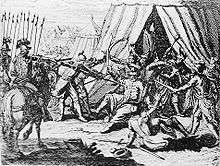
However, in the second half of the XVI century, Transylvania also fell into the zone of influence of Turkey. The dependent principality of Transylvania was formed. At this time, the relationship between the region and the Danube principalities once again begin to develop. In 1600, Wallachia, Transylvania and Moldova were united under the rule of Prince Mihai the Brave . He proclaimed the conquered territories a separate state independent of the Ottoman Empire. However, due to strife with the boyars, Mihai was killed. After him, Rudolph II ascended the throne of the principality. Thus, the region fell under Austrian influence.
The turning point in the history of the Danube principalities, and Transylvania, was the beginning of the XIX century . A new political trend has emerged - Pan - Romanism . During the revolutions of 1848 in Europe, a great influence on Transylvania was exerted by Wallachia and Moldavia. After the defeat, the local intelligentsia fled to the region, spreading the ideas of Romanian unity here. Also a great influence on the political future of Transylvania was the creation of Romania .
Having entered the First World War , Romania openly put forward its claims to the region, but its army was defeated. Only with the end of the war, the Romanian government was able to begin to implement his plans.
The course of events
With the collapse of the Austro-Hungarian Empire, self-proclaimed ethnocratic states began to emerge in its former territories. This was preceded by the emergence of National Councils - one from each region or people of the empire. On October 27, 1918, a congress of local Romanians was held in Bukovina in Chernivtsi , where it was decided to create a National Legislative Assembly of Bukovina and convene a National Council of Romanians Bukovina with 50 members. The first decision of the Bukovinian Romanian National Council was the unification of Bukovina with the Kingdom of Romania and Transylvania. Also in the National Council was elected representative of the Romanian Bukovina Janku Frondor . Yanku headed the Bukovina Management Committee .
On November 2 of the same year, the Romanian Central National Council appeared in Transylvania. The Council entrusted the powers of the Provisional Government of the region. In November, the council began negotiations with the Hungarian government on the peaceful separation of Transylvania from Hungary, but they failed. In the meantime, Transylvania workers staged strikes on a par with workers in Hungary, and the region lived the same political life as Hungary. In such conditions, on December 1, a congress of all members of the Romanian Central National Council was appointed in Alba Iulia. This congress was named the Great National Assembly. Alba Iulia was chosen as the site of the congress because in 1600, Prince Mihai the Brave , who united the principalities of Wallachia , Transylvania and Moldova into a single state, declared this city to be his residence.
On this day, more than 100,000 people came to the city from all regions of Transylvania and Bukovina. Of these, there were 1,228 deputies who had the right to vote. After the speeches of the deputies before the assembled people, a vote began, in which it was decided to separate the region from Hungary. A supreme body of provisional self-government, the Steering Consilium, was also elected. All requirements of the Romanian National Central Council were set forth in a separate resolution to the Austro-Hungarian government, containing 6 points:
- Self-determination of Transylvania and other regions of the disintegrating Austria-Hungary.
- Religious freedom in Austria-Hungary and Transylvania as in one of its constituent parts.
- Equality of men and women during the polls; reduction of property and age qualifications for participation in public affairs.
- Cancel censorship.
- Conducting agrarian reforms; improving the situation of the peasants.
- Granting broader rights to trade unions; Improving the position of workers factories and plants.
However, both the government of Austria and Hungary were unable to respond in time to this resolution. In these countries, due to the collapse of Austria-Hungary, the situation was extremely unstable, and the authorities of these countries could no longer influence the outskirts of the ex-empire. Thus, the authorities of the First Austrian Republic were already indifferent to what is happening in neighboring newly independent Hungary, since Carinthia favored joining the CXC to the Kingdom , and South Tyrol to Italy . Similar was observed throughout the former Austria-Hungary.
The Romanian government reacted with approval to the decision of the Romanian congress in Alba Iulia. On December 7, Romanian troops crossed the border with Austria-Hungary south of the city of Brasov and occupied it. On the same day, they reached the river Mures and occupied the cities of Cluj-Napoca and Turda in the center of Transylvania. By the beginning of 1919, the whole of Transylvania was controlled by Romanian troops.
See also
- Disintegration of the Austro-Hungarian Empire
- Romanian intervention in Hungary
- Czechoslovak-Hungarian war
- Hungarians in Romania
- Szekei
- Second Vienna Arbitration
- Bessarabia in Romania