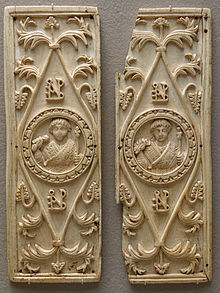
Consular diptychs - in Byzantium, ivory diptychs (plaques for notes) are presented to consuls to commemorate their assumption of office. [one]
The manufacture of consular diptychs is provided for in the code of the emperor Theodosius ( 438 ), but earlier copies are also known (the oldest of them is dated 406 ). Diptychs ceased to exist under Justinian I (the last diptych dated 541 year ).
The form of the Byzantine consular diptych was borrowed from ancient Roman. [2] On the consular diptychs there was an image of the appointed consul (full-length or chest) framed by floral ornaments. In addition, circus scenes, chariot competitions at the hippodrome , struggle with wild animals , and theater actors are found in separate medallions . [3] Diptychs were also covered with paints, sometimes inlaid with precious stones.
In the early diptychs, the influence of ancient traditions is visible. This is manifested both in the style of the image, and in the selection of scenes (for example, scenes from ancient dramas, personifications, etc.). [4] Consular diptychs of the 6th century show the appearance of the Byzantine style against the backdrop of Greek-Eastern artistic tradition. This reflects "the desire for a stylish manner, the development of forms, especially drapes, and it would be difficult not to connect these features with the needs of the capital's circles, government orders, and deny the participation of old workshops in Italy and new in Constantinople ." [5]
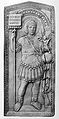
Consular diptych Test (406 year)

Consular diptych Anastasia (517 year)

Consular Diptych of Phyloxenia (525)


Notes
- ↑ Diptych (dictionary of antiquity)
- ↑ Likhacheva V. D. The Art of Byzantium of the IV-XV centuries. - L: Art, 1981. - S. 26.
- ↑ History of Byzantium / (editor-in-chief) Academician S. D. Skazkin. - M .: Nauka, 1967 .-- T. 1.
- ↑ Likhacheva V. D. The Art of Byzantium of the IV-XV centuries. - L: Art, 1981. - S. 28-29.
- ↑ Kondakov N.P. Iconography of Our Lady