A short-haired wombat [1] [2] , or a hairless wombat [2] , or a Tasmanian wombat [2] ( lat. Vombatus ursinus ), is a species of marsupial mammals from the wombat family living in Australia . The only modern representative of the genus Shorthair [2] or hairless wombats [2] ( Vombatus ).
| Shorthair Wombat |
 |
| Scientific classification |
|---|
| No rank : | Bilateral symmetrical |
| Squad: | Two-tailed marsupials |
| Gender: | Shorthair Wombats ( Vombatus E. Geoffroy , 1803 ) |
|
| International scientific name |
|---|
Vombatus ursinus ( Shaw , 1800 ) |
| Area |
|---|

|
| Security status |
|---|
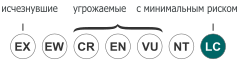
Least ConcernedIUCN 3.1 Least Concern : 40556 |
|
Adults can reach from 80 to 130 cm and weigh from 17 to 40 kg. Wombats found on the islands of Tasmania and Flinders are often smaller in size than their mainland relatives. They differ from long-haired wombats with their bald nose.
The synonymy of both genus and species is vast. The minor synonyms of the genus are [3] :
- Amblotis Illiger, 1811
- Opossum Perry, 1810
- Phascolomis E. Geoffroy, 1803
- Phascolomus Rafinesque, 1815
- Phascolomys Duméril, 1806
- Wombatus Desmarest, 1804
The following binomens [4] [5] are included in the synonymy of the species:
- Didelphis ursina Shaw, 1800
- Opossum hirsutum Perry, 1810
- Phascolomys mitchelli Owen, 1838
- Phascolomys platyrhinus Owen, 1853
- Phascolomys ursinus (Shaw, 1800)
- Phascolomis vombatus Leach, 1815
- Vombatus angasii (Gray, 1863)
- Vombatus assimilis (Krefft, 1872)
- Vombatus bassii (Lesson, 1827)
- Vombatus fossor (Desmarest, 1804)
- Vombatus fuscus (Tiedemann, 1808)
- Vombatus niger (Gould, 1863)
- Vombatus setosus (Gray, 1863)
- Vombatus tasmaniensis (Spencer & Kershaw, 1910)
- Vombatus wombat (Voigt, 1802)
There are three subspecies:
- Vombatus ursinus hirsutus (lives in Australia)
- Vombatus ursinus tasmaniensis (lives in Tasmania )
- Vombatus ursinus ursinus (used to live on all the islands of the Bass Strait , but now only on the Flinders Island )