Bohuslän ( Swede. Bohuslän ) - a historical province in Sweden , located on the coast of the Skagerrak Strait [2] .
The area is 4473 km², the population is 282 949 people (2007) [3] .
| Historical province of Sweden | |||
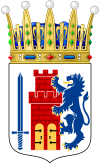
Landskap Bohuslen | |||
| |||
| Region | Götaland | ||
| Lena | Västra Götaland | ||
| Square | 4473 km² | ||
| Symbols of the province | |||
Plant | Curly honeysuckle [1] | ||
Animal | Common seal | ||
Bird | Magpie | ||
A fish | Mackerel | ||

Geography
It extends 160 km from the border with Norway in the north to Gothenburg in the south. It borders with Dalsland and Westergötland from the east.
History
The stretch of coast between Svinesund and Goeta-Elv became a territorial-administrative unit rather late. At least from the Viking era , the province was divided into two parts and was part of the Norwegian regions of Ranrike in the north and Elvssussel in the south. However, from the XIII century, the area began to gradually converge.
The founding importance of this region for Norway is evidenced by the foundation at the turn of the XI-XII centuries Konungahella - the oldest city of Bohuslain. In the 13th century, King Hakon Hakonsson (1217–1263) erected a castle on Ragnhildsholmen to protect the city. At the same time, Marstrand was founded.
At the beginning of the XIV century, King Hakon V the Holy built the Bagahus fortress (later Bohus ) on Bagaholmen. The name "Bohuslen" first appears in the XV century. and originally belonged to the southern part of the region. However, in the sixteenth century, when Norway actually turned into one of the provinces subordinated to the Danish crown, Bohus' lansman began to rule the entire province until Swinesund.
From the 13th century, Sweden had only a narrow corridor facing the coast of the Kattegat , and since the reign of the Vasa dynasty, it tried in every way to expand it, capturing Bohuslän. He moved to Sweden in 1658 across the Roskilde world . In 1693, Gothenburg became the center of the diocese , and in 1700 the center of the province. For economic and political reasons, the Stockholm authorities tried their best to stop the trade of Bohuslen residents with Denmark . Norwegian laws and liturgical order were gradually replaced by Swedish.
Bohuslain's economic life was periodically revived by the arrival of herring to its shores, which happened in the XIII, XVI and XVIII centuries. The XIX century was the heyday of the province, at which time its population grew significantly. In the 20th century, coastal areas once again embraced rapid growth. Now in agriculture no more than 10 thousand bohuslings were employed (4%), and although only a few thousand people worked in fishing-related industries, new types of industry settled on the coast: petrochemical and automobile. In addition, among Swedes and residents of Northern Europe, Bohuslän has become a popular holiday destination.
See also
- Swedish provinces
Notes
- ↑ Svenska landskapsblommor : [ arch. 09/29/2017 ]: [ Swede. ] . - Naturhistoriska riksmuseet , 1996 .-- 12 augusti. - Date of appeal: 04.04.2018.
- ↑ Bogus-lan // Brockhaus and Efron Encyclopedic Dictionary : in 86 volumes (82 volumes and 4 additional). - SPb. , 1890-1907.
- ↑ Statistiska centralbyrån Archived July 31, 2009 on Wayback Machine
Literature
- Bogus-lan // Brockhaus and Efron Encyclopedic Dictionary : in 86 volumes (82 volumes and 4 additional). - SPb. , 1890-1907.