Eduardo Lopez de Romagna ( Spanish: Eduardo López de Romaña ; March 19, 1847 , Arequipa - May 26, 1912 , Lima ) - Peruvian politician, president of Peru from 1899 to 1903.
| Eduardo Lopez de Romagna | |||||||
|---|---|---|---|---|---|---|---|
| Eduardo lópez de romaña | |||||||
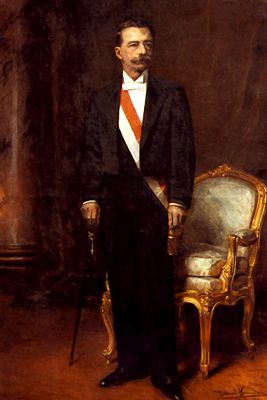 | |||||||
| Predecessor | Nicholas de Pierola | ||||||
| Successor | Manuel Candamo | ||||||
| Birth | March 19, 1847 Arequipa | ||||||
| Death | May 26, 1912 (aged 65) Lima | ||||||
| The consignment | |||||||
| Education | |||||||
Biography
Born in an aristocratic family. He studied in Europe, upon returning to the country he worked as an engineer, then in agriculture. He joined the Civil Party of Peru .
In 1899, with the support of the National Coalition Party, a new union created by the Civil and Democratic Parties, he was elected president for a four-year term. Initially, support was given to his brother Alejandro de Romagna, but he refused in favor of Eduardo.
The presidency of Eduardo Lopez de Romagna actively developed agriculture, as well as mining. Under him, new laws were adopted for the development of the economy, such as the Industrial Code, the Maritime and Commercial Codes. Under his rule, with the participation of foreign capital, the National Agrarian University was founded.
During his presidency, Romagna often faced coup attempts in favor of former President Andrés Avelino Cáceres .
During the presidency of Romagna, the term “Aristocratic Republic” appeared in the political life of the country, which meant the period of the reign of representatives of the Civil Party of Peru, which lasted until the second presidency of Augusto Legia .