Edward I the Long-legged ( Eng. Edward I "Longshanks" ; June 17, 1239 - July 7, 1307 ) - King of England since 1272 from the Plantagenet dynasty .
| Edward I the Leggy | |||||||
|---|---|---|---|---|---|---|---|
| Edward i longshanks | |||||||
 | |||||||
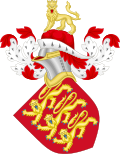 | |||||||
| Coronation | August 19, 1274 | ||||||
| Predecessor | Henry III | ||||||
| Successor | Edward ii | ||||||
| Birth | June 17, 1239 Palace of Westminster , London , Kingdom of England | ||||||
| Death | July 7, 1307 (68 years old) Braff-by-Sands , Cumbria , Kingdom of England | ||||||
| Burial place | Westminster Abbey , London | ||||||
| Kind | Plantagenets | ||||||
| Father | Henry III | ||||||
| Mother | Eleanor of Provence | ||||||
| Spouse | 1st: Eleanor of Castile 2nd: Margarita French | ||||||
| Children | From 1st marriage: sons: John, Henry, Alphonse, Edward II daughters: Eleanor , John, Julian, John, Margarita , Berengaria, Maria , Isabella, Alice, Elizabeth, Beatrice, Blanca From 2nd marriage: sons: Thomas Brotherton , Edmund Woodstock daughter: Eleanor | ||||||
| Religion | |||||||
| Battles | |||||||

He was the eldest son of King Henry III , during the reign of his father participated in political intrigues, including in the open uprising of the English barons. In 1259, Edward briefly sided with the Baron movement for reforms supporting Oxford conditions . After reconciliation with his father, he remained loyal to him during the ensuing armed conflict, known as the Baron War. After the battle of Lewis, Edward became a hostage to the rebel barons, but a few months later he fled and joined the war against Simon de Montfort . After the death of Monfort in the battle of Evesham (1265), the uprising died out. After the reassurance of England, Edward joined the Eighth Crusade , going to the Holy Land (although many historians distinguish Edward's campaign as a separate crusade ). In 1272, when Edward was on his way home, Henry III died. On August 19, 1274, Edward was crowned [1] .
Under the king, the central government strengthened, parliament began to convene regularly, a series of legislative acts regulating the sphere of crime and property relations appeared. The king suppressed a small uprising in Wales in 1276–1277, and responded to the second uprising (1282–83) with a full-scale conquest. Edward conquered Wales and placed it under English control, built many castles and cities in the countryside, and populated them with the British [2] .
In foreign policy, he first played the role of a peacemaker, trying to assemble a new Crusade. In 1286, Edward prevented the Franco-Aragon conflict by breaking the armistice with France. With the fall of Acre in 1291, his role changed, and after the capture of Gascony by King Philip IV of France, Edward put together an anti-French alliance, the hostilities of which ended in failure. In 1299, Edward made peace with France.
After the death of the Scottish Queen in 1290, Margaret Edward intervened as a referee in the struggle for the Scottish inheritance and determined Margaret John I Balliol to be the successor, then invaded Scotland, imprisoned Balliol in the Tower , defeated William Wallace in 1298, captured and executed Wallace (1305) ), however, soon Robert I Bruce raised a new rebellion and after the death of Edward expelled the British from Scotland [3] .
In the mid-1290s, ongoing hostilities led to an unbearable tax increase and Edward faced opposition from both the barons and the church. The result was the Confirmation of the Charter (Confirmato Cartarum), signed by the king on November 5, 1297.
Edward I died in 1307 during his next campaign in Scotland, leaving his son and heir Edward II many financial and political problems, including the ongoing war with Scotland [4] .
By the standards of that time, Edward was a tall man, for which he received the nickname "Leggy." Due to his high growth and his temperament, he made a terrifying impression on others, inspiring fear in his contemporaries. Citizens respected him for embodying the idea of a medieval king as a soldier, ruler [5] and believer [6] , but others criticized him for his uncompromising attitude towards the titled nobility.
Estimates of the present time diverge from one another, it is believed that Edward had many achievements during his reign, among them the restoration of royal power after the regime of Henry III, the founding of parliament as a permanent authority, the creation of a functioning system of tax growth, and the reform of the law through the publication of acts [7 ] . They criticize Edward in particular for the brutal hostilities against the Scots [8] and the expulsion of Jews from England in 1290 [9] .
The early years
Edward was born in the Palace of Westminster on the night of [~ 1] from June 17 to June 18, 1239. His parents were King Henry III and Eleanor of Provence. Although the little prince was seriously ill for various reasons in 1246, 1247 and in 1251, he grew up healthy and strong [6] . Edward was under the care of Hugo Gifford - the father of the future Chancellor Godfrey Gifford, after the death of Gifford in 1246 he was replaced by Bartolomeo Pekke [10] . Among his childhood friends were his cousin Henry of Alemanni, the son of King Henry of Cornwall’s brother [6] . Henry of Alemanni remained a close companion of Edward, having passed with him both the civil war and the Crusade [11] .
In 1254, the English throne feared a Castilian invasion of the Gascogne province of England, which prompted Henry III to arrange the political marriage of his 15-year-old eldest son Edward and Eleanor , who was the daughter of King Castile ( Ferdinand III ) and half-sister of King Castile Alfonso X [ 12] . On November 1, 1254, Eduard and Eleanor were married in the Castilian Abbey of Santa Maria la Real de las Welgas [13] . As part of the marriage agreement, the young prince received an annual payment of 15 thousand marks [14] .
The gifts of King Henry were very respectable, but still Edward gained only a small fraction of independence. As early as 1249, Edward received Gascony, but a year earlier Simon de Montfort, the 6th Earl of Leicester became a royal representative in this province and, therefore, derived income from it, so that de facto Edward had no power in Gascony [15] . In 1254, the prince received a land allotment: most of Ireland and lands in England and Wales, including the Chester brand , but King Henry III retained partial control over these lands (especially over Ireland), so Edward’s power over these lands was limited [16] , and the king appropriated most of the proceeds from these estates. [17] .
Between 1254 and 1257, Edward was influenced by his mother's relatives, known as the House of Savoy. [18] The most famous of these was Pierre of Savoy , the uncle of Edward's mother. [19] . After 1257, he began to increasingly come under the influence of the Poitevins ( Lusignan faction) - his father’s brothers, led by William de Valence [~ 2] . Two groups of influential foreigners were offended by the English aristocracy and in subsequent years became the center of the Baron reform movement [20] . There are known stories of the rebellious and hot-tempered behavior of Eduard and his relatives Lusignan, which raised questions about the personal qualities of the king’s heir. The events of the next year became formative for the character of Edward [21] .
Early political aspirations
Already in 1255, Edward began to show independence in political affairs. In Gascony, he sided with the Soler family in the conflict between Soler and Colombes. This step of Edward came into conflict with the policy of equilibrium between local groups conducted by his father [23] . In May 1258, a group of tycoons signed a document on the reform of the royal government (the so-called " Oxford Provisions "). The reform was mainly directed against the Lusignans. Edward remained on the side of his political allies and resolutely opposed the Oxford Provisions. The reformers achieved their goal of limiting the influence of the Lusignans, and Edward’s political position gradually began to change. In March 1259, Edward entered into an alliance with one of the main reformers, Richard de Claire , 6th Earl of Hartford , 2nd Earl of Gloucester . Then, on October 15, 1259, the prince declared his support for the goals of the barons and the support of their leader Simon de Montfort [24] .
Edward supported Monfort for pragmatic reasons, since Montfort could support the prince in Gascony. [25] When the king left France in November, Edward turned to overt disobedience. The prince held several meetings with the reformers and supported their cause, thanks to which his father came to the conclusion that Edward was plotting a coup [26] . When the king returned to France, he initially refused to see his son, but the Earl of Cornwall and the Bishop of Canterbury convinced the king, Edward and Henry finally agreed [27] . Edward was sent abroad and in November 1260 he joined the Lusignans, who took refuge in France [28] .
At the beginning of 1262, Edward returned to England and broke up with several of his former allies, the Lusignans, for financial reasons. The following year, King Henry sent an heir to Wales in a campaign against Llewelyn up Grifid , the campaign was of limited success [29] . In April 1262, Simon de Montfort (who had been outside the country since 1261) returned to England and again raised the baronial reform movement [30] . At a turning point, when it seemed that the king would again satisfy the demands of the barons, Edward began to regain control of the situation. Edward firmly defended the royal rights of his father [31] . He reunited with those whom he had turned away years earlier - among them was his childhood friend Henry of Alemanni and John de Varenne , Earl of Surrey . The Prince recaptured Windsor Castle from the rebels. [32] With the mediation of King Louis IX of France, the Amiens Accords were concluded between the two parties, which were very favorably received by the royalists, but who sowed the seeds of a future conflict because of their rejection by the barons [33] .
Civil War
In 1264–1267, an armed conflict, known as the Baron Wars, occurred between the forces of the barons led by Simon de Montfort and the royalists who remained loyal to the king. The first scene of the war was the city of Gloucester , which Edward tried to recapture from the enemy. With the arrival of Robert de Ferrers , Earl of Derby , to help the rebels, Edward went to a truce, which he later tore up. Then the prince took the city of Northampton , defended by the son of de Montfort Simon, after which Edward launched a punitive campaign against the lands of the Earl of Derby [34] . The forces of the barons and royalists met at the decisive battle of Lewis on May 14, 1264. Edward, leading the right wing, held steady and soon defeated the London contingent of Montfort forces. However, he embarked on an unreasonable pursuit of a dispersed enemy and, returning, found that the remaining royal troops were defeated [35] . In accordance with the Lewis Accords, Edward and his cousin Henry of Alemanni were extradited to Montfort and became his captives [36] .
Edward remained in captivity until March, and even after his release remained under strict surveillance [37] . On May 28, he managed to escape and join the Earl of Gloucester [~ 3] , who recently took the King’s side [38]. The support provided by de Montfort began to weaken, and Edward relatively easily conquered Worcester and Gloucester [39] . Meanwhile, Montfort made an alliance with the Welsh leader Llewelyn up Griffid and moved east to join the army of his son Simon. Edward suddenly attacked the young Monfort at the apartments of his troops in Kenilworth Castle , after which he cut off the forces of Earl of Leicester [40] . Soon, enemy forces met in the second significant battle of the Baron wars - in the battle of Evesham on August 4, 1265 . The army of de Montfort was inferior to the royal forces in numbers, his troops were defeated, and he himself was killed on the battlefield. The body of the baron was dismembered [41] .
Due to the deception of the Earl of Derby at Gloucester, Edward has gained a reputation as an unreliable politician. But during the summer campaign, he learned a lesson from his mistakes and embarked on a path that brought him respect and even admiration for his contemporaries [42] . With the death of de Montfort, the war did not end, and Edward continued to participate in the campaigns. During Christmas, he agreed with the young Montfort and his allies on the island of Axholm in Lincolnshire , and in March launched a successful assault on the Five Ports [43] . Some of the rebels strengthened in Kenilworth’s almost impregnable castle and didn’t give up until a conciliatory “ Kenilworth report ” was drawn up under the pressure of the pope [~ 4] . In April, it seemed that if Gloucester joined the reform movement, the war would continue, but after accepting the terms of the Kenilworth Conclusion, the parties agreed. Edward took a modest part in the settlement negotiations, focusing on preparations for the Crusade. [44]
Crusade and inheritance of the throne
[~ 5]
On June 24, 1268, at the ceremony, Edward accepted the cross of the campaign, along with his brother Edmund and cousin Henry of Alemanni. Among those who joined the Eighth Crusade were former opponents of Edward: for example, Count Gloucester, although the Count did not end up on a campaign. [45] After the country was pacified, financing came first. [46] King Louis IX of France granted a loan of £ 17,500, [47] but this was not enough, the remainder was collected from a tax levied on the laity [47] , which they had not been taxed since 1237. In May 1270, Parliament approved the tax as a twentieth of movable property, in return the king agreed to confirm the Magna Carta and imposed restrictions on loans granted by Jews [48] . On August 20, Edward sailed from Dover to France. Historians cannot determine the exact number of his troops, perhaps Edward took 225 knights with him, in all he had less than a thousand people [46] .
The crusaders initially intended to free the besieged Christian stronghold of Acre , but Louis IX decided to go to Tunisia. The French king and his brother Carl of Anjou , king of Sicily , decided to attack the emirate in order to establish an outpost in North Africa [49] . However, these plans failed when the French troops were seized by an epidemic of the disease [~ 6] , which on August 25 ended the life of Louis himself. At this time, Edward arrived in Tunisia. Karl had already signed an agreement with the emir and was about to return to Sicily. The crusade was postponed until next spring, but after a devastating storm that struck the coast of Sicily, Karl of Anjou and the heir to Louis Philippe III decided to undertake any further campaigns [50] . Edward decided to continue alone and on May 9, 1271, landed at Acre.
By this time, the situation in the Holy Land remained unstable. Jerusalem fell again in 1244, and Acre was the center of the Christian state [51] . Muslim states went on the offensive under the command of Mameluke Baybars and now they threatened Acre. Although the people of Edward became an important part of the garrison, they had only a small chance of standing up to the superior forces of Baybars. Initial raid against close St. Georges-de-Lebeyne was in vain [52] . The Christians sent an embassy to the Mongols and they launched an attack on Aleppo in the north, which helped divert Baybars’s forces [53] . In November, Edward launched a raid on Kakun, which helped keep the bridgehead in the direction of Jerusalem, but in the end the Mongol offensive and raid on Kakun failed. The situation began to seem more and more hopeless and in May 1272 the king of Cyprus Hugo III , who was also the king of Jerusalem, signed a ten-year truce with Baybars [54] . At first, Edward ignored the ceasefire, but the assassination attempt by the Muslim assassin in June prompted him to withdraw from any further campaigns. Although Edward managed to kill the assassin, he was wounded by a dagger in the arm, perhaps the dagger was poisoned and Edward was seriously ill over the following months [~ 7] .
September 24, Edward left Acre. Arriving in Sicily, he found out about the death of his father, which followed on November 16 [55] . Edward was seriously saddened by the news, but instead of rushing home, he slowly moved north. His health was still undermined, and there was no urgent need to rush [56] , since the political situation in England remained stable after the mid-century coups [~ 8] . Edward was proclaimed king after the death of his father before his own coronation according to the usual legal order. In the absence of Edward, the country was ruled by a royal council led by Robert Barnell [57] . The new king traveled by land through Italy and France, among other things, he paid a visit to the pope in Rome and crushed the rebellion in Gascony. [58] On August 2, 1274 he landed on the coast of England and on August 19, 1274 he was crowned [1] .
Board
Administration and Laws
Upon returning home, Edward immediately set to work on administrative matters, his main concern was the restoration of order and royal power after the disasters that befell the country during the reign of his father [59] . He immediately embarked on extensive personnel shifts of administrative personnel, the most important step was the appointment of Robert Barnell as Chancellor, Barnell held this post until 1292 and was one of the king’s closest comrades [60] . Then Edward replaced most of the local managers, such as confiscators and sheriffs [61] . The next step was to prepare for a widespread investigation into complaints of abuse by the royal officers. One of the outcomes was the creation of the so-called “Hundreds of Scrolls”, according to the administrative division of hundreds [~ 9] .
The second purpose of the investigation was to determine the damage to land ownership and the rights of the crown during the reign of Henry III [62] . A list of hundreds formed the basis for further legal investigations called the Lat process . Quo warranto ( What sentence? ). The purpose of these investigations was to determine which local authorities should be retained [~ 10] . If the defendant did not have royal permission to prove his right (liberty), then, according to the judgment of the crown, based on the writings of the influential 13th century jurist Henry de Brackton , this right passed back to the king. This created a commotion among the aristocracy, which insisted that they had been using their compiled permits for a long time [63] . In 1290, a final compromise was reached, liberty was considered legal if it could be shown that it had been used since the coronation of King Richard I in 1189 [64] . Royal gain thanks to the statute of lat. Quo warranto was insignificant, only a few liberties were taken from the nobles [65] . Despite this, Edward won a significant victory, since the principle was clearly established that all liberties essentially come from the crown [66] .
The 1290 Statute of Quo warranto was just part of an extensive legislative effort that became one of the most important contributions made during the reign of Edward. [6] . This era of lawmaking has already begun since the time of the Baron reform movement. The Marlborough Statute (1267) contained elements of both the Oxford Conditions and the Kenilworth Conclusion [67] . The compilation of the Hundreds Lists was completed shortly after the issuance of the First Westminster Statute , which approved the royal prerogative and outlined the restrictions on freedoms [68] . The statutes of the Dead Hand (1279) raised the issue of preventing the transfer of land to church ownership [69] . The first paragraph of the Second Westminster Statute (1285), known as lat. De donis conditionalibus , examined the issue of family rights to land and marjorams (inheritance of land without the right of alienation) [70] . The Statute of Merchants (1285) substantiated the rights of debt collection organizations [71] . The Winchester Statute (1285) addressed local peace issues [72] . Statute of Quia Emptores (1290) issued with the Statute of Lat. Quo warranto resolved land disputes resulting from the alienation of leased land during leasing by the tenant himself [73] . The adoption of great statutes ended with the death of Robert Barnell in 1292 [74] .
Welsh Wars
Llivelin ap Grifid enjoyed the favorable position for him, established after the Baron wars. Thanks to the treaty in Montgomery (1267), he officially took possession of the four cantries of eastern Gwynedd [~ 11] he had conquered and his title Prince of Wales was recognized by Henry III [75] [76] . However, armed conflicts did not stop, in particular with several infringed lords of the brand , such as Count Gloucester , Roger Mortimer and Humphrey de Bogun , 3rd Earl Hereford [77] . The situation became even more aggravated after the younger brother of Llivelin David and Grifid ap Gwenwinvin from Powis, after a failed attempt at the assassination attempt on Llivelin, fled to the British in 1274 [78] . Referring to the ongoing hostilities and the concealment by the English king of his enemies, Llewelyn refused to take a vassal oath to Edward. [79] Edward himself took as a provocation the planned marriage of Llewelyn and Eleanor, the daughter of Simon de Montfort. [80] In November 1276, war was declared. [81] The actions of the British were led by Mortimer, Edmund Lancaster (brother of Edward) [~ 12] and William de Beauchan , Earl of Warwick . The compatriots of Llevelin provided him with only weak support [82] . In July 1277, Edward invaded with a force of 15.500 people, of which 9 thousand were Welsh [83] . There was no general battle during the campaign. Llivelin soon realized that he had no choice but to surrender. [83] According to the treaty in Aberkonui (November 1277), Llewelyn was left with only western Gwynedd, although he was allowed to retain the title of Prince of Wales. [84]
In 1282, the war flared up again. Not only Welsh participated in it, opponents of King Edward received wide support, fueled by attempts to impose English laws on the inhabitants of Wales [85] . Unlike the previous campaign, which is more likely to be punitive in nature, this campaign became aggressive for Edward [86] . The war began with the rebellion of David, who was dissatisfied with the rewards received from Edward in 1277 [87] . Soon, Llywelyn and other Welsh leaders joined David. At first, success in the war was accompanied by the rebels. In June, Gloucester was defeated at the Battle of Llandailo-Vaur [88] . On November 6, while the Archbishop of Canterbury, John Packham was in peace talks, Luke de Thani, Commander of Anglesey, decided to launch a surprise attack. A pontoon bridge was built, but Tanya’s people soon after crossing crossed the Welsh ambush and suffered heavy losses at the battle of Moyle i Don [89] . On December 11, Llewelyn was entrapped and died in the battle near the Orevin Bridge [90] , the Welsh successes ended there. The final subjugation of the Welsh occurred after the capture of David in June 1283, he was transported to Shrewsbury and executed as a traitor the following fall [91] .
The following uprisings took place in 1287–1288 and more serious in 1294–1295 under the leadership of Madog ap Llivelin , a distant relative of Llivelin ap Grifid. The last uprising attracted Edward's personal attention, but in both cases the uprisings were crushed [6] . According to Rudlan’s statute (1284), Llivelin’s possession was included in the territory of England, Wales received an administrative system similar to the English, the order in the districts was maintained by the sheriffs [92] . English law was enacted for criminal matters, although the Welsh were allowed to settle some property disputes under their own laws [93] . In 1277, Edward began a full-scale program of creating English settlements in Wales, after 1283, the population increased sharply. New cities were founded, such as Flint , Aberystwyth, and Ridlan. [2] It was also the beginning of the large-scale construction of castles. This assignment was entrusted to master James of St. George, a venerable architect whom Edward met in Savoy upon his return from the crusade. Among the main buildings were the castles of Bomaris , Carnarvon , Conui and Harlech [94] . His program for building castles laid the foundation for the widespread use in Europe of loopholes for archers in castle walls under the influence of Eastern experience gained in the Crusades [95] . In this regard, the idea of a concentric castle was introduced, four of the eight castles founded by Edward in Wales were built according to this design [96] [97] . In 1284, the son of Edward (later King Edward II ) was born at Carnarvon Castle. In 1301, he became the first English prince to receive the title of Prince of Wales [~ 13] .
Continental diplomacy and war
After his return to England in 1274, Edward never again participated in the Crusades, but he claimed that he had the intention to take part and in 1287 he accepted the sign of the cross [98] . This intention led his foreign policy until 1291. In order to raise Europeans to a full-scale crusade, it was necessary to prevent a conflict between the great princes on the continent. The main obstacle to this was the conflict between the French house of Anjou and the kingdom of Aragon in Spain. In 1282, the inhabitants of Palermo rebelled against Charles of Anjou, appealed for help to Pedro III, King of Aragon and during the so-called "Sicilian Vespers" , killed all the French, and then crowned Pedro III as king of Sicily. In the outbreak of war, Karl Salernsky , the son of Karl of Anjou, was captured by the Aragonese [99] . The French began to draw up a plan of attack on Aragon, this already saw the prospect of a full-blown European war. It was imperative for Edward to prevent the war, and in 1286 in Paris, he broke the armistice with France, which contributed to the liberation of Karl of Anjou [100] . However, the efforts of Edward were ineffective. In 1291, the Mamelukes overturned his plans, taking Acre - the last Christian stronghold in the Holy Land [101] .
After the fall of Acre, Edward changed his role in international relations from the role of a diplomat to the role of an antagonist. For a long time he was deeply involved in the affairs of his own duchy of Gascon. In 1278, he established a commission of inquiry, which he entrusted to his close associates Otto de Grandson and Robert Barnell . As a result, Seneschal Luc de Thani was removed from his post [102] . In 1286, he personally visited the region and spent almost three years there [103] . The original problem was the status of Gascony in the French kingdom, and the role of Edward was reduced to the role of vassal of the French king. During his diplomatic mission in 1286, Edward took a vassal oath to the new King Philip IV , but in 1294 Philip declared Gascony confiscated after Edward refused to come to him to discuss the recent conflict between the English, Gascon and French sailors (which culminated in the capture of several French ships and the looting of the French port of La Rochelle ) [104] .
In the ensuing war, Edward planned an attack from two directions. While the English troops were advancing on Gascony, Edward entered into alliances with the princes of the Netherlands , Germany and Burgundy , who should attack the French from the north [6] . These alliances have been unstable. At the same time, Edward was faced with problems at home, both in Wales and in Scotland. Only in August 1297 he was able to sail to Flanders, but his allies by this time were defeated [105] . German support never came true and Edward was forced to seek peace. His marriage to the French princess Margarita in 1299 put an end to the war, in general, his continental plan was expensive [~ 14] for England and turned out to be fruitless.
Great Reason
In the 1280s, England and Scotland coexisted relatively peacefully [106] . The issue of the vassal oath in Scotland did not take on the same urgency as in Wales, in 1278 the King of Scotland Alexander III took the oath of Edward I, but probably only for the lands that he received from Edward in England [107] . In the early 1290s, a dynastic crisis occurred in Scotland, since two sons and a daughter, Alexander, died in 1281–1284, and Alexander himself died in 1286. The throne of Scotland was inherited by the three-year-old Margaret of Norway, the Virgin , born in 1283 from the daughter of Alexander Margaret and the Norwegian king Eric II [108] . According to the Birgam treaty, Margaret was supposed to marry the one-year-old Eduard Karnarvonsky , son of Edward I, but Scotland was to remain free from the suzerainty of the English king [109] [110] .
In the fall of 1290, Margaret, at the age of seven, sailed from Norway to Scotland, but she fell ill and died on the way to the Orkney Islands [111] [112] . Scotland was left without an heir, which gave rise to a dynastic dispute known as the Great Occasion [~ 15] . Although about 14 people claimed their title, a major dispute erupted between John Balliol and Robert Bruce. [113] Scottish tycoons asked Edward to act as arbitrator in the dispute. [114] In Birgam, in the prospect of an alliance between the two kingdoms, the issue of suzerainty was not important to Edward. He insisted that if he should resolve the dispute, then he should be recognized as the Scottish supreme feudal ruler [115] . The Scots were not inclined to such a concession, and Edward received the answer that since Scotland was left without a king, no one has been authorized to make such a decision [116] . Проблема была обойдена после того как соперники согласились передать королевство в руки Эдуарду, пока не будет найден полноправный наследник [117] . После длительного обсуждения решение было принято 17 ноября 1292 года в пользу Джона Баллиоля [~ 16] .
Даже после утверждения Баллиоля Эдуард продолжал настаивать на своей власти над Шотландией. Вопреки протестам шотландцев, Эдуард согласился провести слушания апелляционных жалоб на судебные решения, вынесенные регентским советом [~ 17] , управлявшим Шотландией в ходе междуцарствия [118] . Следующей провокацией стал процесс Макдуфа, сына Малкольма, графа Файфа . Эдуард потребовал от Баллиоля лично предстать перед английским парламентом и ответить на обвинения [119] . Шотландский король выполнил это требование. Последней каплей стало требование Эдуарда к шотландским магнатам нести военную службу в войне с Францией [120] . Это было неприемлемо, и шотландцы в 1295 году заключили союз с Францией и предприняли безуспешную атаку на Карлайл [121] . Эдуард в ответ в 1296 году вторгся в Шотландию и после ряда кровопролитных атак взял город Берик [122] . В битве при Данбаре в 1296 шотландское сопротивление было решительно сломлено [123] . Эдуард конфисковал шотландский коронационный Камень Судьбы и перевёз его в Вестминстер, сверг с престола Баллиоля и поместил его в лондонский Тауэр , поставил англичан управлять страной [6] . Кампания увенчалась большим успехом, но английский триумф был только временным [124] .
Финансы, парламент и изгнание евреев
Частые военные кампании Эдуарда нанесли большой финансовый ущерб стране [125] . Было несколько путей собрать деньги для войны, включая таможенные пошлины, денежные ссуды и светские субсидии. В 1275 году Эдуард заключил соглашение с английским торговым сообществом, что закрепило постоянную пошлину на шерсть. В 1303 году подобное соглашение было заключено с иностранными торговцами, в обмен на некоторые права и привилегии. [126] Таможенные доходы были поручены Риккарди , группы банкиров в Лукке (Италия) [127] , в обмен за их положение кредиторов короны, что обеспечило финансовую поддержку в ходе Валлийских войн. Когда была развязана война с Францией, французский король конфисковал финансовые активы Риккарди и банк обанкротился. [128] После этого роль кредитора английской короны взял на себя Фрескобальди из Флоренции . [129]
Другим источником финансовых пополнений для короны были английские евреи. Король мог облагать евреев налогами, как он хотел, так как это считалось его личной прерогативой [130] . С 1280 года евреи стали эксплуатироваться финансово, как они ещё никогда не эксплуатировались короной, но они ещё могли участвовать в политических сделках с короной [131] . Благодаря их ростовщическому бизнесу (запрещённому для христиан) многие люди были должны им, что порождало большое народное негодование [132] . В 1275 году Эдуард выпустил Еврейский статут , который запрещал ростовщичество и вынуждал евреев заняться другими профессиями [133] .
В 1279 году вместе с облавой на резчиков монет король приказал арестовать всех глав еврейских общин, и приблизительно 300 из них были казнены [135] . В 1280 году он обязал всех евреев посещать специальные проповеди, проводимые монахами-доминиканцами в надежде вынудить их перейти в христианскую веру, но все эти призывы остались втуне [136] .
Окончательной атакой на евреев стал выпуск эдикта об изгнании (1290 года) , где Эдуард официально приказал изгнать всех евреев из Англии [137] . Это не только дало доходы после присвоения королём еврейских займов и собственности, но и дало Эдуарду политический капитал для сделок 1290 года с парламентом о существенных светских субсидиях [138] . Изгнание, которое так и не было отменено вплоть до 1656 года [139] , имело более ранние прецеденты в государствах Европы: французский король Филипп II Август изгнал всех евреев из своих земель в 1182 году, Жан I герцог Бретанский выпроводил евреев из своего герцогства в 1239 году, и в конце 1249 года Людовик IX изгнал евреев из королевских земель перед своим первым походом на Восток [140] .
Одним из главных достижений режима правления Эдуарда I были реформы английского парламента и его превращение в источник сбора доходов [6] . В ходе своего правления Эдуард сохранял более или менее регулярный состав парламента [141] . Но в 1295 году произошла значимая перемена. Кроме палаты лордов, в парламент были призваны по два рыцаря от каждого округа и по два представителя от каждого города [142] . В представительстве общин в парламенте не было новинкой, новой оказалась власть, которую они получили. Если раньше от палаты общин ожидалось просто дать своё одобрение на решения уже принятые магнатами, теперь было объявлено, что парламентарии должны получить полное одобрение ( лат. plena potestas ) от своих общин, перед тем как дать одобрение на решения, принятые Парламентом. [143] Теперь король обладал полной поддержкой для того, чтобы собирать субсидии со всего населения. Эти субсидии представляли собой налоги, взимаемые с определённой доли движимого имущества всех ленников [144] . В то время как Генрих III в ходе своего правления собирал четыре налога, Эдуард собирал девять [145] . Парламент в таком виде стал образцом для последующих парламентов и историки назвали собрание «Моделью парламента» [~ 18] .
Конституционный кризис
Непрекращающиеся военные действия в 1290-х годах послужили причиной значительных финансовых требований Эдуарда ко своим подданным. До 1294 года король мог взимать только три налога, в период с 1294 по 1297 годы появились четыре дополнительных налога, благодаря чему было собрано 200 тыс. фунтов [146] . В дополнение взималась пища, шерсть и кожи, непопулярной была шерстяная повинность [147] . Налоговые запросы короля вызвали возмущение подданных, что в конечном итоге привело к возникновению сильной политической оппозиции. Первоначальное сопротивление было вызвано не налогами с мирян, а поборами с духовенства. В 1294 году Эдуард потребовал половину всех церковных прибылей. Это породило сопротивление, но король пригрозил поставить сопротивляющихся вне закона и его финансовое требование было всё же выполнено [148] . В это время место архиепископа Кентерберийского оставалось вакантным, так как Роберт Уинчесли пребывал в Италии, куда уехал для получения рукоположения в сан епископа [~ 19] . Уинчесли вернулся в Англию в январе 1295 года и дал согласие на выплату другого платежа в ноябре того же года. Однако в 1296 году его позиция изменилась, когда он получил папскую буллу лат. Clericis laicos . Булла запрещала священникам платить светским властям без получения ясного согласия папы [149] . Когда духовенство, ссылаясь на буллу, отказалось платить, Эдуард ответил тем, что поставил духовенство вне закона [150] . Уинчесли, оказавшись перед противоречием между сохранением лояльности королю и исполнением папской буллы, оставил вопрос о плате на усмотрение самих священников, чтобы те платили, если считали это нужным [151] . К концу года появилась новая папская булла лат. Etsi de statu , позволяющая облагать налогом духовенство в случаях настоятельной необходимости [152] .
Эдуард : Ради Бога, сэр граф, идите [или в поход] или на виселицу
Бигод : Согласно той же присяге, король, я никогда не пойду ни [в поход] ни на виселицу.
Хроники Уолтера из Гинсборо— [153]
Сопротивление со стороны мирян происходило по причине двух вопросов: королевских прав облагать налогами и требовать военной службы. В феврале 1297 года на заседании парламенте в Солсбери Роджер Бигод, 5-й граф Норфолк как маршал Англии опротестовал королевские повестки о явке на военную службу. Бигод заявлял, что военная повинность распространяется только на службу при особе короля, если же король намерен отплыть во Фландрию, то он не может посылать своих подданных в Гасконь [154] . В июле Бигод и констебль Англии Хемфри де Богун, граф Хартфорд представили серию жалоб, известных как «Увещевания», в них опротестовывались грабительские суммы налогов [155] . Обескураженный Эдуард затребовал утверждение ещё одного налога. Это выглядело провокацией, так как король искал согласие только с небольшой группой магнатов, а не с представителями общин в Парламенте [156] . Пока Эдуард находился в деревне Уинчесли ( Восточный Суссекс ), готовя кампанию во Фландрии, Бигод и Бонун захватили казначейство, чтобы предотвратить сбор налогов [157] . Когда король покинул страну с сильно урезанным войском, страна оказалась на грани гражданской войны [158] [159] . Ситуация разрешилась поражением англичан в битве на Стирлингском мосту . Новые угрозы стране сплотили короля и магнатов [160] . Эдуард подписал лат. Confirmatio cartarum - подтверждение Великой Хартии вольностей и Лесной Хартии , после чего дворянство согласилось служить королю во время шотландской кампании [161] .
Разногласия Эдуарда и оппозиции не прекратились с завершением победоносной Фолкиркской кампании. В последующие годы Эдуард соблюдал сделанные им обещания, особенно в поддержании Лесной Хартии [~ 20] . В 1301 году парламент вынудил его оценить королевские леса , но в 1305 году он получил папскую буллу, освобождающую его от этой уступки. [162] В конечном итоге это повлекло за собой крах оппозиции королю. Де Богун умер в конце 1298 года, после возвращения с Фолкиркской кампании [163] . Бигод пришёл к взаимовыгодному соглашению с королём. Бездетный Бигод сделал Эдуарда своим наследником в обмен на щедрую ежегодную выплату [164] . Эдуард отомстил и архиепископу Уинчесли, в 1305 году новым папой стал Клемент V , он был родом из Гаскони и симпатизировал королю, поэтому архиепископу пришлось оставить свой пост ввиду подстрекательства Эдуарда [165] .
Recent years
Казалось, что проблема с Шотландией разрешилась, когда Эдуард оставил страну в 1296 году, но сопротивление вскоре возобновилось под предводительством Уильяма Уоллеса , наделённого способностями стратега и харизмой. 11 сентября 1297 года многочисленный английский отряд под командой Джона де Варена, графа Суррея и Хага де Крессингема был в битве на Стирлингском мосту разбит меньшим по численности шотландским отрядом, возглавляемым Уоллесом и Эндрю Морем [166] . Это поражение шокировало Англию, незамедлительно началась подготовка к карательной экспедиции. Как только Эдуард вернулся из Фландрии, он выступил на север [167] . 22 июня 1298 года Эдуард разбил войско Уоллеса в битве при Фолкирке [168] , после битвы при Ившеме в 1265 году он не сражался в столь масштабных битвах. Однако Эдуард не воспользовался благоприятным моментом, и в следующем году шотландцы захватили замок Стирлинг [169] . Хотя Эдуард провёл два года (1300 и 1301) в кампании в Шотландии, его противники не вступали с ним в открытую битву, предпочитая вместо этого силами малых групп совершать набеги на английскую территорию [170] . Англичане попытались покорить Шотландию другими способами. В 1303 году между Англией и Францией было заключено мирное соглашение, тем самым франко-шотландский союз был решительно разорван [171] . Роберт Брюс , внук претендента на престол (1291), зимой 1301—1302 годов перешёл на сторону англичан [172] . К 1304 году большая часть знати заявила о своей верности Эдуарду, в этом же году англичане взяли обратно замок Стирлинг [173] . Вскоре была одержана важная психологическая победа: Уильям Уоллес был предан сэром Джоном де Ментейтом, его выдали англичанам, которые отвезли Уоллеса в Лондон и предали его там публичной казни [174] . Большая часть Шотландии перешла под английский контроль, и Эдуард поставил англичан и шотландцев-ренегатов управлять страной [175] .
10 февраля 1306 года ситуация вновь обострилась, когда Роберт Брюс убил своего конкурента Джона Комина и несколькими неделями после этого 25 марта короновал себя как короля Шотландии [176] . Брюс начал кампанию с целью добиться независимости Шотландии, что стало неожиданностью для англичан [177] . В это время Эдуард страдал от болезни и вместо того, чтобы самому возглавить экспедицию, он дал разные военные задания Эймеру де Валенсу и Генри Перси, в то время как главное королевское войско возглавил принц Уэльский [178] . Первоначально успех сопутствовал англичанам, 19 июня в битве при Метвене Эймер де Валенс разбил Брюса наголову [179] . Брюс был вынужден скрываться, в то время как силы англичан вновь захватили утраченные было ими земли и замки [180] . Эдуард с крайней жестокостью обошёлся с союзниками Брюса, стало ясным, что он рассматривает конфликт как подавление восстания изменивших ему подданных, а не как войну между двумя странами [181] . Эта жестокость возымела обратный эффект, она не помогла подчинить шотландцев, усилилась поддержка Брюсу [182] . В феврале 1307 года Брюс снова начал собирать людей, в мае он разбил Эймера де Валенса в битве при Лаудон-Хилл [183] . Немного оправившийся Эдуард сам двинулся на север. Однако в пути он подхватил дизентерию, его состояние ухудшилось. 6 июля он разбил лагерь у Браф-бай-Сэндс, южнее шотландской границы. Когда слуги пришли к нему наутро, чтобы приподнять его для приёма пищи, он скончался у них на руках [184] .
Появилось множество историй о последней воле Эдуарда на смертном одре. Согласно традиционной версии, он попросил, чтобы его сердце было перенесено в Святую Землю вместе с армией, воюющей с неверными. Более сомнительная история повествует, что король пожелал, чтобы его тело выварили, извлекли кости и несли их вместе с армией, пока шотландцы не будут покорены [185] . Другие сведения о его кончине вызывают больше доверия, согласно одной из хроник Эдуард призвал к себе графов Линкольна и Уорика, Эймера де Валенса и Роберта Клиффорда и попросил их присматривать за его сыном Эдуардом. Им также следовало предотвратить возвращение Пирса Гавестона в Англию [186] . Эту последнюю волю отца сын проигнорировал и немедленно призвал к себе своего фаворита, находящегося в изгнании [187] . Тело Эдуарда I было отправлено на юг и, после длительного промежутка времени, 27 октября было захоронено в Вестминстерском аббатстве [185] . Новый король Эдуард II оставался на севере до августа, но затем оставил руководство кампанией и направился на юг [188] . 25 февраля 1308 года он был коронован [189] .
Характер и оценки
У Эдуарда был внушительный вид, благодаря росту в 188 см он возвышался над своими современниками. У него была репутация человека с суровым характером, он вызывал страх у окружающих. Существует рассказ о том, как декан капитула Собора Святого Павла , вступивший в конфликт с Эдуардом по вопросу о повышении налогов в 1295 году, упал и умер в присутствии короля [190] . Его ужас был небезосновательным: Эдуард мог проявить неистовый характер. Когда наследник попросил пожаловать графский титул своему фавориту Пьеру Гавестону , король, придя в ярость, вырвал из шевелюры сына полные горсти волос. [191] Некоторые из современников считали Эдуарда устрашающим, особенно в его ранние годы. Песнь Льюиса (1264) описывает Эдуарда как леопарда, этот хищник обычно считается мощным и непредсказуемым [192] . Несмотря на такие черты характера, современники Эдуарда считали его способным и даже идеальным правителем [193] . Хотя подданные не любили Эдуарда, одновременно с этим они его побаивались и уважали [194] . Король оправдал ожидания подданных, выступив в роли настоящего солдата и воплотив в себе общепризнанные рыцарские идеалы [5] . С религиозной точки зрения он также оправдал ожидания, регулярно посещая церковь и широко раздавая милостыню [6] .
Взгляды современных историков менее однозначны. Епископ Уильям Стаббс, принадлежащий к либеральной историографической традиции, положительно оценивает Эдуарда как короля, который целенаправленно шёл к созданию конституционного правительства; по словам Стаббса, «функционирование государства как саморегулируемого политического организма — в значительной мере дело рук Эдуарда» [195] . Ученик Стаббса Т. Ф. Тут выдвинул другую точку зрения. По его мнению, «даже парламентская система выросла в подчинении королю. Это была не уступка народу, взывающему о свободе, а прагматичный ход самодержца, желающего использовать народные массы как инструмент контроля над своими традиционными врагами в среде влиятельных баронов» [196] . Ф. М. Поуик предложил более позитивную точку зрения в своих обширных трудах об Эдуарде I в книгах «King Henry III and the Lord Edward» (1947) и «The Thirteenth Century» (1953) [6] . К. Б. Макфарлейн, наоборот, критикует ограничительную политику Эдуарда по отношении к графам и заключает, что «он принадлежал больше прошлому, чем будущему» [197] .
В 1988 году выпустил работу, которая была впоследствии охарактеризована как «первое научное исследование, посвящённое исключительно политической карьере Эдуарда I». [198] В этой влиятельной [199] работе Прествича делается попытка рассмотреть Эдуарда с позиций его времени. Автор приходит к выводу, что правление Эдуарда было великим [200] . Особенно выделяется его вклад в развитие законодательства, парламента и работоспособной системы налогообложения, а также его военные успехи [7] . В то же время он оставил наследство в виде финансовых затруднений, политического недоверия и неразрешённой ситуации в Шотландии. Первопричины катастроф в ходе правления Эдуарда II, возможно, следует искать в правлении Эдуарда I [4] . Другие современные историки более склоняются к критике Эдуарда за его ошибки, в частности, за его жестокое обращение с евреями [9] . Также имеет место значительная разница между взглядами английской и шотландской историографии. Г. Барроу в своей биографии Роберта Брюса обвиняет Эдуарда в беспощадной эксплуатации Шотландии, лишившейся лидера, с целью поставить это королевство под свой феодальный контроль [8] . Эта точка зрения отражена и в массовой культуре; примером служит фильм « Храброе сердце » (1995 год), где король Эдуард Длинноногий изображается как жестокосердный тиран [201] .
Имя и прозвища
Имя Эдуард англосаксонского происхождения и не являлось общеупотребительным среди новой английской аристократии, образовавшейся после норманнского завоевания . Король Генрих III почитал короля Эдуарда Исповедника и решил назвать своего первенца в его честь [202] . Хотя Эдуард был первым королём, носившим это имя в эпоху после норманнского завоевания, он не был первым английским королём с именем Эдуард, так как до него три англосаксонских короля носили это имя: Эдуард Старый, Эдуард Мученик и Эдуард Исповедник. Во время Эдуарда I обозначение королей по номерам широко не использовалось, он был известен просто как «король Эдуард», «король Эдуард, сын короля Генриха» или как «король Эдуард, первый с этим именем после [норманнского] Завоевания». Только после того как его сын и внук (обоих звали Эдуардами) наследовали английский престол, имя «Эдуард I» стало общеупотребительным [203] .
Прозвище «Длинноногий» Эдуард получил за свой высокий рост. 2 мая 1774 лондонское Антикварное общество вскрыло могилу Эдуарда в Вестминстерском аббатстве. Согласно их отчёту, тело короля хорошо сохранилось за предыдущие 467 лет, рост тела составил 188 см [204] . С таким ростом он должен был возвышаться над большинством своих современников [205] . Другое прозвище Эдуарда было «Молот шотландцев». Оно произошло от надписи на его могиле на латыни лат. Edwardus Primus Scottorum Malleus hic est, 1308. Pactum Serva (Здесь [лежит] Эдуард I Молот шотландцев. Держите обет.) [206] Эта надпись, отсылающая к многочисленным походам Эдуарда против шотландцев в последние годы его правления, является сравнительно поздней: вероятно, она сделана в XVI столетии [207] . Юрист XVII века Эдвард Кук называл Эдуарда «английским Юстинианом», таким образом отдавая должное законотворческим инициативам короля, сравнивая его с прославленным законодателем византийским императором Юстинианом I . В отличие от Юстиниана, Эдуард не кодифицировал законы, но, как отмечает Уильям Стаббс, «если иметь в виду важность и долговечность его законотворчества и значимость его места в истории права», такое сравнение вполне корректно [208] .
Descendants
Элеонора Кастильская ушла из жизни 28 ноября 1290 года. Эдуард был очень предан жене и был глубоко потрясён её смертью. Его скорбь нашла своё отражение в возведении 12-ти крестов Элеоноры, каждый был построен в местах ночных остановок похоронного кортежа [209] . Как часть мирного соглашения между Англией и Францией Эдуарду пришлось взять в жёны французскую принцессу Маргариту . Брак был заключён в 1299 году [210] .
У Эдуарда и Элеоноры было по меньшей мере 14 детей, возможно более 16-ти. Пять дочерей дожили до зрелого возраста, но только один из сыновей пережил отца — будущий король Эдуард II . Эдуард I опасался, что его сын не состоится как наследник престола и решил сослать фаворита принца Пирса Гавестона [211] . От Маргариты у Эдуарда было двое сыновей, доживших до зрелого возраста, и дочь, умершая в детстве [212] .
| Дети от Элеоноры Кастильской | |||
|---|---|---|---|
| Name | Date of Birth | Date of death | Notes |
| Daughter | 1255 | 1255 | Родилась мёртвой или умерла сразу после рождения |
| Catherine | 1261/63 | 5 сент. 1264 | Похоронена в Вестминстерском аббатстве . |
| Joanna | янв. 1265 | 7 сент. 1265 | Похоронена в Вестминстерском аббатстве. |
| John | 13/14 июля 1266 | 3 авг. 1271 | Умер в Уоллингфорде, будучи на попечении у своего двоюродного деда Ричарда, графа Корнуолльского . Похоронен в Вестминстерском аббатстве. |
| Генри | 6 мая 1268 | 14/16 окт. 1274 | Похоронен в Вестминстерском аббатстве. |
| Элеонора, графиня Бара (1269—1298) | 18 июня 1269 | Aug 19 1298 | Замужем в 1293 за Генрихом III , графом Бара , в браке было двое детей. Похоронена в Вестминстерском аббатстве. |
| Daughter | 1271 | 1271 | Умерла после рождения, во время пребывания Эдуарда и Элеоноры в Акре. |
| Джоанна Акрская | 1272 | Apr 23 1307 | Первый раз замужем (1290) за Гилбертом де Клером, 6-м графом Хартфорда , умершим в 1295, второй раз замужем (1297) за Ральфом де Монтермером, 1-м бароном де Монтермер . Четверо детей от Клера и трое от Мортермера. |
| Альфонсо, граф Честер | 23/24 нояб. 1273 | Aug 19 1284 | Похоронен в Вестминстерском аббатстве. |
| Маргарита Английская | Приблизительно 15 мар. 1275 | After 11 мар. 1333 | Замужем (1290) за Жаном II, герцогом Брабантским . Один сын. |
| Беренгария | 1 мая 1276 | 6—27 июня 1278 | Похоронена в Вестминстерском аббатстве. |
| Daughter | 3 янв. 1278 | 3 янв. 1278 | Мало сведений об этом ребёнке. |
| Maria | 11/12 мар. 1279 | 29 мая 1332 | Бенедиктинская монахиня в Амсбури , Уилтшир , где вероятно и была захоронена. |
| A son | 1280/81 | 1280/81 | Мало сведений об этом ребёнке. |
| Елизавета Рудланская | 7 авг. 1282 | 5 мая 1316 | Первый раз замужем (1297) за Иоанном I, графом Голландским (ум. в 1299 году), второй раз замужем (1302) за Хамфри де Богуном, 4-м графом Херефордом . Первый брак бездетен, в браке с де Богуном десять детей. |
| Эдуард | Apr 25 1284 | 21 sept 1327 | Унаследовал от отца престол Англии. В 1308 году женился на Изабелле Французской , в браке родилось четверо детей. |
| Дети от Маргариты Французской | |||
| Name | Date of Birth | Date of death | Notes |
| Томас Бразертон, 1-й граф Норфолк | 1 июня 1300 | 4 августа 1338 | Похоронен в аббатстве Бери-Сент-Эдмендс . 1-я жена Элис Хейлс, есть потомство. 2-я жена Мэри Бревес, брак бездетен. [213] |
| Эдмунд Вудсток, 1-й граф Кент | 1 августа 1301 | 19 марта 1330 | Жена: Маргарет Уэйк, 3-я баронесса Уэйк из Лидделла , есть потомство. [214] |
| Элеонора | 6 мая 1306 | 1310 | Родилась в Винчестере , умерла в Эймсбери . |
Эдуард в культуре
О жизни Эдуарда написана пьеса Джорджа Пила «Знаменитые хроники короля Эдуарда I» в эпоху драматургии елизаветинского времени .
Эдуард весьма нелестно отображён в нескольких романах с современным местом действия, включая четыре романа «Brothers of Gwynedd» Эллис Питерс , «The Reckoning and Falls the Shadow» Шэрона Пенмана , «The Wallace» и «The Bruce Trilogy» Найджела Трэнтера и в трилогии «Brethren» Робин Янг, художественное повествование об Эдуарде и его участии в секретной организации Ордена рыцарей-храмовников.
Завоеванию Уэльса и стойкому сопротивлению его жителей посвящена поэма «The Bards of Wales» (1875) венгерского поэта Яноша Араня как ответ на политику Австрии по отношению к Венгрии после подавления Венгерской революции 1848-49 .
В фильме « Храброе сердце » (1995) актёр Патрик Макгуэн изображает Эдуарда как жестокого тирана, порабощающего Шотландию. В фильме «The Bruce» (1996) он изображён актёром Брайаном Блесседом как идеалист, стремящийся к объединению англосаксов и норманнов в своём королевстве. Майкл Ренье сыграл роль Эдуарда в фильме «The Black Rose», по мотивам романа Томаса Б. Костейна . Дональд Самптер играет роль Эдуарда в комедийной драме 2008 года «Heist».
Notes
- Comments
- ↑ Источники указывают время рождения как ночь с 17-го на 18-е июня. Таким образом, точная дата рождения принца неизвестна. Morris, 2009 , p. 2
- ↑ Изабелла Ангулемская , жена короля Иоанна Безземельного и мать короля Генриха III после смерти супруга вышла замуж за Гуго X де Лузиньяна . Prestwich, 2005 , p. 94
- ↑ "Это был Гилберт де Клер, 6-й граф Хартфорд, сын Ричарда де Клера 5-го графа Хартфорд, 6-го графа Глостер
- ↑ Согласно Заключению повстанцы получили возможность выкупить обратно свои конфискованные поместья, уровень выплат зависел от масштаба их участия в Баронских войнах. Prestwich, 2007 , p. 117
- ↑ Ряд историков объединяют его с Восьмым Крестовым походом. Здесь речь идёт о кампании принца Эдуарда в Акре
- ↑ Дизентерии или тифа
- ↑ История о том, как королева Элеонора высосала яд из раны Эдуарда составлена позднее Prestwich, 1997 , p. 78. Согласно другим отчётам Джон де Вески увёл плачущую Элеонору, а рану высосал другой близкий друг Эдуарда Отто де Грандсон Morris, 2009 , p. 101
- ↑ Хотя и нет достоверных письменных свидетельств, возможно, что соглашение было достигнуто до отбытия Эдуарда, Morris, 2009 , p. 104
- ↑ Немногие уцелевшие документы из Списков Сотен показывают масштабность проекта. Вопрос об этом рассматривается в: Helen Cam. The Hundred and the Hundred Rolls: An Outline of Local Government in Medieval England. — New. — London : Merlin Press, 1963.
- ↑ В частности королевские судьи особенно выделили графа Глостера, который в предыдущие годы безжалостно попирал королевские права. Sutherland, 1963 , pp. 146–7
- ↑ Область, известная также как Перведвлад («Центр страны»), находится в северо-восточном Уэльсе
- ↑ Во время компании 1277 года первоначально одним из командующих английскими войсками был , но в апреле его заменили на герцога Ланкастера, брата короля. Powicke, 1962 , p. 409
- ↑ Этот титул стал традиционным титулом для всех наследников английского престола. Принц Эдуард не был королевским наследником, но стал им после смерти в 1284 году своего старшего брата Альфонсо, графа Честера Prestwich, 1997 , pp. 126–7
- ↑ Согласно Прествичу общие потери составили 400 тыс. фунтов стерлингов. Prestwich, 1972 , p. 172
- ↑ Сам термин ведён в 18-м веке. Morris, 2009 , p. 253
- ↑ Хотя принцип первородства не обязательно применим к наследникам по женской линии, нет сомнений, что права Баллиоля на престол были самыми весомыми. Prestwich, 1997 , pp. 358, 367
- ↑ Советом хранителей короны
- ↑ Термин был введён Уильямом Стабсом. Morris, 2009 , pp. 283–4
- ↑ Оно затянулось ввиду длительных выборов Папы римского Powicke, 1962 , p. 671
- ↑ Полный текст Хартии с дополнительной информацией можно найти здесь: Jones, Graham The Charter of the Forest of King Henry III (недоступная ссылка) . St John's College, Oxford . Дата обращения 17 июля 2009. Архивировано 1 ноября 2011 года.
- Sources
- ↑ 1 2 Powicke, 1962 , p. 226
- ↑ 1 2 Prestwich, 1997 , p. 216
- ↑ Robert the Bruce & Battle of Bannockburn, pt.2
- ↑ 1 2 Prestwich, 1997 , p. 565–6
- ↑ 1 2 Prestwich, 1980 , p. 37
- ↑ 1 2 3 4 5 6 7 8 9 10 Prestwich (2004).
- ↑ 1 2 Prestwich, 1997 , p. 558–65
- ↑ 1 2 Barrow, 1965 , p. 44
- ↑ 1 2 Morris, 2009 , p. 170–1
- ↑ Prestwich, 1997 , pp. 5-6
- ↑ Prestwich, 1997 , pp. 46, 69
- ↑ Morris, 2009 , pp. 14–8
- ↑ Morris, 2009 , p. 20
- ↑ Prestwich, 1997 , p. ten
- ↑ Prestwich, 1997 , pp. 7–8
- ↑ Prestwich, 1997 , pp. 11–4
- ↑ Prestwich, 1997 , p. 11–4
- ↑ Prestwich, 2007 , p. 96
- ↑ Morris, 2009 , p. 7
- ↑ Prestwich, 2007 , p. 95
- ↑ Prestwich, 1997 , p. 23
- ↑ Morris, 2009 , p. 22
- ↑ Prestwich, 1997 , pp. 15–6
- ↑ Carpenter, 1985 , pp. 226–37.
- ↑ Prestwich, 1997 , pp. 31–2
- ↑ Prestwich, 1997 , pp. 32–3
- ↑ Morris, 2009 , pp. 44–5
- ↑ Prestwich, 1997 , p. 34
- ↑ Powicke, 1962 , pp. 171–2
- ↑ Maddicott, 1994 , p. 225
- ↑ Powicke, 1962 , pp. 178
- ↑ Prestwich, 1997 , p. 41
- ↑ Prestwich, 2007 , p. 113
- ↑ Prestwich, 1997 , pp. 42–3
- ↑ Sadler, 2008 , pp. 55–69
- ↑ Maddicott, John . The Mise of Lewes, 1264 (англ.) // English Historical Review : journal. — 1983. — Vol. 98 , no. 388 . — P. 588—603 . — DOI : 10.2307/569785 .
- ↑ Prestwich, 1997 , pp. 47–8
- ↑ Prestwich, 1997 , pp. 48–9.
- ↑ Prestwich, 1997 , pp. 49–50
- ↑ Powicke, 1962 , pp. 201–2
- ↑ Sadler, 2008 , pp. 105–9
- ↑ Morris, 2009 , pp. 75–6
- ↑ Prestwich, 1997 , p. 55
- ↑ Prestwich, 1997 , p. 63
- ↑ Morris, 2009 , pp. 83, 90–2
- ↑ 1 2 Prestwich, 1997 , p. 71
- ↑ 1 2 Prestwich, 1997 , p. 72
- ↑ Maddicott, 1989 , pp. 93–117.
- ↑ Riley-Smith, 2005 , p. 210
- ↑ Riley-Smith, 2005 , p. 211
- ↑ Morris, 2009 , p. 95
- ↑ Prestwich, 1997 , p. 76
- ↑ Morris, 2009 , pp. 97–8
- ↑ Prestwich, 1997 , p. 77
- ↑ Prestwich, 1997 , pp. 78, 82
- ↑ Prestwich, 1997 , p. 82
- ↑ Carpenter, 2003 , p. 466
- ↑ Prestwich, 1997 , pp. 82–5
- ↑ Morris, 2009 , pp. 116–7
- ↑ Prestwich, 1997 , p. 92
- ↑ Prestwich, 1997 , p. 93
- ↑ Morris, 2009 , p. 115
- ↑ Sutherland, 1963 , p. 14
- ↑ Powicke, 1962 , pp. 378–9
- ↑ Sutherland, 1963 , p. 188
- ↑ Sutherland, 1963 , p. 149
- ↑ Brand, Paul. Kings, Barons and Justices: The Making and Enforcement of Legislation in Thirteenth-Century England. — Cambridge : Cambridge University Press, 2003. — ISBN 0521372461 .
- ↑ Plucknett, 1949 , pp. 29–30
- ↑ Plucknett, 1949 , pp. 94–8
- ↑ Prestwich, 1997 , p. 273
- ↑ Plucknett, 1949 , pp. 140–4
- ↑ Prestwich, 1997 , pp. 280–1
- ↑ Plucknett, 1949 , pp. 45, 102–4
- ↑ Prestwich, 1997 , p. 293
- ↑ Carpenter, 2003 , p. 386
- ↑ Morris, 2009 , p. 132
- ↑ Davies, 2000 , pp. 322–3
- ↑ Prestwich, 1997 , p. 175
- ↑ Prestwich, 1997 , pp. 174–5
- ↑ Davies, 2000 , p. 327
- ↑ Powicke, 1962 , p. 409
- ↑ Prestwich, 2007 , p. 150
- ↑ 1 2 Prestwich, 2007 , p. 151
- ↑ Powicke, 1962 , p. 413
- ↑ Davies, Rees. Law and national identity in thirteenth century Wales // Welsh Society and Nationhood / RR Davies, RA Griffiths, IG Jones & KO Morgan (eds.). — Cardiff : University of Wales Press, 1984. — P. 51–69. — ISBN 0708308902 .
- ↑ Prestwich, 1997 , p. 188
- ↑ Davies, 2000 , p. 348
- ↑ Morris, 2009 , p. 180
- ↑ Prestwich, 1997 , p. 191–2
- ↑ Davies, 2000 , p. 353
- ↑ Carpenter, 2003 , p. 510
- ↑ Carpenter, 2003 , p. 511
- ↑ Davies, 2000 , p. 368
- ↑ Prestwich, 1997 , p. 160
- ↑ Cathcart King, 1988 , p. 84
- ↑ Cathcart King, 1988 , p. 83
- ↑ Friar, 2003 , p. 77
- ↑ Prestwich, 1997 , pp. 326–8
- ↑ Powicke, 1962 , pp. 252–3
- ↑ Prestwich, 1997 , pp. 323–5
- ↑ Prestwich, 1997 , p. 329
- ↑ Prestwich, 1997 , p. 304
- ↑ Morris, 2009 , p. 204–17
- ↑ Morris, 2009 , pp. 265–70
- ↑ Prestwich, 1997 , p. 392
- ↑ Carpenter, 2003 , p. 518
- ↑ Prestwich, 1997 , p. 357
- ↑ Barrow, 1965 , pp. 3-4
- ↑ Prestwich, 1997 , p. 361
- ↑ Morris, 2009 , p. 235
- ↑ Barrow, 1965 , p. 42
- ↑ Morris, 2009 , p. 237
- ↑ Prestwich, 2007 , p. 231
- ↑ Powicke, 1962 , p. 601
- ↑ Prestwich, 1997 , pp. 361–3
- ↑ Barrow, 1965 , p. 45
- ↑ Prestwich, 1997 , p. 365
- ↑ Prestwich, 1997 , p. 370
- ↑ Prestwich, 1997 , p. 371
- ↑ Barrow, 1965 , pp. 86–8
- ↑ Barrow, 1965 , pp. 88–91, 99
- ↑ Barrow, 1965 , pp. 99–100
- ↑ Prestwich, 1997 , pp. 471–3
- ↑ Prestwich, 1997 , p. 376
- ↑ Harriss, 1975 , p. 49
- ↑ Brown, 1989 , pp. 65–6
- ↑ Prestwich, 1997 , pp. 99–100
- ↑ Brown, 1989 , pp. 80–1
- ↑ Prestwich, 1997 , p. 403
- ↑ Prestwich, 1997 , p. 344
- ↑ Prestwich, 1997 , pp. 344–5
- ↑ Morris, 2009 , p. 86
- ↑ Powicke, 1962 , p. 322
- ↑ Prestwich, 1997 , p. plate 14
- ↑ Morris, 2009 , pp. 170–1
- ↑ Morris, 2009 , pp. 226
- ↑ Morris, 2009 , pp. 226–8
- ↑ Prestwich, 1997 , p. 345 Powicke, 1962 , p. 513
- ↑ Prestwich, 1997 , p. 346
- ↑ Morris, 2009 , p. 226
- ↑ Powicke, 1962 , p. 342
- ↑ Brown, 1989 , p. 185
- ↑ Harriss, 1975 , pp. 41–2
- ↑ Brown, 1989 , p. 70–1
- ↑ Brown, 1989 , p. 71
- ↑ Prestwich, 1972 , p. 179
- ↑ Harriss, 1975 , p. 57
- ↑ Prestwich, 1997 , pp. 403–4
- ↑ Powicke, 1962 , p. 674
- ↑ Powicke, 1962 , p. 675
- ↑ Prestwich, 1997 , p. 417
- ↑ Prestwich, 1997 , p. 430
- ↑ The chronicle of Walter of Guisborough / Harry Rothwell. — London : Camden Society, 1957. — Vol. 89. — P. 289–90.
- ↑ Prestwich, 1972 , p. 251
- ↑ Harriss, 1975 , p. 61.
- ↑ Prestwich, 1997 , p. 422
- ↑ Powicke, 1962 , p. 682
- ↑ Prestwich, 1997 , p. 425
- ↑ Powicke, 1962 , p. 683
- ↑ Prestwich, 1997 , p. 427
- ↑ Prestwich, 2007 , p. 170
- ↑ Prestwich, 1997 , pp. 525–6, 547–8
- ↑ Powicke, 1962 , p. 697
- ↑ Prestwich, 1997 , pp. 537–8
- ↑ Prestwich, 2007 , p. 175
- ↑ Barrow, 1965 , pp. 123–6
- ↑ Powicke, 1962 , pp. 688–9
- ↑ Prestwich, 1997 , p. 479
- ↑ Watson, 1998 , pp. 92–3
- ↑ Prestwich, 2007 , p. 233
- ↑ Prestwich, 2007 , p. 497
- ↑ Prestwich, 2007 , p. 496
- ↑ Powicke, 1962 , pp. 709–11
- ↑ Watson, 1998 , pp. 211–
- ↑ Powicke, 1962 , pp. 711–3
- ↑ Barrow, 1965 , pp. 206–7, 212–3
- ↑ Prestwich, 2007 , p. 506
- ↑ Prestwich, 1997 , pp. 506–7
- ↑ Barrow, 1965 , p. 216
- ↑ Prestwich, 1997 , pp. 507–8
- ↑ Prestwich, 1997 , pp. 508–9
- ↑ Prestwich, 2007 , p. 239
- ↑ Barrow, 1965 , p. 244
- ↑ Prestwich, 1997 , pp. 556–7
- ↑ 1 2 Hudson, ME Crown of a Thousand Years. — Crown Publishers, Inc., 1978. — P. 48. — ISBN 0-517-534525 .
- ↑ Prestwich, 1997 , p. 557
- ↑ Morris, 2009 , p. 377
- ↑ Barrow, 1965 , p. 246
- ↑ Prestwich, 2007 , p. 179
- ↑ Prestwich, 2007 , p. 177
- ↑ Prestwich, 1997 , p. 552
- ↑ Prestwich, 1997 , p. 24
- ↑ Prestwich, 1997 , p. 559
- ↑ Prestwich, 1980 , p. 41
- ↑ Stubbs, 1880 , p. 111
- ↑ Tout, TF Chapters in the Administrative History of Mediaeval England: The Wardrobe, the Chamber and the Small Seals. — Manchester : Manchester University Press, 1920. — Vol. ii. — P. 190.
- ↑ McFarlane, KB The Nobility of Later Medieval England. — London : Hambledon, 1981. — P. 267. — ISBN 0950688258 .
- ↑ Denton, JH Review: Edward I, by Michael Prestwich (англ.) // English Historical Review : journal. — 1989. — Vol. xcix , no. 413 . — P. 981—984 . — DOI : 10.1093/ehr/CIV.413.981 .
- ↑ Carpenter, 2003 , p. 566
- ↑ Prestwich, 1997 , p. 567
- ↑ Tunzelmann, Alex von . Braveheart: dancing peasants, gleaming teeth and a cameo from Fabio , The Guardian (31 июля 2008). Дата обращения 3 августа 2009.
- ↑ Carpenter, David . King Henry III and Saint Edward the Confessor: the origins of the cult (англ.) // English Historical Review : journal. - 2007. - Vol. cxxii . — P. 865—891 . — DOI : 10.1093/ehr/cem214 .
- ↑ Morris, 2009 , pp. xv–xvi
- ↑ Prestwich, 1997 , p. 566–7. Оригинал доклада можно найти в: Ayloffe, J. An Account of the Body of King Edward the First, as it appeared on opening his Tomb in the year 1774 (англ.) // Archeologia : journal. — 1786. — Vol. iii . — P. 386, 398—412 .
- ↑ Carpenter, 2003 , p. 467
- ↑ Morris, 2009 , p. 378, речь идёт об обете отомстить за восстание Роберта Брюса.
- ↑ Prestwich, 1997 , p. 566
- ↑ Stubbs, 1880 , p. 114
- ↑ Morris, 2009 , pp. 230–1
- ↑ Prestwich, 1997 , pp. 395–6
- ↑ Powicke, 1962 , p. 719
- ↑ The information on Edward's children with Eleanor is based on Parsons, John Carmi. The Year of Eleanor of Castile's Birth and her Children by Edward I (англ.) // Medieval Studies : journal. - 1984. - Vol. XLVI . — P. 245—265 .
- ↑ Waugh, Scott L. (2004), "Thomas, 1st Earl of Norfolk (1300–1338)" , Oxford Dictionary of National Biography , Oxford: Oxford University Press , DOI 10.1093/ref:odnb/27196
- ↑ Waugh, Scott L. (2004), "Edmund, first earl of Kent (1301–1330)" , Edmund, first earl of Kent (1301–1330) , Oxford: Oxford University Press , DOI 10.1093/ref:odnb/8506
Literature
- Артур Брайант. Эпоха рыцарства в истории Англии. — Москва: Евразия, 2001. — ISBN 5807100859 .
- Азимов Айзек. История Франции = The Shaping of France / Под ред. A. B. Vasiliev. — Москва: Центрполиграф, 2007. — С. 90—116. — 270 с. — ISBN 978-5-9524-3075-4 .
- Конский П. А. Эдуард I // Энциклопедический словарь Брокгауза и Ефрона : в 86 т. (82 т. и 4 доп.). - SPb. , 1890-1907.
- Barrow, GWS Robert Bruce and the Community of the Realm of Scotland. — London : Eyre & Spottiswoode, 1965.
- Brown, Peter. The World of Late Antiquity AD 150–750. — New York : WW Norton & Company, 1989. — ISBN 0-393-95803-5 .
- Cathcart King, David James. The Castle in England and Wales: An Interpretative History. — London, UK : Croom Helm, 1988. — ISBN 0-918400-08-2 .
- Carpenter, David. The Struggle for Mastery: Britain, 1066-1284. — Oxford : Oxford University Press, 2003. — ISBN 0195220005 .
- Carpenter, David. The Lord Edward's oath to aid and counsel Simon de Montfort, 15 October 1259 (англ.) // Bulletin of the Institute of Historical Research : journal. — 1985. — Vol. 58 .
- Davies, RR The Age of Conquest: Wales, 1063-1415. — Oxford : Oxford University Press, 2000. — ISBN 0198208782 .
- Friar, Stephen (2003), The Sutton Companion to Castles , Sutton Publishing, ISBN 978-0-7509-3994-2
- Harriss GL King, Parliament and Public Finance in Medieval England to 136. — Oxford: Clarendon Press, 1975. — ISBN 0-19-822435-4 .
- Maddicott, John. Simon de Montfort. — Cambridge : Cambridge University Press, 1994. — ISBN 0521374936 .
- Maddicott, John. The Crusade Taxation of 1268-70 and the Development of Parliament // Thirteenth Century England II / PR Coss & SD Lloyd (eds.). — Woodbridge : Boydell Press, 1989. — ISBN 0851155138 .
- Morris, Marc. A Great and Terrible King: Edward I and the Forging of Britain. — updated. — London : Hutchinson, 2009. — ISBN 9780091796846 .
- Plucknett, TFT Legislation of Edward I. — Oxford : The Clarendon Press, 1949.
- Powicke, FM The Thirteenth Century: 1216-1307. — Oxford : Clarendon, 1953. — ISBN 0192852493 .
- Powicke, FM King Henry III and the Lord Edward: The Community of the Realm in the Thirteenth Century. — Oxford : Clarendon Press, 1947.
- Powicke, FM The Thirteenth Century: 1216-1307. - 2nd. — Oxford : Clarendon Press, 1962.
- Prestwich, Michael. War, Politics and Finance under Edward I. — London : Faber and Faber, 1972. — ISBN 0571090427 .
- Prestwich, Michael. Edward I. — updated. — New Haven : Yale University Press, 1980. — ISBN 0300072090 .
- Prestwich, Michael (2005), "Edward I (1239–1307)" , Oxford Dictionary of National Biography , Oxford: Oxford University Press , DOI 10.1093/ref:odnb/8517
- Prestwich, Michael. Plantagenet England: 1225-1360. — new. — Oxford : Oxford University Press, 2007. — ISBN 0198228449 .
- Raban, Sandra. England under Edward I and Edward II. — Oxford : Blackwell, 2000. — ISBN 0631203575 .
- Jonathan, Riley-Smith. The Crusades: A History. — Yale University Press, 2005. — ISBN 0-300-10128-7 .
- Jonathan, Riley-Smith. The Crusades: A History. — London : Continuum, 2005. — ISBN 0826472699 .
- Sadler, John. The Second Barons' War: Simon de Motfort and the Battles of Lewes and Evesham. — Barnsley : Pen & Sword Military, 2008. — ISBN 1844158314 .
- Stubbs, William (ed.). Chronicles of the Reigns of Edward I and Edward II. — London : Longman, 1882–1883.
- Stubbs, William. The Constitutional History of England. — Oxford, UK : Clarendon, 1880. — Vol. 2.
- Sutherland, Donald. Quo Warranto Proceedings in the Reign of Edward I, 1278-1294. — Oxford : Clarendon Press, 1963.
- Watson, Fiona J. Under the Hammer: Edward I and the Throne of Scotland, 1286-1307. — East Linton : Tuckwell Press, 1998. — ISBN 1862320314 .