Wladyslaw Opołczyk ( Polish: Władysław Opolczyk , born between 1326–1332 - d. May 18, 1401 in Opole ) - Opole (Silesian) prince in 1356–1401.
| Vladislav Opolechik | |||||||
|---|---|---|---|---|---|---|---|
| polish Władysław Opolczyk | |||||||
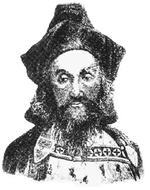 Vladislav Opolechik fig. Yana Mateiko | |||||||
| |||||||
| Predecessor | Boleslav II Opole | ||||||
| Birth | Exact date unknown | ||||||
| Death | May 18, 1401 Opole , Silesia , Poland | ||||||
| Burial place | |||||||
| Kind | |||||||
| Father | Boleslav II Opole | ||||||
| Mother | Elzbieta Švidnitska | ||||||
| Spouse | 1st: Elzbieta Lazfich 2nd: Euphemia ( pol. Eufemia) | ||||||
| Children | and | ||||||
| Religion | Christianity | ||||||
Content
Youth
Vladislav was the eldest son of the Opole prince Boleslav II and Elzbieta Shvidnitskaya (granddaughter of Vladislav Loket ). Driven by a desire to gain experience in the political sphere, the young Vladislav went to Hungary.
After the death of his father, Bolk II, in 1356, Vladislav became the hereditary owner of the Opole principality, the rights to which were claimed by his brothers - Bolko III and Henry. However, Vladislav was able to dissuade them from dividing the already small territory that the principality of Opole was, thus becoming its sole owner.
Political career
At the Court of Louis of Hungary
Opolechik began his political career in the early 1360s at the court of Louis of Hungary . Already in 1364, Vladislav took part in the massacre of Hungarians, which took place in Krakow during the famous congress of monarchs who arrived in the capital of the Polish kingdom at the invitation of Casimir the Great . Two years later, Vladislav had a more serious mission - on behalf of Louis, he held diplomatic negotiations with Wenceslas of Luxembourg about the possible marriage of the latter with his niece, Louis. The Hungarian ruler hoped with the help of this alliance to strengthen ties with the influential Luxembourg House .
Faithful service at the court of Louis very quickly bore fruit. Already at the beginning of 1367, Louis decided to appoint Vladislav Opoleczyk as a palatine , which made the Opole prince the most influential political figure at the Hungarian court. In particular, Vladislav received the right to court cases, and the Hungarian king himself acted as the final authority in the event of appeal against Opolechik's decisions. Vladislav managed to prove himself a talented manager - in the post of the Palatine from 1367 to 1372 he managed to convene 34 general congregations ( congregatio generalis ) to resolve judicial disputes. Perhaps his activity can be explained by a financial factor: two-thirds of court fees were received by the personal treasury of the palatine.
However, Opolechik was not limited solely to domestic political activity. So, in 1368, he took part in a military campaign in Bulgaria. In 1370, after the death of Casimir the Great, he actively contributed to the decision to transfer the Polish crown to Louis of Hungary. In addition, he contributed to the abolition of those points of the will of Casimir, which referred to the transfer of land to the grandson and namesake of the king - Casimir IV Slupsky , as well as other illegitimate sons of Casimir. As a reward for his efforts, Vladislav received the Wieluszka and Czestochowa lands from Louis, after which he decided to share land allotments with his brother Bolko III , transferring to him in 1370 a territorial allotment with the capital in Sagittarius of Opole . The hereditary principality - Opole - he retained.
In 1371, Vladislav became the head of a military campaign against Luxembourg in Moravia, which, however, did not prevent him from leading a mediation mission a year later to resolve the dispute between Charles IV and Louis of Hungary.
Viceroy of Galician Rus
In October 1372, Vladislav was deprived of his post as a palatine, and with it a significant portion of his income. Only a few castles in Hungary remained in his property. Louis of Hungary made Opolechik the governor of Galician Rus , where he actively engaged in the economic development of the regions entrusted to him.
The Polish prince paid particular attention to Lviv , to which, during the reign of Vladislav, the nearby Galich was attached. Against the backdrop of generally successful economic activity as a viceroy, his political position aroused discontent of the Galician boyars: Vladislav too actively supported the Catholic Church in Russia.
Expanding influence in Poland
On the advice of Vladislav, the Hungarian king decided to issue the first gentry privileges - Kositsky (1374), according to which the tax on land lan was reduced to 2 pennies (from 24 under Casimir the Great). In return, the gentry pledged to recognize one of Louis's daughters as the heir to the Polish throne.
Four years later, Louis recalled Opolechik from Galician Rus. His decision was caused by the second massacre of Hungarians in Krakow and the subsequent departure from the Polish capital Elzbieta , the mother of Louis and, in fact, the ruler of Poland. In her place, Louis appointed Vladislav. However, Opolechik was not in power for long. The Polish gentry resolutely opposed him, outraged by the lobbying of the interests of the Hungarian crown (the activities of Vladislav led, in particular, to the loss of Galician Rus by Poland in favor of Hungary).
In compensation for unfulfilled political ambitions, Vladislav received from Dobrynsk lands and part of Kuyav with Bydgosce, Invroclaw and Gnevkov. These territories were located on the border with the lands of the crusaders, with whom the prince quickly established friendly relations.
Relations with another neighbor were worse - the bishop of Plotsk, Dobeslav Suvka ( Paul Dobiesław Sówka), with whom Vladislav had a quarrel because of financial disagreements. This led to the fact that Suvka imposed a penance on the prince: Opolechik was supposed to establish a Pauline monastery on Yasnaya Gora in Czestochowa , which he did in 1382, giving the monastery a miraculous icon of the Mother of God, taken out of Russia, to the monastery.
In 1382, the younger brother of Vladislav Bolko III died, leaving four young sons, and the Prince of Nemodlin Henry I Nemodlinsky . This enabled Opołczyk to expand his influence in Upper Silesia .
On September 10, 1382, the main patron of Opolechik, Louis of Hungary, died. Despite the fact that earlier Opolechik supported the daughters of Louis as candidates for the Polish throne, he put forward his own candidacy. However, he quickly realized that he would not receive support from either the nobles or the gentry, and he supported the candidacy of Semovit IV Plotsky .
Coup attempt and end of political career
The new king of Poland, Wladyslaw Jagiello , realizing the danger of such a strong political adversary as Opołczyk, in 1388 tried to deprive him of part of the land. Vladislav in response decided on a coup and captured Wawel - the royal residence in Krakow . However, the general headman of Sendziva, the coat of arms of Paluk ( Polish Sędziwój Pałuka ) from убubin pacified the rebel, taking him prisoner.
In 1391, the conflict erupted with renewed vigor. The reason was the transfer by Vladislav on bail to the crusaders of a strategically important object - a castle in Zlotory, and in 1392 - Dobrynsky lands, where the Order immediately introduced its troops. Opolechik hatched plans for the division of Poland between the crusaders, Hungary and Brandenburg [2] , which failed - the main forces of the crusaders at that time were concentrated in Zhmude .
The confrontation between Vladislav Opolechik and Vladislav Jagiello ended in 1396 with the victory of the latter. The royal troops occupied the possession of Opoleczyk in Silesia, and then went to Opole, where the nephews of Vladislav decided not to resist them. From this moment, the political career of Opolechik can be considered over.
Last days
Vladislav Opolechik died in May 1401 in Opole. The prince was buried in the monastery of the Franciscans .
Marriages and children
Vladislav was married twice. His first wife, Elzbieta Lacfich ( Paul. Elżbieta Lackfich), he met during his first trip to Hungary. The wedding took place in 1353 . The marriage was childless. Elzbieta died in 1364.
According to another version of Elzbiet - the daughter of the Wallachian governor Alexander , son of John Basarab and sister of Radu Black , great-grandfather of Vlad Tepes . Elzbieta and Vladislav Oppolchik had a daughter, Katerina von Slesen Oppeln (1367-1420), who married Duke Henry VIII Sagan (d. 1387). Their son, Duke Johann I Sagan (1386–1439) with Scholastica (1395–1463), daughter of the Saxon elector Rudolf III , had two daughters, Anna von Sagan and Margarita von Sagan. Through them, they are the ancestors of many European homes.
The second wife of Vladislav was the daughter of Zemovit III from Mazovia Euphemia ( pol. Eufemia), who gave birth to five daughters to Vladislav:
- The name is unknown, Clarisinka in Buge
- Elzbieta
- Katarzyna
- Jadwiga
- Euphemia, died in infancy.
Notes
- ↑ Ladislaus Dei Gracia Dux Opoliensis Wieloniensis et Terre Russie Domin et Heres, circa 1389
- ↑ W. Kucharski, D. Misiejuk. Historia Polski w datach - p. 53
Links
- Kronika Jana z Czarnkowa. Universitas, Kraków, 2006. ISBN 83-242-0589-6
- W. Kucharski, D. Misiejuk. Historia Polski w datach . - Wrocław: Wydawnictwo Dolnośląskie, 2007 .-- 366 S. - ISBN 978-83-7384-652-4