Chairman of the Council of Ministers of the Republic of Poland ( Polish Prezes Rady Ministrów Rzeczypospolitej Polskiej ) in accordance with the Constitution of the Republic of Poland of April 2, 1997 (Article 148):
- represents the Council of Ministers ,
- supervises the work of the Council of Ministers,
- issues orders
- ensures the implementation of the policy of the Council of Ministers and determines the ways of its implementation,
- coordinates and supervises the work of members of the Council of Ministers,
- supervises territorial self-government within the limits and forms defined by the Constitution and laws,
- is the chief of services for employees of the government administration [1] .
| Chairman of the Council of Ministers of the Republic of Poland | |
|---|---|
| Prezes Rady Ministrów Rzeczypospolitej Polskiej | |
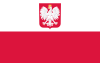 Poland flag with coat of arms | |
 Position is Mateusz Jakub Moravecki from December 11, 2017 | |
| Official residence | |
| Position appeared | December 7, 1917 |
| First in position | Yan Kukhazhevsky |
| Site | |
List of Polish Government Leaders
Kingdom of Poland (1916-1918)
The Kingdom of Poland ( Polish: Królestwo Polskie , German: Königreich Polen ) is a puppet state , founded by the Act of November 5, 1916 with the support of a number of Polish parties [2] and recognized by the German Empire and Austria-Hungary . It was formed within the territory of the Polish Kingdom of Poland occupied by Germany and Austria-Hungary (however, without certain borders) and existed as a satellite state of Germany.
Declaration of both emperors on the establishment of the Regent Council ( Polish. Rada Regencyjna ), limited the power of Germany in the occupied territories and was supposed to allow the election of a new Polish monarch. On September 12, 1917 , the Kingdom adopted a constitution establishing a monarchy, a bicameral parliament, and non-political ministers. On December 7, 1917 post of Prime Minister (literally - Minister-President, Polish minister-prezydent ) of the created government was taken by Jan Kuchazhevsky .
On November 11, 1918 , on the day of the surrender of Germany, the Regency Council transferred military power to Jozef Pilsudski , three days later ( November 14, 1918 , Pilsudski also assumed civilian authority, and the Regency Council and Provisional People's Government of the Republic of Poland decided to empower Pilsudski with the powers of the interim head of state ( Polish. Tymczasowy naczelnik państwa ).
| Portrait | Name | Authorization beginning | Termination of Authority | The consignment The composition of party coalitions is indicated in the referenced articles on the corresponding cabinet of ministers | Cabinet | |
|---|---|---|---|---|---|---|
| one (I) | Yan Kukhazhevsky (1876-1952) polish Jan Kucharzewski | December 7, 1917 | February 27, 1918 | independent | Kukhazhevsky | |
| and about. | Anthony Ponikovsky (1878-1949) polish Antoni Ponikowski | February 27, 1918 | April 4, 1918 | National Democratic Party | Ponikovsky | |
| 2 | Jan Kanty Stechkovsky (1862-1929) polish Jan Kanty Steczkowski | April 4, 1918 [3] | October 2, 1918 | National Law Party | Stechkovsky | |
| one (Ii) | Yan Kukhazhevsky (1876-1952) polish Jan Kucharzewski | October 2, 1918 | October 9, 1918 | independent [4] | ||
| and about. | Bohdan Bronevsky (1855-1952) polish Bohdan brroniewski | October 9, 1918 | October 23, 1918 | |||
| 3 | Jozef Svezhinsky (1868-1948) polish Józef Świeżyński | October 23, 1918 | November 3, 1918 | National Democratic Party | Svezhinsky | |
| and about. | Vladislav Vrublevsky (1875-1951) polish Władysław Wróblewski | November 3, 1918 | November 14, 1918 | independent | Vrublevsky |
People's Republic of Poland (1918)
With the collapse of the Austro-Hungarian Empire on November 7, 1918 , the People’s Republic of Poland ( Polish: Polska Rzeczpospolita Ludowa ) was proclaimed in Lublin , one of the leaders of the Polish Social Democratic Party of Galicia became prime minister of the Provisional People’s Government and Silesia-Cieszyn Ignacy Dashinsky .
At the same time, on November 11, 1918 in Warsaw, the Regency Council The Kingdom of Poland transferred power to govern the country to Jozef Pilsudski (and was dissolved 3 days later), after which on November 14, 1918 , the people's government self-dissolved, transferring power to the Provisional Head of the State of Poland Jozef Pilsudski, while joining Pilsudski Ignatius Dashinsky until November 17, 1918 retained the post of head of government, thus becoming in fact the first head of government of the Second Polish-Lithuanian Commonwealth .
| Portrait | Name | Authorization beginning | Termination of Authority | The consignment The composition of the party coalition is indicated in the reference article on the cabinet of ministers | Cabinet | |
|---|---|---|---|---|---|---|
| four | Ignacy Evaryst Dashinsky (1866-1936) polish Ignacy Ewaryst Daszyński | November 7, 1918 | November 17, 1918 [5] | Polish Social Democratic Party of Galicia and Silesia-Cieszyn | Dashinsky |
Republic of Poland (1918-1939)
The Polish Republic , also known as the Second Polish-Lithuanian Commonwealth ( Polish: Rzeczpospolita Polska, II Rzeczpospolita ) - is a Polish state, restored in 1918 . The name emphasizes the continuous connection with the Polish-Lithuanian Commonwealth (1569-1795), liquidated as a result of its divisions between the Russian Empire , the Prussian Kingdom and the Austrian Empire at the end of the 18th century.
The beginning of the history of the Second Polish-Lithuanian Commonwealth is considered November 11, 1918 , when the Polish troops disarmed the German garrison in Warsaw , and Jozef Pilsudski , who returned from German captivity, took military power from the hands of the Regency Council Kingdom of Poland . On November 14, 1918 , Pilsudski also assumed civil power, and the Regency Council and the Provisional People’s Government of the Republic of Poland granted Pilsudski the powers of interim head of state ( Polish: Tymczasowy naczelnik państwa ). Elected in the elections of January 26, 1919 On February 20, 1919 , the Legislative Diet appointed Pilsudski as "Head of State" ( Polish: Naczelnik państwa ) [2] . The Prime Minister ( Polish minister-prezydent ) remained the head of government.
On March 17, 1921 , the constituent Seim adopted the constitution , which approved the republican system. A bicameral parliament was established - the National Assembly, consisting of the Sejm and Senate , elected for a term of 5 years by universal, equal and secret proportional vote. The Sejm approved on the proposal of the president (elected by the National Assembly for 7 years) the chairman of the Council of Ministers ( Polish Prezes Rady Ministrów Rzeczypospolitej Polskiej ) and individual ministers, and had the right to change them.
In 1926, after a coup in Poland, an authoritarian reorganization regime was established, led by Jozef Pilsudski, nullifying the basic principles underlying the constitution.
On January 16, 1935 , the Sejm adopted a new constitution , according to which the president, who concentrated state power in his person, was recognized as the source and bearer of state power. All ministers were appointed by the president at the suggestion of the chairman of the council of ministers. The position of the chairman of the council of ministers in the cabinet was strengthened: he led the work of the government and headed the council of ministers. He, and not the Council of Ministers, established general principles of state policy that determined the activities of ministers.
After the attack on Poland on September 1, 1939 by Nazi Germany, the Polish government, led by President Ignacy Mostitsky, fled the country to Romania , crossing the border on the night of September 17, 1939 , but there were interned by the Romanian authorities at the request of Germany. On the same day, the USSR sent its troops to the Curzon line in the eastern part of Poland, occupying its eastern part.
| Portrait | Name | Authorization beginning | Termination of Authority | The consignment The composition of party coalitions is indicated in the referenced articles on the corresponding cabinet of ministers | Elections | Cabinet | |
|---|---|---|---|---|---|---|---|
| Presidential Ministers ( Polish minister-prezydent ) | |||||||
| five | Yendzhey Edward Morachevsky (1870-1944) polish Jędrzej Edward Moraczewski | November 18, 1918 | January 16, 1919 | Polish Social Democratic Party of Galicia and Silesia-Cieszyn | Morachevsky | ||
| 6 | Ignacy Jan Paderewski (1860-1941) polish Ignacy Jan Paderewski | January 16, 1919 | December 13, 1919 | independent | 1919 | Paderevsky | |
| 7 | Leopold Skulsky (1877-1940) polish Leopold skulski | December 13, 1919 | June 23, 1920 | National Union of the People | Skulsky | ||
| eight (I) | Vladislav Dominic Grabsky (1874-1938) polish Władysław Dominik Grabski | June 23, 1920 | July 24, 1920 | People’s National Union | Hrabsky — I | ||
| 9 (I) | Vincent Vitos (1874-1945) polish Wincenty witos | July 24, 1920 | September 19, 1921 | Polish Peasant Party "Piast" [6] | Vitos — I | ||
| ten (I — II) | Anthony Ponikovsky (1878-1949) polish Antoni Ponikowski | September 19, 1921 | March 10, 1922 | Polish Christian Democratic Party | Ponikovsky — I | ||
| March 10, 1922 | June 28, 1922 | Ponikovsky — II | |||||
| eleven | Arthur Slivinsky (1877-1953) polish Artur Śliwiński | June 28, 1922 | July 31, 1922 | Polish Socialist Party | Slivinsky | ||
| 12 | Julian Ignacy Novak (1865-1946) polish Julian Ignacy Nowak | July 31, 1922 | December 14, 1922 | National Law Party | 1922 | Novak | |
| Chairmen of the Council of Ministers ( Polish Prezes Rady Ministrów ) | |||||||
| (12) [7] | Julian Ignacy Novak (1865-1946) polish Julian Ignacy Nowak | December 14, 1922 | December 16, 1922 | National Law Party | Novak | ||
| 13 | general of armor Vladislav Eugeniusz Sikorsky (1865-1946) polish Władysław Eugeniusz Sikorski | December 16, 1922 | May 28, 1923 | military | Sikorsky — I | ||
| 9 (Ii) | Vincent Vitos (1874-1945) polish Wincenty witos | May 28, 1923 | December 19, 1923 | Polish Peasant Party "Piast" | Vitos — II | ||
| eight (Ii) | Vladislav Dominic Grabsky (1874-1938) polish Władysław Dominik Grabski | December 19, 1923 | November 20, 1925 | People’s National Union | Hrabsky — II | ||
| 14 | Alexander Jozef Skrzynski (1882-1931) polish Aleksander Józef Skrzyński | November 20, 1925 | May 10, 1926 | National Law Party | Skshinsky | ||
| 9 (Iii) | Vincent Vitos (1874-1945) polish Wincenty witos | May 10, 1926 | May 15, 1926 | Polish Peasant Party "Piast" | Vitos — III | ||
| 15 (I — III) | Kazimierz Vladislav Bartel (1882-1941) polish Kazimierz Władysław Bartel | May 15, 1926 | June 4, 1926 | Workers Party | Bartel — I | ||
| June 4, 1926 | September 24, 1926 | Bartel — II | |||||
| September 24, 1926 | October 2, 1926 | Barthel — III | |||||
| sixteen (I) | Marshal of Poland Jozef Clemens Pilsudski (1867-1935) polish Józef Klemens Piłsudski | October 2, 1926 | June 27, 1928 | military | 1928 | Pilsudski — I | |
| 15 (Iv) | Kazimierz Vladislav Bartel (1882-1941) polish Kazimierz Władysław Bartel | June 27, 1928 | April 14, 1929 | Workers Party | Bartel — IV | ||
| Non-partisan bloc of cooperation with the government [8] | |||||||
| 17 | Kazimierz Stanislav Svitalsky (1886-1962) polish Kazimierz Stanisław Świtalski | April 14, 1929 | December 29, 1929 | Svitalsky | |||
| 15 (V) | Kazimierz Vladislav Bartel (1882-1941) polish Kazimierz Władysław Bartel | December 29, 1929 | March 29, 1930 | Bartel — V | |||
| 18 (I) | Valery Jan Slavek (1879-1939) polish Walery Jan Sławek | March 29, 1930 | August 25, 1930 | Slavek — I | |||
| sixteen (Ii) | Marshal of Poland Jozef Clemens Pilsudski (1867-1935) polish Józef Klemens Piłsudski | August 25, 1930 | December 4, 1930 | military | 1930 | Pilsudski — II | |
| 18 (Ii) | Valery Jan Slavek (1879-1939) polish Walery Jan Sławek | December 4, 1930 | May 27, 1931 | Non-partisan government cooperation unit | Slavek — II | ||
| nineteen | Alexander Blejey Prestor (1874-1941) polish Aleksander Błażej Prystor | May 27, 1931 | May 10, 1933 | Prestor | |||
| 20 | Yanush Enzheevich (1885-1951) polish Janusz Jędrzejewicz | May 10, 1933 | May 15, 1934 | Endzheevich | |||
| 21 | Leon Tadeusz Kozlovsky (1892-1944) polish Leon Tadeusz Kozłowski | May 15, 1934 | March 28, 1935 | Kozlovsky | |||
| 18 (Iii) | Valery Jan Slavek (1879-1939) polish Walery Jan Sławek | March 28, 1935 | October 13, 1935 | 1935 | Slavek — III | ||
| 22 | Marian Zyndram-Koscyalkovsky (1892-1946) polish Marian Zyndram-Kościałkowski | October 13, 1935 | May 15, 1936 | independent [9] | Zyndram-Koscyalkovsky | ||
| 23 | division general Felician Slava-Skladkovsky (1885-1962) polish Felicjan Sławoj Składkowski | May 15, 1936 | September 30, 1939 [10] | Slava-Skladkovsky | |||
| National Association Camp [11] | 1938 | ||||||
Government of Poland in exile (1939-1990)
The Polish government in exile ( Polish: Rząd RP na uchodźstwie ) is the government of the Republic of Poland , acting after its supreme leadership fled the country in September 1939 during the German occupation . During the war and in the first post-war years, it led the Polish underground state , the formations of the Polish armed forces in the West and the Polish underground in Poland itself ( Craiova Army , Freedom and Independence ). The seat of government were successively Paris (from September 30, 1939 , Angers (from November 1939) and London (from November 1940).
The first head of government on September 30, 1939 was appointed General Vladislav Sikorsky , who created a coalition cabinet, which included representatives of the National Party , Labor Party , People’s Party , Polish Socialist Party and reorganization policies.
On June 28, 1945 , in accordance with the Yalta agreements, the Provisional Government of the Polish Republic was expanded at the expense of figures from Poland itself and Poles from abroad and transformed into the Provisional Government of National Unity . On July 5, 1945 , Great Britain and the United States ceased to recognize this government. Contrary to the statement of the Potsdam Conference in August 1945 that it “no longer exists”, it continued to function. The last states that recognized the emigrant government of Poland were Ireland , Spain, and the Holy See (until 1958). Formally, it completed its activity after Lech Walesa took the oath of office as the President of Poland and transferred him the historical presidential regalia from the exiled president Ryszard Kaczeworski .
| Portrait | Name | Authorization beginning | Termination of Authority | The consignment | Cabinet | |
|---|---|---|---|---|---|---|
| BUT (I — II) [12] | general of armor Vladislav Eugeniusz Sikorsky (1865-1943) polish Władysław Eugeniusz Sikorski | September 30, 1939 | July 18, 1940 | military in a coalition with the National Party , Polish Socialist Party , Peasant Party and the Labor Party | Sikorsky — I | |
| B [13] | August Zalesky (1883-1972) polish August zaleski | July 18, 1940 | July 20, 1940 | independent the government was not formed | ||
| BUT (II) [12] | general of armor Vladislav Eugeniusz Sikorsky (1865-1943) polish Władysław Eugeniusz Sikorski | July 20, 1940 | July 4, 1943 [14] | military in a coalition with the National Party , Polish Socialist Party , Peasant Party and the Labor Party | Sikorsky — II | |
| and about. | Stanislav Mikolajchik (1901-1966) polish Stanisław Mikołajczyk | July 4, 1943 | July 14, 1943 | Peasant Party in a coalition with the National Party , Polish Socialist Party and the Labor Party | ||
| AT | July 14, 1943 | November 29, 1944 | Mikolajchik | |||
| R | Tomas Stefan Artsishevsky (1877-1955) polish Tomasz Stefan Arciszewski | November 29, 1944 | July 2, 1947 | Polish Socialist Party in a coalition with the National Party , Peasant Party and the Labor Party | Artsishevsky | |
| D | major general Tadeusz Komorowski (1895-1966) polish Tadeusz komorowski | July 2, 1947 | April 7, 1949 | military in a coalition with the National Party , Polish Socialist Party and the Labor Party | Komorowski | |
| E | Tadeusz Tomaszewski (1881-1950) polish Tadeusz tomaszewski | April 7, 1949 | August 10, 1950 [15] | Polish Socialist Party | Tomaszewski | |
| the post is vacant from August 10, 1950 to September 25, 1950 | ||||||
| F | brigade general Roman Vladislav Odzezhinsky (1892-1975) polish Roman Władysław Odzierzyński | September 25, 1950 | January 18, 1954 | military in a coalition with the Labor Party and the League of Polish Independence | Odzezhinsky | |
| H | Jerzy Hrynevsky (1895-1978) polish Jerzy Hryniewski at birth Mikolay Dolianovsky polish Mikołaj dolanowski | January 18, 1954 | May 13, 1954 | League of Polish Independence | Hrynevsky | |
| the post is vacant from May 13, 1954 to June 8, 1954 | ||||||
| AND | Stanislav Matskevich (1895-1978) polish Stanisław Mackiewicz | June 8, 1954 | June 21, 1955 | independent | Matskevich | |
| the post is vacant from June 21, 1955 to August 8, 1955 | ||||||
| TO | Hugon Hanke (1904-1964) polish Hugon hanke | August 8, 1955 | September 11, 1955 | Labor party | Hanke | |
| L (I — III) | Anthony Paenk (1893-1965) polish Antoni Pająk | September 11, 1955 | March 28, 1957 | Polish Socialist Party | Pajenk — I | |
| March 28, 1957 | October 9, 1963 | Pajenk — II | ||||
| October 9, 1963 | June 14, 1965 | Paenok — III | ||||
| the post is vacant from June 14, 1965 to June 25, 1965 | ||||||
| M | Alexander Zavisha (1896-1977) polish Aleksander Zawisza | June 25, 1965 | June 9, 1970 | independent | Zavisha | |
| the post is vacant from June 9, 1970 to July 20, 1970 | ||||||
| H | Zygmunt Mukhnevsky (1896-1979) polish Zygmunt muchniewski | July 20, 1970 | July 13, 1972 | Labor party | Mukhnevsky | |
| the post is vacant from July 13, 1972 to July 18, 1972 | ||||||
| ABOUT (I — II) | Alfred Urban (1899-1983) polish Alfred urbański | July 18, 1972 | December 15, 1973 | Polish Socialist Party | Urban — I | |
| December 15, 1973 | July 15, 1976 | Urban — II | ||||
| the post is vacant from July 15, 1976 to August 5, 1976 | ||||||
| P (I — IV) | Kazimierz Alexander Sabbat (1913-1989) polish Kazimierz Aleksander Sabbat | August 5, 1976 | June 12, 1978 | independent | Sabbath — I | |
| June 12, 1978 | April 9, 1979 | Sabbath — II | ||||
| April 9, 1979 | December 17, 1983 | Sabbath — III | ||||
| December 17, 1983 | April 8, 1986 | Sabbath — IV | ||||
| R (I — II) | Zygmunt Cheslav Shkopyak (1926-2002) polish Zygmunt Czesław Szkopiak | April 8, 1986 | November 1, 1989 | League of Polish Independence | Shkopyak — I | |
| November 1, 1989 | November 22, 1990 | Shkopyak — II | ||||
Post-war period (1944-1952)
On January 1, 1944 , in contrast to the Polish government in Poland , Craiova Rada Narodova ( Polish Krajowa Rada Narodowa , “state national council”) was created in exile , a political organization that subsequently was transformed into parliament, which lasted until February 4 1947 years.
At that time, when the Red Army crossed the Western Bug , the delegation of the Regional Krai Rada was in the USSR, having the authority to create its own executive body. Such a body with government functions, the Polish Committee for National Liberation (PKNO, Polish Polski Komitet Wyzwolenia Narodowego ) was formed on July 21, 1944 in Moscow . It included representatives of the Polish Workers' Party , the Union of Polish Patriots , the Polish Socialist Party ( Edward Osubka-Moravsky faction), the People’s Will of the People Party and the Democratic Party . Edward Osubka-Moravsky became the chairman of the Council.
On December 31, 1944 , the PKNO was transformed into the Provisional Government of the Polish Republic (VPRPR), whose chairman was Edward Osubka-Moravsky. The government included representatives of the Polish Workers Party , the Polish Socialist Party , the Democratic Party and the Peasant Party . On February 1, 1945 , the government moved from Lublin to Warsaw . By the end of the war ( May 8, 1945 , it created its own administration throughout Poland (with the exception of Szczecin ), under direct Soviet military command.
On June 28, 1945 , in accordance with the Yalta agreements, the All-Russian Union of Political and Political Entities was expanded to include political figures from Poland itself and Poles from exile, and was transformed into the Provisional Government of National Unity (VPNE), whose chairman again remained Edward Osubka-Moravsky. To the previous coalition members were added the Labor Party and the Polish Peasant Party [16] .
VPN resigned on February 6, 1947 year after the election to the Legislative Diet and the formation of his government Jozef Tsirankevich , who worked until the formation of the first government of the Polish People’s Republic on November 21, 1952 .
| Portrait | Name | Authorization beginning | Termination of Authority | The consignment | Elections | |
|---|---|---|---|---|---|---|
| Chairman of the Polish Committee for National Liberation | ||||||
| 24 (I) | Edward Osubka-Moravian (1909-1997) polish Edward Osóbka-Morawski | July 21, 1944 | December 31, 1944 | Polish Workers Party in a coalition with the Polish Socialist Party , the Democratic Party and the Peasant Party | ||
| Chairman of the Provisional Government of the Republic of Poland | ||||||
| 24 (Ii) | Edward Osubka-Moravian (1909-1997) polish Edward Osóbka-Morawski | December 31, 1944 | June 28, 1945 | Polish Workers Party in a coalition with the Polish Socialist Party , the Democratic Party and the Peasant Party | ||
| Chairman of the Provisional Government of National Unity | ||||||
| 24 (Iii) | Edward Osubka-Moravian (1909-1997) polish Edward Osóbka-Morawski | December 31, 1944 | June 28, 1945 | Polish Workers Party in a coalition with the Polish Socialist Party , the Democratic Party , the Peasant Party , The Labor Party and the Polish Peasant Party | ||
| Chairman of the Council of Ministers of the Polish Republic ( Tsirankevich — I ) | ||||||
| 25 (I) | Jozef Adam Zygmunt Tsirankevich (1911-1989) polish Józef Adam Zygmund Cyrankiewicz | June 28, 1945 | November 20, 1952 | At the time of formation: Polish Workers Party in a coalition with the Polish Socialist Party , the Democratic Party , the Peasant Party and the Labor Party | 1947 | |
| At the conclusion of the work: Polish United Workers' Party [17] in a coalition with the Democratic Party and the United Peasant Party [18] | ||||||
People's Republic of Poland (1952-1989)
The People’s Republic of Poland ( Polish. Polska Rzeczpospolita Ludowa ) is the official name of Poland from 1952 to 1989 . The constitution of the NDP was adopted on July 22, 1952 , significant amendments were introduced in 1976. The legislative body was the unicameral Seimas , elected for 4 years, the collective head of state until 1989 - the State Council , elected by the Seimas for a period of 4 years, since 1989 - the president, the executive body - the Council of Ministers, appointed by the Seimas.
In fact, the state was one-party with the dominance of the Polish United Workers Party . Small parties (mainly the Democratic Party and the United Peasant Party ), as well as trade union, youth and other public organizations, were united into a socio-political organization (also acting as an electoral bloc) - since 1952 it was called the National Front ( Polish Front Narodowy , since 1956 - Front of the Unity of the People ( Polish Front Jedności Narodu ), in 1983 transformed into the Patriotic National Revival Movement ( Polish Patriotyczny Ruch Odrodzenia Narodowego ).
On December 29, 1989 , by amending the constitution of the NDP, the historical name “Rzeczpospolita Polska” (Polish Republic) was returned to the country.
| Portrait | Name | Authorization beginning | Termination of Authority | The consignment | Elections | Cabinet | |
|---|---|---|---|---|---|---|---|
| 26 | Boleslav Take (1892-1956) polish Bolesław bierut | November 20, 1952 | March 18, 1954 | Polish United Workers Party in a coalition with the Democratic Party [19] and the United Peasant Party | 1952 | Take / Tsirankevich | |
| 25 (II — V) | Jozef Adam Zygmunt Tsirankevich (1911-1989) polish Józef Adam Zygmund Cyrankiewicz | March 18, 1954 | February 27, 1957 | ||||
| February 27, 1957 | May 18, 1961 | 1957 | Tsirankevich — II | ||||
| May 18, 1961 | June 25, 1965 | 1961 | Tsirankevich — III | ||||
| June 25, 1965 | February 28, 1969 | 1965 | Tsirankevich — IV | ||||
| February 28, 1969 | December 23, 1970 | 1965 | Tsirankevich / Yaroshevich | ||||
| 27 | Peter Yaroshevich (1909-1992) polish Piotr jaroszewicz | December 23, 1970 | December 23, 1973 | ||||
| December 23, 1973 | March 27, 1976 | Yaroshevich | |||||
| March 27, 1976 | February 18, 1980 | 1976 | Ярошевич / Бабюх | ||||
| 28 | Эдвард Бабюх (1927—) polish Edward Babiuch | 18 февраля 1980 | 3 апреля 1980 | ||||
| 3 апреля 1980 | 24 августа 1980 | 1980 | Бабюх / Пиньковский / Ярузельский | ||||
| and about. | Юзеф Пиньковский (1929—2000) polish Józef Pińkowski | 24 августа 1980 | 5 сентября 1980 | ||||
| 29 | 5 сентября 1980 | 11 февраля 1981 | |||||
| thirty | army General Войцех Витольд Ярузельский (1923—2014) polish Wojciech Witold Jaruzelski | 11 февраля 1981 | 12 ноября 1985 [20] | ||||
| 31 | Збигнев Стефан Месснер (1929—2014) polish Zbigniew Stefan Messner | 12 ноября 1985 | 14 октября 1988 | 1985 | Месснер | ||
| 32 | Мечислав Францишек Раковский (1926—2008) polish Mieczysław Franciszek Rakowski | 14 октября 1988 | 12 сентября 1989 | 1989 | Раковский / Кищак | ||
| 33 | генерал брони Чеслав Ян Кищак (1925—2015) polish Czesław Jan Kiszczak | 4 августа 1989 [21] | 24 августа 1989 | ||||
| 34 | Тадеуш Мазовецкий (1927—2013) polish Tadeusz Mazowiecki | 24 августа 1989 | 29 декабря 1989 [22] | независимый [23] в коалиции с Польской объединённой рабочей партии , Демократической партией и Объединённой крестьянской партией | Мазовецкий |
Польская Республика (с 1989)
По́льская Респу́блика , также известна как Третья Речь Посполитая ( польск. Rzeczpospolita Polska, III Rzeczpospolita ) — название Польши, возвращённое ей 29 декабря 1989 года путём внесения изменения в конституцию ПНР.
23 апреля 1992 года был принят «Конституционный закон о порядке подготовки и принятия Конституции Республики Польша», 17 октября 1992 года — «Конституционный закон о взаимных отношениях между законодательной и исполнительной властью, а также территориальном самоуправлении», получивший название Малой конституции . Документ объявлял о прекращении (за некоторым исключением) действия Конституции 1952 года. Закон также предусматривал принятие новой конституции Сеймом и Сенатом. Современная конституция Польши была принята 2 апреля 1997 года и утверждена на референдуме 25 мая 1997 года.
| Portrait | Name | Authorization beginning | Termination of Authority | The consignment | Elections | Cabinet | |
|---|---|---|---|---|---|---|---|
| (34) [24] | Тадеуш Мазовецкий (1927—2013) polish Tadeusz Mazowiecki | 29 декабря 1989 [22] | 4 января 1991 | при формировании: независимый [23] в коалиции с Польской объединённой рабочей партией , Демократической партией и Объединённой крестьянской партией | Мазовецкий | ||
| при завершении работы: Демократическая уния [25] в коалиции с Социал-демократией республики Польша [26] , Польской крестьянской партией [27] , Демократической партией , Гражданским движением за демократическое действие [28] и Демократическим правым форумом [29] | |||||||
| 35 | Ян Кшиштоф Белецкий (1951—) polish Jan Krzysztof Bielecki | 4 января 1991 | 4 декабря 1991 | Либерально-демократический конгресс в коалиции с Соглашением центра , Христианско-национальным союзом , Демократической партией и Демократической унией | 1991 | Белецкий | |
| 36 | Ян Фердинанд Ольшевский (1930—2019) polish Jan Ferdynand Olszewski | 4 декабря 1991 | 5 января 1992 | Соглашение центра в коалиции с Христианско-национальным союзом , Народно-христианской партией и избирательным блоком «Польская крестьянская партия — Народное соглашение» [30] | Ольшевский | ||
| 37 (I) | Вальдемар Павляк (1959—) polish Waldemar Pawlak | 5 января 1992 | 11 июля 1992 | Польская крестьянская партия в коалиции с другими членами предвыборного союза «Польская крестьянская партия — Народное соглашение» , Соглашением центра , Христианско-национальным союзом и Народно-христианской партией | |||
| 38 | Ханна Сухоцкая (1946–) polish Hanna Suchocka | 11 июля 1992 | 26 октября 1993 | Демократическая уния в коалиции с предвыборным союзом «Польская крестьянская партия — Народное соглашение» , Христианско-национальным союзом , Либерально-демократическим конгрессом , Народно-христианской партией , Христианско-демократической партией и Польской партией любителей пива | Сухоцкая | ||
| 37 (Ii) | Вальдемар Павляк (1959—) polish Waldemar Pawlak | 26 октября 1993 | 6 мая 1995 | Польская крестьянская партия в коалиции с Социал-демократией республики Польша [31] | 1993 | Павляк | |
| 39 | Юзеф Олексы (1946—2015) polish Józef Oleksy | 6 мая 1995 | 7 февраля 1996 | Социал-демократия республики Польша в составе предвыборного Союза демократических левых сил и в коалиции с Польской крестьянской партией | Олексы | ||
| 40 | Влодзимеж Цимошевич (1950—) polish Włodzimierz Cimoszewicz | 7 февраля 1996 | 31 октября 1997 | independent в составе предвыборного Союза демократических левых сил и в коалиции с Польской крестьянской партией | Цимошевич | ||
| 41 | Ежи Кароль Бузек (1940—) polish Jerzy Karol Buzek | 31 октября 1997 | 19 октября 2001 | independent в составе предвыборного союза «Избирательная Акция Солидарность» [32] и, до 6 июля 2000 года, в коалиции с Унией Свободы . | 1997 | Бузек | |
| 42 | Лешек Цезарий Миллер (1946–) polish Leszek Cezary Miller | 19 октября 2001 | 2 мая 2004 | Союз демократических левых сил в коалиции с Унией труда и, до 3 марта 2003 года, Польской крестьянской партией . | 2001 | Миллер | |
| 43 (I — II) | Марек Мариан Белька (1952—) polish Marek Marian Belka | 2 мая 2004 | 11 июня 2004 | Союз демократических левых сил в коалиции с Унией труда | Белька—I | ||
| 11 июня 2004 | 31 октября 2005 | Союз демократических левых сил в коалиции с Унией труда , Свободой и равенством и Социал-демократией Польши | Белька—II | ||||
| 44 | Казимеж Марцинкевич (1959—) polish Kazimierz Marcinkiewicz | 31 октября 2005 | 14 июля 2006 | Право и справедливость в коалиции с Партией центра и, с 5 мая 2006 года, с Самообороной Республики Польша и Лигой польских семей | 2005 | Марцинкевич | |
| 45 | Ярослав Александер Качиньский (1949—) polish Jarosław Aleksander Kaczyński | 14 июля 2006 | 16 ноября 2007 | Право и справедливость в коалиции с Самообороной Республики Польша и Лигой польских семей | Качиньский | ||
| 46 (I — II) | Дональд Францишек Туск (1957–) polish Donald Franciszek Tusk | 16 ноября 2007 | 18 ноября 2011 | Гражданская платформа в коалиции с Польской крестьянской партией | 2007 | Туск—I | |
| 18 ноября 2011 | 22 сентября 2014 | 2011 | Туск—II | ||||
| 47 | Эва Божена Копач (1956—) polish Ewa Bożena Kopacz | 22 сентября 2014 | 13 ноября 2015 | Kopach | |||
| 48 | Beata Maria Szydlo (1963—) polish Beata Maria Szydło | November 13, 2015 | December 11, 2017 | Law and justice in a coalition with the Solidarity of Poland Zbigniew Zybro [33] and, until November 4, 2017 , Poland together , and then with the Agreement of Yaroslav Govina [34] | 2015 | Sidlo | |
| 49 | Mateusz Jakub Moravecki (1968—) polish Mateusz jakub morawiecki | December 11, 2017 | acting | Law and justice in a coalition with the Solidarity of Poland Zbigniew Zybro and the Agreement of Yaroslav Govina . </ref> | Moravecki |
Early Rebel and Sub-Protect Governments
In the eighteenth and nineteenth centuries, large rebel movements arose in Polish lands, proclaiming the restoration of the national Polish state, and therefore forming various kinds of national governments that actually exercised executive power in the controlled territory. In addition, during the Napoleonic wars in Poland there was the Grand Duchy of Warsaw under the protectorate of France, whose government was also perceived by the Poles as national.
Uprising Kosciuszko (1794)
Uprising of Tadeusz Kosciuszko ( Polish: Powstanie kościuszkowskie , insurekcja kościuszkowska ) - an uprising on the territory of the Polish-Lithuanian Commonwealth ( 1794 ), which at that time included parts of modern Polish, Belarusian, Ukrainian, Lithuanian and Latvian lands.
The constitution , proclaimed at the Warsaw Diet on May 3, 1791 , aroused discontent among tycoons and gentry. At the congress in Targovitsa, they declared the constitution illegitimate and formed a confederation to fight King Stanislav . After the adoption of Empress Catherine II under the protection of the Confederates, the Russo-Polish War began , and soon the king obeyed the demands of the Confederates. However, part of the nobility prepared and started the uprising, whose leader Tadeusz Kosciuszko was elected. On March 16, 1794 , the inhabitants of Krakow proclaimed him the dictator of the republic; the Act of Rebellion was proclaimed, giving him full power in the country. On April 19, 1794 , after the liberation of Warsaw, the Provisional Council was formed for the management of Warsaw and surrounding areas. On May 10, 1794 , in the camp near Polanets , as the central civil authority, Kosciuszko founded the Higher National Council , a collegial body consisting of 8 advisers ( Polish radców ) and 32 deputies. Decisions were to be taken by a minimum of 5 advisers together. Most of the formally appointed advisers were actually replaced by certain deputies.
The Russian and Prussian troops who entered the territory of the Commonwealth soon inflicted a military defeat on the rebels; On September 28, 1794 , after the battle of , Kosciuszko was captured, on October 25, 1794 , the capitulation of the rebels was signed.
| Portrait | Name | Authorization beginning | Termination of Authority | Position | Government | |
|---|---|---|---|---|---|---|
| Ignacy Vyssogota Zakshevsky (1745-1802) polish Ignacy Wyssogota Zakrzewski | April 19, 1794 | May 27, 1794 [35] | Chairman of the Interim Council, President of Warsaw | Temporary Council | ||
| Aloysius Sulistrovsky (? —1796) polish Alojzy Sulistrowski | May 10, 1794 [36] | October 25, 1794 [37] | order department adviser [38] | Supreme National Council | ||
| Michal Ambrozhy Kokhanovsky (1757-1832) polish Michał Ambroży Kochanowski | de facto security adviser [39] (instead of the appointed Tomasz Anthony Wavzhecki ) | |||||
| Jozef Maciej Ignacy Shimanovsky (1748-1801) polish Józef Maciej Ignacy Szymanowski | de facto adviser to the justice department [40] (instead of the appointed Franciszek Myszkowski ) | |||||
| Hugo Stumberg Collantai (1750-1812) polish Hugo Stumberg Kołłątaj | Treasury Advisor [41] | |||||
| Ignacy Vyssogota Zakshevsky (1745-1802) polish Ignacy Wyssogota Zakrzewski | Food Advisor [42] | |||||
| Tadeusz Victorin Matushevich (1765-1819) polish Tadeusz wiktoryn matuszewicz | de facto adviser to the military needs department [43] (instead of the appointed major Stanislav Adrian Velejewski ) | |||||
| graph Roman Ignacy Frantisek Potocki (1741-1809) polish Roman Ignacy Franciszek Potocki | Foreign Affairs Advisor [44] | |||||
| Franciszek Xavier Dmohovskiy (1762-1808) polish Franciszek Ksawery Dmochowski | de facto adviser to the national education department [45] (instead of the appointed Johann Dominic Peter Yaskevich ) |
Duchy of Warsaw (1807–1813)
The Grand Duchy of Warsaw ( Polish: Księstwo Warszawskie ) is a state formed in 1807 by the Tilsit Peace (concluded between June 13 (25) and June 25 ( July 7 ) 1807 ) from the territories that departed during the Second and Third sections of the Speech Commonwealth to Prussia and the Austrian Empire . It was a protectorate of France .
The Constitution of the Duchy was approved by Napoleon on July 22, 1807 in Dresden . The king of Saxony, Frederick Augustus I , was appointed duke, with his approval of the government, the Council of State and the bicameral parliament. The use of the words Poland, Polish in the political sense was not allowed.
The first provisional government of the duchy, appointed by decree of Napoleon, was the Governing Commission ( Polish. Komisja Rządząca ) consisting of 8 members (president - Stanislav Malakhovsky ), who worked from January 11, 1807 to October 5, 1807 . Later, councils of ministers were formed in the duchy, headed by their presidents ( Polish. Prezes Rady Ministrów ).
The duchy lasted until 1813, when its territory was occupied by the troops of the Sixth Coalition . On May 3, 1815 , the Vienna Congress approved the division of the Duchy: Krakow became a Free City ; Wieliczka went to Austria, Greater Poland to Prussia, to Russia a larger territory where the Kingdom of Poland was formed.
| Portrait | Name | Authorization beginning | Termination of Authority | Position | Government | |
|---|---|---|---|---|---|---|
| Stanislav Malakhovsky (1736-1809) polish Stanisław Małachowski | January 11, 1807 | October 5, 1807 | President of the Governing Commission | Steering Committee | ||
| October 5, 1807 | December 14, 1807 | President of the Council of Ministers | Malakhovsky | |||
| Ludwik Simon Gutakovsky (1738-1811) polish Ludwik szymon gutakowski | December 14, 1807 | March 25, 1809 (actually until November 1808 [46] ) | Gutakovsky | |||
| graph Stanislav Kostka Pototsky (1755-1821) polish Stanisław Kostka Potocki | March 25, 1809 | May 13, 1813 [47] | Potocki |
The November Uprising (1830-1831)
The Kingdom of Poland ( Polish: Królestwo Polskie , Kingdom of Poland), formed on April 21 ( May 3 ), 1815 by the Vienna Congress , transferred to Alexander I and in personal union with the Russian Empire , received the Constitution on November 15 ( 27 ), 1815 . In addition to designating the created state as a hereditary monarchy, “forever connected with the Russian Empire” and asserting Polish rights (conducting all office work in Polish, filling all government posts with Poles, confirming the rights of the Roman Catholic Church), a special regime was established that belonged entirely to the king of the executive branch: all royal orders and decrees had to be sealed by the signature of the minister, who should be responsible for everything that could be in them rotational constitution. Governing Body ( polish. Rada Administracyjna ), as an executive body, consisted of five commissions; each member of the Governing Body was considered a minister; several of them were members of each commission.
During the uprising that began , after the first armed uprising on November 17 ( 29 ), 1830 , the Governing Body defined the coup as an “unfortunate” event. However, on November 18 ( 30 ), 1830 , the “Patriotic Club” was formed, having sought to purge the council and replace a number of ministers. On November 22 ( December 4 ), 1830 , the Provisional Government was formed (which was headed by Prince Adam Czartoryski ), on December 9 ( 21 ), 1830 , replaced by the Supreme National Council appointed by dictator Jozef Grzegorz Hlopicki . On January 18 ( 30 ), 1831 , the Sejm approved the composition of the first national government.
On January 13 ( 25 ), 1831 , the Sejm adopted an act on the detronization of Nicholas and the prohibition of the Romanov dynasty to occupy the Polish throne , after which the military expedition of the Russian army began. The suppression of the uprising and the establishment of military control over Poland as a whole was completed by October 1831. On February 14 ( 26 ), 1832 , the Constitution was replaced by the Organic Statute of the Kingdom of Poland , according to which it was declared part of Russia, and the Sejm and the Polish army were abolished.
| Portrait | Name | Authorization beginning | Termination of Authority | Position | Government | |
|---|---|---|---|---|---|---|
| graph Valenty Faustin Sobolevsky (1765-1831) polish Walenty Faustyn Sobolewski | November 18 ( 30 ), 1830 | November 22 ( December 4 ) 1830 | President of the Governing Body | Governing Body | ||
| the prince Adam Jerzy Czartoryski (1770-1861) polish Adam jerzy czartoryski | November 22 ( December 4 ) 1830 | December 9 ( 21 ), 1830 | President of the interim government | Provisional Government | ||
| December 9 ( 21 ), 1830 | January 18 ( 30 ), 1831 | Council President | Supreme National Council | |||
| January 18 ( 30 ), 1831 | August 5 ( 17 ), 1831 | President of government | Czartoryski | |||
| graph Yan Stefan Krukovetsky (1770-1850) polish Bonawentura wierusz-niemojowski | August 5 ( 17 ), 1831 | August 26 ( September 7 ) 1831 | Krukovetsky | |||
| Bonaventure Verush-Nemoyovsky (1787-1835) polish Bonawentura wierusz-niemojowski | August 26 ( September 7 ) 1831 | September 14 ( 26 ), 1831 [48] | Verush-Nemoyovsky |
Cracow Uprising (1846)
The Krakow uprising ( Polish Powstanie krakowskie ) took place in the Free City of Krakow from February 21, 1846 to March 4, 1846 . It was supposed to be an element of the general Polish uprising on the territory of Great Poland , the Free City of Krakow, Galicia and Congress Poland , but everywhere, except Krakow, it was prevented or suppressed in its first manifestations.
In Krakow on February 22, 1846 , the National Government of the Republic of Poland was created recognized by most public figures sympathizing with the ideas of the uprising. Initially, it was led by a triumvirate of representatives of Krakow, Galicia and Congress Poland, and from February 24, 1846 , Jan Jozef Tyssovsky with the powers of a dictator . They controlled the Council of Ministers led by Ludwik Goszkowski .
On March 3, 1846 , the city was first occupied by Austrian and then Russian troops, the work of government agencies was discontinued.
| Portrait | Name | Authorization beginning | Termination of Authority | Position | Government | |
|---|---|---|---|---|---|---|
| Ludwik Jendrzej Goszkowski (1811-1857) polish Ludwik Jędrzej Gorzkowski | February 22, 1846 | February 24, 1846 | members of the triumvirate of the national government | National Government of the Republic of Poland | ||
| Alexander Grzhezhevsky (1806-1855) polish Aleksander Grzegorzewski | ||||||
| Jan Jozef Tyssovsky (1811-1857) polish Jan Józef Tyssowski | ||||||
| February 24, 1846 | March 3, 1846 | dictator of the national government | ||||
| Ludwik Jendrzej Goszkowski (1811-1857) polish Ludwik Jędrzej Gorzkowski | February 22, 1846 | March 3, 1846 | Chairman of the Council of Ministers |
The January Uprising (1863–1864)
The Polish uprising of 1863 , or the January uprising ( Polish: Powstanie styczniowe ) is a gentry uprising on the lands of the former Polish-Lithuanian Commonwealth , which went to the Russian Empire , namely in the Kingdom of Poland , the North-Western Territory and in Volhynia . The uprising was aimed at restoring the Commonwealth within the borders of 1772. It began on January 9 ( 21 ), 1863 and lasted until June 6 ( 18 ), 1864 .
The uprising was triggered by the unveiling in Warsaw of the leading center during its preparation and deployment, the Central National Committee (CSC, Polish Centralny Komitet Narodowy ), the January 22 manifesto announcing its beginning. The manifesto transformed the Central Executive Committee into the Provisional National Government ( Polish: Tymczasowy Rząd Narodowy ), which had the right to assign dictatorial powers to the organizers of the armed struggle. The first National Government was transformed from provisional April 28 ( May 10 ) 1863 under the leadership of Agaton Hiller , and the latter ceased operations on March 29 ( April 10 ) 1864 after the arrest of Romuald Traugutt . Later, the rebels imitated the creation of several more governments, using the presence of rebel seals.
| Portrait | Name | Authorization beginning | Termination of Authority | Position | Government | |
|---|---|---|---|---|---|---|
| Stefan Bobrovsky (1740-1863) polish Stefan bobrowski | January 9 ( 21 ), 1863 | February 5 ( 17 ), 1863 | Chairman of the Executive Commission of the National Government | Provisional National Government | ||
| Ludwick Adam Meroslavsky (1814-1878) polish Ludwik Adam Mierosławski | February 5 ( 17 ), 1863 [49] | February 27 ( March 11 ) 1863 [50] | dictator | |||
| general Marian Cupronickel Anthony Langevich (1827-1887) polish Marian Melchior Antoni Langiewicz | February 27 ( March 11 ) 1863 | March 6 ( 18 ), 1863 [51] | ||||
| Stefan Bobrovsky (1740-1863) polish Stefan bobrowski | March 6 ( 18 ), 1863 | March 8 ( 20 ), 1863 | members of the executive dictatorial commission | |||
| Agaton Hiller (1831-1887) polish Agaton giller | ||||||
| Jozef Kayetan Janowski (1832-1914) polish Józef Kajetan Janowski | ||||||
| Stefan Bobrovsky (1740-1863) polish Stefan bobrowski | March 8 ( 20 ), 1863 | March 31 ( April 12 ) 1863 | Chairman of the Provisional National Government | |||
| Agaton Hiller (1831-1887) polish Agaton giller | March 31 ( April 12 ) 1863 | April 28 ( May 10 ) 1863 | ||||
| April 28 ( May 10 ) 1863 | May 11 ( 23 ), 1863 | Chairman of the National Government | Hiller | |||
| Franciszek Dobrovolsky (1830-1896) polish Franciszek Dobrowolski | May 11 ( 23 ), 1863 [52] | May 28 ( June 9 ) 1863 | Dobrovolsky / Kobylansky | |||
| Peter Kobylansky (1823-1868) polish Piotr Kobylański | May 28 ( June 9 ) 1863 | May 29 ( June 10 ) 1863 | ||||
| Karol Konstantin Mayevsky (1833-1897) polish Karol Konstanty Majewski | May 29 ( June 10 ) 1863 | September 2 ( 14 ), 1863 | Mayevsky | |||
| Franciszek Dobrovolsky (1830-1896) polish Franciszek Dobrowolski | September 2 ( 14 ), 1863 | October 2 ( 14 ), 1863 | Dobrovolsky | |||
| Romuald Traugutt (1826-1864) polish Romuald traugutt | October 2 ( 14 ), 1863 | March 29 ( April 10 ) 1864 [53] | Traugutt |
See also
- President of Poland
Notes
- ↑ Constitution of the Republic of Poland Neopr . Chancellery of the Sejm (April 2, 1997). The appeal date is April 4, 2014.
- ↑ 1 2 Pchelov E.V. , Chumakov V.T. Rulers of Russia from Yuri Dolgoruky to the present day. - 3rd ed. - M .: Grant, 1999 .-- S. 171. - ISBN 5-89135-090-4 .
- ↑ From July 27, 1918 to September 30, 1918 , an independent politician, Stanisław Dzierzbicki ( Polish: Stanisław Dzierzbicki ), was acting president for Jan Kantiy Stechkovsky .
- ↑ Jan Kukhazhevsky, having received a mandate from the Regent Council to form a government, could not form it.
- ↑ In Lublin until November 12, 1918 .
- ↑ The party bore the name Piast , the legendary founder of the first Polish dynasty, Piast .
- ↑ Continuation of the powers of Julian Ignazy Novak .
- ↑ Kazimierz Vladislav Bartel became part of the Non-Party Bloc of Cooperation with the Government (the “party of power”), founded in November 1927, in 1928.
- ↑ Non-partisan cooperation with the government was disbanded on October 30, 1935 after the death of Marshal of Poland Jozef Pilsudski
- ↑ After the outbreak of World War II, on September 7, 1939 , he left Warsaw with the government. On the night of September 18, 1939 , the government moved to Romania, where it was interned. On September 30, 1939 , Slava-Skladkovsky officially resigned.
- ↑ The national association camp was established on February 21, 1937 as a government political organization on behalf of the Polish Marshal Edward Rydz-Smigly .
- ↑ 1 2 Previously served as chairman of the Council of Ministers from December 16, 1922 to May 28, 1923 (No. 13)
- ↑ July 18, 1940 , the President of the Republic of Poland in exile relieved General Sikorski of the post of head of government and appointed August Zaleski to this post. On the same day, a delegation of officers persuaded the appointed prime minister to resign, he was not sworn in and did not form a government.
- ↑ Killed in a plane crash .
- ↑ He died in exile as chairman of the council of ministers.
- ↑ The Polish People’s Party was formed on August 22, 1945 from an underground Polish organization . Stronnictwa Ludowego "Roch" , operating during the war.
- ↑ The Polish United Workers Party was formed on December 15, 1948 by the unification of the Polish Labor Party and the Polish Socialist Party
- ↑ The United Peasant Party was formed on November 27, 1949 by unifying the Lublin Peasant Party with the remnants of the Polish Peasant Party .
- ↑ In some years, representatives of the Democratic Party were not members of the government.
- ↑ Also chairman of the Military Council for National Salvation from December 13, 1981 to July 21, 1983 .
- ↑ Cheslav Kishchak could not form a council of ministers.
- ↑ 1 2 Amendments to the constitution of the NDP, restoring the country's historical name “Rzeczpospolita Polska” (Polish Republic).
- ↑ 1 2 One of the members of the Civil Parliament Club of the members of the Council of Ministers , объединившего депутатов сейма и сената, избранных по спискам профсоюза «Солидарность» .
- ↑ Продолжение полномочий правительства Тадеуша Мазовецкого
- ↑ Демократическая уния создана Тадеушем Мазовецким 2 декабря 1990 года для поддержки его кандидатуры на предстоящих президентских выборах.
- ↑ Социал-демократия республики Польша была основана 29 января 1990 года после роспуска Польской объединённой рабочей партией как её правопреемница.
- ↑ Польская крестьянская партия была создана 5 мая 1990 года как объединение нескольких политических групп с Польской крестьянской партией «Возрождение» , ранее созданной 27 ноября 1990 года как правопреемница распущенной Объединённой крестьянской партии .
- ↑ Гражданское движение за демократическое действие было основано 16 июля 1990 года активистами профсоюза «Солидарность» , в том числе входившими в состав правительства Тадеуша Мазовецкого как члены Гражданского парламентского клуба .
- ↑ Демократический правый форум был основан 27 июня 1990 года консервативными членами Гражданского парламентского клуба , к которому в качестве депутата сената принадлежал и Тадеуш Мазовецкий.
- ↑ Основой избирательного блока являлась Польская крестьянская партия
- ↑ Социал-демократия республики Польша действовала в составе предвыборного Союза демократических левых сил .
- ↑ Став председателем совета министров, вышел из состава входящего в «Избирательную Акцию Солидарность» профсоюза «Солидарность»
- ↑ Партия Солидарность Польши получила имя своего президента Збигнева Тадеуша Зёбро в 2012 году.
- ↑ Соглашение Ярослава Говины основано 4 ноября 2017 года вышедшим из партии Польша вместе членом кабинета Беаты Шидлы Ярославом Адамом Говиной .
- ↑ Передача власти в Варшаве Высшему национальному совету .
- ↑ Основание Высшего национального совета.
- ↑ Капитуляция восставших.
- ↑ Функции: обслуживание дорог и мостов, почта и связь.
- ↑ Функции: отслеживании шпионов и преступников, проведении обысков и арестов и содержании тюрем.
- ↑ Функции: контроль судов, исполнение судебных решений.
- ↑ Функции: управление национальными товарами, контроль монетного двора.
- ↑ Функции: снабжение повстанческой армии, контроль мельниц, пекарен и пивоварен, раздача еды бедным.
- ↑ Функции: призыв в армию, контроль военных заводов, закупка оружия, униформы и боеприпасов, создание военных магазинов и доставка лошадей в армию.
- ↑ Функции: направление депутатов и агентов за границу, проведение переговоров с другими государствами.
- ↑ Функции: руководство школами, пропаганда повстанцев, информирование газет, участие в делах церкви, управление образовательным фондом.
- ↑ Фактически отошёл от дел совета министров из-за возраста в ноябре 1808 года; числился его президентом до назначения нового состава кабинета; его обязанности исполнял князь Юзеф Антоний Понятовский .
- ↑ С 8 февраля 1813 года в Кракове .
- ↑ Дата прокламации, выпущенной покинувшим страну правительством о невозможности исполнять обязанности.
- ↑ Вошёл в Польшу с вооружённым отрядом, приняв полномочия диктатора.
- ↑ Покинул Польшу 11 ( 23 ) февраля 1863 года после военных поражений, но продолжал про-польскую агитацию, вернувшись в Париж.
- ↑ Покинул Польшу 6 ( 18 ) марта 1863 года после военных поражений и был арестован в Галиции .
- ↑ Захват повстанческих печатей, владение которыми было равносильно захвату власти; фактически правительство было сформировано 20 мая ( 1 июня ) 1863 года.
- ↑ Ромуальд Траугутт 29 марта ( 10 апреля ) 1864 года был арестован; позже казнён.
Links
- Kancelaria Prezesa Rady Ministrów (польск.) . The appeal date is April 4, 2014.
- Список руководителей Польши (англ.)