Bailey Whitfield 'Diffie ( born Bailey Whitfield' Whit 'Diffie ; born June 5, 1944 , Queens , New York , USA ) is one of the most famous American cryptographers who has earned worldwide fame for the concept of public key cryptography .
| Whitfield Diffie | |
|---|---|
| Bailey Whitfield 'Whit' Diffie | |
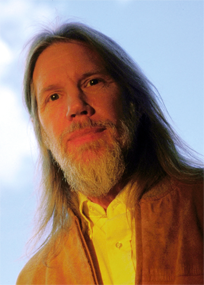 | |
| Date of Birth | |
| Place of Birth | Queens , New York , USA |
| A country | |
| Scientific field | Cryptography |
| Place of work | |
| Alma mater | |
| Awards and prizes | EFF Pioneer Award ( 1994 ) [d] ( 1992 ) Paris Canellakis Award ( 1996 ) Marconi Award ( 2000 ) Richard Hamming Medal ( 2010 ) Turing Award ( 2015 ) US National Inventors Hall of Fame Fellow Awards ( 2011 ) [d] ( 2012 ) [d] ( 2004 ) [d] ( 2017 ) |
Early years
Diffie was born in New York to the Bailey Diffie family, who taught Iberian history and culture at New York City College , and Justine Louise Whitfield, a writer and scholar. His interest in cryptography appeared at the age of 10, when his father brought home many cryptography books from the College Library City in New York.
He studied at the City College of New York, loved to browse all the books in the library related to cryptography. However, this interest did not last long, and soon Diffie found himself many new hobbies, among which were medieval castles, rockets and even poisonous gases (at one time he seriously considered a military career). During high school, his interests changed again, this time to mathematics . As a result, in 1965, Diffie received a bachelor's degree from the Massachusetts Institute of Technology . While studying at MIT, Diffie spent the summer holidays working at the Berkeley Institute . After receiving a degree at MIT, Diffie became interested in computers (before that, he was very dismissive of them). As a result, he began working for one military contractor - the Miter Corporation company, located in Massachusetts , which freed him from military service and the outbreak of the Vietnam War at that time. His work took place at , where he wrote modules for symbol operations on LISP . Diffie left this post in 1969, having spent a lot of time with hackers and made many suggestions for improving the security of computer systems in which he found vulnerabilities .
Meet McCarthy and work at Stanford
After leaving MIT, joining Stanford University's artificial intelligence lab, Diffie again changed his area of interest, this time to the problems of proving the correctness of computer programs and algorithms . At Stanford, he worked under the guidance of John McCarthy on a project sponsored by the US Defense Advanced Research Projects Agency . One of the objectives of the project, set by the US Department of Defense, was the unification of military computers located at remote distances from each other. Thus, in the event of failure of one computer, information and calculations were not lost, but transferred to other network members. This project was named ARPANET and became the progenitor of the Internet .
It was McCarthy who was the one who aroused Diffie's interest in cryptography, after which Diffie worked tirelessly since 1972. Concerned that all users had to work on the same computer and that all information was stored on a central machine (access to which had an administrator), Diffie took up the protection of information. In the beginning, he found this occupation difficult - although many worked in this area, many works were kept secret, others were carried out by the government. In 1974, McCarthy became dissatisfied with the amount of time that Diffie spent on cryptography, and by mutual agreement, Diffie was suspended from work. After that, he decided to travel the United States to gather more information and meet other independent cryptographers.
Meet Hellman and the Public Key
During his trip, Diffie met Martin Hellman , a professor at Stanford University in the Department of Electrical Engineering. At first, Hellman reluctantly agreed to talk with Whitfield, since he had never heard of him before, but after the conversation he realized that Diffie was one of the most knowledgeable people he had ever met. As a result, Hellman hired Diffie as a software researcher for his Stanford team. After some time, they were joined by Ralph Merkle , who left his research team due to disagreements with the leadership. All three were united by a desire to solve the key distribution problem, which at that time was considered an unsolvable paradox. It consisted in the fact that if two people want to exchange secret information, they must encrypt it, for which the sender must use a secret key, which in turn is a secret. The question arises how to transfer the secret key to the recipient so that he can use it to decrypt the message. Their work was also triggered by the recent release of the DES encryption standard and Diffie's announcement that the entire system could be hacked by a machine worth $ 650 million per week. After a discussion with Hellman, this estimate was refined, and their result was a 20-million-day machine. Subsequent reflections, publications, and the development of information technology sharply reduced the requirements necessary for hacking DES. For comparison, according to data for 2012, a computer worth ten thousand dollars in one day can cope with the task of hacking DES.
In 1975, Diffie, Hellman, and Merkle began working on the concept of public key encryption. The system was based on dividing the key into two parts - the well-known public key and the private key. This ensured the safety of communication without the need for a meeting to exchange keys, and also provided the ability to digitally sign messages to understand who the message came from. Their discovery later became known as the Diffie-Hellman algorithm . Diffie’s further suggestion of using an asymmetric key made it possible to improve and implement their scheme in practice.
Prior to this, secure encryption was available exclusively to the government, but public key encryption allowed ordinary people to use cryptography in everyday life. The decision of Diffie and Martin created many problems for government agencies whose task was to track negotiations.
Further work
In 1978, Diffie joined the Northern Telecom California Secure System Research division, where he worked in information security technology. There he developed the key management architecture for the PDSO security system for X.25 networks. From 1991 to November 2009, Whitfield worked at Sun Microsystems as a Distinguished Engineer, primarily working in public key cryptography. Since 2010, he has been working for Internet Corporation for Assigned Names and Numbers as Vice President of Information Security and Cryptography.
Freedom of information and forecasting options for the development of information technology
Diffie is considered one of the first cipherpunk - people who believe that private information is untouchable and should be protected using cryptography. He is an ardent opponent of government attempts to limit the use of cryptography for personal purposes and has many times acted in the US Senate, defending his position. In his reports, he drew an analogy with America at the end of the eighteenth century, stating that after the bill of rights was approved, two people could freely exchange information, while now people cannot walk a couple of meters without making sure that no one is sitting in the bushes with a listening device.
Diffie was also one of the first to predict a revolution in the field of information technology, saying that, given the growth rate of computing power and reducing their size, computers will soon be available to everyone. Starting work on ARPANet, he also foresaw the creation of the Internet, which at one time he called the "superhighway", transmitting information between users. These predictions were one of the reasons Diffie took up the key distribution problem seriously. He was convinced that if people would exchange information using computers, they should have the right to privacy and be able to encrypt the necessary information.
Personal life
During his trip to the United States in 1973, Diffie met the Egyptologist Mary Fisher, who eventually became his wife. As Mary recalls, Diffie knew that she was always keen on space, so their first date was with the launch of the Skylab rocket, where they fell under the guise of journalists.
Mary was always a pillar and support for Diffie, and was often the only reason he continued his research. During the period of work on the concept of public key encryption, he often had periods of long thought, which eventually led to nothing. In one of these periods, Diffie was so upset that he called himself a loser who would not achieve anything and even suggested Mary to leave him. However, she always understood him and did everything possible to support him.
Appearance
Particularly worth emphasizing is how Diffie dresses and his philosophy about appearance. His long white hair and white beard, combined with the often bright and colorful costumes, create conflicting associations.
Diffie himself comments on his style as follows: “People always think that I am taller than I really am, but I say that this is the“ tiger effect ”: no matter how much it weighs pounds and ounces; because of his jumps, he always seems bigger. "
Awards and Publications
- In 1981, he received the IEEE Donald E. Fink Award.
- In 1992 received a doctorate in technical sciences from the Swiss Higher Technical School of Zurich .
- In 1994, for his achievements in the field of cybernetics, he received the EFF Pioneer Award from the Electronic Frontier Foundation and was also awarded the Canellakis Award for Merit in Information Technology.
- In 1997 received the Louis Levy Medal Award from the Franklin Institute .
- In 1998, Diffie Whitfield and Susan Landau published a book entitled Privacy on the Line, which was supplemented and republished in 2007. In the same year he won the Golden Jubilee Award for Technological Innovation from the IEEE Information Theory Society .
- In 2000 received the Marconi Award .
- In July 2008 he was awarded a doctorate at the University of London .
- In 2010 received the Richard Hamming Medal .
- In 2015 received the Turing Award .
Diffie is one of the founders of the Marconi Foundation and the Isaac Newton Institute .
Notes
- ↑ SNAC - 2010.
Literature
- Sinh, S. Book of Ciphers: The Secret History of Ciphers and their Decryption. - AST, 2007 .-- 447 p. - ISBN 978-5-17-038477-8 .
- Brigham Narins. World of Computer Science. - Thomson Gale, 2001 .-- 500 p. - ISBN 978-0787649609 .