Igor Aleksendrovich Moiseev (January 8 ( 21 ), 1906 - November 2, 2007 ) - Soviet and Russian ballet dancer , dancer, choreographer, choreographer and teacher, public figure. People's Artist of the USSR (1953) [5] . Hero of Socialist Labor (1976). Laureate of Lenin (1967), three Stalin (1942, 1947, 1957) and USSR State Prize (1985).
| Igor Moiseev | |||||||||||||||||||||||||||||||||||||||||||
|---|---|---|---|---|---|---|---|---|---|---|---|---|---|---|---|---|---|---|---|---|---|---|---|---|---|---|---|---|---|---|---|---|---|---|---|---|---|---|---|---|---|---|---|
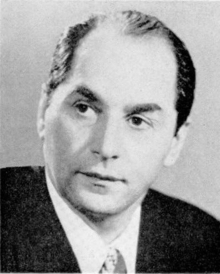 | |||||||||||||||||||||||||||||||||||||||||||
| Birth name | Igor Alexandrovich Moiseev | ||||||||||||||||||||||||||||||||||||||||||
| Date of Birth | |||||||||||||||||||||||||||||||||||||||||||
| Place of Birth | |||||||||||||||||||||||||||||||||||||||||||
| Date of death | |||||||||||||||||||||||||||||||||||||||||||
| Place of death | |||||||||||||||||||||||||||||||||||||||||||
| Citizenship | |||||||||||||||||||||||||||||||||||||||||||
| Profession | ballet dancer , choreographer , choreographer , ballet teacher | ||||||||||||||||||||||||||||||||||||||||||
| Theater | The Bolshoi Theatre Folk Dance Ensemble named after Igor Moiseyev | ||||||||||||||||||||||||||||||||||||||||||
| Awards |
| ||||||||||||||||||||||||||||||||||||||||||


Content
Biography
He was born on January 8 (21), 1906 in Kiev , where his father, Alexander Mikhailovich Moiseev, a Russian nobleman, originally from the Oryol province , worked as a lawyer. Igor’s mother was the modist Anna Alexandrovna Gran, “half French, half Romanian.” Parents met in Paris , where Igor also spent several childhood years and was fluent in French. He was the only child in the family [6] [7] .
He studied in Moscow , in a private ballet studio (1920). His father believed that dancing improves posture, and fearing the "fatal" influence of the street on a 14-year-old teenager, he took him to the ballet studio of the Bolshoi ballet dancer V. Mosolova , located not far from their house. [8] Two to three months after the start of classes, the teacher took Igor to the State Ballet School of the Bolshoi Theater (now the Moscow Academy of Choreography ). Moiseev passed the entrance exam [9] .
In 1924 he graduated from the State Ballet School of the Bolshoi Theater (teachers Ivan Smoltsov and Alexander Gorsky ) and was accepted into the troupe of the Bolshoi Theater , where he worked until 1939. Since 1931 - a soloist. Already in 1930 he began working as a choreographer .
In the 1930s, he staged a number of physical culture parades on Red Square , performances in the Armenian studio of Ruben Simonov , gave lessons in the dueling code at the Moscow Art Theater , taught at the Moscow Choreographic School , and headed the choreography section at the Folk Theater (1936) [10] .
In 1933 he graduated from the University of Arts.
In 1937, with the support of the chairman of the Council of People's Commissars Vyacheslav Molotov , he created the country's first professional folk dance ensemble (now the Igor Moiseyev Folk Dance Ensemble ). The first rehearsal of the new ensemble took place on February 10, 1937. Since that time - a permanent artistic director and dance director of the ensemble.
Together with the ensemble he continuously toured the USSR (since 1938) and abroad (since 1945).
In 1943 he created the country's first professional school of folk dance (a choreographic school-studio at the State Academic Folk Dance Ensemble), and in 1966 he organized the Young Ballet choreographic concert ensemble (now the State Ballet Theater under the direction of N. Kasatkina and V. Vasileva ), which led until 1970 [11] .
He staged gala concerts and cultural programs dedicated to outstanding events in the country's social life. He headed the jury of the Rainbow television folk festival, was a regular member of the jury of many international competitions and festivals of folk dance, and participated in the work of the Peace Committee .
Moiseev recalled that he had been asked to join the CPSU 18 times. But he invariably refused for reasons of principle.
“Why don't you want to join the party?”
- Because I believe in God and do not want you to work on me for this at your meetings. [12]
Member of the board of the Bolshoi Theater (since 1985), member of the Presidium of the Russian Academy of Arts (since 1996), member of the Presidential Commission on State Prizes of the Russian Federation in the field of literature and art, member of the Council of Culture, Science and Education of the Ministry of Foreign Affairs of Russia .
The author of articles on choreography, an autobiographical book "I Remember ... Life-long Tour".
Since the mid-1960s he was fond of [philately | philately]]. The basis of his collection was the Hungarian stamps given to him along with the classbook back in the mid-1950s while touring this country, [ Spanish stamps, as well as stamps dedicated to dances and costumes of the world.
Igor Moiseev died on November 2, 2007 in Moscow from complications of hypertension and coronary heart disease . He was buried on November 7, 2007 at the Novodevichy Cemetery (plot number 5).
Family
He was married three times:
- The first wife - Nina Borisovna Podgoretskaya (1902-1977), the prima ballerina of the Bolshoi Theater, participated in the creation of the folk dance ensemble. Honored Artist of the RSFSR (1947).
- The second wife is Tamara Alekseevna Seifert (1918-2005), a dancer, and a tutor-tutor. People's Artist of the RSFSR (1958).
- Daughter - Olga Igorevna Moiseeva (born 1943), ensemble soloist and tutor, Honored Artist of the RSFSR (1973).
- Grandson - Vladimir Borisovich Moiseev (born 1963), ballet dancer, choreographer. Honored Artist of the Russian Federation (1996), creator of the Russian National Ballet Theater.
- Daughter - Olga Igorevna Moiseeva (born 1943), ensemble soloist and tutor, Honored Artist of the RSFSR (1973).
- Third wife (from 1974) - Irina Alekseevna Moiseeva (born 1925, nee Chagadaeva ), artist of folk stage dance, soloist (since 1941) and teacher of the Folk Dance Ensemble. Honored Artist of the RSFSR (1958). After the death of I. Moiseyev - chairman of the creative board, managing the ensemble. [13]
Memory
- In Moscow, on the house where the artist lived, a memorial plaque was installed.
- The folk dance ensemble is named after I. Moiseyev.
- The work of Moiseyev is devoted to the documentary "Eternal Movement" ("Perpetuum mobile", 1967) and the television movie "Ballet of Igor Moiseyev" (1982).
- Dmitry Shcherbina in the role of Boris Evseev - the identically named director of the State Academic Folk Dance Ensemble of the USSR (protopip GAANT USSR p / r I.A. Moiseev ) in the series " Birch "
Repertoire at the Bolshoi Theater
- Corsair by A. Adan , choreography by M. Petipa , revised version by A. Gorsky - Slave
- The Little Humpbacked Horse by C. Pugni , choreography by M. Petipa, revised version by A. Gorsky - Slave, Mazurka
- “Theolinda” F. Schubert , choreographer K. Goleizovsky - Raul
- “Joseph the Beautiful” S. Vasilenko , choreographer K. Goleizovsky - Joseph
- “Footballer” by V. Oransky , own production - Footballer
- “Salambo” by A. Arends directed by A. Gorsky - Mato
- " Red Poppy " R. Gliere - Ma Li-chen
First Party Performer
- 1932 - Salambo A. Arends , own production - Mato
- 1933 - “Dionysus” by A. Shenshin , “ Chopeniana ”, “Charda”, choreographer K. Goleizovsky - Soloist
- 1935 - “ Bright Stream ” by D. Shostakovich , choreographer F. Lopukhov - Uzbek
Performances at the Bolshoi Theater
- Ballets
- 1930 - “Footballer” by V. Oransky (together with L. Lashchilin and L. Zhukov )
- 1930 - “In vain precaution ” by P. Gertel (together with A. Messerer on the stage of the Experimental Theater at the Bolshoi Theater)
- 1932 - “Salambo” by A. Arends (with the addition of music by A. Glazunov , V. Nebolsin and A. Tsfasman )
- 1935 - "Three Fat Men" by V. Oransky
- 1958 - Spartak by A. I. Khachaturian
- Dancing in operas
- 1930 - “Zagmuk” by A. A. Krein
- 1930 - Turandot by J. Puccini
- 1932 - The Demon by A. G. Rubinstein
- 1933 - “ Love for Three Oranges ” by S. S. Prokofiev
- 1936 - " Carmen " by J. Bizet
Folk Dance Ensemble
Since 1937, he was the leader of the USSR Folk Dance Ensemble that he created (in 1991 it was renamed the State Academic Folk Dance Ensemble under the direction of Igor Moiseev, and since 2007 it was named after Igor Moiseev).
Staged Dances
- Dances of the peoples of the world:
- Russian dances:
Glade, Seasons. Suite of two dances "," Monogram "," Six. Ural dance "," Bullied ditties "," Russian dance "," Snowstorm (Snow Maiden) " - Belarusian dances:
Lyavonikha , Kryzhachok, Polka Yanka, Bulba, Polka Mama, Yurochka (Rural Don Juan) - Ukrainian dances:
“Vesnyanki. Suite ”(“ Girls' exit (Girl’s sorrow) ”,“ Farewell ”,“ Fortune-telling (Scene with wreaths ”),“ Big dance ”,“ Heel ”,“ Out of couple ”,“ Return ”,“ Meeting and greatness ”,“ Hopak ”,“ Arkan ”(Hutsul male shepherd’s dance),“ Dance of a girl and two guys ”(Hutsul dance) - Moldavian dances:
“Jokul Mare (big jock). Suite ”(“ Chora (Dance of the Girls) ”,“ Chokyrlia (Lark) ”,“ Zhok ”,“ Moldovenyaska ”,“ Koasa (Kosari) ”,“ La spelat (Laundress) ”,“ Sfredelush (agricultural dance) ”,“ Moldavanochka ”,“ Tricky Mokanu. Suite ”(“ Dance of the guys ”,“ Dance of the girls ”,“ Declaration of love ”,“ General exit ”,“ Syrba (very fast dance) ”,“ Yula ” - Kyrgyz dances:
"Yurt", "Kyz Kumai (Catch a Girl)", "Dance of Kyrgyz Girls" - Uzbek dances:
“Buttermilk (Cotton)”, “Dance with a dish”, “Uyghur dance“ Safaili ”(national rattle instrument)” - Tajik dances:
“Dance of the girls”, “Male warlike dance with a dagger”, “Dance with a doira (eastern name of a tambourine)” - Kazakh dance "Kok-par"
- Jewish dances as part of the Jewish Suite
- Mongolian dances:
“Mongolian Riders”, “Mongolian Figurine”, “Dance of the Mongolian Wrestlers" - Bashkir dance "Seven Beauties"
- Buryat dances (Suite “ Tsam ” of ten dances)
- Dance of Kazan Tatars
- Dance of the Crimean Tatars "Black Sea"
- Kalmyk dances:
“Chichirdyk (Soaring Eagle)”, “Ishkymdyk (Two Horsemen)”, Torgut Dance - Ossetian dance " Simd "
(mass dance) - Georgian dances:
“Kartuli (Lekuri)”, “Horumi” (Adjarian dance) - Azerbaijani dances:
“Shepherds”, “Desmoles”, “Gazakhs” - Armenian “Minuki” of four dances
- Gypsy dance
- Latvian dances (suite of three dances)
- Lithuanian dances (suite of five dances)
- Estonian dances:
“Estonian polka through a leg”, “Hiu-waltz. Estonian Suite of Three Dances ” - Polish dances:
"Polonaise", "Troyak", " Oberek ", "Krakowyak", "Mazurka", "Polka Labyrinth" - Hungarian dances:
“Chardash”, “Pontozoo”, “Crackers” (dance with dots with a beat on the boots), “Farewell”, “Girl's dance with bottles on the head”, “Dance with spurs” - Bulgarian dances (suite of five dances)
- Romanian dances:
“Briul”, “Mushamaua” (a fun mass dance), “Oash dance” - Finnish dance "Comic polka"
- German dance "German Waltz"
- Chinese dances:
“Dance with drums”, “Dance with ribbons”, “San cha kou” (At the crossroads), “Big pantomime” - Korean dance "Sancheong"
- Yakut dance "Good hunter"
- Nanai dances:
“Nanai folk game“ Fencing on sticks ””, “The struggle of two kids” (scene) - Chuvash dance
- Mari dance
- Vietnamese dance "Dance with Bamboo"
- Czech dance "Czech polka"
- Slovak dance
- Greek dances:
“Sirtaki (Male dance)” (music by M. Theodorakis ), “Girls' dance”, “Round dance”, “Male dance with fours”, “General final dance” - Italian dance "Sicilian tarantella La karetta"
- Spanish dances:
“The Spanish Ballad”, “Aragonese Hota” (music by M. I. Glinka) - Irish dance "Youth"
- Yugoslav dances:
“Serbian woman” (Serbian dance), “Kukunesti” (Serbian male dance), “Macedonian female dance”, “Dziurdevka” (Montenegrin warlike dance), “Villager” (Serbian dance), “Oath” (Macedonian male dance)
- Russian dances:
- Dances of Latin America:
- Argentinean dances:
"Malambo", "Gaucho" (Dance of the Argentine shepherds), "Tavern" (one-act picture), "In the Tavern Radriguez Peña". - Mexican Suite (Zapateo, Avalulco)
- Venezuelan dance "Horopo"
- Argentinean dances:
- Dancing USA:
"Square Dance", "Back to the Monkey" (a parody of rock and roll) - The series “Pictures of the Past”:
Lyrics near Moscow, City Factory Quadrille, Trepak (music by P. I. Tchaikovsky from the ballet The Nutcracker), Suite from Old Russian Dances, In the Yards, The Boyfriends, Polish Beauty with figures and compliments ”,“ Good-for-nothing merrymaking ”,“ Jewish Suite “Family Joys” ” - The cycle "Soviet Pictures":
“Kolkhoznaya Street”, “Russian Red Army Dance”, “Draftees”, “Partisans”, “Labor Day - Fifteen Dance Fragments”, “Navy Suite“ Day on the Ship “”, “Football” (choreographic scene) - The road to dance (concert class):
“Machine Tool”, “Middle”, “Walkthroughs”, “Dance”, “Ukrainian Dance”, “Hopak-Kolo”, “Polka” - At the rink (music by Jacques Offenbach, Johann Strauss, Andrei Petrov):
“Skating Waltz”, “Girl and Boy”, “Competitions of the Spinners”, “Parade”, “Gallop and the Finale” - Night on the Bald Mountain (in two scenes):
“Fair” (folk music), “ Night on the Bald Mountain ” (music by M. P. Mussorgsky ) - Polovtsian dances (music by A.P. Borodin):
“Khan's Exit”, “Dance of the Captives”, “Dance of the Boys”, “Dance of Archers”, “Departure of the Riders”, “General Dance”, “Dance of the Shepherds”, “Warlike Dance”, “Final” - Ballet Spartak. Dances from the ballet (music by A. I. Khachaturian):
Bacchanalia, The Exit of the Gladiators, Andobats (Fight in Blind Helmets), Retarius and Mermelon (Fisherman and Fish), Adagio, The Battle of the Thracians and Samnites - Pop number “Polka-labyrinth”.
Filmography
Filmmaking
- 1961 - Behind the Ramp - America (Documentary)
- 1961 - USSR with an open heart (documentary)
- 1967 - Perpetuum mobile. Perpetual motion (documentary)
- 1984 - And again the high point! (documentary)
- 2006 - 100 years of disunity. Igor Moiseev (documentary)
Archive footage
- 2006 - 100 years of disunity. Igor Moiseev (documentary)
- 2012 - Igor Moiseev. Left to stay (documentary)
Awards and titles
Awards of the USSR and the Russian Federation:
- Hero of Socialist Labor ( January 20, 1976 ) - for outstanding achievements in the development of Soviet choreographic art and in connection with his seventieth birthday [14]
- Three Orders of Lenin :
- first ( 1958 )
- second ( 1976 )
- the third ( January 20, 1986 ) - for great achievements in the development of Soviet choreographic art and in connection with the eightieth birthday [15]
- Order of the October Revolution ( 1981 )
- Two orders of the Red Banner of Labor :
- the first ( 1940 )
- the second ( January 20, 1966 ) - for great achievements in the development of Soviet choreographic art and in connection with his sixtieth birthday [16]
- The Order of the Badge of Honor ( June 2, 1937 ) - for outstanding achievements in the development of opera and ballet art [17]
- Order "For Merit to the Fatherland" I degree ( January 21, 2006 ) - for his outstanding contribution to the development of domestic and world choreographic art, many years of creative activity [18]
- Order “For Merit to the Fatherland”, II degree ( June 12, 1999 ) - for outstanding contribution to the development of culture and in connection with the 75th anniversary of creative activity [19]
- Order “For Merit to the Fatherland”, III degree ( December 28, 1995 ) - for merits to the state, outstanding contribution to the development of choreographic art [20]
- Order of Friendship of Peoples ( April 11, 1994 ) - for his great personal contribution to the development of choreographic art and world culture [21]
- Medal “For Valiant Labor. In commemoration of the 100th anniversary of the birth of Vladimir Ilyich Lenin "
- Medal "For Valiant Labor in the Great Patriotic War of 1941-1945."
- Medal “In memory of the 800th anniversary of Moscow”
- Medal “In memory of the 850th anniversary of Moscow”
- Gratitude of the President of the Russian Federation ( January 20, 2001 ) for his outstanding contribution to the development of world choreographic art [22]
- The distinction "For Merit to Moscow" ( December 26, 2005 ) is for merit in the development of choreographic art, a great contribution to the cultural life of Moscow and many years of creative activity [23]
Foreign awards:
- Order "St. Alexander" with a crown ( Bulgaria , 1945)
- Officer of the Order of Culture ( Romania , 1945)
- Order of Brotherhood and Unity ( Yugoslavia , 1946)
- Commander of the Order of the Renaissance of Poland ( Poland , 1946)
- Cavalier of the Order of the Polar Star ( Mongolia , 1947)
- Officer of the Order of Culture I degree ( Hungary , 1954)
- National Order of the Cedar II degree ( Lebanon , 1956)
- Officer of the Order of Culture, II degree ( Hungary , 1960)
- Order of Sukhbaatar ( Mongolia , 1976)
- Order of the White Lion, III degree ( Czechoslovakia , 1980)
- Officer of the Order of Culture, III degree ( Hungary , 1989)
- Commander of the Order of Civil Merit ( Spain , 1996)
- Commander of the Order of Merit for the Republic of Poland ( Poland , 1996)
- Commander of the Order of Merit ( Hungary , 1997)
- Order of Merit, III degree ( September 30, 1999 , Ukraine ) - for a significant personal contribution to the development of Ukrainian-Russian cultural ties, significant creative achievements [24]
- Mozart Medal ( UNESCO , 2001)
- Commander of the Order of the Star of Romania ( Romania , 2003)
- Mayor Commander ( Argentina , 2004)
- Order “Danaker” ( January 23, 2006 , Kyrgyzstan ) - for great achievements in the development and deepening of Kyrgyz-Russian relations in the field of culture and art [25] [26]
- The Order of Prince Yaroslav the Wise of the V degree ( March 3, 2006 , Ukraine ) - for outstanding personal contribution to the development of cultural ties between Ukraine and the Russian Federation, many years of ascetic artistic activity [27] [28]
Prizes:
- Stalin Prize of the first degree (1942) - for outstanding work in the field of folk dance
- Stalin Prize of the second degree (1947) - for staging the program "Dances of Slavic Peoples" in the USSR GAANT
- Stalin Prize of the first degree (1952) - for concert and performing activities as part of the USSR GAANT
- Lenin Prize (1967) - for the concert program of the GAANT of the USSR (1965)
- USSR State Prize (1985) - for new programs of the USSR GAANT (1983-1984)
- State Prize of the Russian Federation in the field of literature and art for 1995 (1996) [29]
- Prize of the International Fund “For the Development of Cultural Relations between the USA and Russia” (1995) [30]
- Russian Independent Triumph Award (1997)
- Russian national Ovation Award in the Living Legend nomination (2000)
- The first prize “Legend of the Century” ( Government of Moscow , 2001) - for an outstanding contribution to the development of domestic and world choreographic art and in connection with the 95th anniversary of his birth [31]
- Award "For selfless service to the art of dance" ( G. Ulanova Foundation, 2004)
- International Prize “Faith and Loyalty” ( St. Andrew the First-Called Foundation , 2006)
- National Award “Russian of the Year” (2006) [32]
- American Academy Award for Dance (1961, 1974)
- American Dance Magazine Dance Award [33]
Ranks:
- People's Artist of the Buryat-Mongolian Autonomous Soviet Socialist Republic (1940)
- Honored Artist of the RSFSR ( October 27, 1942 )
- People's Artist of the RSFSR (1944)
- People's Artist of the Moldavian SSR (1950)
- People's Artist of the USSR ( December 19, 1953 )
- People's Artist of the Kyrgyz SSR (1976)
- Honorary Member of the French National Assembly and Member of the French Academy of Music and Dance (1955)
- Doctor of Science, International Academy of Sciences San Marino
- Professor Emeritus, Beijing Academy
- Professor of the Russian Academy of Theater Arts (1997)
- The title of "Man-Age" (2005).
Notes
- ↑ http://www.iht.com/articles/ap/2007/11/02/europe/EU-GEN-Russia-Obit-Moiseyev.php
- ↑ Encyclopædia Britannica
- ↑ SNAC - 2010.
- ↑ Moiseev Igor Aleksandrovich // Great Soviet Encyclopedia : [in 30 vol.] / Ed. A. M. Prokhorov - 3rd ed. - M .: Soviet Encyclopedia , 1969.
- ↑ Moiseev Igor Aleksandrovich (Unavailable link) . Date of treatment March 18, 2008. Archived August 15, 2009.
- ↑ Moiseev I.A. I remember ... A life-long tour. - M .: Consent, 1996 .-- S. 5 .-- 224 p. - ISBN 5-86884-040-2 .
- ↑ Alla Perevalova. Livelier than all the living (interview with Igor Moiseyev) . Week . 1001.ru (1994).
- ↑ An outstanding choreographer Igor Moiseev died - Vladivostok News on VL.ru
- ↑ Igor Moiseev passed away
- ↑ Biography of Igor Moiseyev »Igor Moiseyev Ballet | Ballet Igor Moiseyev
- ↑ Hero of Socialist Labor Moiseev Igor Aleksandrovich :: Heroes of the country
- ↑ Dancing Century "Russian Newspaper" 01/20/2006
- ↑ “Moses was more afraid than Stalin” - From the first person - “Culture” newspaper
- ↑ Decree of the Presidium of the Supreme Soviet of the USSR of January 20, 1976 No. 2869 "On the awarding of the title of Hero of Socialist Labor to People's Artist of the USSR I. Moiseev
- ↑ Decree of the Presidium of the Supreme Soviet of the USSR of January 20, 1986 No. 4040 “On the Awarding of Comrade Moiseev I. A. Order of Lenin "
- ↑ Decree of the Presidium of the Supreme Soviet of the USSR of January 20, 1966 No. 4403 “On the awarding of Comrade Moiseeva I. A. Order of the Red Banner of Labor "
- ↑ Decree of the Central Executive Committee of the USSR of June 2, 1937 "On awarding artists of the State Academic Bolshoi Theater of the USSR"
- ↑ Decree of the President of the Russian Federation dated January 21, 2006 No. 34 “On awarding the Order“ For Merit to the Fatherland ”, First Class, Moiseev I.A.
- ↑ Decree of the President of the Russian Federation of June 12, 1999 No. 739 “On awarding the Order“ For Merit to the Fatherland ”, II Degree, Moiseev I.A.”
- ↑ Decree of the President of the Russian Federation dated December 28, 1995 No. 1325 “On Awarding with State Prizes of the Russian Federation”
- ↑ Decree of the President of the Russian Federation of April 11, 1994 No. 704 “On the Awarding of the Order of Friendship of Peoples I.A. Moiseev”
- ↑ Order of the President of the Russian Federation of January 20, 2001 No. 33-rp “On the Promotion of Moiseev I.A.”
- ↑ Decree of the Mayor of Moscow No. 94-UM of December 26, 2005 "On the award of the distinction" For Services to Moscow "
- ↑ President of Ukraine No. 1254/99 “On the Remuneration of the Mayors of Ukraine by the Mysteries of the Russian Federation”
- ↑ Decree of the President of the Kyrgyz Republic dated January 23, 2006 No. 30 “On the Awarding of the Danaker Order by IA Moiseev”
- ↑ Igor Moiseev was awarded the Kyrgyz Order ...
- ↑ Decree of the President of Ukraine of March 3, 2006 No. 189/2006
- ↑ Igor Moiseev received from Yushchenko the order of Yaroslav the Wise
- ↑ Decree of the President of the Russian Federation of May 27, 1996 No. 779
- ↑ Igor Moiseev. Video materials (inaccessible link) . Date of treatment August 6, 2012. Archived on February 13, 2012.
- ↑ Decree of the Government of Moscow No. 210-PP of March 13, 2001 “On the Establishment of the Moscow Government Prize Legend of the Century”
- ↑ “Russian of the Year” on the website of the Russian Academy of Business and Entrepreneurship (inaccessible link)
- ↑ Moiseev, Igor Alexandrovich - RuData.ru
Literature
- Sladkov L. Dance - my life // Philately of the USSR . - 1975. - No. 7. - S. 52-54
Links
Moiseev, Igor Alexandrovich . Site " Heroes of the country ".
- State Academic Folk Dance Ensemble led by Igor Moiseyev
- Igor Moiseev on Peoples.ru
- The ensemble of Igor Moiseev. Moscow 1962
- Presenter: Oksana Pashina; guest: Elena Shcherbakova, artistic director and director of the ensemble Igor Moiseyev. Difiramb . Echo of Moscow (2017-02-05, 14:07). Date of treatment February 7, 2017.