The land of Eric Red - ( Norwegian. Eirik Raudes Land ) is the territory of eastern Greenland , so named by the Norwegians after the occupation of this territory by Norway in the early 1930s. The name is given in honor of the citizen of Iceland and the native of Norway Eric Red - the discoverer of Greenland , who founded the first settlements on this island in the X century . In 1933, the League of Nations International Court of Justice condemned Norway, and subsequently Norway renounced its claims on this Danish territory.
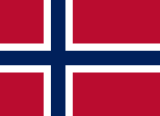
| colony of Norway | |||
| Eric the Red Land | |||
|---|---|---|---|
| Eirik raudes land | |||
| |||
 Claims of Norway in Danish Greenland in 1931 - 1933 | |||
←  → →1931 - 1933 | |||
| Capital | |||
| Form of government | A constitutional monarchy | ||
| King | |||
| • 1931 - 1933 | Haakon VII | ||
| Story | |||
| • July 11, 1931 | Norway's declaration of sovereignty over East Greenland | ||
| • April 5, 1933 | East Greenland returns to Denmark | ||
Content
Background
In the 1920s, Norway demanded that Denmark give her part of eastern Greenland . This territory was used mainly by crews of Norwegian fishing and whaling vessels. In response to this demarche, Denmark in 1921 demanded that all foreigners leave the territory of Greenland, which led to new tense negotiations. In 1924, Denmark agreed that both countries have the right to conduct business, hunting and research there.
On June 27, 1931, the chairman of the Norwegian Arctic Trading Company, Halvard Devold, and four ATK employees [1] raised the Norwegian flag in the East Greenland village of Myggbukta . On July 11, 1931, King Haakon VII issued a decree establishing Norwegian sovereignty over Eirik Raudes Land, the central part of East Greenland.
On July 12, 1932, 33-year-old Helge Markus Ingstad was appointed governor and supreme judge of the Earth Eric Red. He arrived at the duty station on the Polarbjørn ship. Norway acknowledged its loss and rejected any claim to the land of Eric Red.
See also
- Overseas territories of Norway
Links
Notes
- ↑ Eiliv Herdal, Tour Halle, Ingvald Strøm and Søren Richter.
Literature
- Anokhin G. I. To the Ethnic History of the Greenland Normans // Romania and Barbaria. To the ethnic history of the peoples of foreign Europe: Sat. / Ed. S. A. Arutyunova et al. - M.: Science 1989. - S. 131-163.
- Buyer Regis. Vikings: History and Civilization. Per. with fr. - SPb. : Eurasia, 2012 .-- 416 p. - 3000 copies. - ISBN 978-5-91852-028-4 .
- Vikings. Raids from the North: Sat / Per. from English L. Florentieva. - M .: Terra, 1996 .-- 168 p .: ill. - Series "Encyclopedia" Disappeared Civilizations "". - ISBN 5-300-00824-3 .
- Vozgrin V.E. Greenland Normans // Questions of History. - 1987. - No. 2. - S. 186-187.
- Jones Gwyn. Normans. Conquerors of the North Atlantic. - M.: Tsentrpoligraf, 2003 .-- 301 p.
- Ingstad Helge. In the footsteps of Happy Happy. - L .: Gidrometeoizdat, 1969 .-- 246 p.
- Affectionate G.V. Vikings: Campaigns, discoveries, culture. - Minsk: MFTSP, 2004 .-- 322 p. - Series "Peoples of the Earth."
- Roesdal Elsé. The world of the Vikings. Vikings at home and abroad / Translation from dates. F.K. Zolotarevskaya. - St. Petersburg: The World Word, 2001 .-- 272 p.
- Stringholm Anders Magnus . Viking Campaigns . - M .: AST, 2007 .-- 272 p. - 5,000 copies. - ISBN 5-17-037901-3 , 5-9713-3327-5, 5-9762-0365-5.
- Odd Arnesen Vi flyver over Eirik Raudes land. - Oslo: 1932.