Tehran was founded in the 6th millennium BC. The capital of Iran since 1795. The modern urban layout was adopted in the 1920s - 1930s. Prior to this, the city had a radial-circular structure with narrow streets and small buildings piled almost on top of each other. The only major buildings of the time were several palaces and mosques. Old city buildings have been preserved in some areas in the south of Tehran.
At the beginning of the 20th century, in the north of Tehran, in the Shemiran district, the palaces of Saadabad and Niavaran were built.
A considerable contribution to the development of Tehran was made by Russian architects. They built the buildings of the railway station, the Ministry of Defense, the Ministry of Justice, the main post office and some others.
The city experienced major modernization in the 1970s during the celebration of the 2500th anniversary of the Iranian monarchy. In 1971, the Freedom Tower (Azadi) was built, remaining the western "gate" to Tehran and the main symbol of the Iranian capital.
After the Islamic Revolution of 1979, the city began to be built up faster than ever. The face of central Tehran was an array of faceless gray buildings erected without a general plan. At the same time, in the prestigious northern quarters, closer to the Tochal ridge, mainly cottage and individual buildings are preserved.
In recent years, a large-scale reorganization of the road network has been carried out in Tehran. Broad highways pass through Tehran, in some places "going" underground. There are a large number of multi-tier transport interchanges.
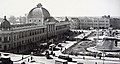
Tuphane Square
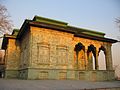
Green palace

Islamic Institute
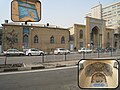
Dar ul Funun

City building
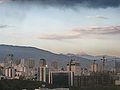
City building

City building

Skyscrapers in Elahiya

Court of Audit

Prospect Nawab Safavi

Pasdaran Street

Tehran-Keredzh Highway
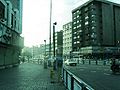
Engelab Street
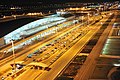
Imam Khomeini International Airport

Hyperstar Shopping Center

Tehran Road Interchanges


See also
- International Tower (Tehran)