Fermentation is a biochemical process based on redox transformations of organic compounds under anaerobic conditions. During fermentation, the formation of ATP occurs due to substrate phosphorylation [1] . During fermentation, the substrate is not completely oxidized ; therefore, fermentation is energetically ineffective in comparison with respiration , during which ATP is formed not due to substrate phosphorylation, but due to oxidative phosphorylation [2] .
Fermentation is carried out by many microorganisms , the so-called fermenters , both prokaryotic and eukaryotic , for example, yeast of the genus alcohol carry out alcohol fermentation [3] .
Fermentation has been used by humans to produce a variety of foods from ancient times. It is used in brewing , baking , winemaking , sour-milk products . In the XX century, fermentation began to be used for the industrial production of ethanol , butanol , acetone , lactic acid and acetaldehyde [4] .
Study History
For a long time, chemists , including Antoine Lavoisier , regarded fermentation as a chemical reaction to which living organisms have nothing to do. In 1837, Charles Cagnard de La Tour , Theodor Schwann and Friedrich Kützing independently published works in which they showed that the yeast used for centuries in brewing and winemaking is living organisms that can multiply by budding [5] . Schwann boiled grape juice , thereby killing the yeast, and showed that fermentation could start again only after adding new yeast. However, even after these studies, many chemists continued to deny the role of living organisms in fermentation [6] . The situation changed when Louis Pasteur repeated the experiments of Schwann in the 1850-1860s and showed that living organisms carry out the fermentation. In 1857, he showed that lactic fermentation is carried out by living organisms [7] . In 1860, he demonstrated that milk , which was previously thought to be a chemical process independent of living organisms, is caused by bacteria . This work showed the role of microorganisms in food spoilage and gave impetus to the development of pasteurization [8] . To promote the development of brewing in France , in 1877, Louis Pasteur wrote the famous work Etudes sur la Bière (The Study of Fermentation), in which he gave the famous (albeit incorrect) definition of fermentation as “life without oxygen ”. He managed to establish a connection between various types of fermentation and the microorganisms that carry them out [9] .
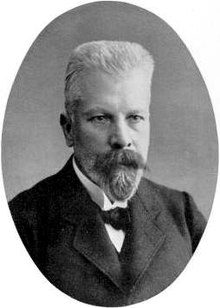
Although Pasteur convincingly proved that microorganisms carry out the fermentation, what exactly is responsible for this process in them, remained unknown. Many scientists, including Pasteur, tried unsuccessfully to isolate fermentation- catalyzing components from yeast. Finally, in 1887, the German chemist Eduard Buchner grew yeast, obtained an extract from them and found that this “dead” liquid was able to ferment sugars , like living yeast, with the formation of ethanol and carbon dioxide . Buchner's results laid the foundation for the science of biochemistry. Thanks to his discoveries, it became clear that special proteins — enzymes contained in microorganisms — carry out fermentation [10] . For his results, Buchner in 1907 received the Nobel Prize in Chemistry [11] . It is worth noting that even before Buchner, the Russian woman doctor Maria Manaseina , who published the work “On the doctrine of alcoholic fermentation” in 1871, was actively studying alcohol fermentation [12] .
Recent advances in microbiology and biotechnology optimize fermentation for industrial needs. So, already in the 1930s, it was shown that, with the help of chemical and physical influences, it is possible to cause mutations in microorganisms that allow them to grow faster and in a more concentrated environment, be tolerant to a small amount of oxygen and give more fermentation products. Such strains are actively used in the food industry [13] [14] .
General characteristics
Various organic compounds in which carbon is not completely oxidized can act as a substrate in fermentation processes: carbohydrates , alcohols , organic acids , amino acids , heterocyclic compounds . Fermentation products also include organic substances: organic acids ( lactic , acetic , butyric and others), alcohols, acetone , gases can also be emitted : carbon dioxide, hydrogen , ammonia , hydrogen sulfide , methyl mercaptan , and various fatty acids are formed . Types of fermentation are commonly referred to as the main emitted product [15] .
In the fermentation process, two stages are distinguished:
- oxidative , in which special enzymes tear electrons from the substrate and transfer them to a temporary carrier (for example, NAD + ). The energy released during this process is stored in the form of ATP.
- reducing , in which the formed intermediate compound is restored due to the transfer of electrons and protons to it from a temporary carrier. Reduced organic compounds are secreted by microorganisms into the environment [2] .
As a rule, during fermentation , the substrate molecule splits, and the same compounds serve as both donors and electron acceptors. Conjugation is also known, in which different substances are donors and acceptors of electrons. So, during the fermentation of some amino acids, one amino acid is oxidized, and the other is restored [2] .
During fermentation, the substrate does not completely oxidize; therefore, fermentation is an energetically unproductive process. For various types of fermentation, fermentation of one glucose molecule gives from 0.3 to 3.5 ATP molecules, while aerobic respiration with complete oxidation of the substrate has a yield of 38 ATP molecules. Due to the low energy output, fermenting microorganisms are forced to process a huge amount of substrate [2] .
The fermentation pathway can be straight or branched, in which the oxidation stage lengthens, which is accompanied by an increase in energy yield. Molecules of the intermediate product in the reduction phase can also undergo additional transformations to increase their acceptor ability [16] .
Basic types
Alcohol Fermentation
In 90% of cases, alcoholic fermentation is carried out by the yeast of the genera Saccharomyces and . They ferment mono - and disaccharides with the formation of ethanol and carbon dioxide. The oxidative stage of alcoholic fermentation proceeds along the path of glycolysis with the formation of two pyruvate molecules, two ATP molecules , and two NADH + H + molecules from one glucose molecule. At the recovery stage, the enzyme functions, the coenzyme of which is thiamine pyrophosphate . In the absence of oxygen, pyruvate decarboxylase converts pyruvate to acetaldehyde to release a carbon dioxide molecule. Next, the alcohol dehydrogenase enzyme, using two NADH + H + formed in the oxidative step, reduces acetaldehyde to ethanol. The general equation for the reaction of alcoholic fermentation: glucose + ADP + P i → 2 ethanol + 2 CO 2 + ATP [17] .
Alcoholic fermentation was found only in single prokaryotes due to the rare occurrence of the pyruvate decarboxylase enzyme in them. The strictly anaerobic gram-positive bacterium Sarcina ventriculi is capable of alcoholic fermentation, like yeast. The bacterium Zymonomonas mobilis , although it has pyruvate decarboxylase, does not conduct alcohol fermentation, but ferments sugar along the Entner-Dudorov pathway . Another bacterium having pyruvate decarboxylase, Erwinia amylovora, is capable of alcoholic fermentation, along with other types of fermentation [18] .
Alcoholic fermentation is of great industrial importance. It is used in bakery, in the production of ethanol, glycerin , and alcoholic beverages [18] .
Lactic fermentation
Lactic fermentation is carried out by phylogenetically unrelated organisms: representatives of the orders Lactobacillales , , as well as the family . These bacteria live solely due to fermentation. Lactic fermentation is divided into homoenzymatic and heterozymatic. With homoenzymatic lactic acid fermentation, sugar is fermented through glycolysis and about 90% of the final product is lactate (the remaining 10% is acetate , acetoin and ethanol). The substrate for homoenzymatic lactic acid fermentation is lactose , other mono- and disaccharides, as well as organic acids. The general equation of homoenzymatic fermentation: glucose → 2 lactate + 2 ATP [19] .
With heterofermentative lactic acid fermentation, sugars are fermented through the pentose phosphate pathway and lactic acid accounts for only about half of the final product [20] . An important substrate for heteroenzymatic lactic acid fermentation is maltose . Some homoenzymatic bacteria, appearing in a medium containing pentoses , can pass to heteroenzymatic fermentation [21] .
Lactic acid fermentation is used in the preparation of various products based on milk ( yogurt , sour cream , kefir ), in pickling vegetables and silage [22] .
Propionic Acid Fermentation
Propionic acid fermentation is carried out mainly by bacteria of the order of the Actinobacteria class , which live in the rumen and intestines of ruminants . Mono- and disaccharides, as well as some organic acids, serve as a substrate for propionic acid bacteria, however, unlike lactic acid bacteria, they are not able to decompose lactose and are never found in milk. Propionic acid bacteria are capable of fixing CO 2 under heterotrophic conditions using and phosphoenolpyruvate carboxylase . The total equation for the reaction of propionic acid fermentation is 1.5 glucose → 2 propionate + acetate + CO 2 [23] [24] .
Propionic acid fermentation occurs during the preparation of some hard cheeses at the stage of their ripening. In addition, propionic acid bacteria are a source of vitamin B 12 for medicine [23] .
Formic acid (mixed) fermentation
Formic acid (also known as blended) fermentation is carried out by bacteria of the Enterobacteriales order, most of which belong to the human intestinal microflora (including Escherichia coli E. coli ). All of them are facultative anaerobes and, in addition to fermentation, are capable of breathing . In the general case of formic acid fermentation, glucose is converted into pyruvate through glycolysis, which is then reduced to formic acid (which, in turn, can turn into hydrogen and carbon dioxide), ethanol, and other organic acids. Despite the fact that different representatives form diverse products (for which fermentation is called mixed), all formic acid bacteria have the enzyme, which turns pyruvate into acetyl CoA and formic acid [25] [26] .
Butyric Fermentation
Some representatives of the genera Clostridium , , , are capable of oleic acid fermentation. Clostridia can use not only mono- and disaccharides as a substrate for butyric acid fermentation, but also starch , cellulose , pectin and other biopolymers . During oil-acid fermentation, glucose is oxidized to pyruvate via the glycolytic pathway, which then turns into acetyl-CoA. Further chemical transformations of acetyl-CoA give butyric acid (butyrate) and acetate. The total yield of butyric acid fermentation is 3.5 ATP molecules per glucose molecule. Microorganisms of oily fermentation live in different types of soils , decompose many biopolymers, cause food spoilage ( rancidity of oil, sour cream, pickled vegetables, silage ) [27] .
Homoacetate Fermentation
Homoacetate fermentation, although called fermentation, includes part of the reactions of anaerobic respiration, its only product is acetate. Bacteria capable of homoacetate fermentation are strict anaerobes that can process a wide range of substrates (including monocarbon), in addition, they are connected by syntrophic bonds with acetoclastic methanogens . Homoacetogens occupy an intermediate position between fermenters and anaerobically breathing bacteria, since they form two acetate molecules during fermentation reactions, and the third is obtained due to anaerobic carbonate respiration. Homoacetogenic bacteria are found in different phylogenetic groups. Among them are representatives of the genera Clostridium , , , and others [28] .
Human Use
Fermented foods and drinks are found in almost all cuisines of the world. Fermentation, along with smoking , drying and pickling, has long been one way of preventing food spoilage. Man began to use fermentation, in particular in brewing, from the Neolithic period of about 7 thousand years BC. e. in China [29] . Wine for the first time began to be received in Mesopotamia about 6 thousand years BC. e. Some fermentation products have become sacred in Christianity . In the modern world, fermentation (fermentation) plays a huge role in the food industry . It is estimated that every day around the world, every person eats from 50 to 400 g of products obtained as a result of fermentation, which make up from 5 to 40% of the daily diet. Using alcoholic fermentation and a variety of substrates, various alcoholic drinks are produced for it: beer , wine , sparkling wines , spirits [30] . Fermenting microorganisms are used in the food industry in bakery, production of sour-milk products, pickled vegetables, cheese, soy sauce and other products of Asian cuisine [31] . In total, there are about 5 thousand different food products obtained using fermentation in the world [32] . Fermentation is also important for agriculture : with the help of lactic acid fermentation, silage is carried out - fodder beet harvesting [33] .
Notes
- ↑ Kuranova, Kupatadze, 2017 , p. 21.
- ↑ 1 2 3 4 Kuranova, Kupatadze, 2017 , p. 22.
- ↑ Kuranova, Kupatadze, 2017 , p. 23.
- ↑ Pinevich, 2007 , p. 85.
- ↑ Shurtleff William, Aoyagi Akiko. A Brief History of Fermentation, East and West . Soyinfo Center . Soyfoods Center, Lafayette, California. Date of appeal April 30, 2018.
- ↑ Tobin Allan, Dusheck Jennie. Asking about life. - 3rd. - Pacific Grove, Calif. : Brooks / Cole, 2005. - P. 108-109. - ISBN 9780534406530 .
- ↑ Accomplishments of Louis Pasteur .
- ↑ HowStuffWorks "Louis Pasteur". Science.howstuffworks.com .
- ↑ Louis Pasteur. Studies on fermentation: The diseases of beer, their causes, and the means of preventing them .. - Macmillan Publishers, 1879.
- ↑ Cornish-Bowden, Athel. New beer in an old bottle. Eduard Buchner and the Growth of Biochemical Knowledge. - Universitat de Valencia, 1997 .-- ISBN 978-84-370-3328-0 .
- ↑ Lagerkvist, Ulf. The enigma of ferment: from the philosopher's stone to the first biochemical Nobel prize. - World Scientific Publishers, 2005. - P. 7. - ISBN 978-981-256-421-4 .
- ↑ Manaseina, Marya Mikhailovna // Brockhaus and Efron Encyclopedic Dictionary : in 86 volumes (82 volumes and 4 additional). - SPb. , 1890-1907.
- ↑ Steinkraus, Keith. Handbook of Indigenous Fermented Foods. - Second. - CRC Press, 2018 .-- ISBN 9781351442510 .
- ↑ Wang HL , Swain EW , Hesseltine CW Phytase of Molds Used in Oriental Food Fermentation (Eng.) // Journal of Food Science. - 1980 .-- September ( vol. 45 , no. 5 ). - P. 1262-1266 . - ISSN 0022-1147 . - DOI : 10.1111 / j.1365-2621.1980.tb06534.x .
- ↑ Kuranova, Kupatadze, 2017 , p. 21-22.
- ↑ Kuranova, Kupatadze, 2017 , p. 22-23.
- ↑ Kuranova, Kupatadze, 2017 , p. 23-24.
- ↑ 1 2 Kuranova, Kupatadze, 2017 , p. 25.
- ↑ Kuranova, Kupatadze, 2017 , p. 25-26.
- ↑ Netrusov, Kotova, 2012 , p. 132.
- ↑ Kuranova, Kupatadze, 2017 , p. 27.
- ↑ Kuranova, Kupatadze, 2017 , p. 26-27.
- ↑ 1 2 Netrusov, Kotova, 2012 , p. 136.
- ↑ Kuranova, Kupatadze, 2017 , p. 29-30.
- ↑ Kuranova, Kupatadze, 2017 , p. 35.
- ↑ Netrusov, Kotova, 2012 , p. 136-137.
- ↑ Kuranova, Kupatadze, 2017 , p. 32-35.
- ↑ Netrusov, Kotova, 2012 , p. 142-145.
- ↑ McGovern PE , Zhang J. , Tang J. , Zhang Z. , Hall GR , Moreau RA , Nuñez A. , Butrym ED , Richards MP , Wang CS , Cheng G. , Zhao Z. , Wang C. Fermented beverages of pre - and proto-historic China. (English) // Proceedings Of The National Academy Of Sciences Of The United States Of America. - 2004 .-- 21 December ( vol. 101 , no. 51 ). - P. 17593-17598 . - DOI : 10.1073 / pnas.0407921102 . - PMID 15590771 .
- ↑ Schmid, 2015 , p. 12-14.
- ↑ Schmid, 2015 , p. 16-18.
- ↑ Fermented Foods and Beverages of the World / edited by Jyoti Prakash Tamang & Kasipathy Kailasapathy. - CRC Press, Taylor & Francis Group, 2010 .-- P. vii. - ISBN 978-1-4200-9495-4 .
- ↑ Schmid, 2015 , p. nineteen.
Literature
- Pinevich A.V. Microbiology. Biology of prokaryotes: in 3 volumes - St. Petersburg. : Publishing House of St. Petersburg University, 2007. - T. 2. - 331 p. - ISBN 978-5-288-04269-0 .
- Netrusov A.I., Kotova I. B. Microbiology. - 4th ed., Revised. and add. - M .: Publishing Center "Academy", 2012. - 384 p. - ISBN 978-5-7695-7979-0 .
- Modern Microbiology: in 2 volumes / Ed. J. Langelera, G. Drevs, G. Schlegel. - M .: Mir, 2005.
- Kuranova N.G., Kupatadze G.A. Microbiology. Part 2. Metabolism of prokaryotes. - M .: Prometheus, 2017 .-- 100 p. - ISBN 978-5-906879-11-0 .
- Schmid R. Visual Biotechnology and Genetic Engineering. - M .: BINOM. Knowledge Laboratory, 2015 .-- 324 p. - ISBN 978-5-94774-767-6 .
Links
- Louis Pasteur 's Fermentation Works