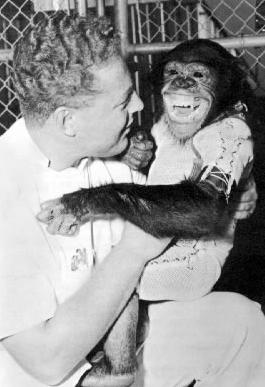
The hominini tribe traditionally includes people , chimpanzees , their extinct ancestors, and several other fossil genera, including:
- Australopithecus / Keniapitec ;
- Parantrop ;
- Ardipitec (controversially) [1] ;
- Sahelanthropus (controversial) [1] ;
- Orrorin (controversially) [1] .
Sometimes australopithecines together with parantropes are isolated into the subtribe of Australopithecine ( en: Australopithecina ) in the hominini tribe [2] .
There are alternative approaches to the composition of the taxon; Thus, Morris Goodman, in his extraordinary classification of primates, also refers to the tribe of the gorilla hominini, including them in the hominin subtree , and orangutans , highlighting them in the Pongina subtribe .
Anthropologist Volker Sommer noted that geneticists comparing the differences between the Homo and Pan genera with the differences between men and women in humans suggest including the common chimpanzee in the Homo genus and renaming the chimpanzee in Homo troglodytes , and the pygmy chimpanzee (bonobo) in Homo paniscus [3] .
Some authors suggest that the diversification of hominins could have occurred in the Eastern Mediterranean, and the grecopithecus may claim the role of the last common ancestor of African anthropoid apes and Homo sapiens [4] [5] . Nikolai Spassov et al note that the position of a grecopithecus on the stem line of the subtribe of hominin cannot be ruled out [5] . However, dating of a grecopithecus (7.2 million years ago) practically excludes its belonging to the hominini, since, according to genetic data, the last crosses of human and chimpanzee lines occurred up to 4 million years ago. The approach of the authors, who are trying to indicate the location of the find on the evolutionary tree, relying in fact only on the roots of the teeth, is also seriously criticized [6] .