
Toy - an item intended for play .
Recreating real and imaginary objects, images, the toy serves the goals of the child’s mental, moral, aesthetic and physical education, helping him to know the world around him, accustoming him to purposeful, meaningful activities and contributing to the development of thinking , memory , speech , emotions . The toy is widely used in educational work with children, in particular for the development of technical and artistic creativity (see children's games , children's creativity ). The types, character, content and design of a toy are determined by specific educational tasks in relation to the age of children, taking into account their development and interests. As works of decorative art, toys, especially national-traditional, are used as decorative elements in a modern interior.
The content and form of the toy are in direct connection with the social structure of society, with the level of its culture.
Toys also allow you to more naturally organize the child’s communication with parents, which is a very urgent problem in the modern world.
Toy Story
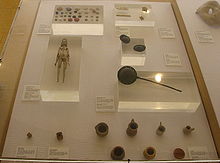
Toys have been known to mankind since ancient times, they were discovered by archaeologists during excavations of the remains of ancient civilizations. Toys found during excavations of Indian civilization (3000-1500 BC) include small carts , whistles in the form of birds and toy monkeys that can crawl along the rope [1] .

The oldest toys are made from available natural materials, stones, sticks and clay . Thousands of years ago, Egyptian children played with dolls that had wigs and moving limbs, they were made of stone, ceramics and wood [2] . In ancient Greece and ancient Rome, children played with dolls made of wax and terracotta , bow and arrow , yo-yo . In Greece, when children, especially girls, came of age, it was customary to sacrifice childhood toys to the gods. On the eve of the wedding, girls of about fourteen years of age brought their toys to the temple as a ceremony of initiation into adulthood [3] [4] .
The technological progress of civilization has affected children's toys. Today, toys are made of plastic , toys with batteries have appeared. If earlier toys were home-made, now there is a whole toy industry with mass production and sales mechanisms .
The evolution of toys can be traced on the example of dolls. The oldest dolls were simply carved from wood or tied from grass. In ancient Egypt, dolls could already move limbs. Dolls from the beginning of the 20th century were already able to say “mother” [5] . Today, there are already dolls that can recognize objects, the voice of their owner, and choose phrases from hundreds of options embedded in them by the program. [6] Toys have changed, the technology of their manufacture, only the fact that children love to play with them remains unchanged throughout the history of mankind.
Russian toys
The toy in Russia until the 18th century was called fun , nursery rhyme . In Moscow, toys were sold in the Vegetable, Gingerbread and Comic rows, or made at home. Toys - wooden figures: horses, lambs, goats, birds, bears, cockerels, dogs, lions, peasants, Germans (dolls); wooden and clay vessels, toy dippers, glasses, cups and so on. Toy houses, wells, huts, towns, gazebos, etc.
One of the first toys was a ball (sword) - made of fabrics, with bells inside.
In the royal family , by the end of the first year of life, the boys were given a wooden horse with a saddle , bridle and stirrups . Probably, this tradition has remained from the ceremony of planting a live horse. With growing up, the prince bought drums , banners , armor , bows , swords , voivode signs, halberds .
The princesses played with dolls. Dolls were bought with funny cots , bedclothes , clothes : fliers , fur coats , etc. [7] .
Child development
Toys, like the game process itself, perform many different functions. They entertain the child, performing at the same time the educational function. In addition, toys improve cognitive function and foster creativity . They help the development of physical and mental skills necessary for the child in later life.
Toys for babies use characteristic sounds, vibrant colors, a unique texture. When playing with them, babies begin to recognize sounds and colors, which also affects the development of memory.
Ordinary cubes are a great educational tool. They form hand-eye coordination, mathematical and cognitive skills, allowing children to simultaneously show creative abilities [8] . Toys such as balls and balls help the child to study cause and effect relationships, help to develop coordination of movements and other useful skills.
Plasticine molding , “ silly putty ” and other similar entertainments positively affect the child’s physical, cognitive , emotional and social development. [9] In addition, such materials allow the child to create toys on their own.
Educational toys for schoolchildren include puzzles, designers , toys to help develop technical problem solving skills and mathematical abilities.
There are toys for teens and adults. For example, Newton's Cradle demonstrates the law of conservation of momentum and energy.
Gender Differences
There are gender-based differences in the choice of toys between boys and girls. Girls often play with dolls, boys prefer cars. Researchers believe that children demonstrate such differences as early as a year and a half [10] .
Nevertheless, observation of the eye movement of infants showed that girls already in infancy pay more attention to dolls than to cars, while boys show the opposite result [11] . This suggests that preferences in choosing toys appear earlier than self-awareness and understanding of one’s gender. Clear preferences in choosing toys develop at the age of about three years [12] .
It has been observed that parents, teachers, and other children respond more positively to children playing toys specific to their gender [13] . For sons, more stringent requirements are usually imposed in the choice of toys considered to be characteristic of boyish games [13] . Among girls, the game of toys, considered toys for boys, is becoming more common and is not considered so reprehensible [14] . It has also been noted that fathers more often than mothers express a negative attitude towards games with toys uncharacteristic of the child’s sex [15] .
Toy Museums
In many countries toy museums are open. The world's first German toy museum was created in 1901 in Sonneberg .
The first toy museum in Russia was opened in 1918 in Moscow , and in 1931 he moved to the city of Zagorsk , now Sergiev Posad . Since 1997 , as a non-governmental cultural institution, there is a Toy Museum in St. Petersburg . There are artists working in this genre. For example, in 2005, an exhibition by Oleg Buryan “Non-naive toys” was held in the mentioned Toy Museum of St. Petersburg . In it there is a puppet museum.
In 2015, the Museum of Soviet Toys was opened in the Leningrad Region, the exposition of which covers the time period of 1920-1990.
Toy classification
There are many parameters by which you can systematize information about the whole variety of toys known today [16]
By age
- from birth to 1 year
- from 1 to 3 years (during this period, the separation of toys for girls and boys begins)
- from 3 years to 5 years
- from 5 years to 10 years
- 10 years and older
For educational (developing) purpose
(Classification by educators)
- Sensory (up to a year mostly sound - rattles, tweeters, musical toys; visual - kaleidoscope, color outline images);
- Motor (mobile, ball , yule , clockwork toys);
- Shaped (images of animals, dolls, soldiers, cars);
- Public and industrial and technical (toy tools, such as a scoop and bucket, weapons);
- constructive (various designers and prefabricated toys).
According to the material of manufacture
- FabricClay toy "cat fisher"
- Felt
- Straw
- Clay
- Wooden
- Plastic
- Rubber
- Fur
- Metal
- Porcelain
Pedagogical classification of children's toys
The pedagogical classification of children's toys is as follows [17] :
I. Toys by type of game: subject, didactic, sports, entertaining
- The plot-forming toys, the prototype of which are the animated and inanimate objects of the surrounding world, are used primarily in story games:
- dolls ;
- figures of people;
- animal figurines;
- household items;
- theatrical;
- festive carnival ;
- technical.
- Didactic toys are intended for didactic games, the content or design of which contains educational (developing) tasks:
- didactic proper: based on the principle of self-control;
- didactic games (sets) with the rules: intended primarily for games on the table (printing and others);
- designers and building kits;
- puzzle games;
- musical toys.
- Sports toys.
- Toys are fun.
II Toys according to the degree of readiness:
- Finished.
- Collapsible, consisting of transforming parts and details.
- Billets and semi-finished products for homemade toys.
- A set of different materials for creating homemade toys.
III Toys by type of raw materials used:
- Wooden.
- Plastic
- Metal.
- From fabrics, including stuffed toys.
- Rubber.
- From paper and cardboard.
- From ceramics, porcelain and earthenware.
- From wood materials, papier-mâché.
- From new synthetic materials.
IV Toys in size:
- Small (size from 3 to 10 cm).
- Medium (size from 10 to 50 cm).
- Oversized (commensurate with the growth of children in different age periods).
V By functional properties:
- Simple, without moving parts.
- With moving parts, mechanical (including with clockwork and inertial mechanisms).
- Hydraulic.
- Pneumatic
- Magnetic.
- Electrified (including electrotechnical, electromechanical, radio-fired, electronic based).
- Electronic (computer-based).
- Sets of toys (or parts) - a set of parts of one or more toys, interconnected by purpose or functional feature.
- Game sets united by a single theme (task).
VI Toys according to the artistic-figurative decision:
- Realistic.
- Conditional.
- Constructive.
Toy Examination
Establishes the rules for the socio-psychological and pedagogical examination of board, computer and other games, toys and game facilities for children in order to permit their production, import and sale
Evaluation Criteria
Intended for use in the activities of organizations conducting the examination, during the examination of toys
Criteria Groups
Group 1
Ensuring the safety of the child, his protection from the negative effects of the toy on health and emotional well-being
Group 2
The inclusion of the qualities of toys aimed at ensuring the development of the child
Toy Certification
Decree of the Government of the Russian Federation No. 1013 of August 13, 1997 stipulates the need for mandatory certification of children's toys. Toy certification is an assessment of children's physical safety. In the process of certification, a sanitary-epidemiological examination and certification of compliance are carried out. Toys are tested on more than a hundred indicators. It also inspects the production of toys, as well as toys that have already entered the distribution network.
The following basic requirements are presented to children's toys. First of all, it is the safety of the materials from which they are made and which are coated. It must be certified in a special passport, which in addition indicates that the materials are not allergenic irritants and do not contain toxic chemical and harmful substances. Toys are also checked for the presence of a sharp unpleasant odor, and the color is also evaluated - too bright and poisonous color can have a negative effect on the psyche of the child.
The fragility and fragility of the toy is taken into account along with the presence of small and potentially dangerous parts that could injure the child. All plastic elements of soft and plush toys must be firmly sewn and glued to avoid swallowing. Like any other certification of goods in Russia, certification of toys guarantees safety and high quality. It is designed to ensure that the toy will bring joy to the child and will not cause trouble or illness.
The certification of toys intended for the European Community ( European Union ) market is somewhat different in its test procedure (currently the draft Customs Union Technical Regulation has been published, the provisions of the project are almost identical to the European Union Toy Safety Directive). The manufacture and circulation of children's toys in the European Union is determined by the Directive 2009/48 / EU on the safety of toys, which entered into force on July 20, 2011, the provision on the chemical composition of toys comes into force on July 20, 2013. This Directive toughens the requirements for the manufacture of toys and the responsibility for the manufacture of toys and sales hazardous to health. All children's toys entering the European Union market must be CE marked, please do not confuse the China marking, which is very common on toys and practically indistinguishable from the European CE marking [18] , delivered products to the EU market must comply with harmonized EU standards and Directives EU
Toys representing an increased danger for a child under 3 years old must have the warning “Not suitable for children under 3 years of age (36 months)” or a warning in the form of graphics and toys in the instructions for use, brief warnings about dangers, for example - The toy uses an NdFeB magnet, which is dangerous if swallowed.
In the European Union do not apply to children's toys:
- Christmas tree decorations ;
- accurate models for adult collectors ;
- equipment for general use on playgrounds;
- products for sports activities;
- accessories for diving in deep waters;
- folk and decorative souvenir dolls and similar products for adult collectors;
- toy models installed in public places (for example, in shopping centers , at train stations);
- puzzles ;
- air rifles and pistols ;
- accessories for fireworks and caps that are not used as toys;
- slings , catapults ;
- sets of arrows with metal tips;
- nipples for babies;
- electric furnaces, irons and other functional products whose rated voltage exceeds 24 Volts;
- items with heating elements intended for training in the presence of adults;
- vehicles with an internal combustion engine ;
- toy steam engines;
- bicycles for sports and driving on official roads;
- video toys that can be connected to a video screen and whose rated operating voltage exceeds 24 Volts;
- accurate imitations of firearms ;
- decorations for children.
Кроме Директивы 2009/48/EC по безопасности игрушек, В ЕС при изготовлении и испытаниях, применяются следующие директивы:
- Директива 2004/108/EC ЭМС [19] для электрических игрушек
- Директива 99/5/EC R&TTI [20] для радиоуправляемых игрушек, с 20 апреля применяется новая Directive 2014/53/EU (RED), Директива 2014/53/EU на русском языке.
- Директива 2005/84/EC — директива относительно использования фталатов и пластифицированных материалов в игрушках и товарах для заботы о ребёнке (теперь является частью регламента REACH )
- Директива 94/62/EC — упаковочные материалы для игрушек (отходы)
- EN 71-1: Проверка конструкции на физическую и механическую безопасность
- EN 71-2: Испытание на воспламеняемость
- EN 71-3: Испытание на наличие тяжелых металлов
- EN 71-4 & 71-5: Особые требования к комплектам для проведения химических экспериментов и химическим игрушкам
- EN 71-6: Требования к графическим символам возрастных предупреждений
- EN 71-7: Краски для рисования пальцами — требования и метод испытания
- EN 71-8: Подвесные, раздвижные и другие аналогичные игрушки для домашнего использования
- EN 71-9-11: Испытание на наличие органических химических соединений
- Азокрасители Директива по запрещенным азокрасителям 2002/61/EC для текстиля и кожи, используемых при производстве игрушек, которые могут вступать в продолжительный контакт с кожей человека
- Директива по упаковочным отходам 94/62/EC, регламентирующая упаковочные материалы для игрушек
- Единое испытание на наличие кадмия, проводимое в Нидерландах и других странах Евросоюза
- Испытания на соответствие Закону о продуктах питания и товарах Германии (LFGB) для игрушек, которые могут контактировать или упаковываются вместе с пищевыми продуктами
- Выщелачиваемый свинец и кадмий в керамических игрушках
- WEEE Директива (2002/96/EC) и RoHS Директива (2011/65/EU) — об утилизации электрического и электронного оборудования (2002/96/EC) и директива об ограничении использования некоторых вредных веществ в электрическом и электронном оборудовании (2011/65/EU) для электрических игрушек
- Регламент (ЕС) 1907/2006, касающийся правил регистрации, оценки, санкционирования и ограничения химических веществ (Регламент REACH )
С 1 июля 2012 игрушки должны соответствовать Техническому регламенту Таможенного союза
Одним из необходимых документов является Экспертное заключение Таможенного Союза , выдаваемое аккредитованными Органами сертификации и учреждениями государственной санитарно-эпидемиологической службы Российской Федерации ( Роспотребнадзор ) [21] .
See also
- Barbie
- Винтажные игрушки
- Волчок
- Волшебный экран
- Всемирный день уничтожения военной игрушки
- Puzzle
- Железнодорожный моделизм
- Kaleidoscope
- Компьютерные игры
- Constructor
- Кукла
- Пилотируемая полоска
- Матрёшка
- Board game
- Пазл
- Teddy bear
- Радиоуправляемая автомодель
- Развивающие игры
- Слинки
- Солдатики
- Спирограф
- Форматное конструирование — бумажные объемные игрушки
- Fischertechnik
- Lego
- Playmobil
- K'nex
Notes
- ↑ Daily Life Ancient India (недоступная ссылка) (19 февраля 1999). Дата обращения 16 июня 2018. Архивировано 19 февраля 1999 года.
- ↑ Maspero, Gaston Camille Charles. Manual of Egyptian Archaeology and Guide to the Study of Antiquities in Egypt . — 2004.
- ↑ Powell, Barry B. Classical Myth; Third Edition. — Upper Saddle River, NJ : Prentice Hall, 2001. — P. 33–34. — ISBN 0-13-088442-1 .
- ↑ Oliver, Valerie History Of The Yo-Yo . Spintastics Skill Toys, Inc. (1996). Дата обращения 30 октября 2006. Архивировано 9 августа 2006 года.
- ↑ Reading Eagle - Google News Archive Search . Дата обращения 29 апреля 2013.
- ↑ Van Patten, Denise A Brief History of Talking Dolls - From Bebe Phonographe to Amazing Amanda . About.com. Дата обращения 30 октября 2006. Архивировано 28 апреля 2013 года.
- ↑ Иван Забелин. Домашний быт русских царей в XVI и XVII столетиях. — М. : Транзиткнига, 2005. — С. 572—595. — ISBN 5-9578-2773-8 .
- ↑ Tsuruoka, Doug. Toys: Not All Fun And Games (англ.) // Investor's Business Daily. — 2007. — 5 February. Архивировано 9 октября 2009 года.
- ↑ Ucci, Mary. Playdough: 50 Years' Old, And Still Gooey, Fun, And Educational (англ.) // Child Health Alert : journal. — 2006. — April ( vol. 24 ). (недоступная ссылка) (Full-text on-line version requires login)
- ↑ Caldera, Yvonne M.; Aletha C. Huston, Marion O'Brien. Social Interactions and Play Patterns of Parents and Toddlers with Feminine, Masculine, and Neutral Toys (англ.) // Child Development : journal. — 1989. — February ( vol. 60 , no. 1 ). — P. 70—76 . — DOI : 10.2307/1131072 . — PMID 2702876 .
- ↑ Alexander, GM, Wilcox, T., & Woods, R. Sex differences in infants' visual interest in toys (англ.) // Archives of Sexual Behavior. — 2009. — No. 38 . — P. 427—433 . — DOI : 10.1007/s10508-008-9430-1 .
- ↑ Alexander, GM, & Saenz, J. Early androgens, activity levels and toy choices of children in the second year of life (англ.) // Hormones and Behavior. - 2012. - No. 62 . — P. 500—504 .
- ↑ 1 2 Servin, A., Bohlin, G., & Berlin, L. (1999). Sex differences in 1-, 3-, and 5-year olds' toy-choice in a structured play-session. Scandinavian Journal of Psychology, 40, 43-48.
- ↑ Toys for Girls and Boys — The Canadian Toy Testing Council accessed 27 May 2007 Архивная копия от 28 февраля 2007 на Wayback Machine
- ↑ Berenbaum, SA, Martin, CL, Hanish, LD, Briggs, PT, & Fabes, RA (2008). Sex differences in children's play. In J. Becker, K. Berkley, N. Geary, E. Hampson , J.Herman, & Young, EA (Eds.), Sex Differences in the Brain from Genes to Behavior (1ed., pp. 275—290).New York, NY: Oxford University Press.
- ↑ Классификация, экспертиза и сертификация игрушек Архивная копия от 25 декабря 2008 на Wayback Machine
- ↑ Педагогическая классификация и ассортимент детских игрушек . Игрокопилка . www.igrokopilka.ru. Date of appeal June 16, 2018.
- ↑ Сертификация Европейский Союз, маркировка CE, экспорт, China Export, безопасность продукции, сертификат, декларация, протокол испытаний, соответствие требованиям, нотифицированный орган . www.icqc.eu. Date of appeal June 16, 2018.
- ↑ Директива 2004/108/ЕС электромагнитная совместимость (EMC Директива) (89/336/EEC 92/31/EC 93/68/EEC) Directive 2004/108/EC Electromagnetic compatibility (Directive EMC)
- ↑ Неофициальный перевод Директива 1999/5/ЕС Радиооборудование и телекоммуникационное оборудование и взаимное признание их соответствия — Radio equipment and telecommunications terminal equipment and the mutual recognition of their conformity directive (R&TTE)
- ↑ [1] ТЕХНИЧЕСКИЙ РЕГЛАМЕНТ ТАМОЖЕННОГО СОЮЗА — ТР ТС 008/2011 — «О безопасности игрушек»
Links
- Музей торговли - Торговля игрушками в СССР
- Игрушка. Энциклопедия мастерства