The Amur state formation , from July 23, 1922, the Amur Zemsky Territory , (unofficially the Amur Territory, “Black Buffer” ) is a state entity that existed from May 26, 1921 to October 25, 1922 in part of the territory of the former Primorsky Region of the Russian Empire , nominally owned by the Far Eastern Republic .
| temporary public education | |||
| Amur public education Amur Zemsky Territory (since July 23, 1922 ) | |||
|---|---|---|---|
| ( unofficially Amur Region, "Black Buffer") | |||
| |||
| Hymn : God save the King! | |||
←  ←  → →May 26, 1921 - October 25, 1922 | |||
| Capital | Vladivostok | ||
| Languages) | Russian language | ||
| Religion | Orthodoxy | ||
| Currency unit | Ruble of the Amur Zemsky Territory | ||
| Population | 223 336 people (on 1897) | ||
| Form of government | Parliamentary republic (until July 23, 1922 ) Military dictatorship (after July 23, 1922 ) | ||
| Official language | |||
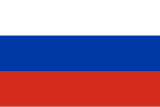
The name "Black Buffer" arose in Soviet journalism during the Civil War and subsequently was widely used in Russian historiography.
Content
History
The beginning of the existence of the Amur state formation is considered to be May 26, 1921, when in the city of Vladivostok white rebels overthrew the government of the Primorsky Zemsky Council , headed by the Bolshevik V. G. Antonov , who recognized the power of the Far Eastern Republic [1] . Power was transferred to the Congress of Non-Socialist Organizations of the Far East. He was elected the Provisional Amur Government. [2]
The governing body of the Amur state formation was called the Provisional Amur Government, the armed forces subordinate to it consisted of parts of the White Far Eastern Army , formerly part of the army of General V.O. Kappel and Ataman G.M. Semenov . The highest representative authority was the People's Assembly. [2]
The United States and Japan, in the person of the consular corps, supported the new state formation; the latter also provided military assistance at the expense of Japanese troops stationed in Primorye during the intervention period. [2]
The first head of the new Amur government was attorney S. D. Merkulov . Almost immediately after the coup on the territory of Primorye, a wide partisan movement resumed, organized by parties of socialist orientation, primarily the Bolsheviks.
The inability to cope with the growing partisan movement, as well as the defeats inflicted on the troops of the People’s Revolutionary Army of the Far East Republic subordinate to the Provisional Amur Government near Khabarovsk in the winter and spring of 1922, led to the resignation of the Merkul government in the summer of 1922 and the transfer of real power to the general M.K.Diterikhsu , who combined the posts of head of government and commander-in-chief and proclaimed July 23, 1922 as Ruler of the Amur State Formation. [3]
By decree No. 1, Diterichs renamed the Amur State Formation into the Amur Zemsky Territory , and the army into the Zemsky Army . On September 1, the Zemsky army began an offensive operation against the NRA of the Far Eastern Democratic Republic, but in October it was almost completely defeated.
Elimination of the Black Buffer
On October 19, at about 13 hours, the NRA FDA approached Vladivostok at a distance of 9 km, however, the Japanese units blocked its path. At that moment, the evacuation of the White Guards and interventionists from the port of Vladivostok was already in full swing. The Japanese command and the representative of the Japanese Ministry of Foreign Affairs in Vladivostok have put forward ultimatum demands to suspend evacuation if clashes occur between parts of the NRA and Japanese troops. In many ways, the Japanese hoped to create an excuse for leaving their troops in Vladivostok. The American Consul McGown also made a statement in the local newspaper that "in case of danger, the US will take the most decisive measures." The NRA Military Council called on the personnel to move an organized mile away from the city and wait for instructions. [four]
The Japanese command sought in every possible way to tighten negotiations on the entry of the NRA into Vladivostok. At the same time, the interventionists and White Guards loaded valuable property and equipment onto ships, blew up fortifications and warehouses with weapons, and that they did not have time or could not take out, they destroyed and drowned them at sea. [four]
Even at that moment, the interventionists attempted to create another puppet "government" in Vladivostok, the role of which was played by a group of Siberian regionalists led by A. N. Sazonov, replacing the government of Diterichs who had fled on a Japanese ship. However, the actions of the new government were limited to putting up on October 22 Vladivostok handwritten posters on the assumption of power, for which it received the contemptuous name of “poster government”, and also three ministers of this quasi-government made the same day raid the city council to seize the cash office, which by the time of their "visit" was already plundered. [four]
The government of the Far Eastern Republic and the government of the RSFSR turned to Japan to protest the Japanese from delaying the evacuation of their troops from Vladivostok and blamed the Japanese government for the anarchy and plunder of the city. At the same time, the workers of Vladivostok, demanding the immediate departure of the interventionists, declared a general strike. Only after that, the Japanese command was forced to sign an agreement on October 24 at the Sedanka junction to leave Vladivostok and the adjacent islands with their troops no later than 16 hours on October 25, 1922 [4]
On October 25, at 4 p.m., following the interventionist troops, the advanced units of the 1st Trans-Baikal Rifle Division and the junior command school of the 2nd Amur Rifle Division entered Vladivostok. [four]
The Far Eastern Republic regained control over the entire territory of Primorye. Amur Zemsky Territory and all white movement in the country ceased to exist.
In Culture
The song “Heirs” is dedicated to the Amur Zemsky Territory and the White Exodus of 1922 from Primorye, closing the album “ Eskhato ” of the Siberian group “ Kalinov Bridge ” [5] .
Notes
- ↑ Savchenko S. N. Ussuriysk Cossack Army in 1917−1922: dissertation for the degree of candidate of historical sciences - Institute of History, Archeology and Ethnography of the Peoples of the Far East, Far Eastern Branch of the Russian Academy of Sciences. (Retrieved December 22, 2012) - Ch. 3. The Ussuri Cossack Army in the period of the Far Eastern Republic (FER).
- ↑ 1 2 3 Shishkin S.N. , 1957 .
- ↑ Sonin VV. Amur bourgeois state formation (“black buffer”) and the collapse of the politics and practice of counter-revolution in Primorye. Monograph. - Vladivostok: FENU Publishing House, 1974.
- ↑ 1 2 3 4 5 Shishkin S.N. , 1957 , Ch. 5., Sec. Seaside operation of the People's Revolutionary Army. The liberation of Vladivostok. .
- ↑ "Kalinov Bridge" - the song "Heirs"
Literature
- Shishkin S. N. Civil war in the Far East . - M .: Military Publishing House of the Ministry of Defense of the USSR, 1957. (unavailable link)
Links
- Harold van Vechten Fay: Witness to Japan's april 1920 offensive in the russian far east ; reports of Capt. Fay are used in the chapter "Ataman's exile and White Russian last spasms (October 1920 - November 1922)" of the book Jamie Bisher . White Terror: Cossack Warlords of the Trans-Siberian - 2005 .-- ISBN 0-7146-5690-9 . (eng.)
- 6) プ リ = ア ム ー ル お よ び マ ル チ ン 州 (ウ ラ ジ オ ス ト ッ ク 反共 政 権) (Japanese) = Postage stamps. Amur Zemsky Territory // Website "cccpcamera.photo-web.cc". - (Retrieved December 20, 2012) .
See also
- Yakut campaign