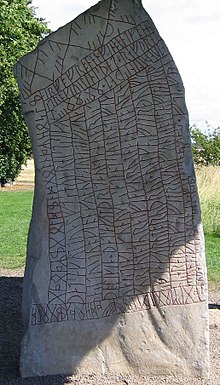
Rökstenen runestone ( Swede. Rökstenen ) - a rune stone from Ryok with the longest known inscription, consisting of 762 runes .
The original place where the stone was installed is unknown, but it was probably not far from its current location near the Ryoksky parish church in the commune of Edeshög fln Östergötland . The inscription on the stone dates from the first half of the 9th century. It covers the stone from all sides, including the top. The main text is carved using the so-called " younger runes ."
There is complete agreement among scientists on the issue of reading and interpreting individual runes, but the meaning of the text is rather vague. However, the initial words leave no doubt that the stone is commemorative: “These runes speak of Vemud. Varin folded them in honor of the fallen son . " Then follows a poetic stanza with some hints of an unsaved myth :
Tell me, memory, what prey there were two,
which was extracted twelve times on the battlefield,
and both came together, from person to person.
Tell me who's nine knees
lost his life at the Ostrogoths
and still all the first in battle.
Tyodrik rules
brave in battle
helmsman warriors
ready at sea.
Now he is sitting
holding your shield
on a gothic horseleader of the meringues.
Probably, under Theodricus the Ostrogoth king Theodoric the Great is meant.
Full text
Full text
| Transliterated version | Runic text | Transfer |
|---|---|---|
| aft uamuþ stonta runaR þaR | ᛆᚠᛐ ᚢᛆᛙᚢᚦ ᛌᛐᚨᚿᛐᛆ ᚱᚢᚿᛆᛧ ᚦᛆᛧ | These runes speak of Vemud |
| n uarin faþi faþiR aft faikion sunu | ᚿ ᚢᛆᚱᛁᚿ ᚠᛆᚦᛁᛧ ᛆᚠᛐ ᚠᛆᛁᚴᛁᚨᚿ ᛌᚢᚿᚢ | Varin folded them in honor of the fallen son. |
| sakum ukmini þat huariaR ualraubaR uaRin tuaR | ᛌᛆᚴᚢᛙ ᚢᚴᛙᛁᚿᛁ ᚦᛆᛐ ᚽᚢᛆᚱᛁᛆᛧ ᚢᛆᛚᚱᛆᚢᛓᛆᛧ ᚢᛆᛧᛁᚿ ᛐᚢᛆᚱ | Tell me, memory, what prey there were two, |
| þaR suaþ tualf sinum uaRin numnaR t ualraubu | ᚦᛆᛧ ᛌᚢᛆᚦ ᛐᚢᛆᛚᚠ ᛌᛁᚿᚢᛙ ᚢᛆᛧᛁᚿ ᚿᚢᛙᚿᛆᚱ ᛐ ᚢᛆᚱᛚᛆᚢᛓᚢ | which was extracted twelve times on the battlefield, |
| baþaR somon o umisum monum þat sakum ona | ᛓᛆᚦᛆᛧ ᛌᚨᛙᚨᚿ ᚨ ᚢᛆᛁᛌᚢᛙ ᛆᚨᚿᚢᛙ ᚨᚿᛆ | and both came together, from person to person. |
| rt huaR fur niu altum on urþi fiaru | ᚱᛐ ᚽᚢᛆᚱ ᚢᚠᚱ ᚿᛁᚢ ᛆᛚᛐᚢᛆ ᚨᚿ ᚢᚱᚠᛁ ᚠᛁᛆᚱᚢ | Tell me who's nine knees |
| miR hraiþkutum auk tu | ᛙᛁᛧ ᚽᚱᛆᛁᚦᚿᚢᛐᚢᛙ ᛆᚢᚿ ᛐᚢ | lost his life at the Ostrogoths |
| miR on ub sakaR | ᛙᛁᛧ ᚨᚿ ᚢᛓ ᛌᛆᚴᛆᛧ | and still all the first in battle. |
| raiþ þiaurikR hin þurmuþi stiliR | ᚱᛆᛁᚦ ᚦᛁᛆᚢᚱᛁᛆᛧ ᚽᛁᚿ ᚦᚢᚱᛙᚢᚦᛁ ᛌᛐᛁᛚᛁᛧ | Tyodrik ruled, brave in battle, the helmsman of the warriors at sea is ready. |
| flutna strontu hraiþmaraR sitiR nu karuR o | ᚠᛚᚢᛐᚿᛆ ᛌᛐᚱᚨᚿᛐᚢ ᚽᚱᛆᛁᚦᛙᛆᚱᛆᛧ ᛌᛁᛐᛁᛧ ᚿᚢ ᚴᚱᛆᚢᛧ ᚨ | Now he is sitting, holding his shield, |
| kuta sinum skialti ub fatlaþR skati marika | ᚿᚢᛐᛆ ᛌᛁᚿᚢᛆ ᛌᚴᛁᛆᛚᛐᛁ ᚢᛓ ᚠᚽᛐᛚᛆᚦᛧ ᛌᚴᛆᛐᛁ ᛙᛆᚱᛁᚴᛆ | on a gothic horse, leader of the meringues. |
| þat sakum tualfta huar histR si ku | ᚦᛆᛐ ᛌᛆᚴᚢᛙ ᛐᚢᛆᛚᚠᛐᛆ ᚽᚢᛆᚱ ᚽᛁᛌᛐᛧ ᛌᛁ ᚴᚢ | I say this is the twelfth |
| NaR itu uituoki on kunukaR tuaiR tikiR sua | ᚿᛆᛧ ᛁᛐᚢ ᚢᛁᛐᚢᚨᚴᛁ ᚨᚿ ᚴᚢᚿᚢᚴᛆᛧ ᛐᚢᛆᛁᛧ ᛐᛁᚴᛁᛧ ᛌᚢᛆ | where the horse of Hun feeds on the battlefield, twenty kings |
| þ o likia þat sakum þritaunta huariR t | ᚦ ᚨ ᛚᛁᚴᚴᛆ ᚦᛆᛐ ᛌᛆᚴᚢᛙ ᚦᚱᛁᛐᛆᚢᚿᛐᛆ ᚽᚢᛆᚱᛁᛧ ᛐ | lie. I say this as the thirteenth of twenty |
| uaiR tikiR kunukaR satin t siulunti fia | ᚢᛆᛁᛧ ᛐᛁᚴᛁᚱ ᚴᚢᚿᚢᚴᛆᛧ ᛌᛆᛐᛁᚿ ᛐ ᛌᛁᚢᛚᚢᚿᛐᛁ ᚠᛁᛆ | four kings sitting in Schelund |
| kura uintur at fiakurum nabnum burn | ᚴᚢᚱᛆ ᚢᛁᚿᛐᚢᚱ ᛆᛐ ᚠᛁᛆᚴᚢᚱᚢᛙ ᚿᛆᛓᚢᛙ ᛓᚢᚱᚿ | winters, of four names born |
| iR fiakurum bruþrum ualkaR fim raþulfs su | ᛁᛧ ᚠᛁᛆᚴᚢᚱᚢᛙ ᛓᚱᚢᚦᚱᚢᛙ ᚢᚿᛚᚴᛆᛧ ᚠᛁᛙ ᚱᛆᚦᚢᛚᚠᛌ ᛌᚢ | four brothers. Five names of Valke sons |
| niR hraiþulfaR fim rukulfs suniR hoislaR fim haruþ | ᚿᛁᛧ ᚽᚱᛆᛁᚦᚢᛚᚠᛆᛧ ᚠᛁᛙ ᚱᚢᚴᚢᛚᚠᛌ ᛌᚢᚿᛁᛧ ᚽᚨᛁᛌᛚᛆᛧ ᚠᛁᛙ ᚽᛆᚢᚱᚠ | Rodfuls. Five Raidulfs, sons of Rugulfs, five Heisley, sons |
| s suniR kunmuntaR fim birnaR suniR | ᛌ ᛌᚢᚿᛁᛧ ᚴᚢᚿᛙᚢᚿᛐᛆᛧ ᚠᛁᛙ ᛓᛁᚱᚿᛆᛧ ᛌᚢᚿᛁᛧ | Hords, the five Gunnmund, sons of Björn |
| nuk m --- m-- alu --ki ainhuaR -þ ... ... þ ... ftiR fra | ᚿᚢᚴ ᛙ ᛙ ᛆᛚᚢ ᚴ ᛁ ᛆᛁᚿᚽᚢᛆᛧ ᚦ ᚦ ᚠᛐᛁᛧ ᚠᚱᛆ | Now I will tell the whole story. Someone... |
| sagwm mogmeni þad hoaR igold | ᛋᚨᚷᚹᛗ ᛗᛟᚷᛗᛖᚾᛁ ᚦᚨᛞ ᚺᛟᚨᚱ ᛁᚷᛟᛚᛞ | I speak to young descendants |
| iga oaRi goldin d goonaR hosli | ᛁᚷᚨ ᛟᚨᛉᛁ ᚷᛟᛚᛞᛁᚾ ᛞ ᚷᛟᛟᚾᚨᛉ ᚺᛟᛋᛁᛚ | Yngwald, whose debt was paid off by the sacrifice of his wife. |
| sakum ukmini uaim si burin ni | ᛌᛆᚴᚢᛙ ᚢᚴᛙᛁᛆᛁ ᚢᛆᛁᛙ ᛌᛁ ᛓᚢᚱᛁᚿ ᚿᛁ | I say this to young born descendants |
| þR troki uilin is þat knuo knat | ᚦᛧ ᛐᚱᚨᚴᛁ ᚢᛁᛚᛁᚿ ᛁᛌ ᚦᛆᛐ ᚴᚿᚢᚨ ᚴᚿᛆᛐ | wrestler. This is Vilen. He could win |
| i iatun uilin is þat | ᛁ ᛁᛆᛐᚢᚿ ᚢᛁᛚᛁᚿ ᛁᛌ ᚦᛆᛐ | giant. This is Vilen. Nit. |
| sakum ukmini þur | ᛌᛆᚴᚢᛙ ᚢᚴᛙᛁᚿᛁ ᚦᚢᚱ | I say young: Thor |
| sibi uia uari | ᛌᛁᛓᛁ ᚢᛁᛆ ᚢᛆᚱᛁ | Sibbe from Vieux, |
| ul niruþR | ᚢᛚ ᚿᛁᚱᚢᚦᛧ | ninety year old, begot (son) |
Ryok Stone West Side
Ryok Stone East Side
Ryok Stone North Side
Ryok Stone South Side
Ryok Stone Top
Text Interpretation
There are several interpretations of the text, which sometimes give mutually exclusive interpretations of its parts. The interpretation of the test as written in the genre of greppaminni is modern: questions or riddles alternate with equally mysterious poetic riddles. [1] This interpretation organically fits the poetic stanza about the statue of Theodorich (who died in 526 AD), sitting on the horse of the king, which was transported in 801 from Ravenna to Aachen by Charles the Great [2] . The statue was very famous and depicted Theodoric riding with a shield on his left shoulder and a spear extended in his right hand. Merovingi was the name of the kind of king of the Franks - according to the parallel text of the Ryok stone in the English poem “Deor” of the 10th century, Theodorich of Frank , son of Clovis, ruled in exile in Meran for 30 years [3] .
Another interpretation was given to the text by Otto von Friesen , who published a monograph on the inscription in 1920. He reads the text þiaurikʀ not as the name of Theodorich, but as the leader of the raids. The main message of the text is interpreted as the incitement of the reader to revenge for Vemud son of Varin, who fell in the battle with the twenty kings.
Elias Wessen published his reading of the text in 1958, which is still used by RAÄ .
See also
- Runestone U455, Nesby
- Runestones in Jelling
- Runic inscriptions in the Hagia Sophia
Notes
- ↑ The Academy of Odin: selected papers on Old Norse literature. . - Odense: University Press of Southern Denmark, 2011 .-- 426 pages p. - ISBN 9788776745899 , 8776745899.
- ↑ Andren, A. Jennbert, K. Raudvere, C. “Old Norse Religion: Some Problems and Prospects” // Old Norse Religion in Long Term Perspectives: Origins, Changes and Interactions, an International Conference in Lund, Sweden, June 3- 7, 2004 . Nordic Academic Press. ISBN 91-89116-81-X . S. 11.
- ↑ Deor
Literature
- Brate Erik Östergötlands runinskrifter. H.3. - Stockholm, 1918.
- Häger O., Villius H. Rök - gåtornas sten. - Stockholm, 1976.
- Petersson C. Rökstenen - Varins besvärjelse. - Klockrike, 1991.
- Wessén E. Rökstenen. KVHAA, Stockholm, 1958
Links
- A History of Swedish Literature on Google Books .
- Troels Brandt . The Roek Stone - Riddles and answers .
| This page or section contains special Unicode characters . If you do not have the required fonts , some characters may not display correctly. |