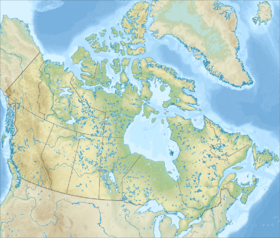
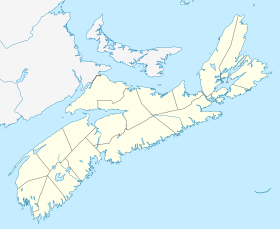
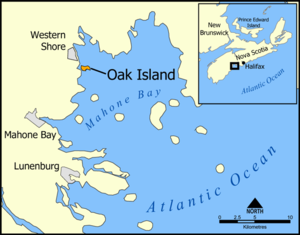
Oak Island (from the English Oak Island - an oak island ) - an island in Lunenburg County (near the West Coast of Nova Scotia , Canada ) - is glorified by the legend about the treasure allegedly stored on it.
| Oak | |
|---|---|
| English Oak island | |
| Specifications | |
| Square | 0.57 km² |
| Highest point | 11 m |
| Population | 0 pax (2012) |
| Location | |
| Water area | Atlantic Ocean |
| A country |
|
| Provinces | Nova Scotia |


General information
Oak Island is one of the 360 small islands that make up the archipelago, located in Mahon Bay off the West Coast of Nova Scotia. The size of the island is 57 hectares (140 acres ). The maximum altitude is 11 m (35 ft ). The island was once covered with oak trees, because of which it actually got its name.
The so-called Money Mine was discovered in the 18th century, and since then, repeated attempts to find the supposedly hidden treasures in it have invariably ended in nothing. The island is privately owned, entry to it requires special permission.
History of treasure hunting on the island
Money Mine Opening
Sources differ greatly in how the famous Money Mine was found, from which the glory of the island actually began. A more “romantic” version says that the 16-year-old Daniel McGuinness and his friends Anthony Vaughan and John Smith in 1795 , intending to play pirates, unexpectedly discovered an old oak tree on one of the branches of the island hanging from one of its branches a ship block with a piece of rope half decayed from time to time and a piece of fishing equipment. Right under the oak, curious teenagers discovered the entrance to the mine, which was almost covered to the ground with soil.
According to another version, it all started with two old sailors, according to rumors that had retired from one ship - John McGuinness and Robert Lethbridge. John McGuinness was engaged in raising pigs and growing vegetables, lived as a hermit, stubbornly refusing to leave the island, although his son and daughter-in-law constantly invited him to him. The old man had special trust in his eight-year-old grandson Daniel, and according to the memoirs of the latter, once having drunk Jamaican rum , he declared that "when he dies, the grandson will become the richest man in Nova Scotia ."
McGuinness apparently drowned in 1805 while fishing, and the grandson received his hut almost in full possession. Once, playing pirates, young Daniel found several old maps in his grandfather's chest, where an island was marked, covered with obscure badges and encrypted inscriptions. Unable to decipher the designations, Daniel turned for help to Robert Lethbridge, who lived nearby. He allegedly became interested in the find and promised to help, but that night a fire started in the hut and old Lethbridge died in the fire, along with it all the records of old McGuinness, from which the children did not guess in advance to make copies, burned down. Digging in the ashes, the boys allegedly managed to find the entrance to the mine under the stone slabs covering the floor.
On the walls of the mine were unknown by whom and when strange icons were made. Young treasure hunters immediately began to deepen the hole found, but at a depth of about 3 meters they found an overlap consisting of thick oak logs. They managed to break through the overlap, but there were no treasures beneath it, and the mine went down to an unknown depth.
The parents of the boys did not show any interest in treasure hunting, however, the widow of Lethbridge remembered the stone she had stored with an encrypted inscription.
Daniel McGuinness and his friends returned to the excavations as early as adulthood when, in 1813, a certain Joe Sellers, retired British Navy captain bought the Lethbridge farm. In collaboration with him, McGuinness, Vaughan and Smith had to delve into the Money Mine to a depth of about 28 m, passing over and over again from charcoal, coconut washcloth, and dense clay. Under one of them, made of ship putty, there was another stone with an encrypted inscription. This stone disappeared in 1912 , but a copy was made in advance, later allegedly deciphered as follows: "At a depth of 40 feet , 2 million pounds are buried under this stone."
There is another option - the first stone handed over to the widow Lethbridge is read in Latin as “Look for the entrance to the mine on the north-north-west from the main landmark”, and the second, found actually in the mine, “Gold is lowered at a distance of 160 + 180 feet from here. " It is not possible to prove something, since the inscriptions are too short.
Work continued at this time. Four treasure hunters at that moment were not interested in deciphering the inscription, but they rushed to dig in order to take out the treasure lying literally under their feet. They had to face new difficulties. Water penetrated the mine, and literally on the day when the steel probe managed to determine something small and hard at a depth of about 30 m, the mine almost filled to the brim with sea water that came from nowhere.
After painstaking research, it turned out that the Money Mine is just one part of a gigantic hydraulic complex, from the side of Smuggler’s Bay at the northern end of the island, at least a few drainage tunnels have been brought into it, which constantly fill the lower levels with sea water, thus preventing access to the contents . A few more years passed in an attempt to plug the tunnels, and finally on August 23, 1813 (as miraculously preserved Joe Sellers diary), a certain oak barrel was removed to the surface.
Traces of treasure hunters are then lost. Officially, nothing was announced about the find, the further fate of the main characters of this story is also unknown. The exception is Anthony Vaughan, whose traces were found in London (Great Britain), where he owned huge estates in Canada and England, and the son of Anthony Vaughan, Samuel, at one of the auctions bought his wife jewelry worth about 50 thousand pounds (at in terms of modern prices - about 200 thousand dollars ).
Truro Syndicate
The history of the Money Mine continues in 1848, when two residents of the town of Truro , located on the west coast of Nova Scotia - Jack Lindsay and Brandon Smart, who got to the island in unknown ways, discover a diary accidentally forgotten in Joe Sellers' hut.
Those who want to continue excavations immediately appear, rightly believing that for the sake of one barrel, even full of gold, no one would build such a puzzling structure. The founders of the Truro Syndicate are the same Lindsay and Smart in partnership with a certain James McCully, an adventurer from Boston .
The chief mountain foreman and supervisor of the syndicate is a certain William Sellers, the namesake of the one-legged sailor. The work has been going on for 20 years, and they are being carried out haphazardly and very illiterate from the point of view of geology, as a result of which it is not possible to plug the tunnels or pump the water to the end.
A little later, in October 1856, information about excavations on the island of Oak penetrate the pages of newspapers. The Liverpool Transcript is the first to report this, then the news is picked up by The Novascotian Newspaper and the British Colonist. The history of the Money Mine is becoming public.
In 1863, the company changed its name and became the "Oak Island Association" ("The Oak Island Association"). The number of people hired for work is constantly growing, reaching two hundred, the latest equipment was purchased at that time, but only in 1865 Sellers finally reported to the management that under the next overlap of oak logs chests filled with soft metal were found.
However, as a result of illiterate drilling, as it is officially considered, the chests fell to a depth of 70 m and were finally stuck there. In the future, the story acquired an openly criminal character. Sellers, according to the workers, took and pocketed something that stuck to the storm, and then ran away from the island at night and it is not known what money (however, it is believed that he managed to pocket a large enough diamond) tried to put together his own company and buy off Truro Syndicate The right to develop the Money Mine.
He did not succeed, but in June 1865 the company unexpectedly turned off work and at night, in a hurry, all the managers disappeared from the island, leaving William Sellers corpse in the Money Mine. However, it was not possible to prove the Syndicate's involvement in his death, as the witnesses unanimously reiterated that Sellers had long gone mad because of treasure hunting and could completely fall into an open mine. It was also not possible to prove that the Directorate of the Syndicate managed to find and raise something to the surface.
Other treasure hunters
The next attempt to get to the Treasures of the Money Mine was made by Halifax, led by industrialist Clifton Riggs. However, Riggs stayed on the island one summer of 1867 , managed to find the exit of the second drainage tunnel at a depth of 34 m, but all attempts to block it failed.
The next expedition arrives at Oak in 1896 . During ultra-deep drilling of a flooded mine, they manage to find “chests” lost by the Truro Syndicate at a depth of 70 m, and the drill picks up a piece of parchment with the letters “w” and “i” to the surface, but this finding remains without consequences.
At the beginning of the 20th century, the soil in the area of the Money Mine resembled a swamp, pitted with passages and deep drifts , so the next expedition spent quite a bit of time to find the entrance to the mine. The expedition was organized by the Company for the Search for Lost Treasures, founded in 1909 with an authorized capital of 250 thousand dollars. Its directors included future US President Franklin Delano Roosevelt . Being a lawyer in New York at that time, he invested 5 thousand dollars in searching for treasures, but, like many others, was forced to leave the island empty-handed after two years.
Gilbert Hadden and William Chapel
In 1931, William Chapel undertook the further development of the Money Mine. He manages to reach a depth of 50 m (163 ft) by drilling a new drift southwest of the main shaft of the mine. At 39 m (127 ft), he comes across an ax, part of an anchor and a pick . The latter was identified as manufactured in Cornwall . But these findings themselves did not prove anything: there were so many expeditions on the island that what they found could belong to any of them.
Gilbert Hedden, an engineer and steel specialist who worked at one of the major steel concerns in New York, in 1928 stumbled upon a note in a local newspaper telling about the history of the Money Mine, and he himself got into the idea of treasure hunting. However, as a specialist, he sufficiently imagined the difficulties associated with the search for a drowned treasure. Hadden had been preparing for several years. 6 times he visited the island, he examined the surroundings of the mine and collected all the possible information about the work of previous expeditions. He managed to buy off the southeastern part of the island, and he continued drilling from the mark where Chapel stopped. Hadden's letter to King George VI on the state of affairs on the island has been preserved. But this time, nothing worthwhile attention was found.
The Restall and Robert Dunfield Family
In 1955, a company called the Texas Petroleum Syndicate was operating on the island. Through super-deep drilling, she manages to establish that under the island there are extensive karst cavities filled with sea water.
At the beginning of 1960, the Restall family continued the treasure hunt, but they had to interrupt their work after four people (among them the head of the family Robert Restall, his son and two rescuers) suffocated in one of the drifts from methane emissions - or according to another version - drowned.
In 1965, Robert Dunfield brought a 70-ton bulldozer to the island (for which he received the contemptuous nickname “Bulldozer” among treasure hunters) and managed to go deeper into the mine to the 41 m (134 ft) mark, expanding its hole to 30 m (100 ft), and at the same time turning everything around, so that from the original landscape there was no trace. However, unlike his predecessors, he set the matter somewhat more scientifically competent, carefully sifting through the earth in search of possible archaeological and other finds. A road was laid to transport the equipment to the opening of the mine, the remains of which are still preserved.
Triton Alliance and Daniel Blankenship's Opening
Daniel Blankenship was originally a Danfield Bulldozer partner, but after the search ended in nothing, he founded the company Triton Alliance Ltd in 1967 with his partner David Tobias and bought up most of the island to continue excavations. For several years, he carefully prepared, trying to get all the possible information about the island itself and the work on the Money Mine, including copies of both stones covered with an encrypted inscription. It is Blankenship who owns the attempts to decrypt (by the way, and now remains in question). However, as a result of his research, Blankenship concluded that it was pointless to drill the Money Mine, and laid a hole called 10X to the northwest. He expected to find treasures at a depth of 85 m (160 feet indicated in the text). At a depth of 65 m, the drill rested on the rocky base of the island, but drilling continued and, finally, an underwater cave was found. According to the story of Blankenship himself, chambers lowered under water recorded a severed human brush, a blurry image of the skull, the same blurry outlines of chests, wooden parts and several tools. However, the pictures turned out to be of very poor quality, and it was not possible to finally establish what was depicted on them. In the end, the pit collapsed, I had to dig again, but the work stopped due to lack of funds and disagreements between the partners. Litigation continued until 2000, and it was not known by anyone who started and seized the duck that Blankenship, descending into the pit, saw something there that made him flee the island in a panic. In fact, Dan Blankenship lived on the island for half his life and died on March 17, 2019, at the age of 95 years [1] .
Current Status
In 2005, part of the island, previously owned by David Tobias, left the auction for $ 7 million. Oak Island Travel Agency proposed it to the Canadian government, but was refused. In April 2006, the island was purchased by the Michigan Deep Drilling Team. The exact amount of the transaction remains a secret.
In 2013, the search for the treasure was continued by two brothers - Rick and Marty Lagina. The results of their work were shown in the documentary television series Curse of Oak Island on the History channel [2] .
Hypothesis of treasure ownership
Pirate Cache
This is the most common hypothesis about the origin of the possible Treasures of the Money Mine. Discoverers unanimously adhered to it - Daniel McGuinness and his friends. In this case, the names of William Kidd , or Edward Ticha , nicknamed "Blackbeard" are called.
The first of them really managed to profit from the wealth of the Great Mogul , capturing the Indian ship as prey, for which he was deprived of a privateer license and hanged. However, treasures, the price of which must be calculated in a very large number, have never been found.
The second "applicant" - Blackbeard became famous for allegedly buried his many treasures on different islands of the Atlantic , methodically cracking down on all the initiates in secret. He is credited with the saying “Only the devil and I know where the treasures are. Which of us will remain the last will use them. ”
An ardent defender of "pirate" theory was one of the treasure hunters of the beginning of the 20th century - William Hedden. The fact is that he fell into the hands of the book of Harold Tom Wilkins “ Captain Kidd and his Skeleton Island”, and the map contained in it supposedly repeated the outlines of Oak Island.
However, recently the "pirate" theory is increasingly being called into question. Во-первых, большинство из пиратов были неграмотны и никак не обладали познаниями в гидротехническом и горном деле, без которых не могла быть сооружена Денежная шахта и связанный с ней комплекс.
Во-вторых, эксперты подсчитали, что подобные работы потребовали бы при знаниях и инструментах XVIII века полугодового труда порядка 100 человек.
И последнее — столь сложные тайники противоречили самой пиратской психологии, в основе которой было жить одним днем, так как следующий мог уже не наступить.
Сокровища французской короны
Ещё более сказочной представляется теория, связанная с пропажей знаменитых драгоценностей Марии-Антуанетты . Известно, что после революции их никто уже не видел, причём до настоящего времени лишь единичные образцы находятся в музеях или частных коллекциях.
Легенда об отправке драгоценностей короны подальше от мятежного Парижа , появилась во время революции, когда бывший духовник короля признался во время допроса, что якобы слышал разговор между королём и королевой, планировавшими спрятать драгоценности на случай, если им придется бежать из революционной столицы.
Долгое время местонахождение сокровищ Французской короны связывалось с судном «Телемак», затонувшим 4 января 1790 года в устье Сены . Однако подъём и осмотр корабля, осуществленные уже в XX веке, не дали ничего.
Отсюда, видимо, и родилась легенда, что Мария-Антуанетта сумела передать ценности некоей преданной служанке или фрейлине , которой удалось бежать в Лондон , и далее, примкнуть к солдатам и офицерам Французского флота, оставшимся верными королю.
Действительно, флот поднял мятеж в пользу королевы, однако, после поражения, было решено спрятать драгоценности там, где их никто не стал бы искать. Таким местом, якобы оказался остров Оук.
Этой теории придерживался Франклин Рузвельт, будущий президент США, но стоит сказать, что история драгоценностей Французской короны представляет собой откровенный домысел, не подтверждённый никакими свидетельствами и ничем кроме невнятных слухов.
К тому же, семейства Макгиннесов и Летбриждей в то время уже находились на острове, и строительство шахты должно было происходить чуть не перед глазами юного Дэниела. В настоящее время теорию поддерживает очень незначительное количество исследователей, указывающих на то, что французский флот обладал достаточными силами и в отличие от пиратов, имел превосходных специалистов, способных устроить практически недоступный тайник. Также указывается, что сама технология строительства напоминает французские гидротехнические сооружения того времени.
Военно-морская казна
Ещё одна теория связывает сокровища Денежной шахты с испанцами, возможно спасшимися с некоего судна, бурей прибитого к острову Оук или — что чаще упоминается в литературе — с английскими войсками во время Войны за Независимость США . По этой теории, некое судно, везшее жалование для войск, вынуждено было повернуть назад или, застигнутое флотом повстанцев, спрятать золото, чтобы оно не попало в руки армии Вашингтона . Джон Годвин, отстаивающий эту возможность, указывает также, что стиль постройки напоминает французские гидротехнические постройки того времени, и, следовательно, в Денежной шахте лежит казна крепости Луисбург , вывезенная перед самым её захватом англичанами во время англо-французской войны за канадские территории. Остается открытым вопрос, зачем было прятать казну вместо того, чтобы доставить её в метрополию, и если даже возникла острая необходимость укрыть её от врагов, было ли время у экипажа для того, чтобы спроектировать и соорудить столь сложный комплекс.
Остров Оук и Уильям Шекспир
Пожалуй, самой экзотической в этом списке служит теория, выдвинутая сторонниками того, что подлинным автором шекспировских пьес был Фрэнсис Бэкон (т. н. «антистратфордианцами»). На основании того, что в Денежной шахте были найдены следы ртути , что немедля заставило вспомнить запись в дневнике Бэкона, говорившую что «для сохранности документов нет лучшего средства чем ртуть». Антистратфордианцы немедля заявили, что в Денежной шахте хранятся неопровержимые доказательства, будто автором шекспировских пьес является именно Бэкон. Теория вызвала в основном насмешки. В настоящее время приверженцев почти не имеет.
Скепсис
Однако же, с самого начала исследований Денежной шахты не перестают звучать голоса, выражающие сомнения в том, что она представляет собой гидротехнический комплекс, а не природное явление, принятое за тайник разгоряченными искателями сокровищ.
Основой для сомнений служит то, что ни фотографий, ни зарисовок первоначального положения не осталось. Какой шахта и окружающий ландшафт были ранее, до того, как нетерпеливые кладоискатели разворотили все вокруг, достоверно неизвестно, и мы вынуждены полагаться лишь на воспоминания первых участников событий.
Основные доводы скептиков:
- Искусственное или естественное образование?
Приверженцы этой точки зрения полагают, что Денежная шахта представляет собой на самом деле вполне естественную депрессию земной коры, причём такое явление вполне характерно для побережья Новой Шотландии . Также известны многочисленные карстовые пещеры, обязанные своему происхождению многолетней работе грунтовых вод .
Подобная депрессия может иметь вид неглубокой ямы с рыхлой почвой, из чего создается неправильное впечатление, будто здесь недавно прошлись лопатой. Поваленные деревья, постепенно оказывающиеся под землей, вполне могут создать эффект «платформ» или «перекрытий», найденных в Денежной шахте. Также указывается факт, что в 1949 году во время рытья колодца в близлежащей бухте Махон был найден похожий провал с рыхлой, как будто недавно раскопанной землей. Рабочие затем вспоминали, что «на глубине около 2 футов лопаты наткнулись на слой плоских камней. Несколько глубже нашлись пихтовые и дубовые стволы, наваленные без всякого порядка, некоторые из них обуглились. Сразу пришло в голову, что мы наткнулись на ещё одну Денежную шахту».
- Естественный гидротехнический комплекс
В 1850 году кладоискатели наткнулись на слой кокосовой мочалки, располагавшийся ниже уровня воды в т. н. Кузнечной Бухте. Это и привело к домыслам, что найден гидротехнический комплекс, обеспечивающий затопление Денежной шахты и тем самым сохранность её загадочного содержимого. Действительно, в Канаде кокосы не растут, и тем самым якобы поддерживалась версия об искусственном происхождении шахты и всего с ней связанного.
Однако не стоит забывать, что за прошедшие столетия мимо острова Оук проходили многие сотни судов, в том числе из южных морей, где кокосовое волокно издавна используется для изготовления верёвок и корабельного такелажа .
В начале XX столетия образец части найденного в бухте материала был отправлен в Смитсоновский Институт (США), где было окончательно подтверждено, что он представляет собой кокосовую губку. Радиоуглеродный анализ ( 1960 г. ) показал для волокон кокоса возраст около 600—800 лет, но это лишь свидетельствует о том, что пальма, из которой добыто волокно, была срублена в 1200 - 1400 году . При этом нет никаких свидетельств, когда волокно было доставлено на остров.
Как известно, остров Оук расположен в той области, где ледник оставил множество холмов и подземных карстовых полостей, которые постоянно заполняясь водой, затапливали вход в Денежную шахту, создав тем самым впечатление сооружённого человеческими руками гидротехнического комплекса.
В 1995 году по приглашению Дэвида Мунгара, бизнесмена из Бостона , группа ученых из одного из океанографических институтов США (WHOI) провела исследование острова и, в частности, окрестностей Денежной шахты. Заключение специалистов было категорическим — перед нами комплекс, созданный природой, в частности, система подводных карстовых пещер. Постоянное затопление шахты они объяснили как результат приливных взаимодействий.
- Свойство человеческой памяти приукрашать события
Мнение о том, что Денежная шахта содержит некие сокровища, основано, как считают скептики, на голословных утверждениях.
Никто не видел карт острова, якобы сгоревших вместе со старым Летбриджем, и неизвестно, действительно ли они существовали. Т. н. шифрованный камень пропал, осталась лишь снятая с него Дэниелом Макгинессом копия. Дешифровка столь короткого текста математически не может быть подтверждена и носит во многом гадательный характер. Опять же, находка такого камня и вообще все обстоятельства начала работ на шахте слишком уж напоминают пиратские романы и повести, в частности, « Золотого жука » Эдгара По .
Возможно, на формирование легенды оказали воздействие неясные слухи о пропавших сокровищах французской короны и циркулировавшие в то время истории о скрытых масонских сокровищах.
Дневник Джо Селлерса, якобы найденный в его хижине, вполне мог быть сфабрикован для того, чтобы привлечь капиталы и потенциальных партнеров — такие случаи известны в истории кладоискательства.
Фотографии, сделанные Дэниелом Блэнкеншипом в 1971 году , слишком размыты, и при желании на них можно разглядеть всё, что угодно.
Literature
- А. В. Бирюк Загадка острова Оук
- Хедер Уиппс Продается: Остров с таинственной Денежной шахтой (на англ.яз)
- 100 великих кладов. Москва, «Вече», 2007 г.
- L.B. Сумм Я познаю мир: клады и сокровища, 1998 г.
- «The Secrets of Oak Island», Joe Nickell, Skeptical Inquirer, March/April 2000.
- Microfiche of the original Liverpool Transcript articles
- Unnamed author. «Correspondence.» Liverpool Transcript, 15 August 1857.
- McCully, JB «The Oak Island Diggings.» Liverpool Transcript, October 1862
- Patrick. «Response to the Oak Island Folly.» The Novascotian, 30 September 1861
- Unnamed author. «The Oak Island Folly», The Novascotian, 29 August 1861
- A Member. «A History of The Oak Island Enterprise.» British Colonist (in 3 chapters published on 2, 7, and 14 January, 1864)
- DesBrisay, Mather, A History Of Lunenburg County (1895)
- Snow, Edward Rowe. True Tales of Buried Treasure, (Dodd and Mead, 1951) ASIN B000OI2EFC
- The History Channel, Decoding the Past: The Templar Code, video documentary, November 7, 2005, by Marcy Marzuni
- Doyle, Lynn C. «Nova Scotia's Treasure Island.» MacLean's 1 June, 1931
- Ellerd, Kerry. «Finding Buried Treasure: It's an Expensive Business.» Montreal STAR February 6, 1971
- Howlett, A. «Mystery of Captain Kidd's Treasure.» World Wide Magazine October, 1958
- Lamb, Lee. Oak Island Obsession: The Restall Story (Dundurn Press, 2006) ISBN 978-1-55002-625-2
- Godwin, John. This Baffling World. (Bantam, 1971)
- Leary, Thomas P. The Oak Island Enigma: A History and Inquiry Into the Origin of the Money Pit. (TP Leary, 1953)
- Loe, Erland, and Amundsen, Petter. Organisten (Cappelen, 2006)
- Sora, Steven. The Lost Treasure of the Knights Templar (Inner Traditions/Destiny, 1999). ISBN 0-89281-710-0
- This section follows Nickell, section «Man-made or Natural?».
- Bowdoin, HL 1911. Solving the mystery of Oak Island. Collier's Magazine, August 18. Cited and discussed in Harris 1958, 110—120; O'Connor 1988, 63-66.
- Faribault, E. Rudolph. 1911. Summary Report of Geological Survey Branch of the Department of Mines. Quoted in Furneaux 1972, 110.
- Atlantic Advocate. 1965. Article in October issue, cited in Crooker 1978, 85-86.
- Preston, Douglas. 1988(thoughts taken form a Novel fiction body of work called «Riptide»). The Smithsonian. June. 53-6
- French, Carey. «Treasure Island? Fabled Booty Eludes the Fortune Hunters.» Globe & Mail 19 November, 1983
Filmography
- «Острова сокровищ. Золото Дубового острова» ( англ. The Secrets of Treasure Islands. Gold Oak Island ) — документальный фильм, снятый Discovery в 1993 г.
Notes
Links
- Oak Island Money Pit: The Last Great Unsolved Mystery (англ.)
- Необыкновенная история острова Оук . Вокруг света № 4 (2583) Апрель 1974. (рус.)
- Бирюк А. В. Тайна острова Оук (рус.)