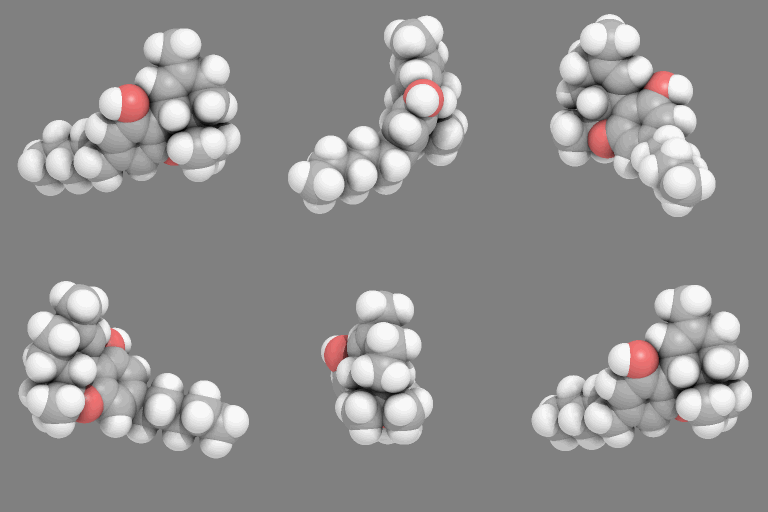
Tetrahydrocannabinol , THC (abbr.), THC (abbr. From English tetrahydrocannabinol ), Δ 9 -THC , Δ 9- tetrahydrocannabinol (delta-9-tetrahydrocannabinol), one of the main cannabinoids , is an aromatic terpenoid .
| Tetrahydrocannabinol | |
|---|---|
 | |
 | |
| Chemical compound | |
| IUPAC | (-) - (6a R , 10a R ) -6,6,9-trimethyl-3-pentyl- 6a, 7,8,10a-tetrahydro-6H-benzo [ c ] chrome-1-ol |
| Gross formula | C 21 H 30 O 2 |
| Molar mass | 314.46 g / mol |
| CAS | |
| Pubchem | |
| Drugbank | |
| Classification | |
| ATH | |
| Dosage Forms | |
| 2.5, 5 and 10 mg capsules | |
| Other names | |
| Marinol® (Dronabinol), Cesamet® (Nabilon) | |
Contained in the inflorescences and leaves of hemp , partly in the form of the delta-8-THC isomer, partly in the form of butyl and propyl analogs (see DVT ) and tetrahydrocannabinolic acid [1] . Reaches maximum concentration during flowering period; after the discharge of pollen (in posconi ) or fertilization (in the mother ), it is gradually converted into cannabinol [2] [3] .
Selection history

The THC was singled out in 1964 by Raphael Meshulam (left) and Yechiel Gaoni at the Weizmann Institute , Rehovot , Israel . At low temperatures, THC is hard and transparent; when heated, it becomes viscous and sticky. THC is poorly soluble in water, but it is well soluble in most organic solvents, such as pure methanol , ethanol , diethyl ether , hexane , etc.
In 2015, yeast that produces THC was derived by genetic engineering [4] . This event was given great importance not because the artificially produced tetrahydrocannabinol could be more effective or cheaper than cannabis, but because it could prevent the use of the plant, the cultivation of which is illegal in many countries [5] [6] . However, at the same time, some experts fear that with the development of technology, this method may be more beneficial to drug traffickers [7] .
Pharmacology
Mechanism of Action
The main targets of THC in the human body are cannabinoid receptors CB 1 (K i = 10 nM), which are located mainly in the cells of the central nervous system and CB 2 expressed in cells of the immune system [8] . The psychoactive effect of THC is associated with the activation of cannabinoid receptors, which leads to inhibition of adenylate cyclase and a decrease in the concentration of the second messenger cAMP [9] .
The presence of cannabinoid receptors has led researchers to the idea of the existence of endocannabinoids , in particular anandamide and 2- arachidonyl glyceride (2-AG). Anandamide acts as a neurotransmitter , facilitating the transmission of impulses to those parts of the central nervous system that control movement, coordination, concentration, memory, pleasure, and a sense of time. As a result, THC disrupts the corresponding functions of the body, causing intoxication [10] . Influencing the work of the hippocampus , orbitofrontal cortex , cerebellum and basal nuclei , THC impairs the ability to drive [11] [12] [13] . Compared with endocannabinoids released during retrograde signaling, the effect of THC has a significantly lower selectivity, which is associated with relatively low efficiency and affinity of THC. In addition, it should be noted that THC is a lipophilic molecule [14] and may nonspecificly bind in the body, for example, in adipose tissue. [15] [16]
THC is similar in structure to cannabidiol (CBD) , although it is a weaker allosteric modulator of μ- and δ-opioid receptors . [17]
Medical application
THC is the first (and currently the only) cannabinoid approved for medical use. Preparations containing synthetic THC (marinol and analogues) are used in the United States , Canada and Western Europe to relieve the side effects of chemotherapy in cancer and to combat the syndrome of weight loss in AIDS . Recent studies indicate that this drug may also be effective in glaucoma [18] , Tourette syndrome [19] , schizophrenia , phantom pain , neuropathic pain, and certain other diseases [20] .
Regarding reports on the effectiveness of THC in the treatment of Tourette syndrome, independent scientists have identified only two studies that meet scientific criteria (conducted by the same group of researchers in 2002 and 2003), and those with ambiguous results. The Cochrane systematic review of 2009 emphasizes the low reliability of research due to the small number of subjects and other deficiencies. Thus, there is no reliable evidence of the effect of reducing tic symptoms and obsessive-compulsive behavior in Tourette syndrome [21] [22] .
For 2018, there is no reliable data (no qualitative studies) confirming the effectiveness of the treatment of neuropathic pain with cannabis and THC in particular. When using cannabis preparations, the quality of life of people suffering from neuropathic pain syndrome did not improve. Many patients were forced to abandon such therapy because of side effects [23] [24] .
Medications
By 2019, three drugs containing THC have been created in the world, each with a narrow scope (international non-proprietary names are indicated) [25] :
- Nabilone ( eng. Nabilone ) - contains synthetic modified Δ 9 -THC (removed psychoactive effect), used to relieve the negative symptoms of chemotherapy in the treatment of cancer in cases where other means are not valid;
- Dronabinol ( English Dronabinol ) - contains a semi-synthetic Δ 9 -THC (transisomer, formula (6aR-trans) -6a, 7,8,10a-tetrahydro-6,6,9-trimethyl-3-pentyl-6H-dibenzo [b , d] pyran-1-ol), indicated for the treatment of severe anorexia with AIDS ;
registered in the USA under the trademark Marinol ( English Marinol ) [26] - Nabiximols ( eng. Nabiximols ) - contains a standardized cannabis extract (a mixture of tetrahydrocannabinol and cannabidiol extracted from plants in strict proportion), is used to eliminate spastic neuropathic pain, in multiple sclerosis and in the treatment of oncological diseases for the relief of pain that is not eliminated by standard therapy.
Ban
In Russia and in Belarus and in most other countries of the world - the production, sale, import and storage of tetrahydrocannabinol (including its synthetic dosage forms) are prohibited by law, and the substance itself is included in List No. 1 .
See also
- Sativex
- Designer Drugs
Notes
- ↑ Pate, David W. Chemical ecology of Cannabis (Neopr.) // Journal of the International Hemp Association. - 1994. - V. 2 , No. 29 . - pp . 32—37 .
- ↑ Fetterman PS, ES Keith, CW Waller, O. Guerrero, NJ Doorenbos and MW Quimby, 1971b. Mississippi-grown Cannabis sativa L .: Preliminary observation of the phenotype and variations in tetrahydrocannabinol content. Journal of the Pharmaceutical Sciences 60: 1246-1,249.
- ↑ Ohlsson A., CI Abou-Chaar, S. Agurell, IM Nilsson, K. Olofsson and F. Sandberg, 1971. Cannabis sativa. UN Bulletin on Narcotics 23: 29-32.
- ↑ Production of Δ9-tetrahydrocannabinolic acid from Pichia (Komagataella) pastoris expressing Δ9-tetrahydrocannabinolic acid synthase from Cannabis sativa l. Zirpel, B., Stehle, F. & Kayser, O. Biotechnol Lett (2015) 37: 1869. https://doi.org/10.1007/s10529-015-1853-x
- ↑ Roxanne Khamsi. Newly Risen From Yeast: THC. The New York Times , Sept. 14, 2015
- Ale sciencealert.com - Scientists engineer marijuana compound, THC.
- ↑ Donald G. McNeil Jr. Narcotic Drugs Can Be Coaxed From Yeast. The New York Times , Aug. 13, 2015
- ↑ Pertwee, RG The pharmacology of the cannabinoid receptors and their ligands: An overview: [ eng ] // International Journal of Obesity. - 2006. - Vol. 30 (30 April). - P. 13-18. - DOI : 10.1038 / sj.ijo.0803272 . - PMID 16570099 .
- ↑ Elphick MR, Egertová M. The neurobiology and evolution of cannabinoid signaling (Eng.) // Philosophical Transactions of the Royal Society B: Biological Sciences : journal. - 2001. - Vol. 356 , no. 1407 . - p . 381–408 . - DOI : 10.1098 / rstb.2000.0787 . - PMID 11316486 .
- ↑ How does marijuana produce its effects? Marijuana , National Institute of Drug Abuse (NIDA), February 12, 2018, 9. Last updated: June 2018.
- N MG MG [ eng ] / MG Lenné, PM Dietze, TJ Triggs ... [et al. ] // Accident; Analises and Prevention. - 2010. - Vol. 42, no. 3 (May). - p. 859–866. - DOI : 10.1016 / j.aap.2009.04.021 . - PMID 20380913 .
- ↑ Hartman RL, Huestis MA. Cannabis effects on driving skills. Clin Chem. 2013; 59 (3): 478-492. doi: 10.1373 / clinchem.2012.194381.
- ↑ Hartman RL, Brown TL, Milavetz G, et al. Cannabis effects on driving lateral control with and without alcohol. Drug Alcohol Depend. 2015; 154: 25-37. doi: 10.1016 / j.drugalcdep.2015.06.015.
- ↑ Rashidi H., Akhtar MT, van der Kooy F., Verpoorte R., Duetz WA 9-Tetrahydrocannabinol by Alkane-Degrading Bacteria (Engl.) // Appl Environ Microbiol : journal. - 2009. - November ( vol. 75 , no. 22 ). - P. 7135-7141 . - DOI : 10.1128 / AEM.01277-09 . - PMID 19767471 .
- Ton Ashton CH Pharmacology and effects of cannabis: a brief review (English) // British Journal of Psychiatry : journal. - Royal College of Psychiatrists , 2001. - February ( vol. 178 , no. 2 ). - P. 101—106 . - DOI : 10.1192 / bjp.178.2.101 . - PMID 11157422 .
- ↑ Huestis MA Human cannabinoid pharmacokinetics (Neopr.) // Chem Biodivers. - 2007. - August ( vol. 4 , no. 8 ). - p . 1770-1804 . - DOI : 10.1002 / cbdv.200790152 . - PMID 17712819 .
- ↑ Kathmann M., Flau K., Redmer A., Tränkle C., Schlicker E. Cannabidiol is an allosteric modulator at mu- and delta-opioid receptors (Eng.) // Naunyn Schmiedebergs Arch. Pharmacol. : journal. - 2006. - February ( vol. 372 , no. 5 ). - P. 354-361 . - DOI : 10.1007 / s00210-006-0033-x . - PMID 16489449 .
- ↑ Medicinal plants useful for the eyes. Articles. Section "Your Health", Saratov
- ↑ EZ Dajani, KR Larsen, J. Taylor, et al., J. Pharm. Exp. Ther., 291, 31-38 (1999).
- ↑ DR Morgan (ed.), Therapeutic uses of Cannabis. Amsterdam, Harwood Academic Publishers (1997)
- ↑ Curtis, A. Cannabinoids for Tourette's Syndrome: [ eng ] / A. Curtis, CE Clarke, HE Rickards // The Cochrane Database of systematic reviews. - 2009. - No. 4 (7 October). - CD006565. - DOI : 10.1002 / 14651858.CD006565.pub2 . - PMID 19821373 .
- ↑ Alexey Vodovozov . Herbs: from medicine to poison: public lecture on YouTube - MISiS , 2019 - 25: 51−27: 50
- ↑ Mücke, Martin. Cannabis ‐ based medicines for chronic neuropathic pain in adults: [ eng ] / Martin Mücke, Tudor Phillips, Lukas Radbruch ... [ et al. ] // The Cochrane Database of systematic reviews. - 2018. - No. 3 (7 March). - CD012182. - DOI : 10.1002 / 14651858.CD012182.pub2 . - PMID 29513392 . - PMC 6494210 .
- ↑ Water carriers , 2019 , 27: 51−29: 19.
- ↑ Water carriers, 2019 , 29: 21–31: 50.
- ↑ MARINOL® (Dronabinol) : Capsules // NDA 18-651 / S-021 : [ arch. February 17, 2017 ] / Joyce Korvick; Dep. of Health & Human Services. - FDA , 2005. - April 26th. - P. 1.3. - 14 p.