Carelessness should be left if it comes to health.
It is important to observe the measure in everything - in food and drinks
And in the exercises for the body, and the measure is that which is not a burden.
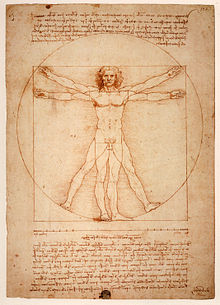
Health is the state of any living organism in which it as a whole and all its organs are able to fully perform their functions; lack of disease, disease (a detailed review of the definitions of health is given below). Health sciences include: dietetics , pharmacology , biology , epidemiology , psychology (health psychology, developmental psychology, experimental and clinical psychology , social psychology ), psychophysiology , psychiatry , pediatrics , medical sociology and medical anthropology , psychohygiene , defectology and others [2] .
Protecting human health ( healthcare ) is one of the functions of the state. Globally, the health of mankind is the World Health Organization .
For 2011, in the field of health psychology, mainly health-related behavior is studied - types, factors, methods of change [3] .
World Health Day is celebrated annually on April 7, World Mental Health Day is October 10.
Content
- 1 Definitions of Health
- 2 Health Levels in Health and Social Research
- 3 Health Indicators
- 3.1 Some biological indicators of the norm for the average adult
- 3.2 Public Health Criteria
- 4 Health Factors
- 5 Mental health
- 6 Occupational health
- 7 Healthy Living
- 8 Health
- 8.1 World Health Organization
- 9 Valeology
- 10 See also
- 11 Notes
- 12 Literature
- 13 Links
Health Definitions
According to the WHO charter, “health is a state of complete physical, mental and social well-being, and not just the absence of diseases and physical defects” [4] . However, this definition cannot be used to assess health at the population and individual levels. According to WHO, in health statistics, health at the individual level refers to the absence of identified disorders and diseases, and at the population level, the process of reducing mortality , morbidity and disability .
P. I. Kalyu in his work “The Essential Characteristic of the Concept“ Health ”and Some Issues of Health Care Reorganization: Overview Information” [5] examined 79 definitions of health formulated in different countries of the world at different times and by representatives of various scientific disciplines. Among the definitions are the following [6] :
- Health is the normal function of the body at all levels of its organization, the normal course of biological processes that contribute to individual survival and reproduction.
- Dynamic balance of the body and its functions with the environment .
- Participation in social activities and socially useful work, the ability to fully perform basic social functions.
- The absence of disease, painful conditions and changes.
- The ability of the body to adapt to constantly changing environmental conditions.
According to Kalju, all possible health characteristics can be reduced to the following concepts:
- Medical model - for definitions containing medical signs and characteristics; health as the absence of diseases and their symptoms.
- The biomedical model is the lack of subjective feelings of ill health and organic disturbances.
- Biosocial model - medical and social characteristics considered in unity are included, with priority being given to social characteristics.
- Value-social model - health as a person's value; it is to this model that WHO's definition refers.
Health Levels in Social and Social Research
- Individual health is the health of an individual.
- Group health - the health of social and ethnic groups.
- Regional health - the health of the population of administrative territories.
- Public health - the health of the population, society as a whole; defined as “the science and art of disease prevention, life extension and health promotion through organized efforts and informed choice of society, organizations, public and private, community and individual”. Methods of public health prevention - the introduction of educational programs, the development of policies, services, as well as the conduct of scientific research [7] . The concept of vaccination is associated with the concept of public health. The great positive impact of government health programs is widely recognized. Partly as a result of health policies in the 20th century, there has been a decrease in infant and child mortality, as well as a steady increase in life expectancy in many parts of the world. For example, it is estimated that the average life expectancy of Americans has increased since 1900 by 30 years [8] , and throughout the world by six years [9] .
Health Indicators
Human health is a qualitative characteristic, consisting of a set of quantitative parameters: anthropometric (height, weight, chest volume, geometric shape of organs and tissues); physical (heart rate , blood pressure , body temperature); biochemical (the content of chemical elements in the body, red blood cells , white blood cells , hormones , etc.); biological (composition of the intestinal flora, the presence of viral and infectious diseases) and other biomarkers .
For the state of the human body there is a concept of “norm”, when the values of the parameters fit into a certain range developed by medical science and practice. Deviation of the value from the specified range may be a sign and evidence of poor health. Outwardly, loss of health will be expressed in measurable disorders in the structures and functions of the body, changes in its adaptive capabilities.
From the point of view of WHO, people's health is a social quality, and therefore, the following indicators are recommended for assessing public health:
- deduction of gross national product for health;
- access to primary health care ;
- the level of immunization of the population;
- the degree of examination of pregnant women by qualified personnel;
- nutritional status of children;
- infant mortality rate;
- average life expectancy;
- hygienic literacy of the population.
Some biological indicators of the norm for an average adult
- Blood pressure - not higher than 140/90 mm RT. Art.
- Body temperature - from 35.5 to 37.4 ° C
From a health point of view, two levels of blood pressure can be determined:
- optimal: GARDEN less than 120, DBP less than 80 mm RT. Art.
- normal: GARDEN 120-129, DBP 84 mm RT. Art.
GARDEN - systolic blood pressure. DBP - diastolic blood pressure [10] [11] .
Public Health Criteria
- Medical-demographic - birth rate , mortality, natural population growth , infant mortality , frequency of birth of premature babies, life expectancy.
- Morbidity - general, infectious, with temporary disability, according to medical examinations, major non-epidemic diseases, hospitalized.
- Disability indicators.
- Indicators of physical development.
All criteria must be evaluated in dynamics. An important criterion for assessing public health should be considered the health index, that is, the proportion of people who were not sick at the time of the study (for example, during the year).
Health Factors
In the psychology of health, three groups of factors affecting health are distinguished: independent (previous), transmitting and motivators [12] .
- Independent: correlations with health and illness are most powerful:
- Factors predisposing to health or illness:
- Behavioral patterns; behavioral factors of type A (ambitiousness, aggressiveness, competence, irritability, muscle tension, accelerated type of activity; high risk of cardiovascular disease) and B (opposite style).
- Supportive dispositions (e.g. optimism and pessimism).
- Emotional patterns (e.g. alexithymia ).
- Cognitive factors - ideas about health and disease, about the norm, attitudes, values, self-esteem of health, etc.
- Factors of the social environment - social support, family, professional environment.
- Demographic factors - gender, individual coping strategies, ethnic groups, social classes.
- Factors predisposing to health or illness:
- Transmitting factors:
- Coping with multilevel problems.
- Substance use and abuse (alcohol, nicotine, eating disorders).
- Types of health-promoting behaviors (choice of ecological environment, physical activity ).
- Compliance with the rules of a healthy lifestyle .
- Motivators:
- Stressors
- Existence in the disease (processes of adaptation to acute episodes of the disease).
Physical health factors [13] :
- level of physical development;
- physical fitness level;
- level of functional readiness for performing loads;
- the level of mobilization of adaptation reserves and the ability to such mobilization, providing adaptation to various environmental factors.
When examining the differences in the health of men and women, the World Health Organization recommends using not biological criteria, but gender ones, since they are the ones that best explain the existing differences. In the process of socialization, the rejection of self-preserving behavior in men and the implementation of risk-taking behavior aimed at higher earnings are encouraged; women are oriented toward maintaining health as expectant mothers, however, with a focus on such a manifestation of health as external attractiveness, instead of healthy functioning, characteristic female disorders can occur - usually eating disorders [14] .
The difference in the life expectancy of men and women depends on the country of residence; in Europe, it is sufficient, and in some countries of Asia and Africa it is practically absent, which is primarily associated with female mortality from genital mutilation, complications of pregnancy, childbirth, and poorly performed abortions [14] .
It has been shown that doctors provide women with less complete information about their disease than men [14] .
Health factors include income and social status, social support networks, education and literacy, employment / working conditions, social environment, physical environment, personal experience and health skills, healthy development of a child, level of development of biology and genetics, medical services, gender, culture [15] [16] [17] .
Mental Health
Mental health is a person’s ability to cope with the difficult circumstances of life, while maintaining optimal emotional background and adequate behavior [18] . The concept of mental health, euthumia (“good state of mind”) is described by Democritus, the image of a person who has achieved inner harmony is described in the dialogues of Plato regarding the life and death of Socrates [19] . The source of mental suffering in the works of various studies is often called culture (this is characteristic of Sigmund Freud , Alfred Adler , Karen Horney , Erich Fromm) [20] . Victor Frankl calls the most important factor in mental health the presence of a person’s value system [21] .
In connection with the gender approach to healthcare, several mental health models have been developed [14] :
- Regulatory, using a double standard of mental health (for men and women).
- Androcentric, in which the male standard of mental health is adopted.
- Androgynous, assuming a uniform standard of mental health and the same attitude to clients, regardless of gender.
- Non-normative (according to the model of Sandra Boehm [22] ), based on those qualities. that are not exclusively associated with male or female.
Occupational Health
As a subject of scientific research, "professional health" first appeared in psychological scientific literature in the mid-80s of the twentieth century. For the first time, George Everly was used in 1986 in a publication devoted to the problem of integration in the practice of organizational activity of industries such as occupational health and occupational psychology (cited in [23] ). As noted by R. A. Berezovskaya, this researcher emphasized the important role of psychologists in the development and implementation of programs for maintaining and promoting health ( health promotion ) in the workplace [24] . Later, in 1990, researchers from the University of Hawaii, Raymond, Wood and Patrick (J. Raymond, D. Wood, W. Patrick) in their article formulated the idea that one of the tasks of psychology should be to create a healthy professional environment and healthy jobs [25] .
In Russian studies, this topic was first discussed in 1991 in the chapter "Psychology of Health" of the collective monograph (study guide) "Psychological support of professional activities." The authors, scientists of the Psychology Department of St. Petersburg University, focus on the psychological aspects of the formation of a healthy lifestyle , the issues of the hygiene of professional activity, the psychological safety of professional work, professional longevity , as well as the organization of work of the psychological unloading cabinet at work [26] , but definitions of occupational health do not.
Professional health, according to the definition introduced in 1992 by a military doctor, doctor of medical sciences V. A. Ponomarenko (in relation to pilots), is the body's ability to maintain compensatory and protective mechanisms that ensure performance in all conditions of professional activity [27] . The authors of the monograph “Health of a Healthy Person” (1996), who supplement the previous definition with the need to ensure professional reliability, have a similar understanding of professional health . Later, V. A. Ponomarenko and A. N. Razumov [28] proposed considering occupational health in the form of a system , the main structural components of which are clinical, mental and physical statuses that determine the level of functional state, mental and physical qualities, and workers' resistance to occupational factors labor and the reliability of its activities. The central place in the structure of professional health, according to these researchers, is occupied by professionally important qualities (PAC), which determine a person’s genotypic status , his functional reserves, and then (both directly and indirectly) - a person’s functional states [29] .
Later, in the emerging new branch of psychology - the psychology of health - they began to define professional health (already for any professional activity) as “an integral characteristic of the functional state of the human body according to physical and mental indicators in order to assess its ability to a certain professional activity with given efficiency and duration over a given period of life, as well as resistance to adverse factors accompanying this activity [30] .
The criterion of professional health is human performance , which is defined as “the maximum possible efficiency of a specialist’s activity, due to the functional state of his body, taking into account its physiological value” [31] .
В современном понимании профессиональное здоровье рассматривается как определенный уровень характеристик человека–профессионала, специалиста (включая социально-психологические характеристики его личности ), отвечающий требованиям профессиональной деятельности и обеспечивающий ее высокую эффективность.
Сохранение у человека профессионального здоровья при одновременном обеспечении результативности труда связано с психологической профессиональной адаптацией человека. Индикаторами нарушения адаптации (признаками дезадаптации) является, с одной стороны, возникновение негативных психических состояний человека в труде, с другой – снижение эффективности его деятельности [32] .
Профессиональное здоровье является необходимым условием профессионального (и жизненного - в целом) благополучия [33] человека.
Исследователи подчеркивают значимость личностного (психологического ) здоровья профессионала. Базируясь на личностном подходе к здоровью профессионала, Г. Г. Вербина предлагает под профессиональным здоровьем понимать "тот уровень развития здоровья человека, который обеспечивает зрелость целостного организма, когда человек переживает фазы подъема, относительной стабильности и начатой инволюции, изменения внутренней картины здоровья в течение жизни и способен осознать такие изменения через самопознание, а через самоорганизацию, саморегуляцию и само-совершенствование способен противостоять психотравмирующей ситуации, возникающей в профессиональной деятельности" [34] .
Здоровый образ жизни
В психолого-педагогическом направлении здоровый образ жизни рассматривается с точки зрения сознания, психологии человека, мотивации. Имеются и другие точки зрения (например, медико-биологическая), однако резкой грани между ними нет, так как они нацелены на решение одной проблемы — укрепление здоровья индивидуума [35] .
Здоровый образ жизни является предпосылкой для развития разных сторон жизнедеятельности человека, достижения им активного долголетия и полноценного выполнения социальных функций [36] , для активного участия в трудовой, общественной, семейно-бытовой, досуговой формах жизнедеятельности [37] . Здоровый образ жизни предстает как специфическая форма целесообразной активности человека – деятельность, направленная на сохранение, укрепление и улучшение его здоровья [38] .
Актуальность здорового образа жизни вызвана возрастанием и изменением характера нагрузок на организм человека в связи с усложнением общественной жизни, увеличением рисков техногенного, экологического, психологического, политического и военного характера, провоцирующих негативные сдвиги в состоянии здоровья [39] .
Здравоохранение
Здравоохранение — отрасль деятельности государства , целью которой является организация и обеспечение доступного медицинского обслуживания населения, сохранение и повышение его уровня здоровья [40] .
Здравоохранение может составлять значительную часть экономики страны. В 2008 году отрасль здравоохранения потребляла в среднем 9,0 процента от валового внутреннего продукта (ВВП) в наиболее развитых странах ОЭСР [41] .
Здравоохранение традиционно считается важным фактором в обеспечении общего здоровья и благополучия людей во всём мире. Примером тому является мировая ликвидация оспы в 1980 году, объявленная ВОЗ первой болезнью в человеческой истории, полностью устранённой преднамеренным вмешательством здравоохранения [42] .
Всемирная организация здравоохранения
Всемирная организация здравоохранения (ВОЗ, англ. World Health Organization, WHO ) — специальное учреждение Организации Объединённых Наций , состоящее из 193 государств-членов, основная функция которого лежит в решении международных проблем здравоохранения и охране здоровья населения мира. Она была основана в 1948 году со штаб-квартирой в Женеве в Швейцарии .
В специализированную группу ООН кроме ВОЗ входят ЮНЕСКО (Организация по вопросам образования, науки и культуры), МОТ ( Международная организация труда ), ЮНИСЕФ (фонд помощи детям). В состав ВОЗ принимаются государства-члены ООН, хотя в соответствии с Уставом, возможен приём и не входящих в ООН стран.
Валеология
Валеология (от одного из значений лат. valeo — «быть здоровым») — «общая теория здоровья» [43] , претендующая на интегральный подход к физическому, нравственному и духовному здоровью человека со стороны естественных , общественных и гуманитарных наук — медицины , гигиены , биологии , сексологии , психологии , социологии , философии , культурологии , педагогики и других. Некоторыми специалистами причисляется к альтернативным и маргинальным парамедицинским ретроградным течениям [44] .
See also
- Здоровье 2.0
- Здоровье и компьютер
- Здоровье и мобильный телефон
- Здравица (тост)
- Реабилитация (медицина)
- группа здоровья (I, II, III, IV)
Notes
- ↑ iph.ras.ru/uplfile/root/biblio/ps/ps13/7.pdf с. 72
- ↑ Психология здоровья: новое научное направление // Психология здоровья / под редакцией Г.С. Никифорова. - SPb. : Питер, 2003. — С. 28-30. — 607 с. — (Учебник для вузов).
- ↑ Александра Бочавер, Радослав Ступак. XXIV европейская конференция по психологии здоровья «Здоровье в контексте» (рус.) // Психологический журнал. — М. : Наука, 2011. — Т. 32 , вып. 2 . — С. 116-118 . — ISSN 0205-9592 .
- ↑ Преамбула к Уставу (Конституции) Всемирной организации здравоохранения
- ↑ Калью П.И. Сущностная характеристика понятия «здоровье» и некоторые вопросы перестройки здравоохранения: обзорная информация. — М. , 1988.
- ↑ Психология здоровья / под редакцией Г.С. Никифорова. - SPb. : Питер, 2003. — С. 42-43. — 607 с. — (Учебник для вузов).
- ↑ Association of Schools of Public Health. What is Public Health? Retrieved 2010-06-24
- ↑ Association of Schools of Public Health. Impact of Public Health . Retrieved 2010-06-24.
- ↑ World Health Organization. Life expectancy at birth , accessed 20 April 2011.
- ↑ 1.ESH-ESC Guidelines Committee. 2007 guidelines for the management of arterial hypertension. J Hypertension 2007; 25: 1105-87
- ↑ Всероссийское научное общество кардиологов: национальные кардиологические рекомендации.
- ↑ Здесь и далее: Психология здоровья / под редакцией Г.С. Никифорова. - SPb. : Питер, 2003. — С. 31-39. — 607 с. — (Учебник для вузов).
- ↑ Психология здоровья / под редакцией Г.С. Никифорова. - SPb. : Питер, 2003. — С. 70. — 607 с. — (Учебник для вузов).
- ↑ 1 2 3 4 Психология здоровья / под редакцией Г.С. Никифорова. - SPb. : Питер, 2003. — С. 230-240. — 607 с. — (Учебник для вузов).
- ↑ World Health Organization. The determinants of health. Geneva. Accessed 12 May 2011.
- ↑ Public Health Agency of Canada. What Determines Health? Ottawa. Accessed 12 May 2011.
- ↑ Lalonde, Marc. « A New Perspective on the Health of Canadians .» Ottawa: Minister of Supply and Services; 1974.
- ↑ Душевное здоровье и культура // Психология здоровья / под редакцией Г.С. Никифорова. - SPb. : Питер, 2003. — С. 176. — 607 с. — (Учебник для вузов).
- ↑ Душевное здоровье и культура // Психология здоровья / под редакцией Г.С. Никифорова. - SPb. : Питер, 2003. — С. 181. — 607 с. — (Учебник для вузов).
- ↑ Душевное здоровье и культура // Психология здоровья / под редакцией Г.С. Никифорова. - SPb. : Питер, 2003. — С. 203-204. — 607 с. — (Учебник для вузов).
- ↑ Душевное здоровье и культура // Психология здоровья / под редакцией Г.С. Никифорова. - SPb. : Питер, 2003. — С. 211. — 607 с. — (Учебник для вузов).
- ↑ Sandra Bem. Gender Schema theory and Its Implication for Child Development: raising gender-aschematic Children in a gender-shemtic Society // Psychology of women: Ongoing debates. — Yale University Press, 1987.
- ↑ Barling J., Griffiths A. A history of occupational health psychology // Handbook of occupational health psychology / JC Quick, LE Tetrick (Eds.). — 2nd ed. — Washington, DC: APA Books, 2010. — С. 21–34.
- ↑ Березовская Р. А. Психология профессионального здоровья за рубежом: современное состояние и перспективы развития // Психологические исследования : Электронный научный журнал. — 2012. — Т. 5 , № 26 . - S. 12 .
- ↑ Raymond JS, Wood DW, Patrick WD Psychology training in work and health (англ.) // American Psychologist. — 1990. — No. 45 . — P. 1159–1161 .
- ↑ Психология здоровья // Психологическое обеспечение профессиональной деятельности http://www.pedlib.ru/Books/3/0329/3_0329-98.shtml+/+С . А. Боровикова, Т. П. Водолазская, М. А. Дмитриева, Л. Н. Корнеева; ed. Г. С. Никифоров. — учебное пособие. - SPb. : Изд-во С.-Петербургского гос. ун-та, 1991. — С. 98-150. — 152 с.
- ↑ Пономаренко В.А. Психология жизни и труда летчика. — М. : Воениздат, 1992. — 224 с.
- ↑ Разумов Александр Николаевич, академик . Интернист: Национальное интернет общество специалистов по внутренним болезням .
- ↑ Пономаренко В. А., Разумов А. Н. Новые концепции охраны и восстановления здоровья здорового человека в трудовой деятельности. — М. : Русский врач, 1997. — 105 с.
- ↑ Психология здоровья / под ред. Г.С. Никифорова. — Питер. - SPb. , 2006. — С. 508. — 607 с.
- ↑ Шостак В.И. Профессиональное здоровье / под ред. Г.С. Никифорова.. — Психология профессионального здоровья. - SPb. : Речь, 2006. — С. 71. — 67-90 с.
- ↑ Дружилов С.А. Профессиональное здоровье трудящихся и психологические аспекты профессиональной адаптации // Успехи современного естествознания. - 2013. - No. 6 . — С. 34-37 .
- ↑ Дружилов С.А. Профессиональное благополучие человека и психологические аспекты профессиональной адаптации и профессиональных деструкций // Современные научные исследования и инновации. — 2016. — № 12 . — С. 189-211 .
- ↑ Вербина Г. Г. Личностное здоровье профессионала. — автореф. dis. … доктора психол. sciences. — Хабаровск, 2012. — 62 с.
- ↑ Движения под музыку в системе организации здорового образа жизни дошкольников в детском саду . — Диссертация, 1997.
- ↑ Изуткин Д. А. Формирование здорового образа жизни. — Советское здравоохранение, 1984, № 11, с. 8-11.
- ↑ Мартыненко А. В., Валентик Ю. В., Полесский В. А. и др. Формирование здорового образа жизни молодежи. — М.: Медицина, 1988.
- ↑ Дружилов С.А. Здоровый образ жизни как целесообразная активность человека // Современные научные исследования и инновации. — 2016. — № 4 (60) . — С. 654-648 .
- ↑ Шухатович В. Р. Здоровый образ жизни (недоступная ссылка с 14-06-2016 [1205 дней]) // Энциклопедия социологии. — Мн.: Книжный Дом, 2003
- ↑ Академик РАМН Ю. П. Лисицын , http://www.medknigaservis.ru/uploaded_files/shop_images/page_examples/history_medisini.pdf
- ↑ OECD data
- ↑ World Health Organization. Anniversary of smallpox eradication. Geneva, 18 June 2010.
- ↑ Фесенкова Л.В., Шаталов А.Т. Мировоззренческий и научный статус валеологии (к проблеме построения общей теории здоровья) (недоступная ссылка с 23-05-2013 [2323 дня] — история , копия ) / Баксанский О. Е., Лисеев И. К. Философия здоровья.— М.: ИФ РАН, 2001.
- ↑ Мац А.Н. Врачам об антипрививочном движении и его вымыслах в СМИ // Педиатрическая фармакология. — 2009. — Т. 6 , № 6 . — С. 12—35 .
Literature
- Health, state of the organism // Brockhaus and Efron Encyclopedic Dictionary : in 86 volumes (82 volumes and 4 additional). - SPb. , 1890-1907.
- Razumov A.N., Ponomarenko V.A., Piskunov V.A., Health of a healthy person - Health of the healthy: (Fundamentals of restorative medicine). - M.: Medicine, 1996 .-- 413 p.
- Materials for the preparation and qualification certification in the specialty "Public Health and Health Care". Textbook (edited by V. S. Luchkevich and I. V. Polyakov). - SPb., 2005
- Denisov B.P. Health Assessment of the Population of Russia // International Journal of Medical Practice, 2005, No. 3.
- Yablokov A.V. Human health and the environment. - M. 2007. - 186 p. - ISBN 978-5-903709-01-4 .